
Most people don’t overthink what they press play on before grabbing a mop. You just want something to get you moving. But the music you reach for in those moments turns out to be a surprisingly honest window into how your brain works, what your personality looks like, and how you handle the more boring parts of daily life.
Researchers have been studying the link between music preference and personality for years, and the picture that’s emerged is pretty detailed. Your cleaning playlist isn’t random. It reflects something real .
The Tempo You Choose Tells a Lot
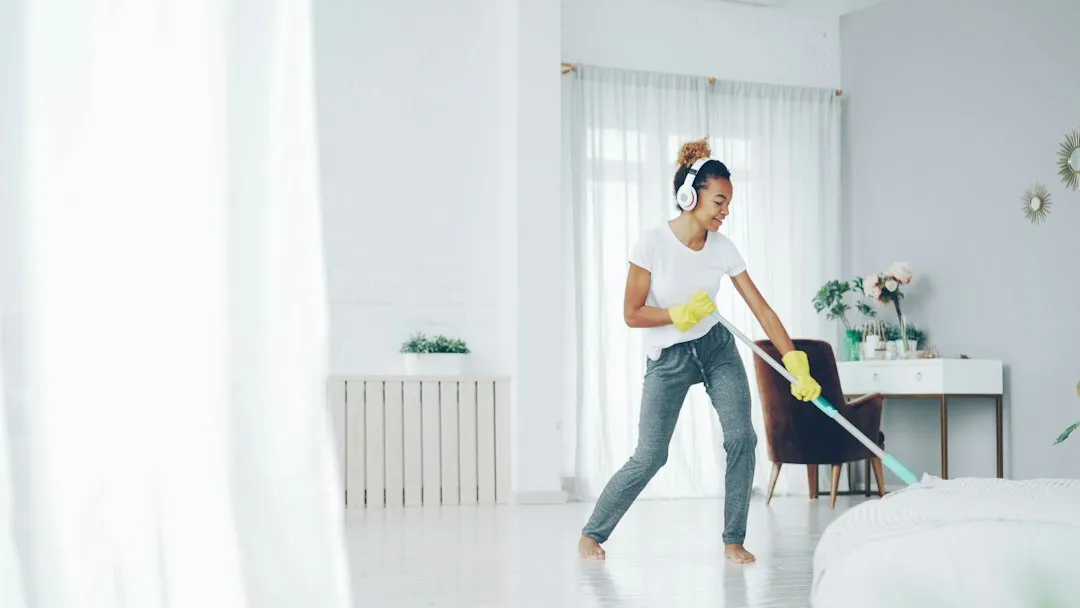
The average tempo of the most popular housework songs clocks in at around 126 beats per minute (BPM). That’s not a coincidence. For housework and staying motivated, faster music is most effective, with upbeat tracks in the 100 to 130 BPM range helping to boost motivation and make repetitive tasks feel easier.
People who gravitate toward fast, driving tempos during cleaning tend to be energetically wired. They often move through tasks with urgency and prefer momentum over patience. The tempo of background music has a demonstrable effect on a person’s productivity, error rate, tension, and alertness.
Pop Fans Are Likely Extroverts

Significant positive correlations with extraversion were found for upbeat and conventional and energetic and rhythmic music preferences. Pop music fits squarely in both categories, which means if your cleaning playlist is packed with chart hits and dance-pop, you’re more likely to be sociable, outward-facing, and energized by the people around you.
Extraversion tends to align with preferences for contemporary, upbeat genres like pop and rap. It’s not that pop fans are shallow or simple. They just tend to process the world through energy and connection, and pop’s structure feeds that naturally.
Classical During Chores Signals Openness
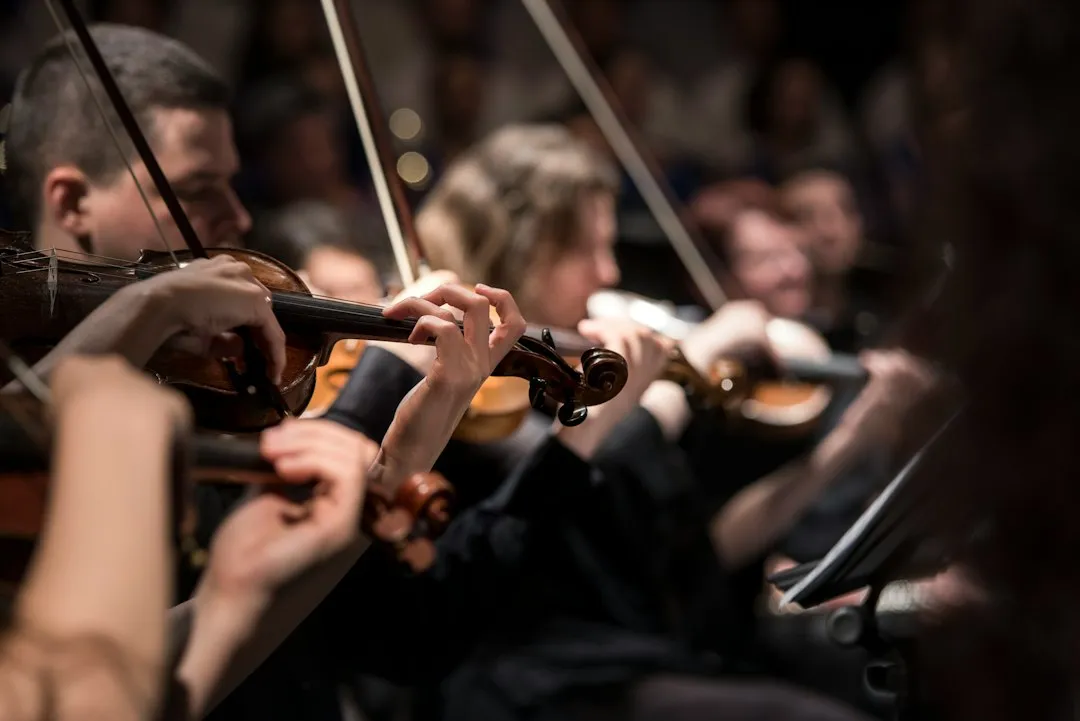
Individuals who appreciate classical music often exhibit a distinctive set of personality traits, primarily characterized by openness and a creative mindset, with classical music’s intricate structure reflecting an inclination towards openness. If you’re the kind of person who puts on a Beethoven sonata while scrubbing the bathroom, you likely score high on intellectual curiosity and comfort with complexity.
Openness predicts liking for complex music, while extraversion predicts liking for happy music. These aren’t rigid rules, but they do hold up consistently across studies. Cleaning to classical also suggests a comfort with solitude and introspection that more socially oriented people may not share.
Heavy Metal and Rock Cleaners Tend to Be Rebellious Types

The “intense and rebellious” music preference dimension, which covers rock and metal, is primarily linked with the openness personality trait. That might surprise people who assume metal fans are just angry. In reality, they tend to be emotionally complex and imaginative. Metal fans also exhibit a higher propensity for neuroticism.
Scrubbing dishes to Metallica or blasting punk while vacuuming isn’t a sign of aggression. It’s often about emotional release and intensity. The music matches the internal energy level, and cleaning becomes an outlet as much as a chore.
Building a Dedicated Cleaning Playlist Shows Structure
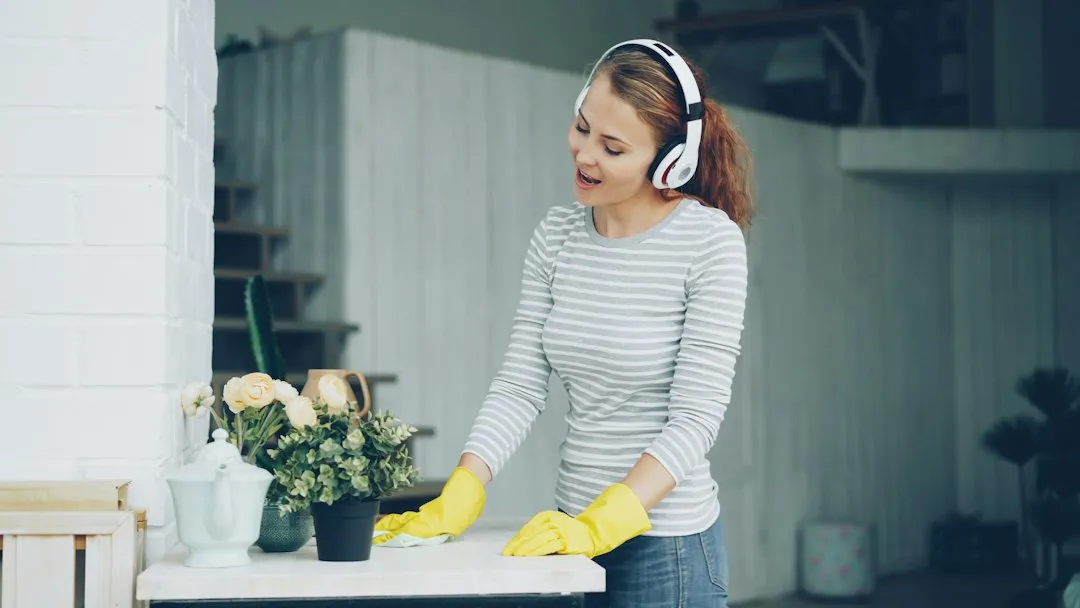
If you’re one of those people who have music playlists specifically designed for cleaning, you probably have a more structured and efficiency-oriented personality, since you’ve optimized even your daily routines. There’s something quietly revealing about spending time curating the perfect 45-minute scrub session soundtrack before you’ve even picked up a sponge.
This kind of advance planning tends to show up in other areas of life too. People who organize their cleaning playlists often keep tidy calendars, prep meals in advance, and treat systems as a source of comfort rather than constraint. Conscientiousness, as a personality trait, tends to lean toward more unpretentious and grounded music genres like country.
Music as Mood Regulation, Not Just Background Noise

Music serves as an emotional regulator, meaning people don’t just listen to songs because they like them, but because music helps them feel a certain way. If you often listen to music while cleaning, you probably have a tendency, whether conscious or not, to actively manage your mood.
The existing literature has consistently reported interactions between the effects of personality traits and music listening, though the interrelations between individual traits and well-being after music listening are still partially unclear. What is clear is that choosing music intentionally, even subconsciously, is a form of emotional self-care. It’s worth paying attention to what you’re actually trying to feel when you hit shuffle.
Jazz and Blues Fans Are Often Emotionally Rich Personalities

Research has found a meaningful association between openness to experience and both classical music and jazz music preference. People who clean to jazz tend to tolerate ambiguity well. They’re comfortable when things don’t resolve neatly, and that quality shows up in their social and emotional lives too.
Agreeableness as a trait tends to favor mellow and harmonious music. Jazz and soul playlists during cleaning often signal someone who prefers a calm, steady rhythm over chaos, even if the actual task involves elbow grease. These listeners tend to be empathetic and emotionally perceptive in everyday interactions.
Electronic and Dance Music Listeners Show Greater Openness

Electronic music listeners show greater openness to experience as a personality trait. EDM during cleaning makes a lot of physiological sense too. House music tracks at 125 to 130 BPM establish a steady cleaning rhythm, while dubstep and techno variations can provide energy spikes for tackling stubborn messes.
People who gravitate toward electronic music while doing chores are often comfort-seeking in an unconventional way. They want structure through rhythm but freedom through texture and sound design. It’s a combination that tends to signal both curiosity and a mild resistance to the ordinary.
Listening to Music While Cleaning at All Reflects Self-Motivation
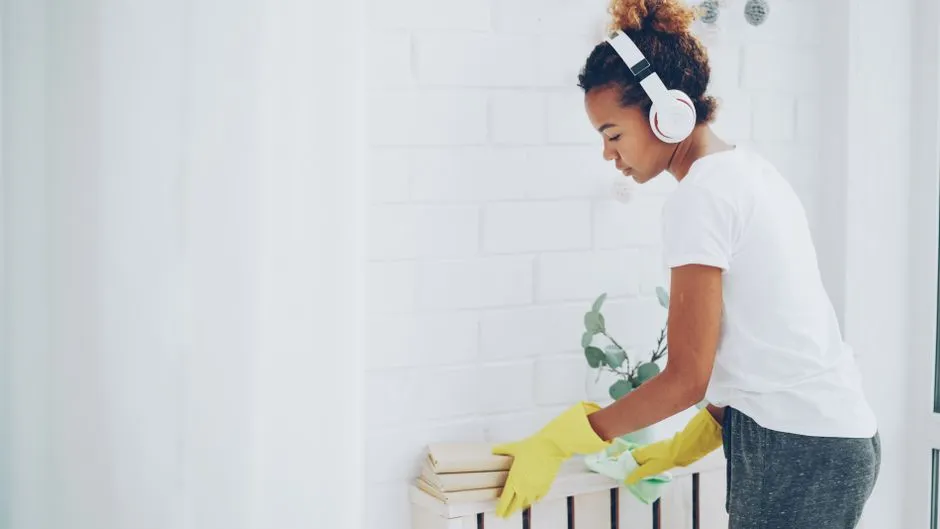
The vast majority of people are not enthusiastic about cleaning day, but those who turn to music show a greater capacity for self-motivation, which probably carries over to other areas of life. Introducing music is a strategic micro-decision that reduces initial reluctance, making cleaning no longer perceived in the same way.
Psychologists note that people who can effectively juggle cleaning and tuning into their favorite music are displaying a high level of multitasking ability. There’s also a dopamine angle. Research from the Journal of Neuroscience shows that music increases dopamine levels by up to roughly nine percent during routine tasks. That’s a real neurochemical nudge that helps explain why people who clean to music tend to actually finish what they start.
Silence Over Music? That’s a Personality Signal Too
Not everyone reaches for a playlist. Some people genuinely prefer silence while cleaning, and that’s just as telling. Research on introversion and cognitive processing suggests that people who find background music distracting often have higher baseline arousal levels or prefer internal monologue during routine tasks.
Uses of music correlate significantly with personality factors and facets, mainly within the neuroticism, extraversion, and openness domains. Those who score lower on extraversion and openness may find music more intrusive than helpful, particularly during tasks that require them to think or decompress. Music preference is a relatively stable construct that reflects personality traits, and that includes the preference for none at all.
The Takeaway

Your cleaning playlist, or the lack of one, is a small but genuine reflection of how you’re wired. The tempo, the genre, the curation, the emotional tone, all of it maps onto personality in ways that hold up across research consistently. Music resonates differently in every single person according to human culture and characteristics, and individual differences such as personality traits play a key role in modulating the emotional response to music.
Next time you hit play before the first sweep of the floor, it’s worth a moment’s curiosity. What are you actually reaching for? The answer says more about you than the cleanliness of the kitchen ever will.
AI Disclaimer: This article was created with the assistance of AI tools and reviewed by a human editor.