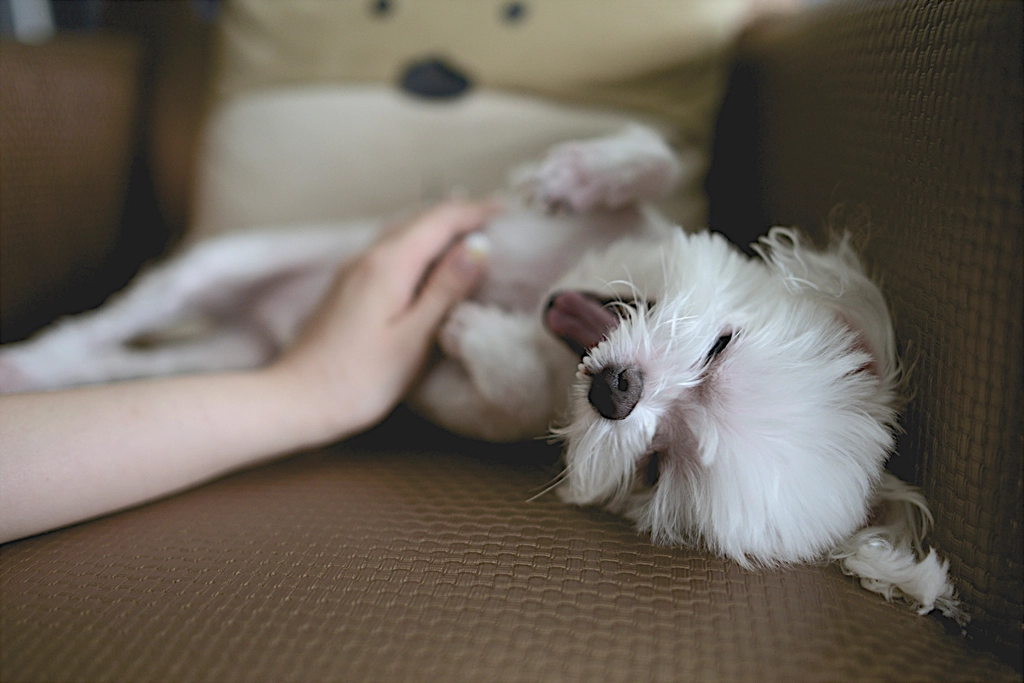

The Dinner Table Is a Sensory Magnet for Dogs
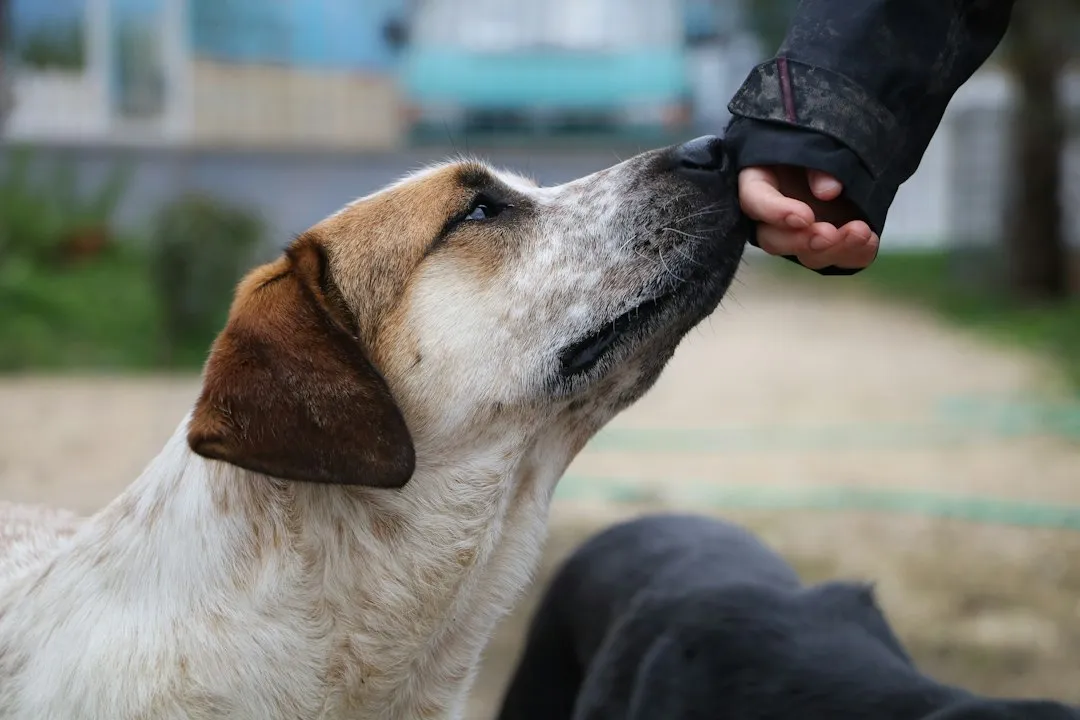
While humans have about six million scent receptors, dogs possess up to 300 million. That difference is not trivial. At the dinner table, it means your dog is experiencing your meal at an intensity you can barely imagine.
Human food smells richer because it often contains fats, proteins, and seasonings dogs find irresistible, and these strong aromas travel easily through the air, making them impossible for a dog to ignore. Placing their head near your lap puts them as close to that source as possible without actively begging in an obvious way.
When your dog places its head on your lap, it’s partly driven by the multitude of odors it detects. Your scent might even linger around your lap after cooking dinner. The lap becomes a kind of scent hotspot, and dogs are drawn to it instinctively.
It’s a Sign of Deep Trust, Not Just Hunger
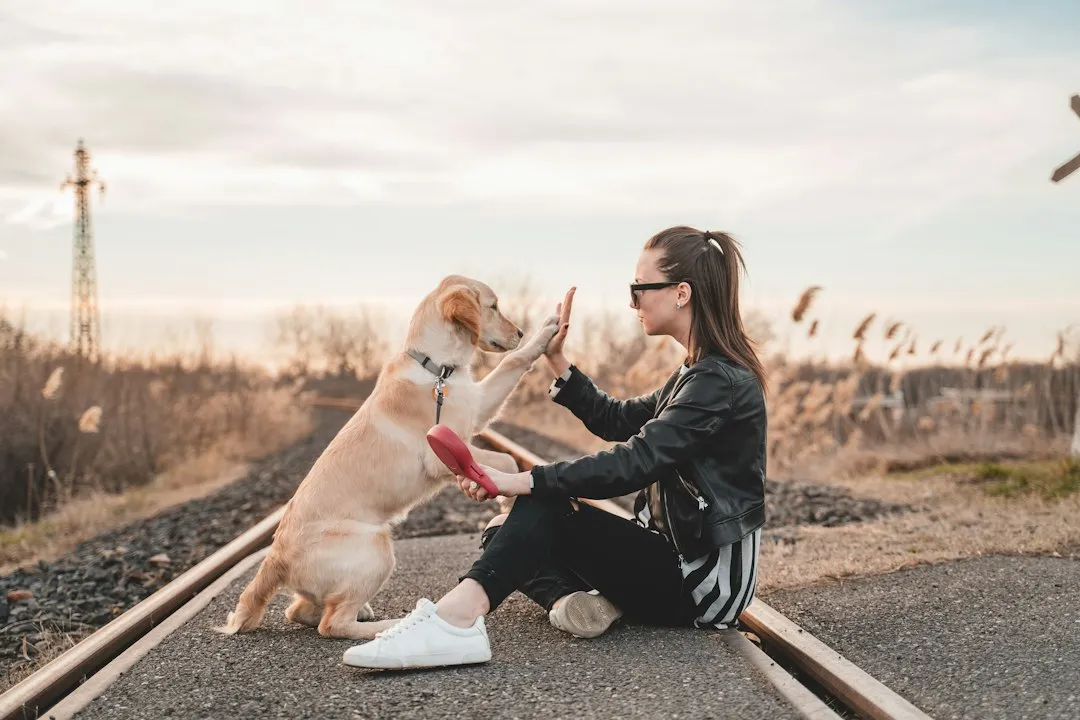
Dogs often rest their head on people as a sign of comfort-seeking, affection, and social bonding. It can also be a way for them to feel close to you, get reassurance, or gently ask for attention. These motivations frequently overlap, which is why the behavior can feel so loaded.
When they rest their heads on your lap, it is a sign of immense trust and a desire for physical and emotional closeness. A dog that trusts you enough to make itself vulnerable in this way is expressing something genuine, not staging a performance.
Dogs naturally feel comfortable and secure around the people they trust. Sleeping next to you, leaning on you, following you around the house, or resting their head on your lap are all common signs of love and affection.
Oxytocin: The Chemistry Behind the Closeness
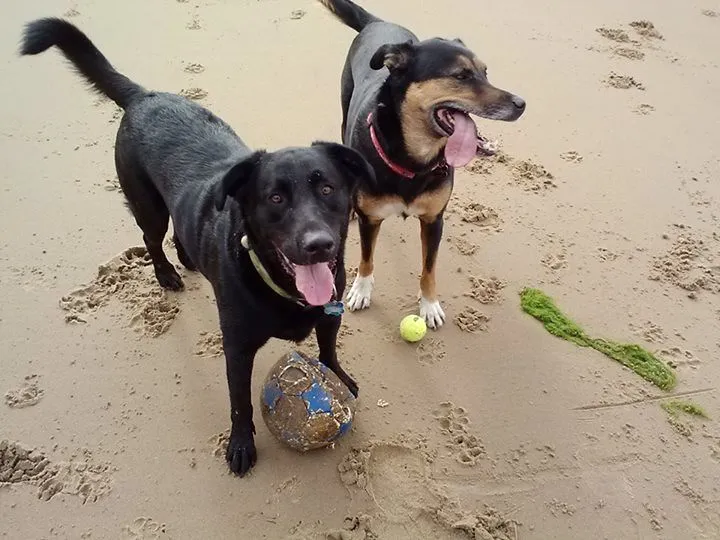
The warmth you feel when your dog rests its head on you isn’t just sentimental. There’s real chemistry behind it. Those loving interactions cause both dog and human brains to secrete the hormone oxytocin, which has been linked to strengthening emotional bonds between mothers and babies and between other mammal pairs.
Research published in PNAS found that the administration of oxytocin increased dogs’ affiliation toward both other dogs and humans, and engagement in affiliation with social partners was associated with an increase of endogenous oxytocin, supporting the idea of an oxytocin-mediated positive feedback loop in dog social bonding.
Human-dog interaction through dogs’ human-like gazing behavior brought on social rewarding effects due to oxytocin release in both humans and dogs, deepening mutual relationships and leading to interspecies bonding. Physical contact, including a head rested on your lap, works through this same system.
Learned Behavior: When It Actually Works, Dogs Remember
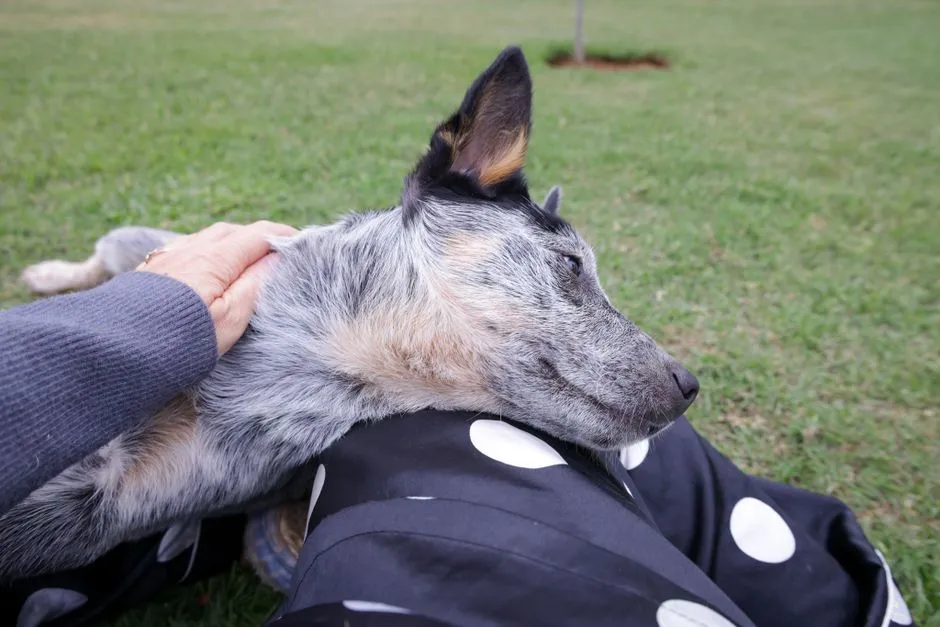
If resting their head on your lap consistently leads to ear scratches, belly rubs, praise, or extra attention, they’ll quickly learn that the behavior works. Dogs are fast, accurate learners when social rewards are involved.
If you’ve noticed their head resting on you and you’ve rewarded it by throwing a ball or getting their favorite toy or feeding them, you’ve reinforced the behavior. They’ve learned that when they put their head on you, you’re giving them the thing that they need.
The dinner table setting is especially potent for this kind of learning. Dogs know that hanging out near humans eating food can lead to a lucky snack drop. Over time, that association shapes a habit that feels spontaneous but is actually well-practiced.
It’s How Dogs Read the Room During Mealtimes
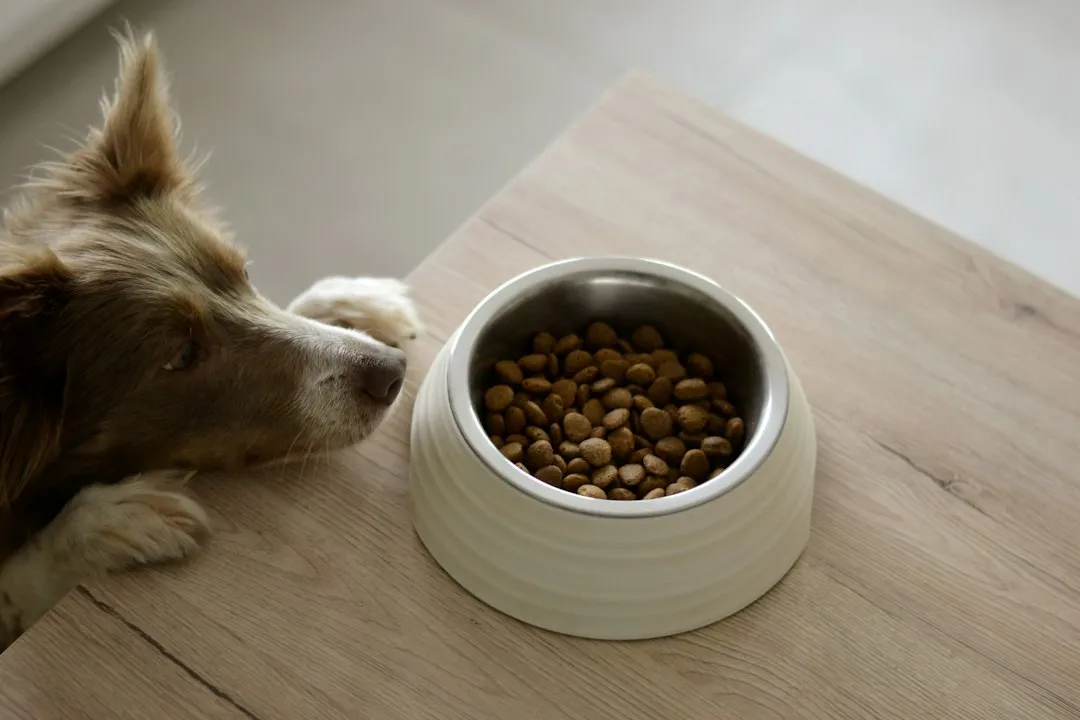
Dogs are expert observers. Studies show dogs are remarkably good at reading human cues, including body language and patterns. At the dinner table, they’re absorbing a stream of information: your posture, your sounds, the rhythm of eating.
Research out of the United Kingdom suggests that the smell of human stress affects dogs’ emotions as well as their decisions, leading them to make more pessimistic choices. At mealtimes, when humans are typically relaxed and calm, dogs read that too, and settle in accordingly.
When exposed to a stress odour, dogs were significantly less likely to approach ambiguous situations, indicating possible risk-reduction behaviours in response to the smell of human stress. Conversely, a calm, food-filled environment signals to them that it’s safe to come close.
It’s Not About Dominance
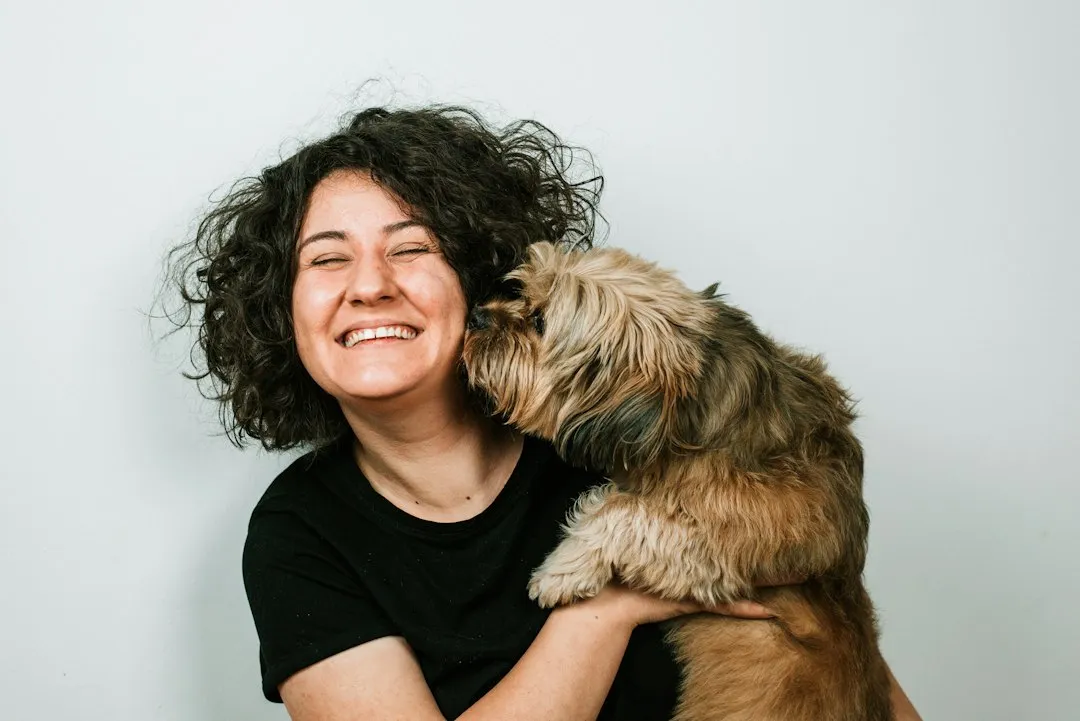
A persistent myth in dog ownership is that this kind of physical contact is a power move. It isn’t. The myth that dogs are trying to become “pack leader” has been proven incorrect. Dogs aren’t plotting to become the alpha of the household; they are simply reacting to their current emotions, feelings, and environment.
Contrary to some beliefs, it’s not about dominance. Modern research focuses more on cooperation and social bonding than hierarchy or being an “alpha.” The head-on-lap gesture is better understood as an invitation to connect, not a territorial claim.
In most cases, a dog laying its head on its owner is seeking comfort, giving affection, showing love, or offering emotional support. The dinner table setting adds food motivation to the mix, but the underlying impulse is social.
Comfort-Seeking When Anxiety Is Present
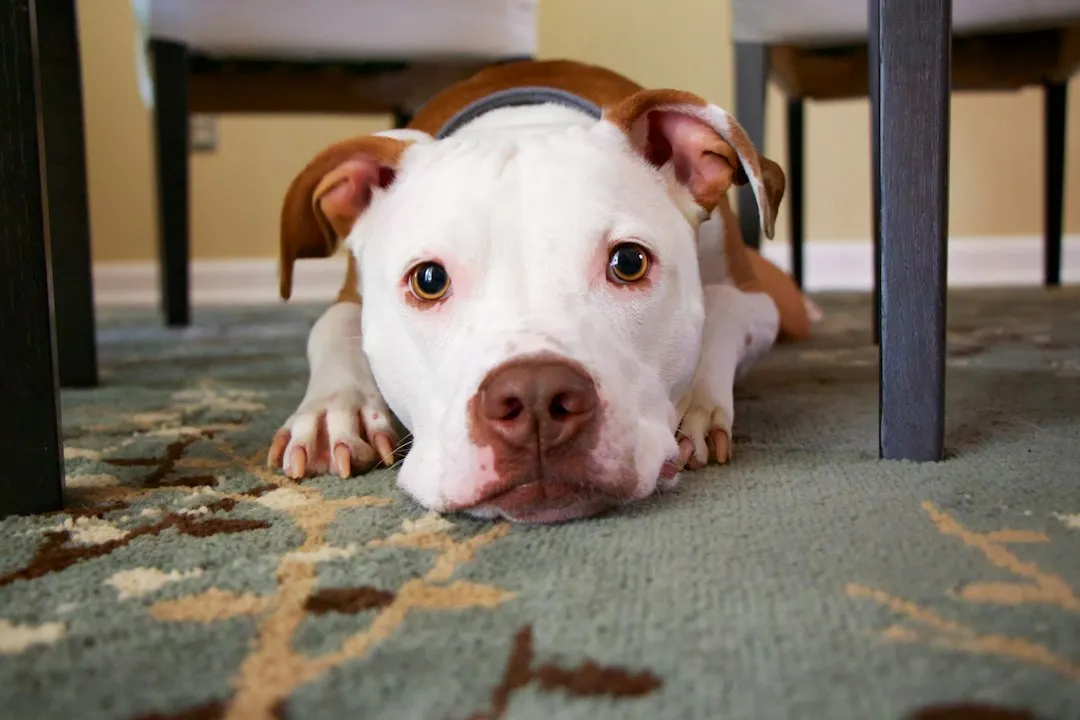
Dogs seek comfort when they’re anxious or stressed. Placing their head on your lap is one way to get as close as possible to you, which could reduce anxiety and help the dog to feel more secure. For some dogs, the bustle of a family mealtime can actually be mildly overstimulating.
Just like humans, dogs also experience stress and uncertainty. When this happens, dogs seek comfort from the people they trust. The lap becomes a kind of anchor in a noisy or busy moment.
A study comparing the blood pressure and heart rates of pet owners while petting their dogs versus other activities found significant decreases in both measures during petting sessions. Research into the health benefits of interactions with companion animals has similarly identified a reduction in stress indicators such as lower blood pressure and heart rates, suggesting substantial relaxation benefits. The calming effect works both ways.
The Scent Connection: Dogs Use Their Nose to Bond
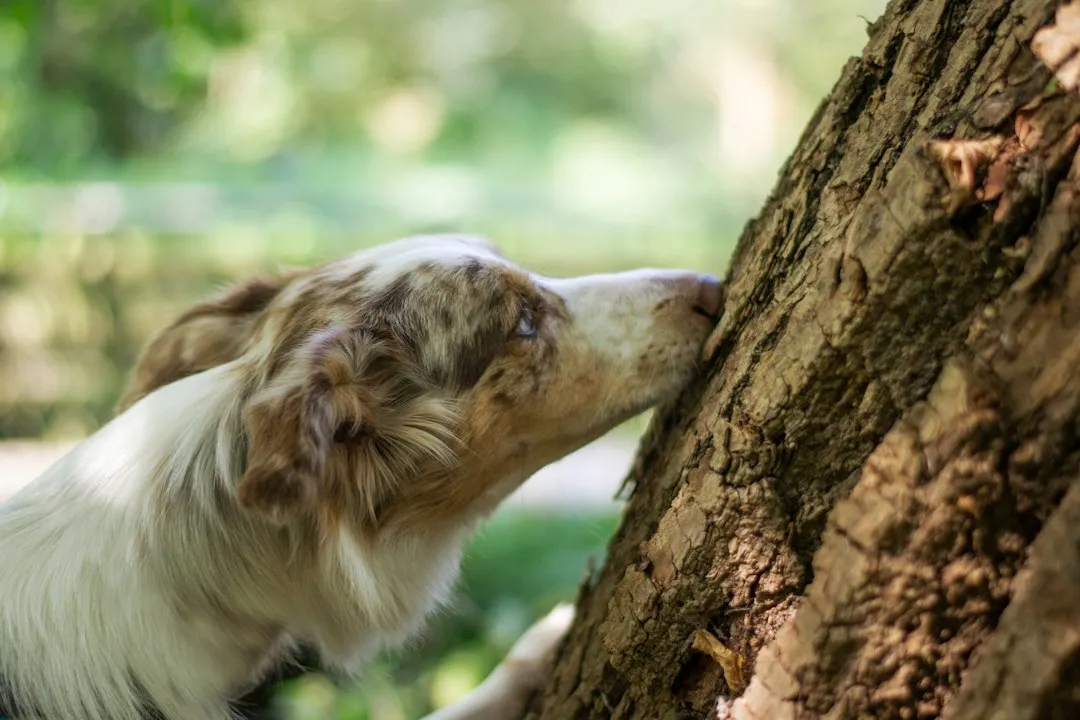
Dogs’ sense of smell seems to be the main sense, allowing them to not only gather both current and historical information about their surrounding environment, but also to find the source of the smell, which is crucial for locating food, danger, or partners for reproduction.
Some research suggests dogs can pick up on chemical changes linked to human stress, such as differences in sweat or breath. Studies in this area are still fairly small, but they point to a channel of information we can’t consciously notice. At the dinner table, your dog may be reading your emotional state through scent before they even make physical contact.
Canine brain imaging research found that dogs could not only discriminate a familiar scent among others, but also had a positive association with it. Your scent, mixed with the aroma of a shared meal, creates a powerfully familiar and comforting signal.
Breed Tendencies Play a Role
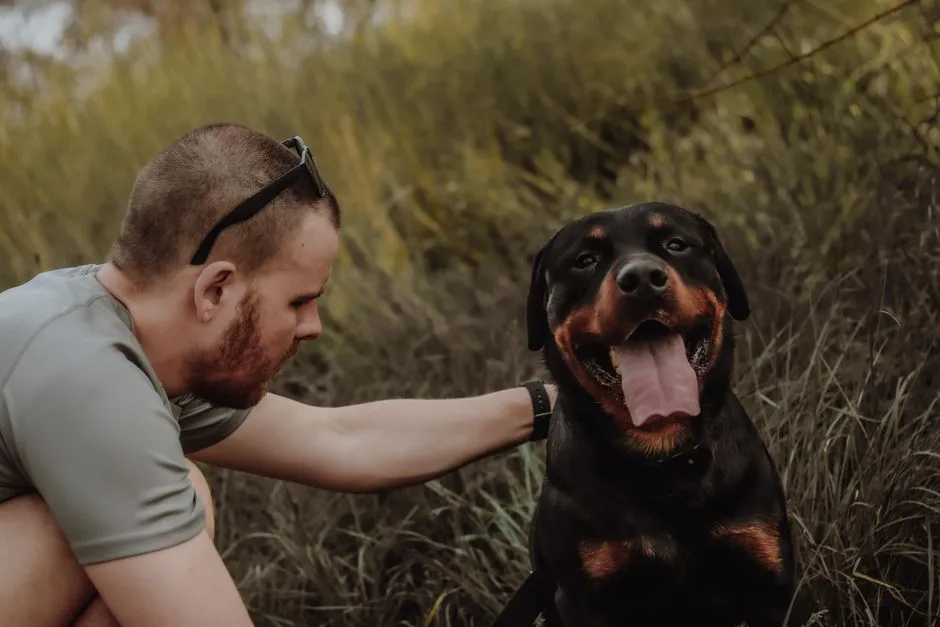
Some dog breeds are more likely to show affection by resting their head on their owner. Breeds that were historically developed to work closely alongside humans, such as retrievers and spaniels, tend to display this contact-seeking behavior more readily than more independent breeds.
Other dog breeds are physically affectionate with their human companions and might often rest their heads on their owners. This doesn’t mean less demonstrative breeds feel the bond less deeply; they may simply express it differently, through eye contact, proximity, or following you from room to room.
Individual personality matters as much as breed. A dog that grew up in a household where physical closeness was welcomed and rewarded will reach for your lap far more readily than one raised in a more hands-off environment.
Emotional Support Goes Both Ways
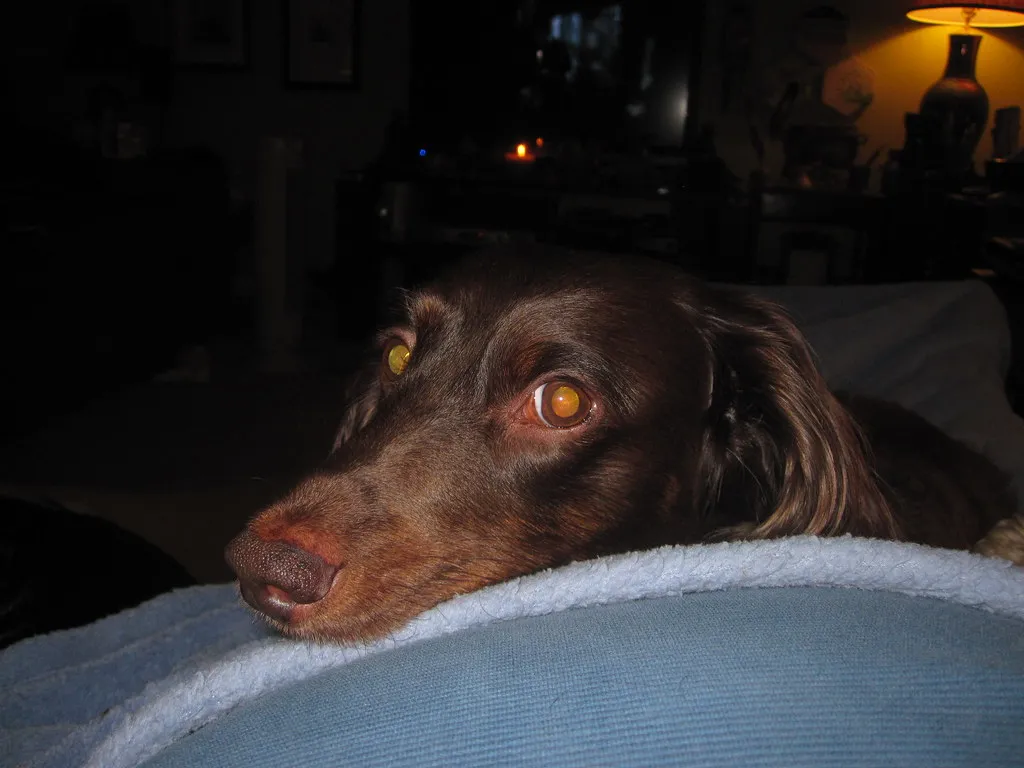
When your dog places its head in your lap, it is more about seeking comfort and reassurance than asserting dominance. Laying their head on your lap is a sign of affection and a means of offering emotional support during your hard times.
Some animal behaviorists describe this kind of head-in-lap behavior as a response to changes in an owner’s emotional state. Dogs are quietly attentive in ways we often underestimate, especially during moments like mealtimes when we’re physically still and emotionally present.
Some dogs always seem to be touching their humans somehow. They put their paw on your foot, lean their body against you, or rest their head on your lap; these gestures help dogs maintain social connection. At the dinner table, the head-on-lap is simply the most available and comfortable form of that contact.
The Takeaway
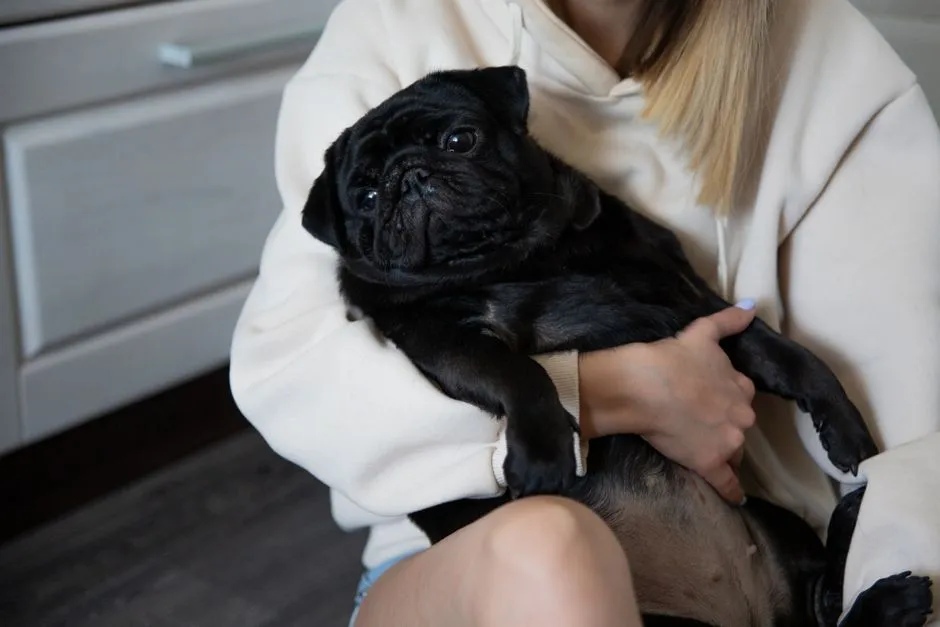
What looks like a simple dinner-table habit is actually a layered behavior rooted in evolutionary biology, neurochemistry, learned association, and genuine attachment. Your dog is responding to your scent, your calm body language, the smell of food, and the emotional history the two of you share, all at once.
The science supports what most dog owners already feel intuitively: that heavy little head on your lap is a form of communication. It’s trust made physical. Whether your dog is hoping for a scrap or simply needs to feel close to you, the gesture means they’ve chosen you as their safe place.
That’s not a small thing.
AI Disclaimer: This article was created with the assistance of AI tools and reviewed by a human editor.