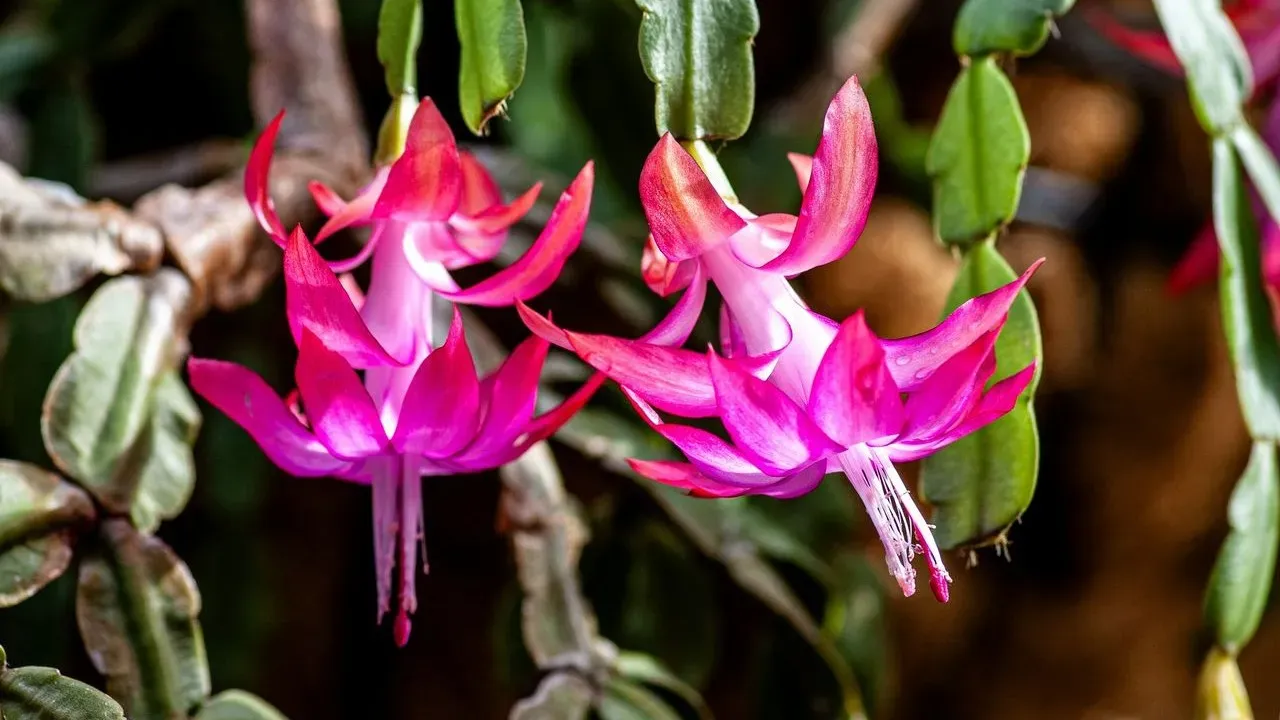

Houseplant owners often notice a sudden shift in their Christmas cactus from vibrant green to shades of purple or red along the segmented stems. This change appears most frequently during the cooler months when the plants prepare for their signature holiday blooms. The discoloration serves as a visible response to environmental stress rather than a random occurrence. ([1])## A Plant’s Built-In Warning System Christmas cactus, known scientifically as Schlumbergera, originates from the shaded understory of Brazilian rainforests. In that setting the stems remain green because they receive filtered light and steady moisture. When brought indoors, the same plant can encounter conditions that trigger protective pigments called anthocyanins. These compounds produce the purple tones as the plant attempts to shield its tissues from excess ultraviolet exposure or other imbalances. The shift rarely happens overnight. It develops gradually as one or more care factors fall out of alignment. Owners who monitor stem color alongside growth patterns gain an early opportunity to adjust routines before more serious damage sets in. ## Light Exposure as a Primary Trigger Direct sunlight ranks among the most common causes of the color change. A Christmas cactus placed on a south-facing windowsill or near an unshaded glass door receives far more intense rays than its rainforest heritage allows. The plant responds by producing anthocyanins to filter the light, resulting in purplish stems that may later show scorch marks if the exposure continues. Relocating the pot to an east- or north-facing window, or filtering the light with a sheer curtain, usually reverses the process over several weeks. Consistent indirect light supports steady green growth without the protective pigment response. ## Moisture and Temperature Balance Both underwatering and overwatering can produce similar purple discoloration. When soil dries out completely for extended periods, the plant experiences drought stress that limits photosynthesis and prompts the color shift. Conversely, waterlogged roots deprive the plant of oxygen, leading to yellowing that can deepen into purple or brown tones before tissue begins to rot. Temperature swings add another layer of stress. Drafts from heating vents, open doors, or cold windows push the plant outside its preferred 70-to-80-degree range. Even brief exposure to cooler air during the winter months can intensify the purple hue. Maintaining even room temperatures and allowing the top inch or two of potting mix to dry between waterings helps stabilize the plant’s appearance. ## Addressing Nutrient Shortfalls Depleted or compacted soil often contributes to the problem when macronutrients such as nitrogen, phosphorus, or magnesium become unavailable. A Christmas cactus left in the same pot for several years without refreshment may develop tightly bound roots that struggle to absorb what little nutrition remains. Repotting into fresh, well-draining medium formulated for epiphytic cacti restores access to essential elements. A diluted, balanced houseplant fertilizer applied during the active growing season can further support recovery, though sudden heavy feeding after prolonged neglect may cause additional stress. ## Restoring Healthy Green Growth Once the underlying cause is identified and corrected, new stem segments typically emerge in their natural green color. Older purple sections may remain, yet they do not usually spread if conditions improve. Consistent attention to light, water, temperature, and soil quality keeps the plant vigorous through its blooming cycle and beyond. Many growers find that small, steady adjustments yield the most reliable results with this forgiving species. The purple phase ultimately serves as a reminder that even low-maintenance houseplants communicate their needs when conditions drift from the ideal.
AI Disclaimer: This article was created with the assistance of AI tools and reviewed by a human editor.