

Watch your dog the moment you pick up the leash, or the second you walk through the front door after a long day. For many dogs, that spike of pure joy doesn’t stay tucked inside. It travels all the way through their body, surfacing as a visible, rapid trembling that can look almost alarming if you don’t know what you’re seeing. It isn’t alarming, though. It’s one of the more fascinating and oddly endearing things dogs do.
The science behind it involves hormones, nervous system responses, impulse control, and breed-specific tendencies. Understanding it doesn’t just satisfy curiosity. It also helps owners tell the difference between healthy excitement and something that might genuinely need attention.
The Body Doing What Emotions Tell It To

Dogs can shake when they’re excited or overwhelmed with positive emotions. This may happen when they see their favorite person, engage in their favorite activity, or anticipate their favorite treat. The connection between emotion and physical trembling is not unique to dogs, but the way dogs express it tends to be more visible and unfiltered than in most other animals.
Some dogs shiver when they’re happy or excited, and one theory is that it’s an outward manifestation of intense emotion. There’s no danger in this type of shivering, and it will most likely stop once they calm down. Think of it as the body momentarily running faster than it can contain.
The Role of Adrenaline

Stressors like thunderstorms or fireworks often trigger trembling in dogs. The release of adrenaline in response to these stressors prepares the body for a fight-or-flight reaction, and shaking is a common byproduct. The same hormonal surge happens during positive excitement. The chemical response in the body doesn’t always distinguish between “thrilled” and “threatened.”
This hormone kick helps dogs respond quickly to stimuli, whether it’s a threat, a task, or an opportunity to work. When a dog spots its owner after a long separation, adrenaline rises fast, and the muscles respond. That cascade of rapid contractions is what we perceive as shivering.
Impulse Control and Why Young Dogs Shake More
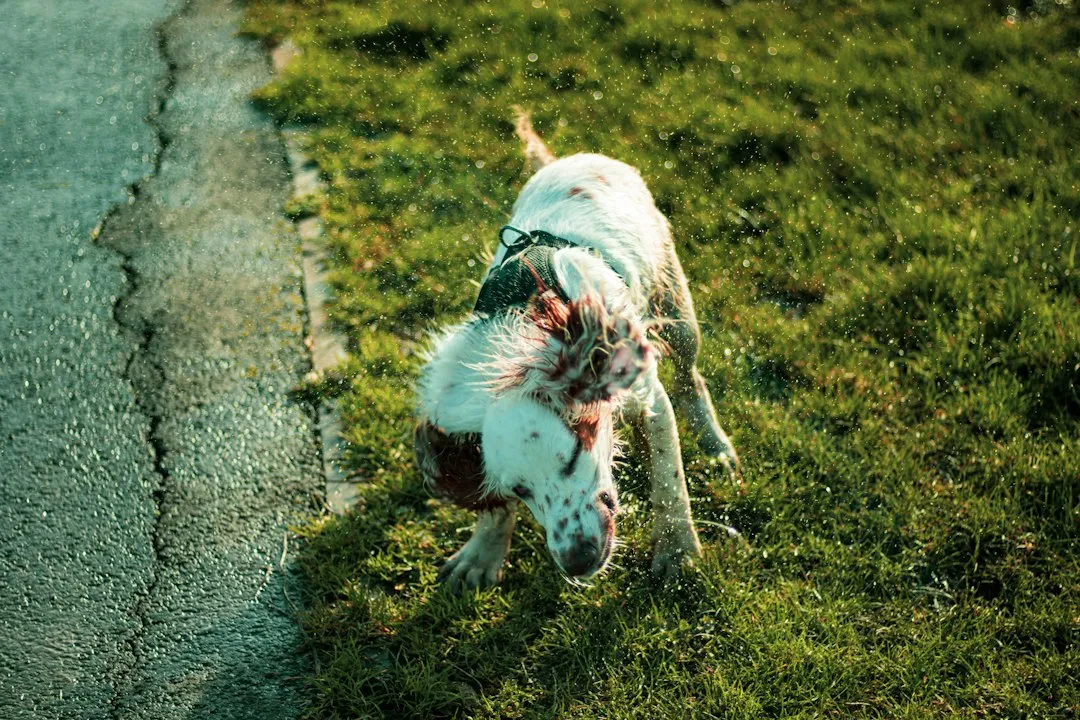
When dogs shake due to excitement, it helps to lower their excess energy and keep them more contained. Most commonly it’s seen in younger dogs, as they tend to have weaker impulse control, and it’s usually a good idea to pay less attention to them until they calm down, then reward them with a calm stroke.
Puppies and adolescent dogs haven’t yet developed the neurological braking systems that help older, calmer dogs regulate themselves. Their excitement response essentially overshoots, spilling into visible physical trembling. This tends to become less frequent as dogs mature and learn to manage their arousal levels, though some individuals never quite lose the habit.
Breed and Body Size Play a Real Part

According to a research project by the University of Sydney, lighter toy breeds are more excitable and hyperactive, and therefore more likely to tremble with excitement. This tendency ties into both their physiology and their breeding history. Smaller dogs have less body mass to absorb intense emotional and physical energy.
Excitement-related shaking is more common in high-energy breeds such as hunting dogs, but it can happen to any dog that is excited. Regardless of breed, what matters most is the individual dog’s temperament and how well they’ve learned to self-regulate in stimulating situations.
Trembling as an Emotional Transition Signal

The most detailed and methodologically focused work to date is the 2024 study by Bryce and colleagues, the first peer-reviewed investigation to examine the canine shake-off directly. Observing 120 shake-offs across 96 dogs in public and daycare settings, the authors described the movement as “a rapid side-to-side movement of the body or head.”
This study was the first peer-reviewed investigation to examine the canine shake-off directly. The researchers reported that shake-offs were most common between behavioral categories and following interruptions. In other words, the shaking often functions as a kind of reset between emotional states, not just a symptom of excitement itself.
Heart Rate and Physiological Arousal
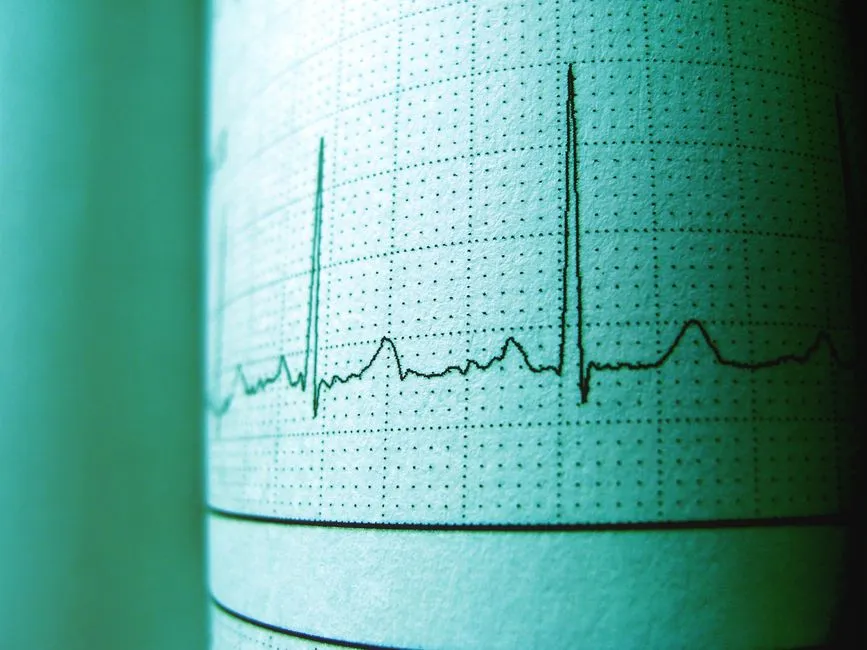
A small exploratory field project by DogFieldStudy in 2024 paired real-time heart rate tracking with video during off-leash walks. In several clips, shake-offs were observed in close proximity to peak heart rate moments. Although not peer-reviewed and based on a limited sample, this biometric pairing offers early indications that shake-offs may occur near shifts in physiological arousal.
This kind of biometric research is still in its early stages, but it points toward a physical explanation that goes beyond behavior alone. The shaking appears to be tied to measurable changes in the cardiovascular system, not just the emotional state we observe on the surface.
It’s Different from Anxiety Trembling (But Can Look the Same)
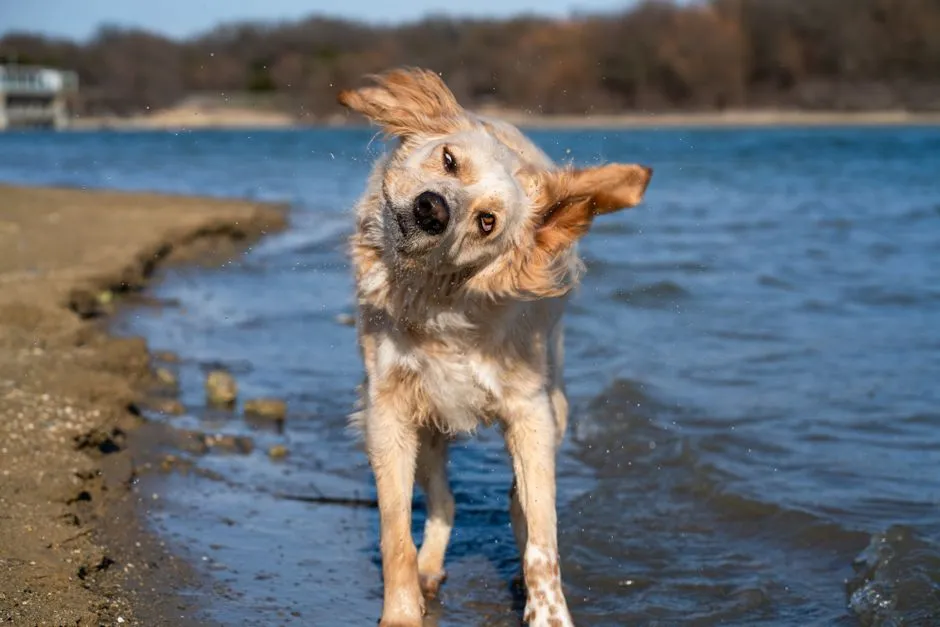
Trembling is a behavioral response that looks like shivering or shaking. Though it may be confused with a neurologic condition or shivering due to a low body temperature, trembling is voluntary and is associated with different scenarios, such as feelings of fear, excitement, anxiety, and pain. Context is the key to telling these apart.
When shaking is short-lived, stops on its own, is triggered by excitement, stress, play, or getting wet, and is followed by the dog acting completely normal, this type of shaking is often a release. Fear-based trembling, by contrast, tends to come alongside tucked tails, flattened ears, panting, and other stress signals. Excitement shaking usually looks more like barely contained energy than distress.
When Shivering Becomes Attention-Seeking

Dogs quickly learn which behaviors gain a response from their humans. Some clever companions discover that trembling earns immediate sympathy and affection. This is a learned pattern rather than a physiological one, and it’s worth being aware of if you have a dog who seems to shake specifically when you’re watching.
If shaking happens right after excitement and stops quickly, it’s usually the dog’s way of settling their nervous system. However, if it persists and seems connected to social rewards rather than emotional peaks, it’s possible your dog has figured out that the shaking itself gets them what they want. In that case, responding calmly and without excessive fuss is typically the better approach.
Medical Tremors vs. Excitement Tremors

Muscle tremors, even though they have a similar appearance to trembling, are an involuntary type of shaking caused by neurologic dysfunction due to a medical condition or exposure to a toxin. This is a meaningful distinction for owners who aren’t sure what they’re observing. Excitement-based shaking stops once the dog settles. Involuntary tremors don’t.
Medical conditions that can cause shaking include corticosteroid-responsive tremor syndrome, Addison’s disease, cerebellar disease, hypoglycemia, and tremorgenic mycotoxicosis. Seizure-related shaking can vary in intensity and duration compared with a normal shake-off or trembling caused by excitement, cold, or anxiety. When in doubt, a veterinarian is always the right call.
What You Can Do as an Owner
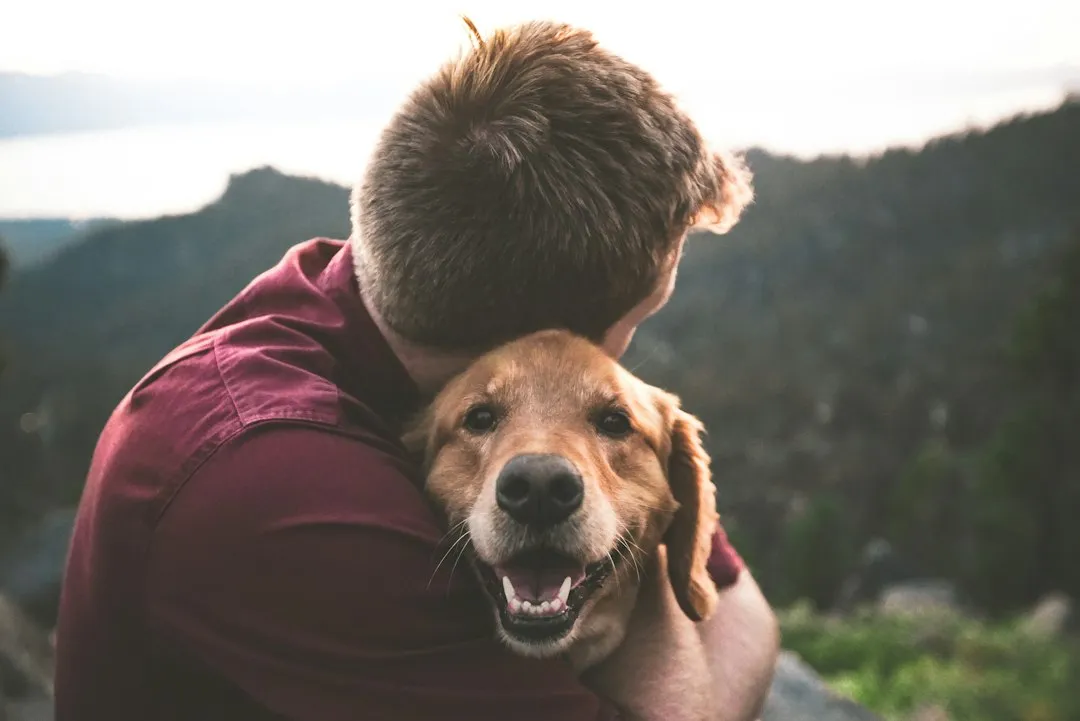
Trembling due to fear, stress, or excitement may stop if a stressor is removed or the dog is distracted or comforted. For excitement specifically, the most effective strategy is to lower the energy of the situation rather than match it. Greeting your dog quietly, turning away until they settle, or waiting before engaging can all help reduce the intensity of the trembling over time.
Common, benign reasons for shaking include excitement, especially in younger dogs, while emotional triggers like stress or fear can also lead to trembling and may warrant identifying and reducing triggers or seeking a behaviorist’s help. Teaching calm responses to exciting cues, like practicing quiet greetings or gradual leash introductions, is one of the more practical things an owner can do to help a highly excitable dog find their baseline more easily.
The Takeaway
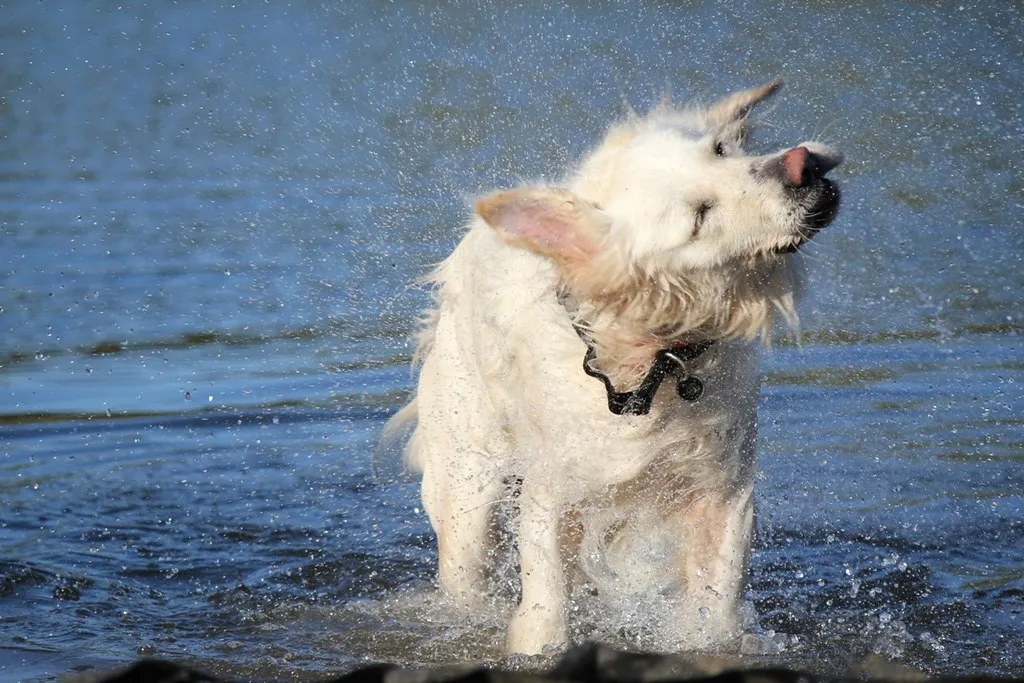
Excitement-related shivering is, in most cases, a perfectly normal window into how intensely dogs experience the moments that matter to them. It’s the body doing something honest. The latest research, including the first peer-reviewed study on canine shake-off behavior published in 2024, is starting to give us a more precise picture of when it happens and what purpose it serves.
What’s clear is that context matters enormously. The same visible trembling can signal joy, anxiety, habit, or something medical. Knowing your dog well enough to read the difference is one of the more rewarding parts of living with one. Most of the time, though, when your dog is shaking at the sight of you, it means they’re genuinely thrilled you’re there.
AI Disclaimer: This article was created with the assistance of AI tools and reviewed by a human editor.