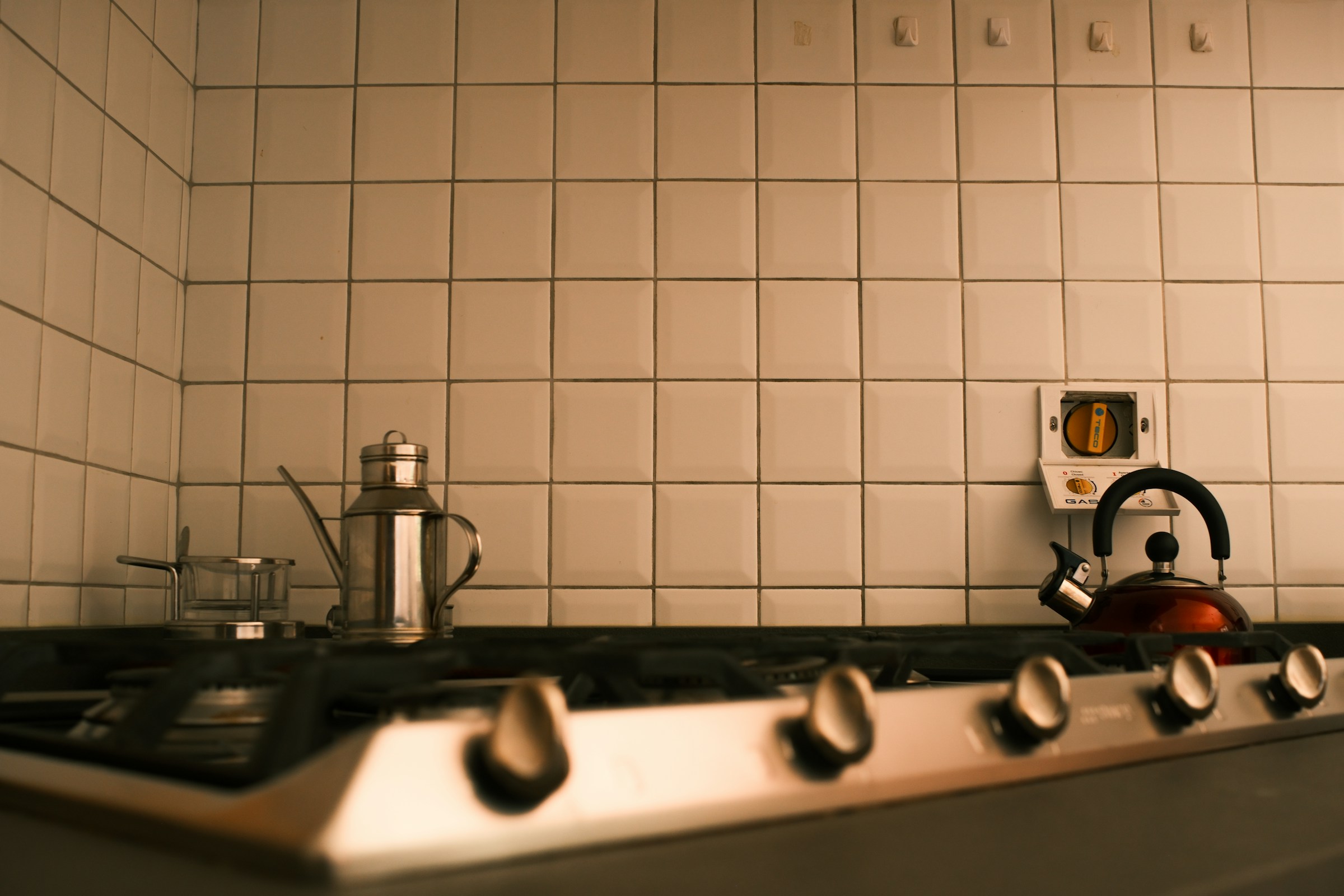

It All Starts with the Water, Not the Kettle
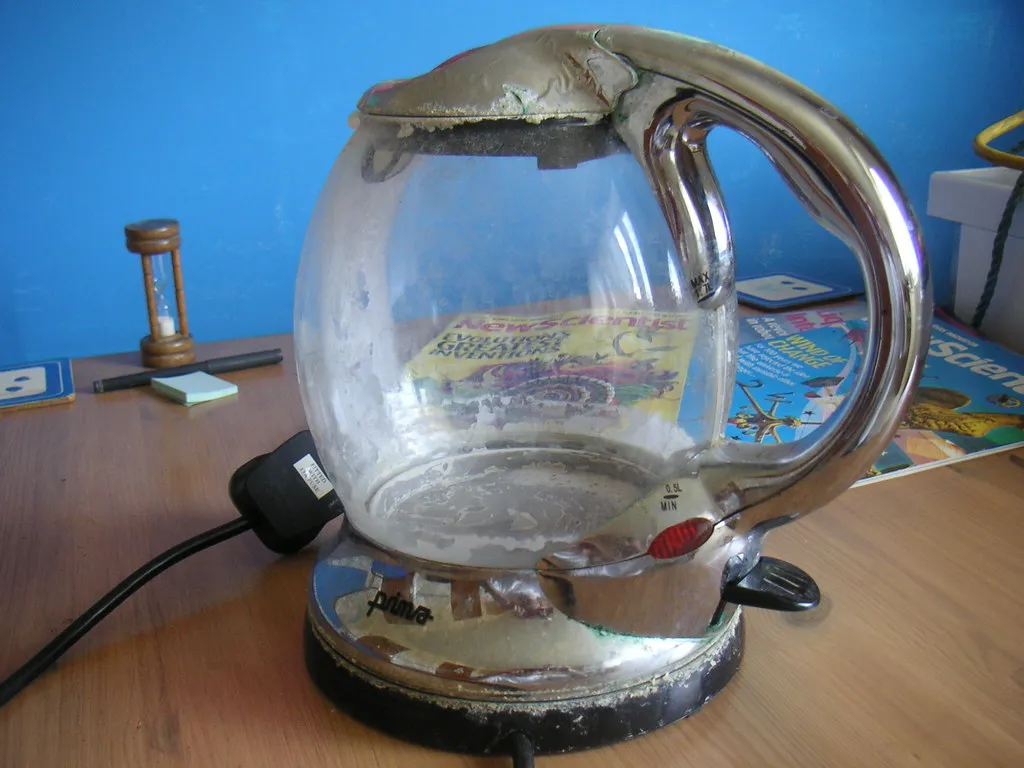
The pale crust that gradually appears inside many kettles is mineral scale. Water can look completely clear while still containing dissolved substances. When hard water is heated, some of those dissolved minerals form solid deposits, including calcium carbonate, on the kettle’s surfaces.
The underlying cause for limescale buildup in kettles is the way in which the water, the minerals dissolved within it, and the repeating heating cycles all interact. The kettle itself is innocent. It’s simply the stage where the chemistry plays out.
What Hard Water Actually Means
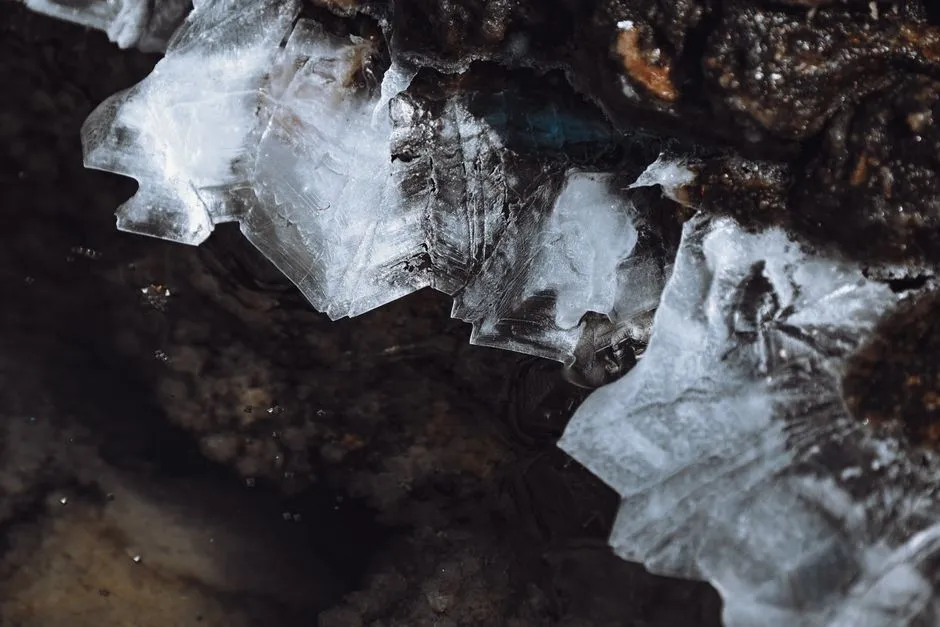
Hard water is described as “hard” not because of any difference in rigidity, but because of its mineral content. During the water cycle, rainwater travels through rock such as chalk and limestone and picks up minerals along the way. If those picked-up minerals are calcium and magnesium, they make the water hard.
The USGS classifies water as soft below 60 parts per million, moderately hard from 61 to 120, hard from 121 to 180, and very hard above 180. These aren’t arbitrary numbers. They correspond directly to how quickly your kettle will show signs of buildup.
How Common Is Hard Water, Really?
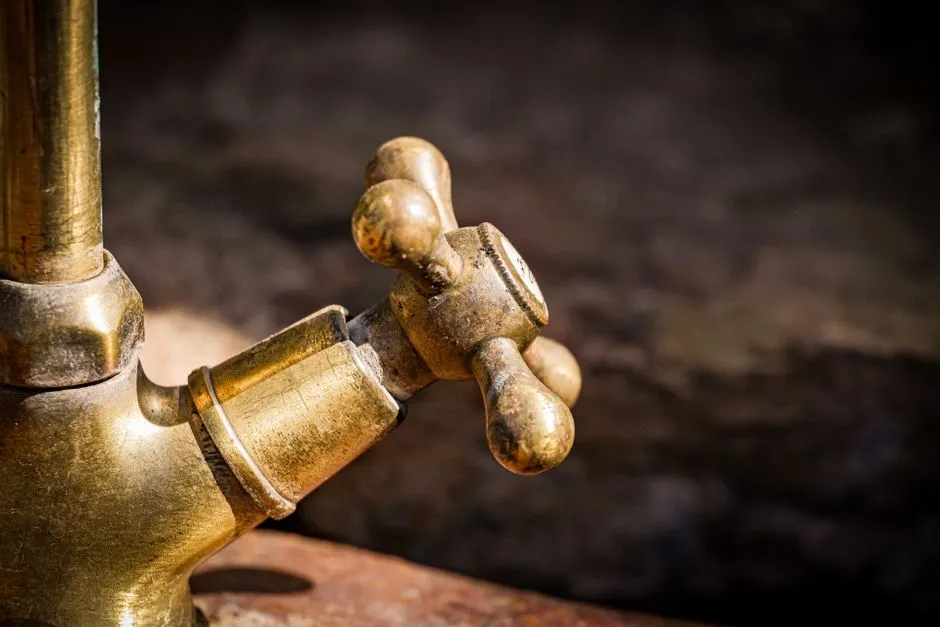
Approximately 85 percent of U.S. homes receive hard water, according to USGS measurements. That’s a strikingly large share, meaning the white crust in kettles is far from a niche problem. About 60 percent of homes have water classified as “hard” or “very hard,” above 7 grains per gallon, while an additional 25 percent receive moderately hard water.
In the UK, almost 60 percent of homes are classed as having hard or very hard water, leaving outlets throughout the household susceptible to limescale buildup. As many as 16 million households in the UK live with varying degrees of hard water.
The Chemical Reaction Behind the Crust
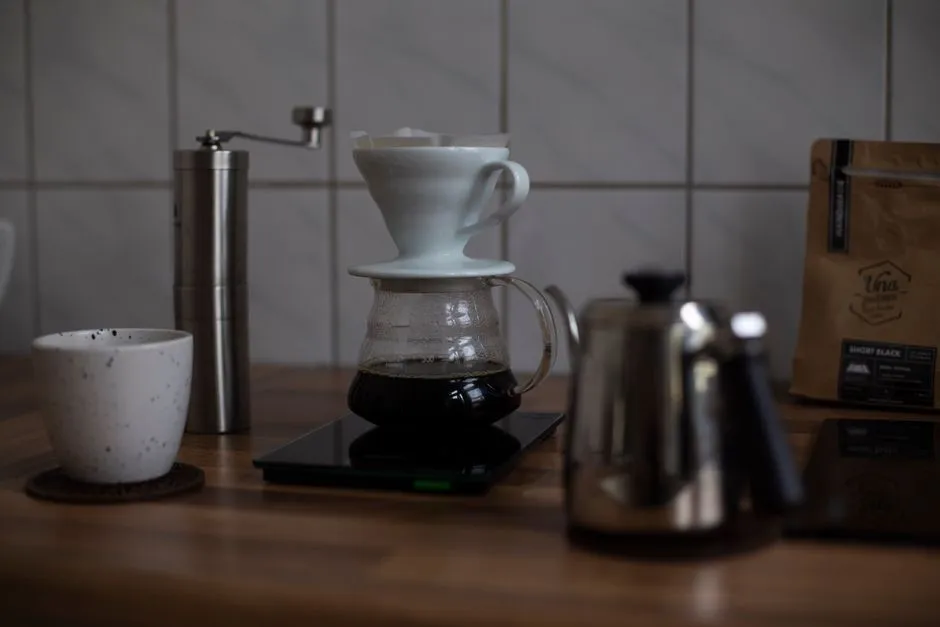
Hard water contains high levels of minerals, including calcium bicarbonate, which is dissolved in the water. When there is an increase in water temperature, the dissolved calcium bicarbonate comes out of solution to form scale deposits, known as calcium carbonate, on surfaces.
When hard water is boiled in a kettle and reaches boiling point, the water naturally turns to steam and starts to slowly evaporate. Calcium carbonate has a boiling point much higher than water, so it does not evaporate when the water is boiled and is left behind in the kettle. That’s the crust. It’s minerals with nowhere left to go.
Why Heat Makes It Happen So Much Faster
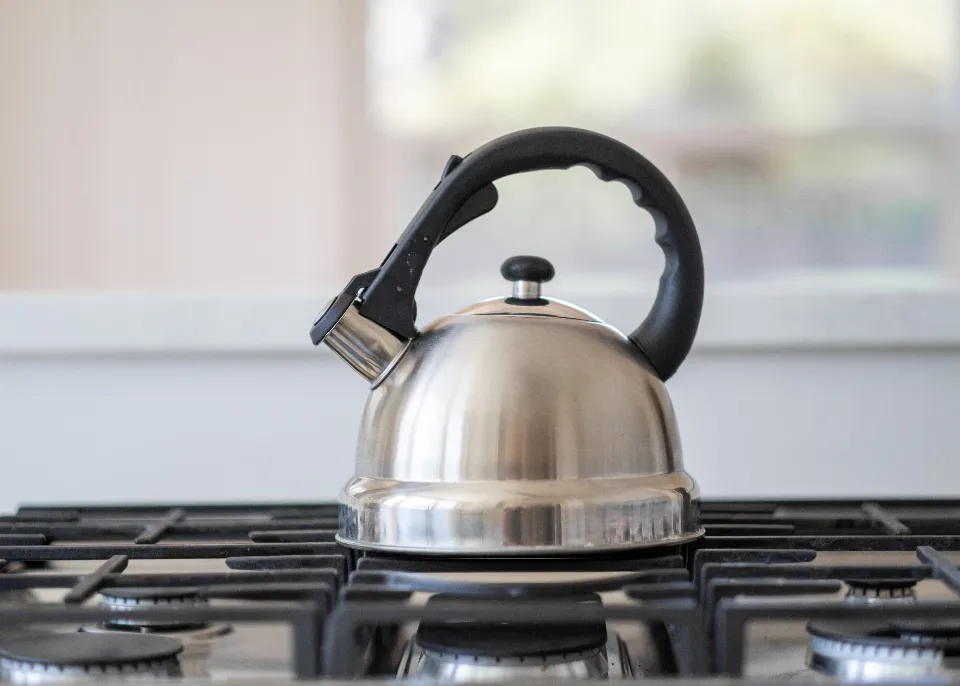
Heating water accelerates the precipitation of calcium carbonate, leading to faster limescale formation. This is why appliances like kettles and water heaters are particularly susceptible to limescale deposits.
The accumulation of limescale increases as the temperature of the water changes repeatedly. Every boiling cycle is essentially another round of mineral deposition. Over weeks and months, those thin layers stack into a visible crust, particularly around the heating element and along the waterline. In very hard water areas, a kettle can develop visible buildup in a matter of weeks.
What the Crust Is Actually Made Of
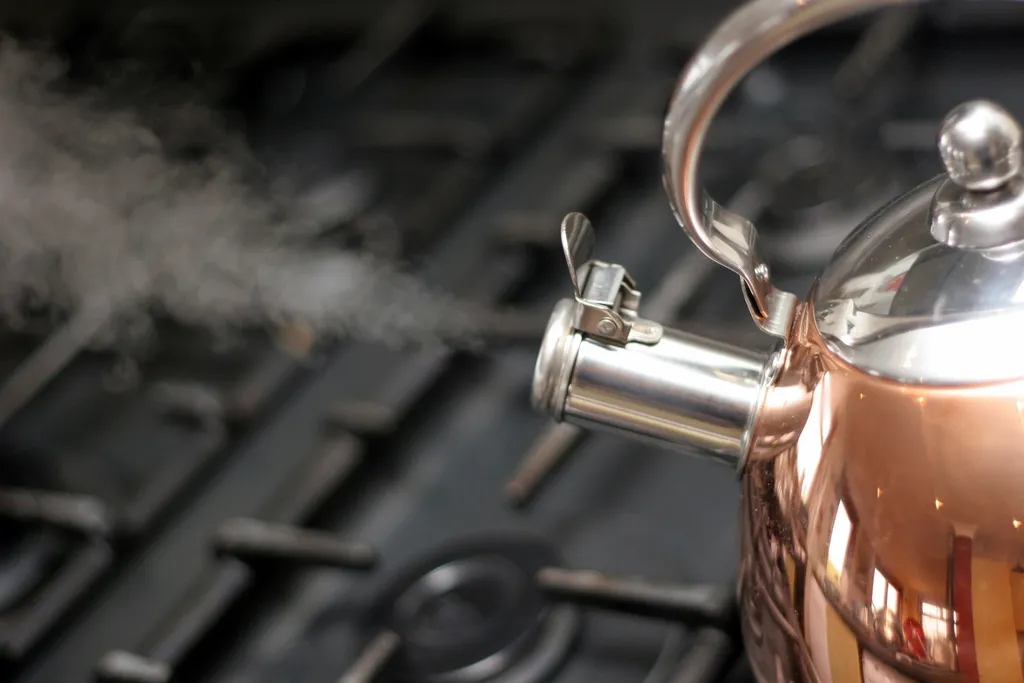
Limescale is the hard, off-white, chalky deposit found in kettles, hot-water boilers, and similar appliances. It is also often found as a similar deposit on the inner surface of old pipes and other surfaces where hard water has evaporated.
Limescale is either white or brownish in colour, the variation due to the presence of iron compounds. Pure calcium carbonate tends toward bright white. When trace amounts of iron or other minerals are present in the water supply, the deposit can take on a slightly yellowish or beige tone. The core chemistry, though, remains the same.
Does the Crust Harm Your Health?
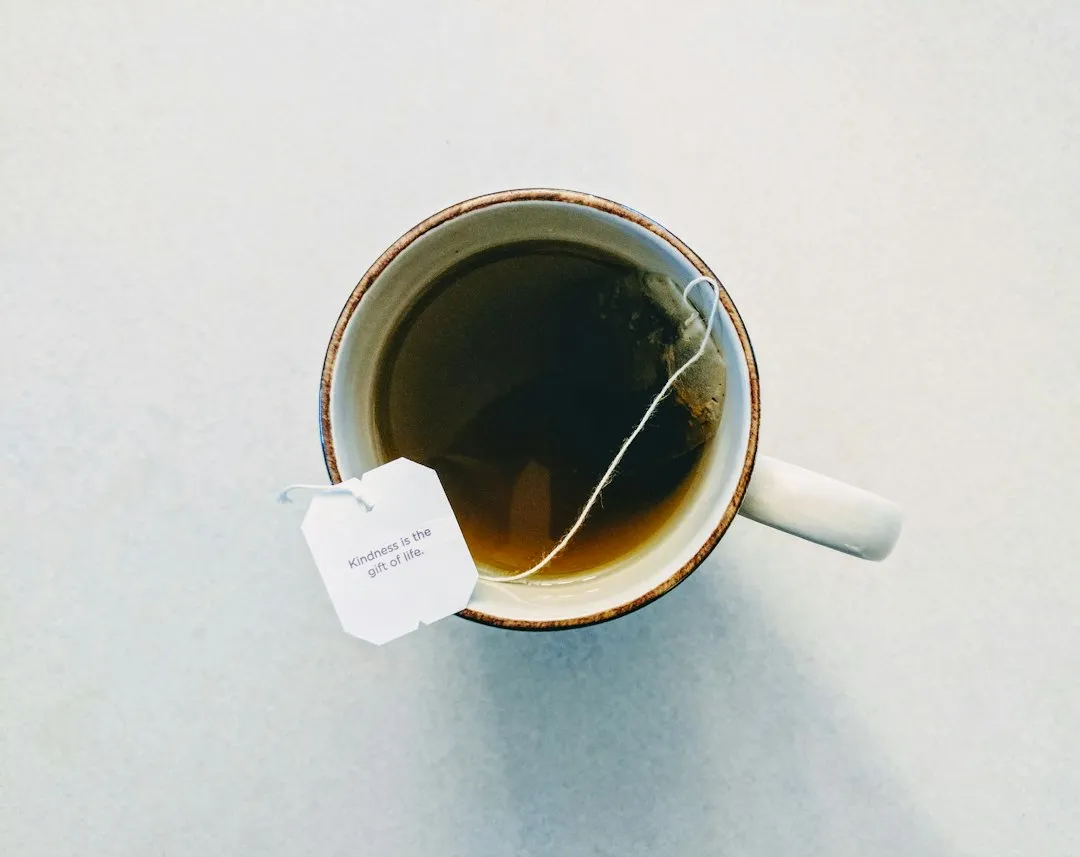
Limescale itself is not a health hazard. The World Health Organization has stated that hard water has no known adverse health effects. This is worth remembering, because the flakes floating in a cup of tea can look alarming if you’re not expecting them.
Mineral flakes from scale are calcium carbonate with traces of magnesium compounds. Research links water hardness to maintenance hassles, not sickness. Reviews and agency notes report no known adverse health effect from hardness itself, and some studies link calcium and magnesium in drinking water with modest gains for bone and heart markers. The concern, in other words, is for the kettle, not the person drinking the tea.
What It Does to Your Kettle and Energy Bills

In kettles, limescale acts as an insulator, impairing heat transfer. It can also damage the heating element, which overheats due to accruing limescale. Think of it as wrapping the heating element in a thermal blanket it doesn’t need.
Limescale buildup can reduce efficiency by up to 35 percent, making regular descaling, every 2 to 8 weeks depending on water hardness, crucial for maintaining optimal energy consumption. Light buildup of 1 to 2 millimetres causes roughly an 8 percent efficiency loss, moderate buildup of 3 to 4 millimetres causes around 18 percent, and heavy buildup of 5 millimetres or more causes a 35 percent efficiency loss. Those are real costs, compounding quietly every month.
New Research into Preventing Buildup
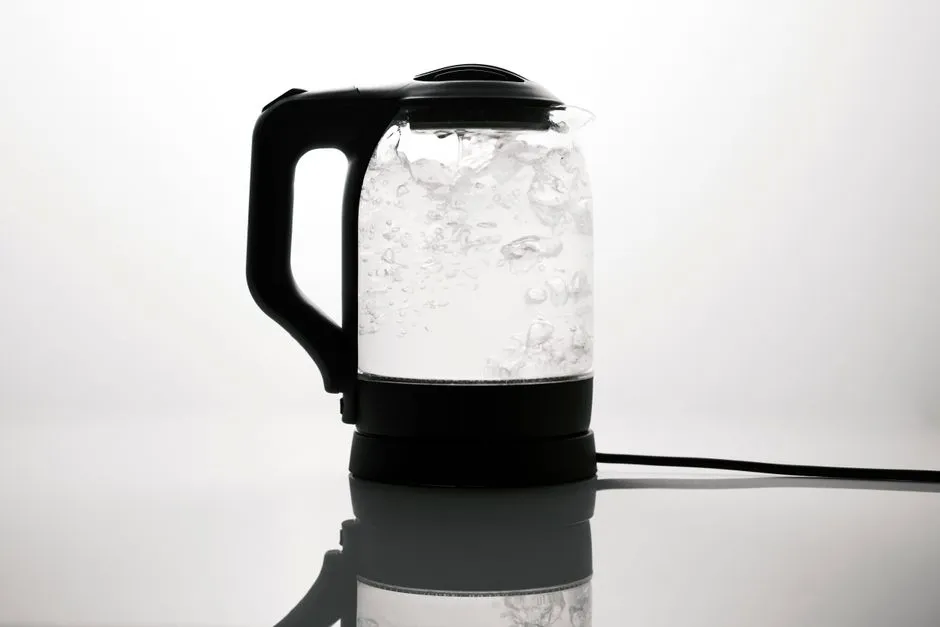
Wherever hot water flows, limescale is never far away. Hot water tanks, washing machines, and kettles all form limescale in areas where the water is hard. This is a nuisance in households and an expensive problem in thermal power stations, where limescale formation is known as fouling.
In kettles or boilers, innovative riblet-based coatings ensure that limescale crystals have less contact with the surface, meaning they cannot adhere and are easier to remove. While these coatings cannot fully prevent limescale crystals from forming, the constant passive removal of microscopic crystals stops them growing together to form a tenacious layer. Researchers emphasise that this solution is more eco-friendly and efficient than existing descaling approaches, some of which involve toxic and aggressive chemicals.
How to Tackle the Buildup at Home
Descaling is the process of removing mineral buildup, called limescale, from surfaces that regularly contact hard water. This buildup forms inside kettles, coffee makers, dishwashers, water heaters, pipes, and faucets over time.
Citric acid powder is considered the most effective household option for heavy limescale. White vinegar, which contains acetic acid, also dissolves limescale but less effectively than citric acid for heavy buildup. Leaving your kettle idle and full of water increases the likelihood of limescale buildup occurring, so emptying it between uses is a simple but meaningful habit. Water softeners, descaling agents, and filtration systems that reduce mineral content can all minimize buildup for those dealing with persistently hard water.
The Takeaway
The white crust in your kettle is one of those things that looks more worrying than it is. It’s not contamination, not corrosion, and not a reason to throw the appliance out. It’s just minerals, extracted from rock by rainfall, carried invisibly through the water supply, and deposited on a hot metal surface every time you make a cup of tea.
What it does tell you is something worth knowing: how hard your water is, and how much extra work your kettle is doing to push through that insulating layer. Keeping the element clean is a small task with a genuinely measurable payoff, both for the appliance and for the energy bill. The chemistry isn’t going to change. The maintenance routine, though, is entirely within your control.
AI Disclaimer: This article was created with the assistance of AI tools and reviewed by a human editor.