
A Campaign Built on a Decade of Research
The “Close Before You Doze” safety initiative is the result of over ten years of research by the UL Firefighter Safety Research Institute (UL FSRI). The goal was straightforward: find out whether something as ordinary as a bedroom door could genuinely change survival odds in a house fire. What researchers found surprised even seasoned fire professionals.
The UL FSRI conducted fire safety research over ten years and concluded that one important sleeping habit can delay the effects and danger in a fire. The researchers used thermal imaging cameras to analyze how fire spreads through rooms with open versus closed doors. The results were impossible to ignore.
The Temperature Difference Is Almost Unbelievable

Using thermal imaging cameras, researchers found that closed-door rooms on both floors during the fire’s spread had average temperatures of less than 100 degrees Fahrenheit, versus more than 1,000 degrees in open-door rooms. That is not a small margin. That is the difference between a survivable room and a fatal one.
The Fire Safety Research Institute found that a closed door can create a roughly 900-degree Fahrenheit temperature difference between the inside of a room and a fire blazing outside. If hallway flames reach 1,000 degrees Fahrenheit, a closed door can keep a bedroom around 100 degrees Fahrenheit. While still hot, that is a survivable temperature that allows someone to get out of bed and escape through a window.
Carbon Monoxide Levels Tell an Even Grimmer Story
Gas concentrations were markedly different between rooms. The open-door bedroom measured an extremely toxic 10,000 parts per million of carbon monoxide, while the closed-door room had approximately 100 parts per million. Carbon monoxide is colorless and odorless. By the time you feel it, it may already be too late to act.
In closed-door rooms, oxygen levels remained at a breathable 18 percent, while open-door rooms dropped to 8 percent, which is extremely low. At oxygen levels that low, a person loses the ability to think clearly or move effectively. The door, it turns out, is quietly doing a lot of work.
The Difference Between Surviving and Not
In experiments done by FSRI, a victim in the closed bedroom was survivable and able to function well through every experiment and well after fire department arrival. In the open bedroom, potential victims would be unconscious if not deceased prior to fire department arrival or as a result of fire ventilation actions.
Not only does the closed door act as a shield from the flames, it also protects people from smoke and carbon monoxide for a much longer period of time. That extended window of time is what allows a smoke alarm to wake you, allows you to gather your senses, and allows you to find a way out.
Modern Homes Burn Faster Than Ever
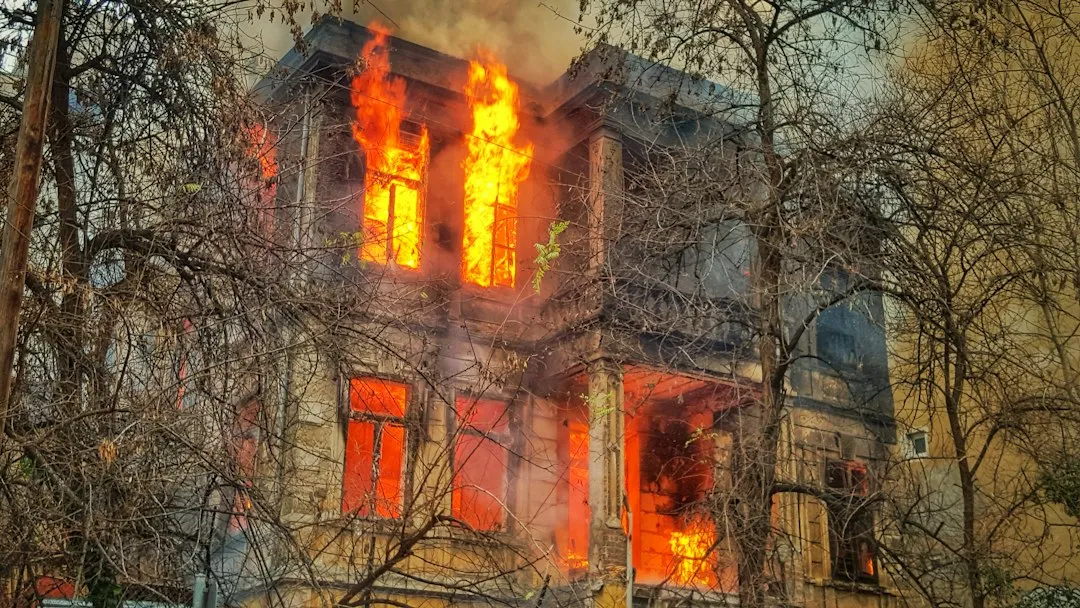
According to the research institute, closing doors before bed is now “more important than ever.” Fires spread faster in today’s homes than they did in the past, UL FSRI has found. Lightweight construction materials, synthetic furnishings, and open floor plans all contribute to this acceleration.
Modern homes burn faster than ever, giving occupants three minutes or less to escape once the smoke alarm sounds, according to the NFPA. Due to changes in building materials and an increase in flammable household items, the time to escape a residential fire can be as low as one to two minutes. A closed bedroom door effectively buys back some of that lost time.
Nighttime Is When Fires Kill Most Often
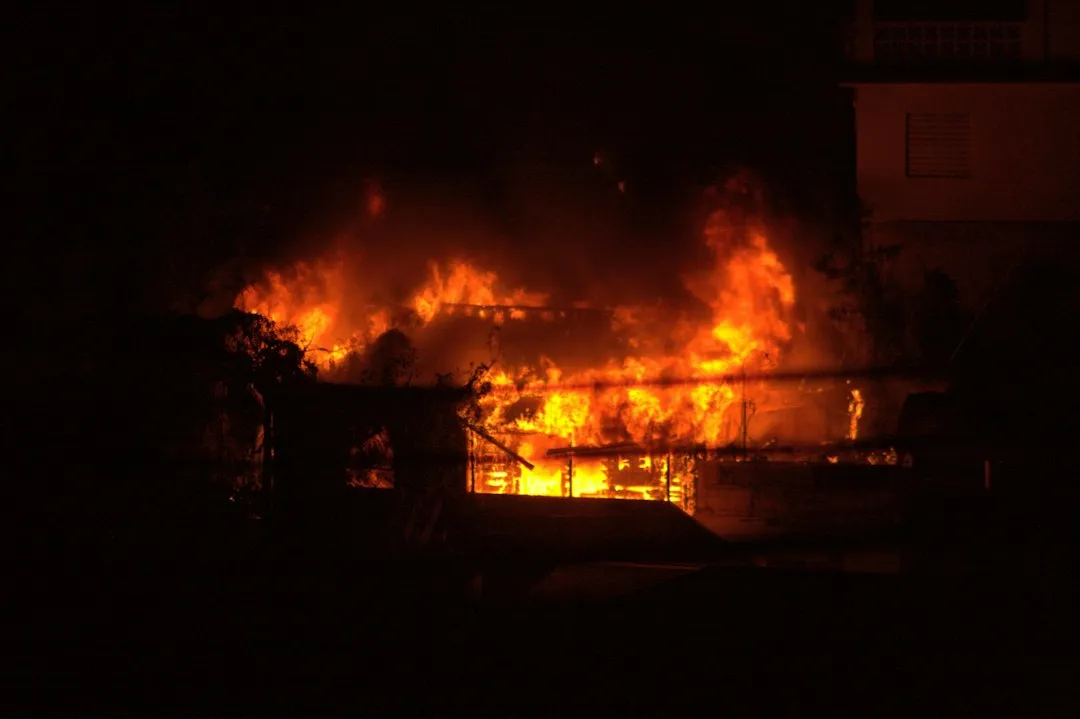
According to the U.S. Fire Administration, roughly half of all residential fires occur between 11 p.m. and 7 a.m., when most residents are asleep. People are simply less able to respond when unconscious, and fires take advantage of that vulnerability.
Nighttime fires are far more deadly, accounting for roughly four in ten home fire deaths, according to the NFPA. This high rate is largely because many people are asleep during these hours and may not notice a fire until it is already out of control. Even if a smoke detector jolts them awake, it won’t stop the spread of fire or smoke. A closed door, however, can.
Most People Still Sleep With the Door Open
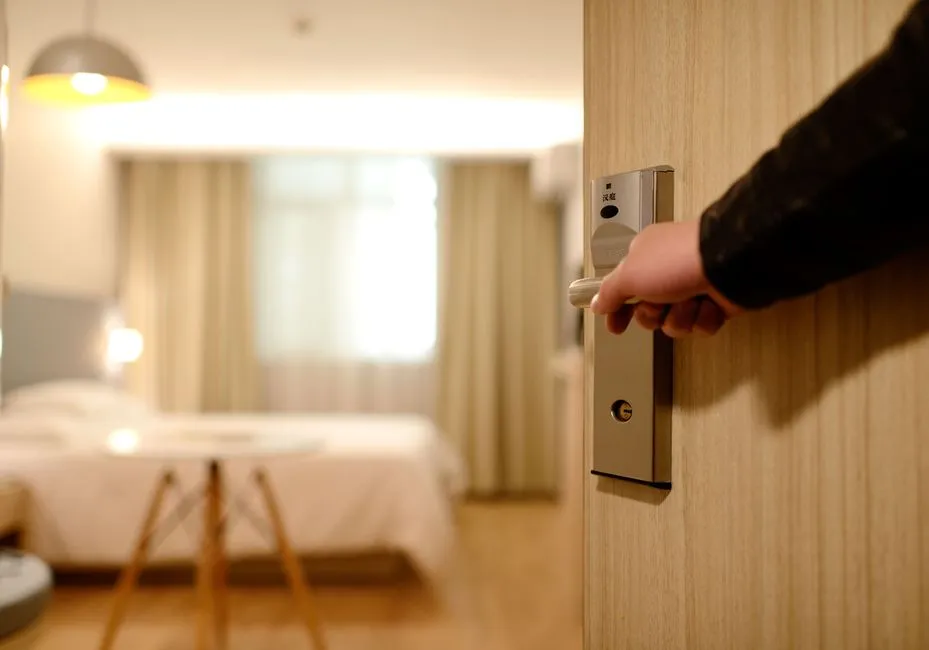
In a UL FSRI consumer survey of 3,204 adults across the United States, less than half of respondents believed it was safer to have their bedroom door closed in the event of a fire, and only 29 percent always sleep with their door closed. The gap between awareness and behavior is striking.
Roughly one third of Americans mistakenly believe it is safer to have their bedroom door open in the event of a fire, and roughly four in ten believe rooms with open doors are more breathable in a fire. Both assumptions are wrong, and the research is unambiguous on this point. The feeling of accessibility an open door provides is an illusion when flames are spreading through a hallway at over 1,000 degrees.
Smoke Alarms Alone Are Not Enough
According to the U.S. Fire Administration, home fires caused over 2,000 deaths in 2024 alone. About 60 percent of home fire deaths occur in homes with no smoke alarms or non-working smoke alarms, according to 2024 NFPA data. Alarms are essential, but they are not the whole picture.
If a fire starts inside a bedroom while the door is closed, the smoke may remain trapped in the room and never reach a smoke alarm located outside. In that case, the alarm may not sound in time to wake the occupant. This is why fire safety experts consistently recommend placing working smoke alarms both inside and outside every sleeping area, in addition to keeping the door shut.
Closing Interior Doors Throughout the Home Helps Too
The goal, according to fire safety professionals, is for every family to close all of their doors, including bedrooms, bathrooms, and basement doors, at night in order to starve any potential fire of the oxygen it requires to grow. It is not just the bedroom door that matters. Every closed door is a barrier.
Closing a door prevents fire, heat, and smoke from spreading to a closed room and gives the person inside a few seconds to call for help or look for another exit. Even if the bedroom door is not a fire-rated one, it can slow down the process of fire, heat, and smoke transfer. Even a hollow-core interior door provides meaningful resistance in those critical early minutes.
What to Do If You Are Trapped
In the event of a fire, the priority is always to get out and stay out. However, if that is not an option, sleeping with doors closed will give occupants much more time to escape or wait for help. Firefighters train specifically for scenarios where people shelter behind closed doors. It is a recognized survival strategy, not a last resort.
By keeping a bedroom door closed, occupants create a protective barrier that slows fire progression, allowing more time for smoke alarms to wake them and for a safe escape route to be planned. If a window is available, signaling to firefighters from behind a closed door is far safer than attempting to run through a smoke-filled hallway.
The Takeaway

This is one of the rare cases where the safest habit is also one of the easiest. Closing a bedroom door before sleep requires nothing more than a moment and costs nothing at all. The research from UL FSRI, backed by more than a decade of controlled testing, is consistent and clear: the door matters enormously.
The FSRI strongly recommends sleeping with a bedroom door closed for added protection, as part of an overall bedroom fire safety plan. Pair that with working smoke alarms in and outside every sleeping area, a practiced escape plan, and the knowledge of what to do if escape is not immediately possible. The door is not a substitute for preparation. It is part of it.
AI Disclaimer: This article was created with the assistance of AI tools and reviewed by a human editor.