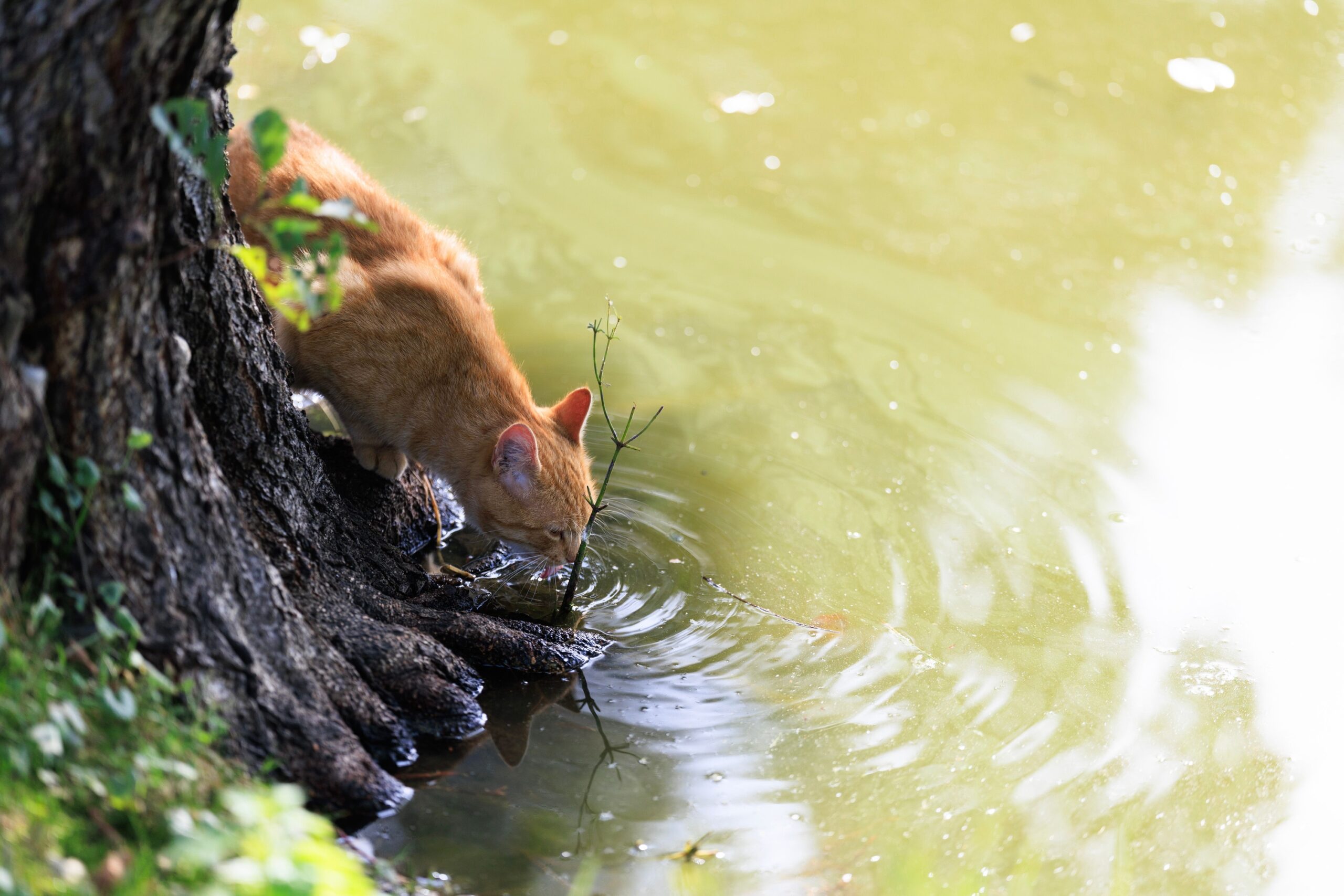

Most cat owners set up a tidy feeding station: food bowl on the left, water bowl on the right, side by side. It looks logical and convenient. Cats, apparently, did not get the memo.
The reason cats often reject water placed next to their food goes deeper than fussy behavior. It connects to millions of years of survival instinct, desert ancestry, and a sensory system finely tuned to detect contamination. Understanding it properly can make a real difference to your cat’s health.
It Starts With the African Wildcat
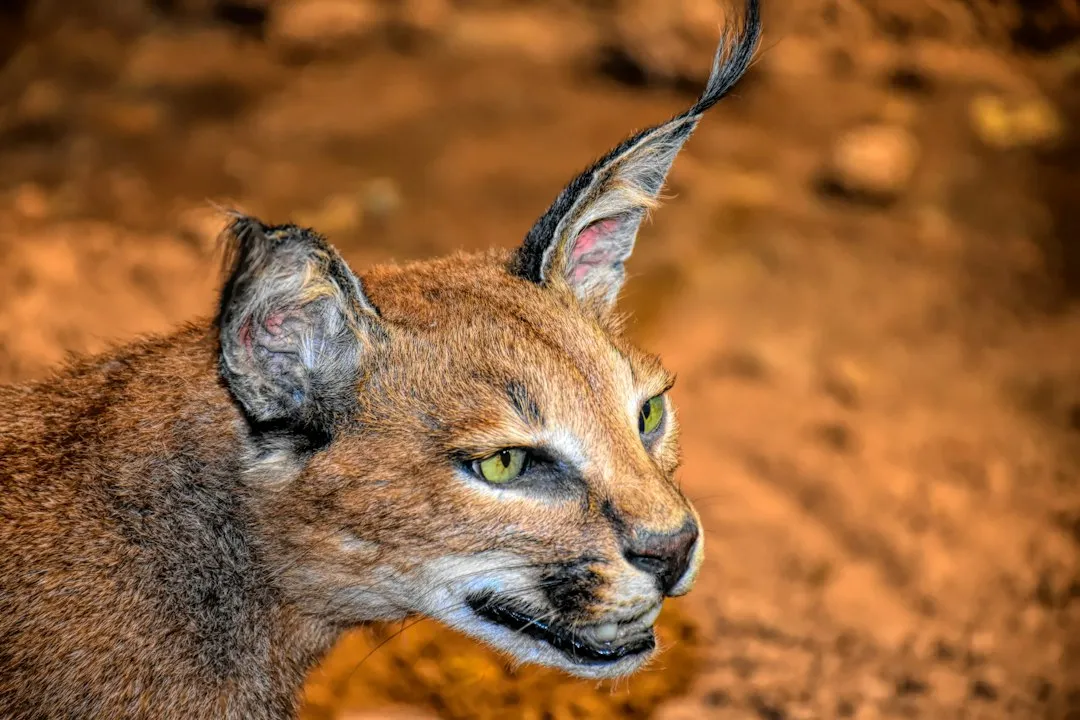
Domestic cats descended from Near Eastern wildcats, known as Felis lybica, desert-dwelling hunters that evolved to get almost all their moisture from their prey. Those ancestors lived in landscapes where clean, still water was rare and often dangerous near a carcass. The instinct to separate water sources from prey sites became deeply ingrained in feline behavior over time.
Domestic cats have a low thirst drive, a trait that stems from their evolutionary origins in desert environments where readily available water sources were scarce. This biology has persisted into the living room, even when a fresh bowl of water sits just a foot away from the food dish.
The Dead Prey Contamination Theory
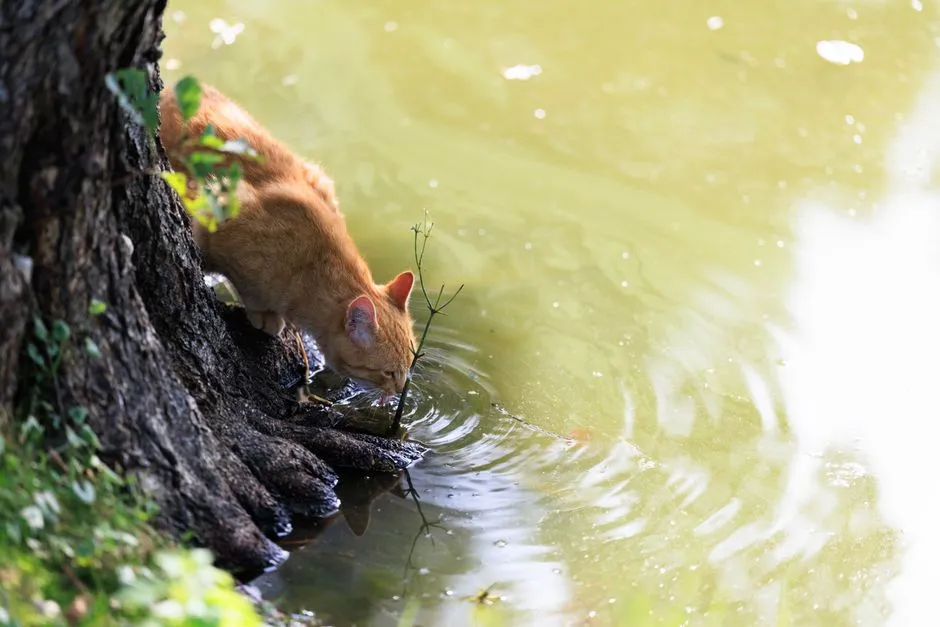
In the wild, mixing food and water often results in bacterial growth and illness. A carcass sitting near a watering hole would contaminate that source quickly. Wild cats instinctively avoided drinking from anywhere close to their kill, protecting themselves from waterborne bacteria and parasites.
Evolutionary biology dictates that cats avoid drinking water near their food sources to prevent potential bacterial contamination from carcasses in the wild. Even inside a modern home, that ancient alarm system still fires. The domestic cat’s brain essentially reads the smell of food near water as a warning sign.
Scent Is the Key Trigger
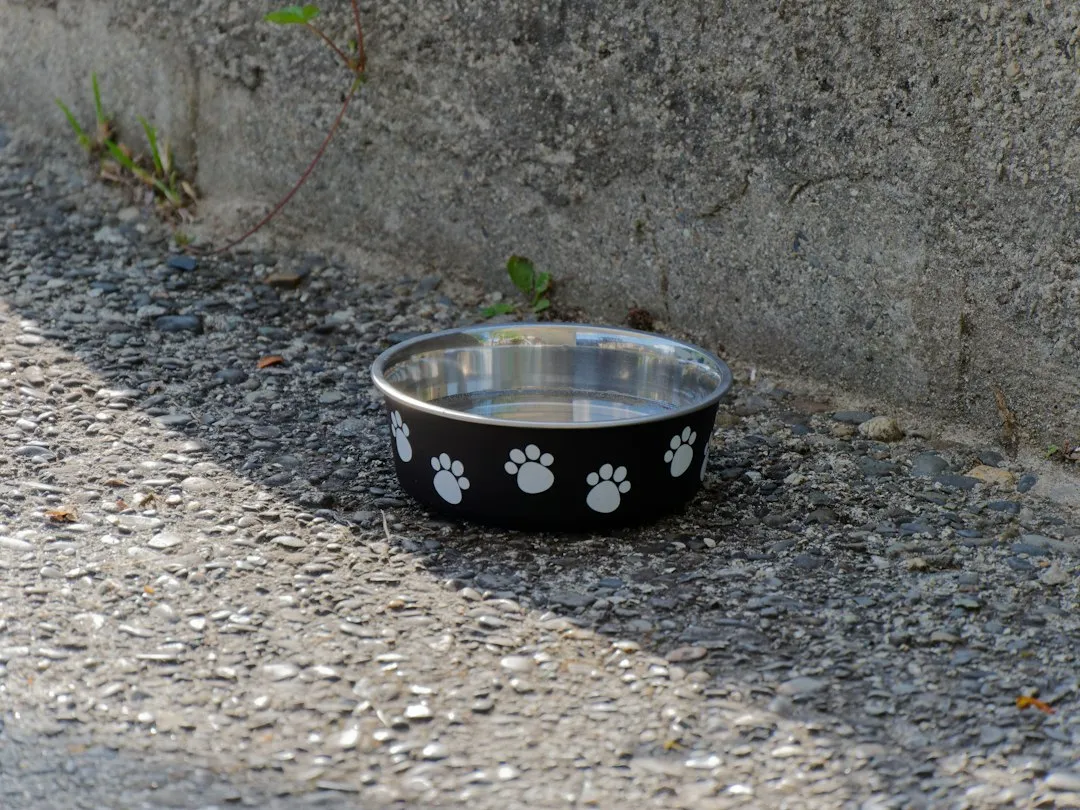
When kibble or wet food sits right next to a water bowl, your cat’s brain flags that water source as potentially unsafe. The strong scent of meat from the food bowl can overpower the clean smell of the water, triggering their natural defense mechanism to avoid drinking.
Cats are very sensitive to smell, and they tend to snub their water if they smell food near it. This is not selective stubbornness. It is a sensory response that evolved as a genuine survival tool, and it remains just as active in a well-fed indoor cat as it was in a desert hunter.
Physical Contamination Is a Real Problem Too
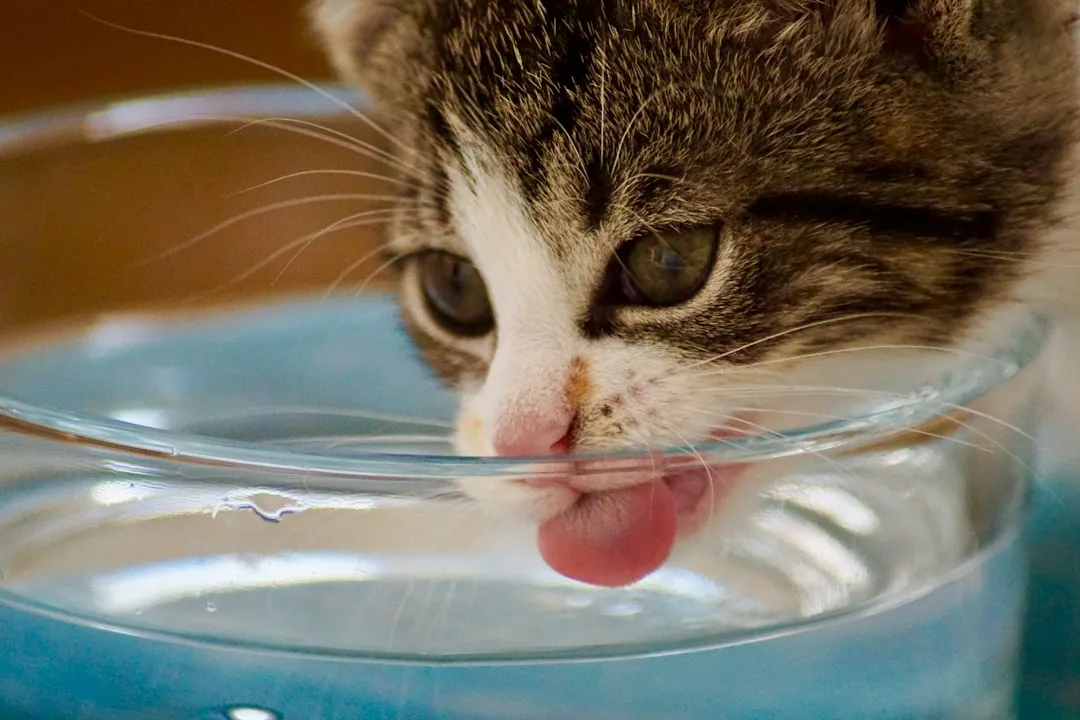
When cats eat, small pieces of kibble, wet food residue, or saliva can easily splash into a neighboring water bowl. Once the water smells like decaying food or has an oily film on the surface, your cat will likely reject it entirely and seek out alternative water sources, such as leaking faucets, puddles, or even the toilet bowl.
A key reason to place cat water bowls away from food is to prevent food particles from contaminating the water. If bowls are placed side by side, when cats eat, food particles can easily fall into the water bowl. Cats are unlikely to drink from water that has food floating in it.
The Low Thirst Drive Makes Placement Even More Critical
Domestic cats may not exhibit signs of thirst until experiencing up to four percent dehydration. That is a significant shortfall before any warning signal even registers in a cat’s brain. When you combine that naturally suppressed thirst drive with a water bowl that the cat is instinctively reluctant to approach, the result can be a cat that rarely drinks enough.
Cats evolved from desert-dwelling ancestors and naturally have a low thirst drive compared to dogs. As a result, many cats consume less water than they actually require. Bowl placement is one of the few adjustments an owner can make at zero cost that directly influences how much a cat drinks each day.
How Far Apart Should the Bowls Actually Be?
A cat’s water bowl should be placed three to five feet away from its food bowl. Keeping the water dish about three to five feet away from its food will help the cat feel like it is exercising a good amount of caution.
Placing the water bowl five feet away from the food dish provides enough distance to prevent scent contamination while remaining convenient for the cat. The goal is not to send your cat on a cross-apartment expedition for a drink, but to give the water station its own clear, uncontaminated identity.
Cats Seek Safe Drinking Spots, Not Just Clean Water
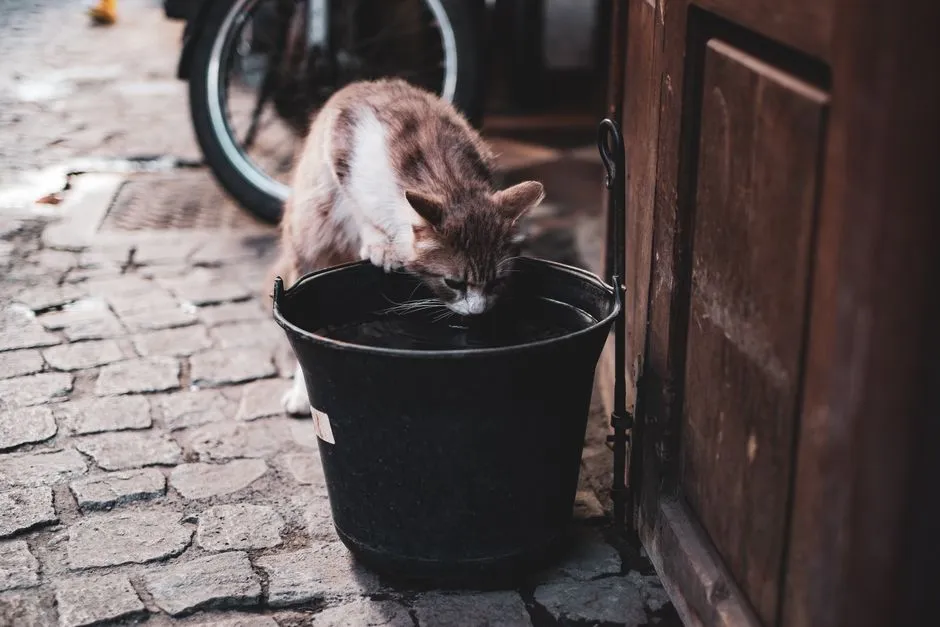
Cats feel vulnerable while drinking and prefer locations where they have a clear line of sight and an escape route. This means that the ideal water placement is not just far from food but also in a quieter, more open area where the cat does not feel cornered. Near a wall with a good sightline to the room tends to work well.
Instinctually, cats are watchful of their surroundings especially when they eat, to detect rivals or predators. Drinking requires the same alertness. A cat that feels exposed or crowded at the water bowl will simply drink less, regardless of how fresh the water is.
What the Research Says About Daily Water Intake
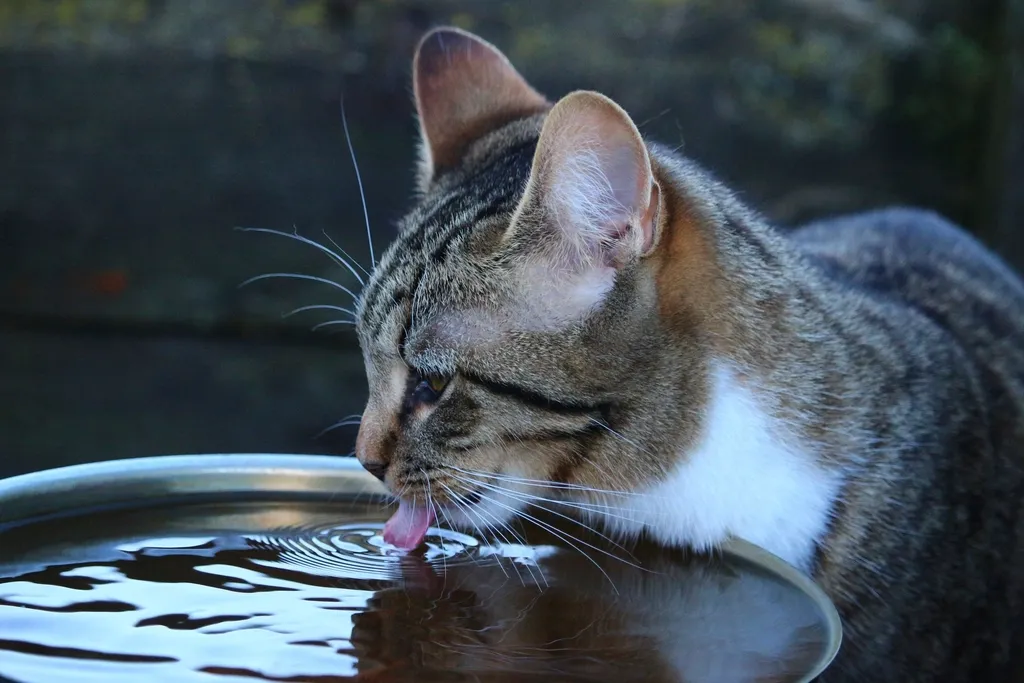
Healthy cats consume roughly 23 to 51 milliliters per kilogram of body weight daily, though cats at high risk of feline lower urinary disease may benefit from consuming 42 to 51 milliliters per kilogram of body weight daily. That range matters because falling short, even slightly and consistently, creates cumulative strain on the kidneys over months and years.
The Cornell Feline Health Center notes that the average ten-pound cat needs roughly one cup of water per day, with cats on wet food meeting a significant portion of that through food moisture, which underscores that diet and bowl type together determine total intake, not bowl type alone. Separation of food and water stations is one piece of a larger hydration picture.
The Health Stakes: Kidneys and Urinary Tract
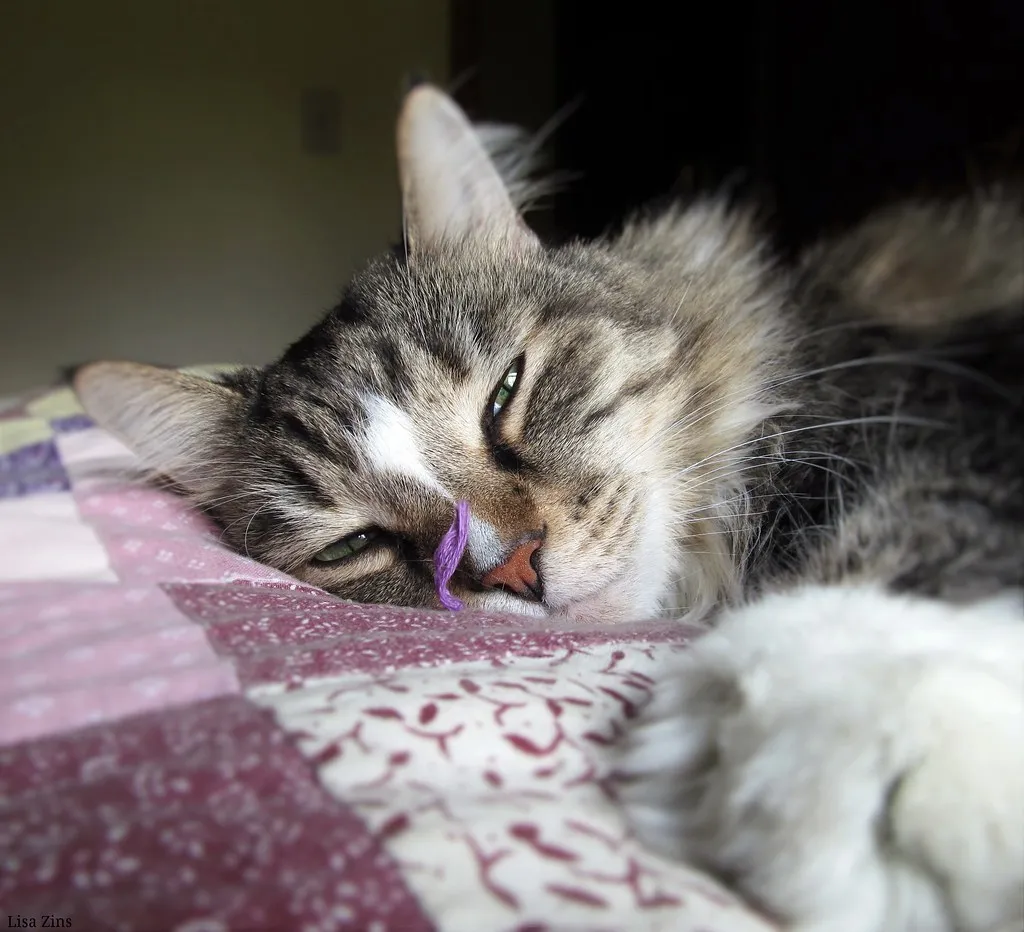
It is estimated that between twenty and thirty percent of cats will suffer from chronic kidney disease, with dehydration being a significant risk factor for its development. That is a sobering number, especially when the contributing causes include something as fixable as where you place a water bowl.
By the time a cat shows clinical signs of kidney disease, like excessive thirst or weight loss, the animal may have already lost between sixty-six and seventy-five percent of its kidney function. Prevention, in this case, genuinely starts with the small daily habits that encourage a cat to drink more freely and more often.
Fountains, Multiple Stations, and Practical Fixes
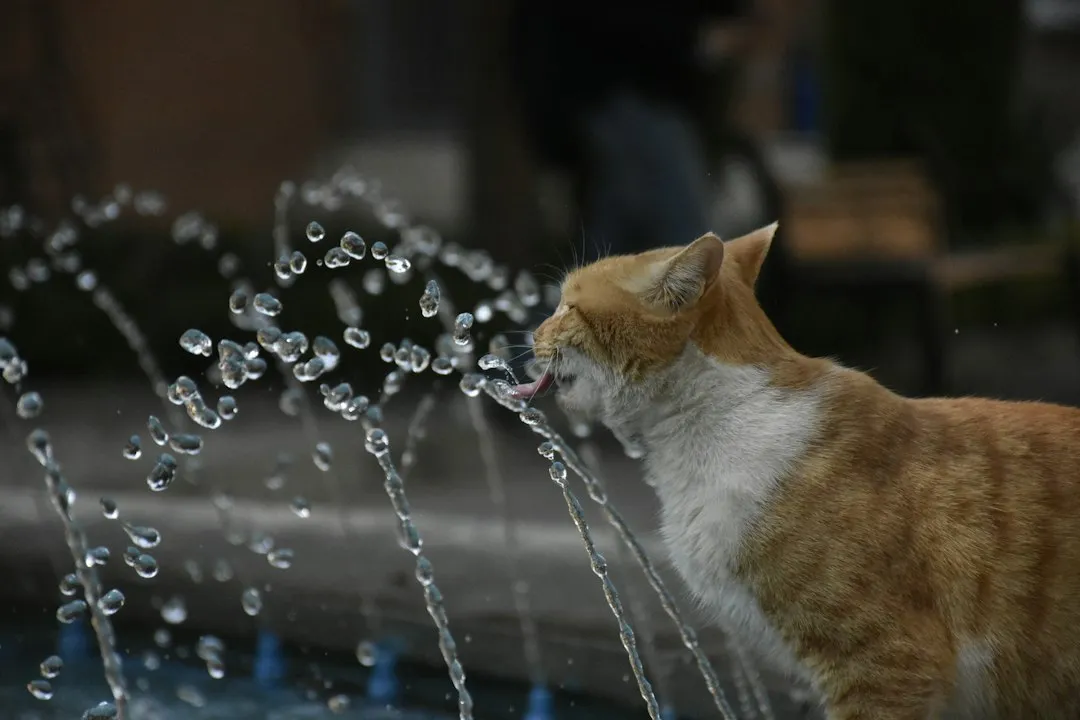
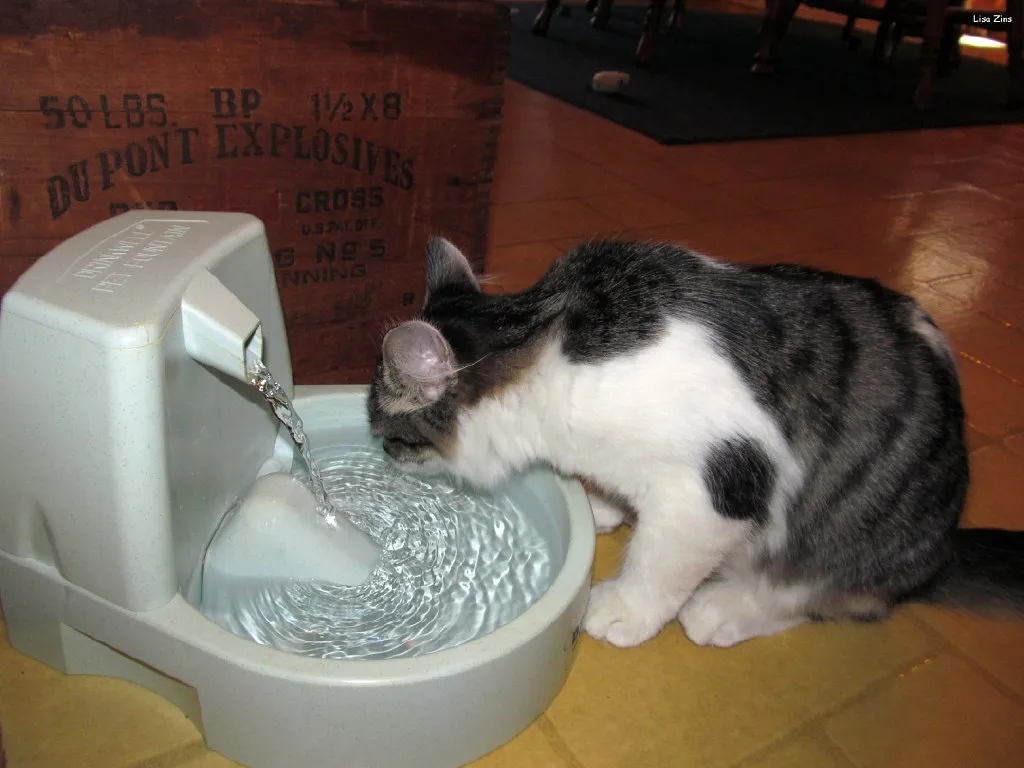
Cats show a slightly higher tolerance for running water sources, such as fountains, placed closer to food than stagnant bowls. That said, the evidence on whether fountains dramatically increase overall water intake is mixed. The evidence does not support the claim that fountains reliably increase water intake or produce measurable urine dilution in healthy cats.
Keeping cat food and water bowls in different locations reduces the chances of contamination and improves cleanliness, encouraging cats to drink more fresh water. If your cat’s food and water bowls are next to each other, move the water bowl to a different corner of the same room or to a nearby room. Multiple water stations placed around the home tend to give shy or multi-cat households the best results, since it removes the social pressure of sharing a single spot.
A Small Change With Lasting Impact
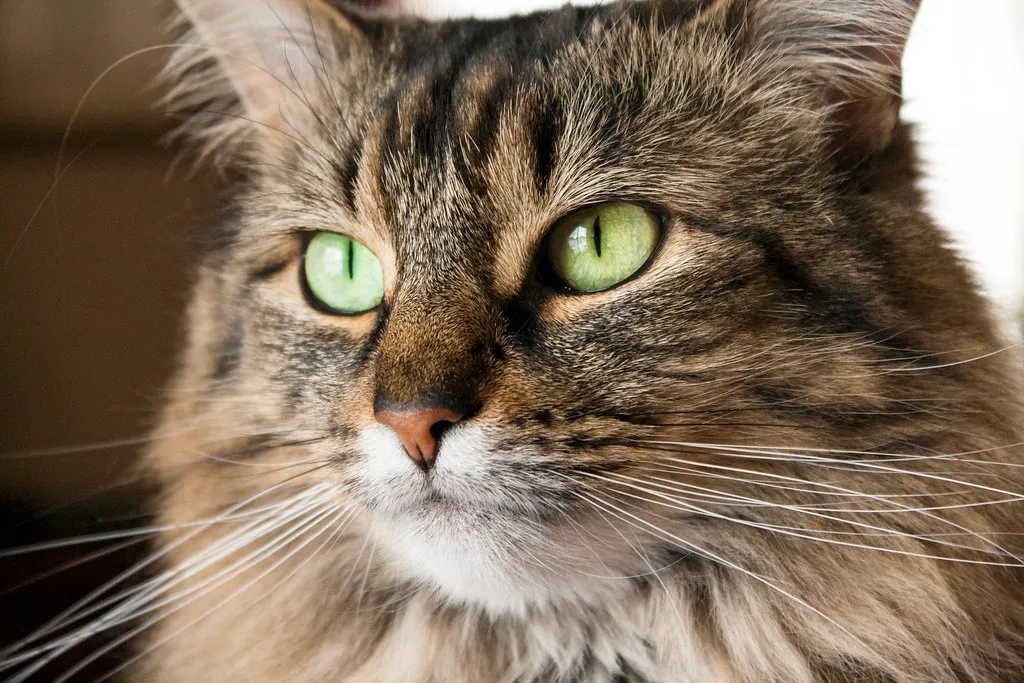
The gap between a cat that drinks well and one that chronically under-hydrates often comes down to a few feet of floor space. The behavior itself is ancient and consistent, documented across ethological research on Felis lybica descendants and confirmed daily by veterinarians who observe the difference in cats whose owners have made the switch.
Moving the water bowl is one of the simplest, lowest-effort adjustments in cat care. It costs nothing, requires no special equipment, and aligns directly with how the cat’s brain is wired to perceive safety and cleanliness. By placing cat water bowls away from their food, cats will likely drink more water. Over a lifetime, that steady improvement in hydration may be one of the most protective things an owner quietly does for their cat without ever realizing it.
AI Disclaimer: This article was created with the assistance of AI tools and reviewed by a human editor.