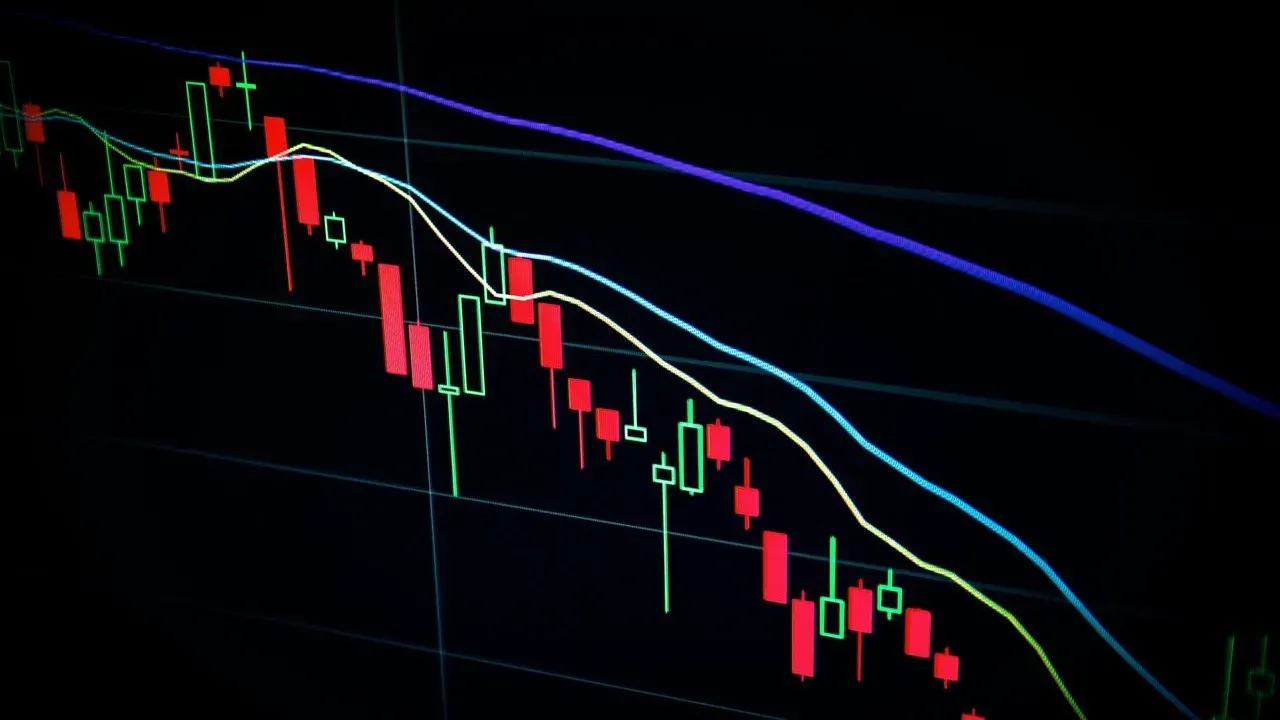

New York – Stocks tied to the expansion of artificial intelligence data centers led a broad selloff on Wall Street on Thursday, erasing the prior session’s gains and pushing major indexes sharply lower. The S&P 500 fell 3.9 percent, its steepest decline since April 2025 when tariff announcements rattled global markets. ([1])The move left the Nasdaq composite more than 10 percent below its October peak, a threshold that qualifies as a correction for many professional investors.
Extent of Thursday’s Losses
The Dow Jones Industrial Average traded down 1,656 points, or 3.1 percent, by midafternoon. Every sector within the S&P 500 posted declines, underscoring the breadth of the retreat. The Nasdaq composite slid 5.2 percent, reflecting heavier exposure to technology names that have driven recent market gains. A handful of companies posted notable advances that failed to offset the wider losses. AppLovin surged 28.5 percent after reporting stronger-than-expected revenue and profit, while Tapestry climbed 6.5 percent on better earnings and raised guidance. Those moves remained isolated amid the broader pressure.
Focus on AI-Related Companies
Shares of companies most directly linked to AI infrastructure bore the brunt of the selling. Nvidia declined 8.7 percent, extending a 3.2 percent drop from the previous day and exerting outsized influence on the S&P 500 because of its large weighting. Advanced Micro Devices fell 15.5 percent, while CoreWeave, which provides cloud access to AI chips, dropped 12.5 percent. GE Vernova, involved in powering data centers, sank 7.7 percent. These moves followed months of volatility tied to concerns over the high cost of borrowing for further data-center construction. Tuesday’s midterm election results added to the uncertainty, with Democratic gains raising the prospect of regulatory pauses on new facilities that could reduce demand for chips, electricity and related services.
Other Market and Economic Developments
In commodity markets, Brent crude oil rebounded 3.6 percent to $98.03 a barrel after an earlier drop. Treasury yields eased, with the 10-year note falling to 4.83 percent from 4.90 percent the day before, a shift some observers linked to investors seeking safer assets. Separate economic data showed fewer new unemployment claims and stronger-than-expected productivity growth during the summer, both viewed as supportive for the economy. Overseas, South Korea’s Kospi index tumbled 5.3 percent while Japan’s Nikkei 225 declined 1.8 percent. European markets were mixed, with London’s FTSE 100 edging down 0.4 percent after the Bank of England raised its main interest rate for the first time in three years.
Policy and Global Context
Bank of England Governor Andrew Bailey noted that future rate decisions would depend heavily on developments in the Middle East conflict and its effect on energy prices. “We’ve seen encouraging news in the past 48 hours,” he said. “The best thing that can happen is to resolve the conflict in the Middle East; there’s no question about it.” Stock prices ultimately track corporate profits and interest-rate trends more closely than short-term political shifts, analysts have long observed. The day’s moves illustrated how quickly sentiment can shift when growth expectations for a high-profile sector come under pressure.
AI Disclaimer: This article was created with the assistance of AI tools and reviewed by a human editor.