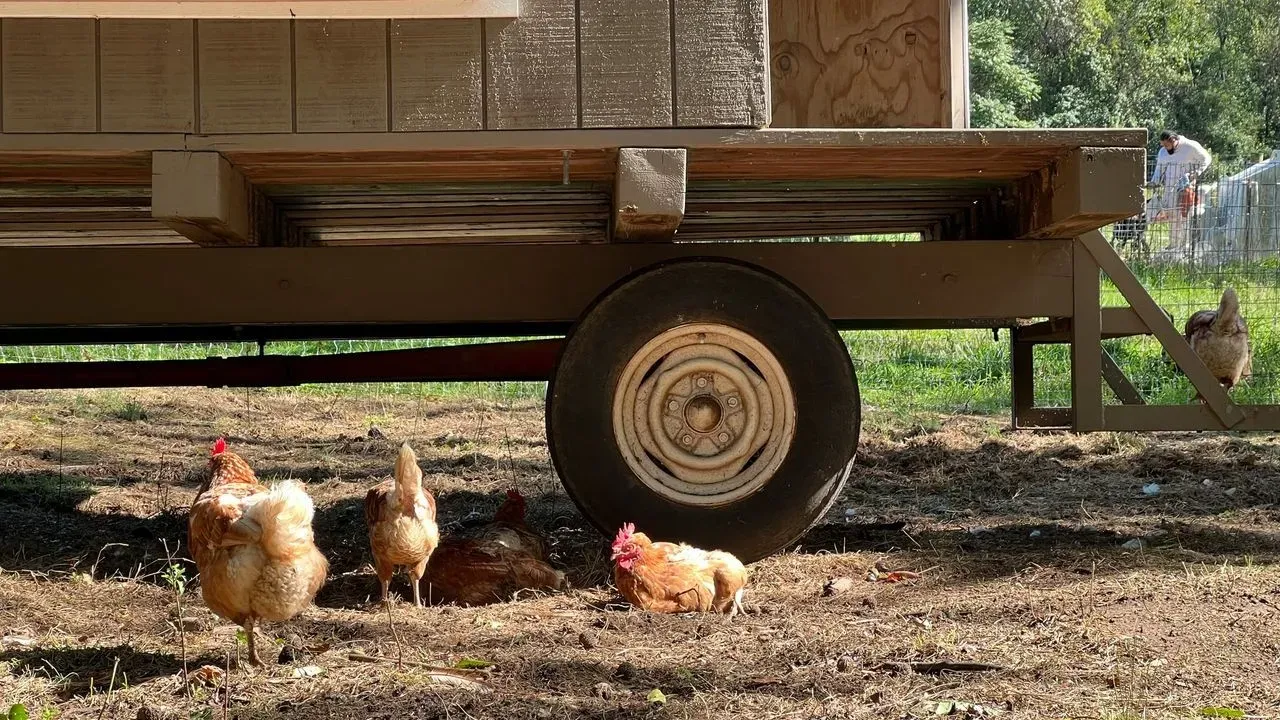

Small chicken keepers with limited space often face challenges when it comes to managing a backyard flock. Movable chicken coops on wheels provide a practical answer by allowing the structure to shift position as needed. These designs stand out for their mobility and straightforward maintenance, helping owners keep their setups clean without major disruption. The approach draws from a range of DIY plans that emphasize functionality for compact yards. ([1])
Addressing Space Constraints in Urban and Suburban Yards
Many people who raise chickens in smaller properties struggle with fixed coops that take up permanent ground and limit flexibility. A wheeled version changes that dynamic by letting keepers reposition the coop to fresh grass or away from problem areas. This mobility supports better rotation of the flock’s access to the yard while keeping the overall footprint modest. Owners report that the ability to move the structure reduces the need for extensive daily cleaning in one spot. The concept fits well for those who want fresh eggs without dedicating large sections of their property. By rolling the coop to different locations, keepers can manage waste distribution more evenly across the available land. Such designs also make seasonal adjustments simpler, such as shifting the coop for better sun exposure or shelter during changing weather.
Practical Benefits of Mobility and Maintenance
Ease of cleaning ranks among the top reasons these coops appeal to small-scale keepers. Wheels allow the entire unit to be pulled aside for quick access underneath or around the base, cutting down on the time spent scrubbing or raking. This feature proves especially useful in tight spaces where maneuvering heavy equipment would otherwise be difficult. Beyond cleaning, the movable aspect supports ongoing flock health by preventing overgrazing or buildup in any single area. Keepers can relocate the coop regularly to give grass time to recover. The result is a more balanced system that aligns with the realities of limited outdoor room.
DIY Approaches Tailored to Individual Needs
A variety of plans exist for those interested in building their own wheeled coop. These options range from basic frames on casters to more refined versions with integrated nesting boxes and ventilation. Builders often start with standard lumber and hardware store wheels suited to the coop’s weight and terrain. Customization plays a key role, as each plan can be adjusted for the specific size of the flock and the layout of the yard. Some designs incorporate lightweight materials to make rolling easier by hand, while others focus on durability for frequent moves. The shared thread across these projects remains the emphasis on accessibility for everyday use in smaller settings.
Getting Started with a Movable Setup
Those new to the idea can begin by assessing their available space and typical flock size before selecting a plan. Simple wheeled bases often serve as the foundation, with the rest of the structure built around them. Testing the mobility on the actual yard surface helps confirm the design works in practice. Over time, many keepers refine their coops based on daily routines and seasonal demands. The core advantage stays consistent: a setup that moves when needed and stays manageable in confined areas. This approach continues to attract interest among backyard poultry enthusiasts seeking straightforward solutions.
AI Disclaimer: This article was created with the assistance of AI tools and reviewed by a human editor.