

Your Table Reveals How Often You Really Connect

How regularly a family sits down together is one of the most studied indicators of household cohesion. A Harvard study found that roughly four in five teenagers say family dinner is the time they are most likely to have a real conversation with their parents. That is a remarkable admission from an age group that often appears unreachable.
The Survey Center on American Life reports that only about 38 percent of Gen Z adults say they ate regularly with family at the dinner table growing up, compared with nearly three quarters of Americans aged 50 and older who report having had regular family dinners. The gap between generations is stark and worth sitting with.
Dinner is often the most consistent and predictable shared meal for families with school-aged adolescents and has remained stable across decades of national data. So frequency at the table is not trivial. It is a window into how much deliberate time a family actually carves out for each other.
It Reflects Your Family’s Relationship With Screens

A recent study in the United States explored how family meals are changing, and found that when devices interrupt family communication at the table, children lose out on guidance and attention that are important for their development. The concern is not theoretical. It plays out at millions of tables every night.
Technoference, the interruption of family interaction by digital devices, is becoming a growing concern as screens show up more and more often during shared meals. Technology has become a regular guest at the dinner table, with most parents and children using some kind of device during their most recent family meal.
Recent research conducted in the UK found that nearly half of children regularly use phones or tablets at the dinner table, and 37 percent of parents reported struggling to engage with their children during mealtimes. The benefits of sharing meals as a family can diminish significantly when screens such as phones, televisions, or tablets are present.
It Shows Whether Your Kids Are Likely to Thrive Academically

The intellectual benefits of regular family dinners carry over directly into academic achievement. Researchers have discovered that how well children do in school is determined more by how often they participate in family dinners than by whether they do their homework consistently. That finding surprises most parents when they first hear it.
Numerous factors affect students’ academic performance, but eating together as a family helps reinforce many of the variables thought to influence student success. More nutritious meals play a role in stronger cognitive function, and multiple researchers have found that children in families that eat together regularly tend to have a stronger vocabulary and higher grades.
Research has found that frequent shared family meals are associated with children’s academic success. The table, in this sense, functions as an informal classroom without anyone intending it to be one.
It Tells You About Your Family’s Mental Health

Family meals have long been associated with improving mental health, including reducing symptoms of depression, decreasing violent behavior, and lessening thoughts of suicide among youth. Increasing the frequency of family meals is also associated with boosting prosocial behavior and life satisfaction among adolescents.
One study found that frequent family meals were associated with better family relationships, lower depression scores in kids, and higher overall well-being scores. Parents who enjoyed frequent family meals also reported feeling less stress, lower depressive symptoms, and higher self-esteem.
Families who eat dinner together more often report higher levels of family cohesion, and in turn, higher levels of family cohesion are associated with lower levels of depressive symptoms among young people. The connection between the table and emotional wellbeing runs in both directions, benefiting parents as much as children.
It Signals How You Feel About Food Itself
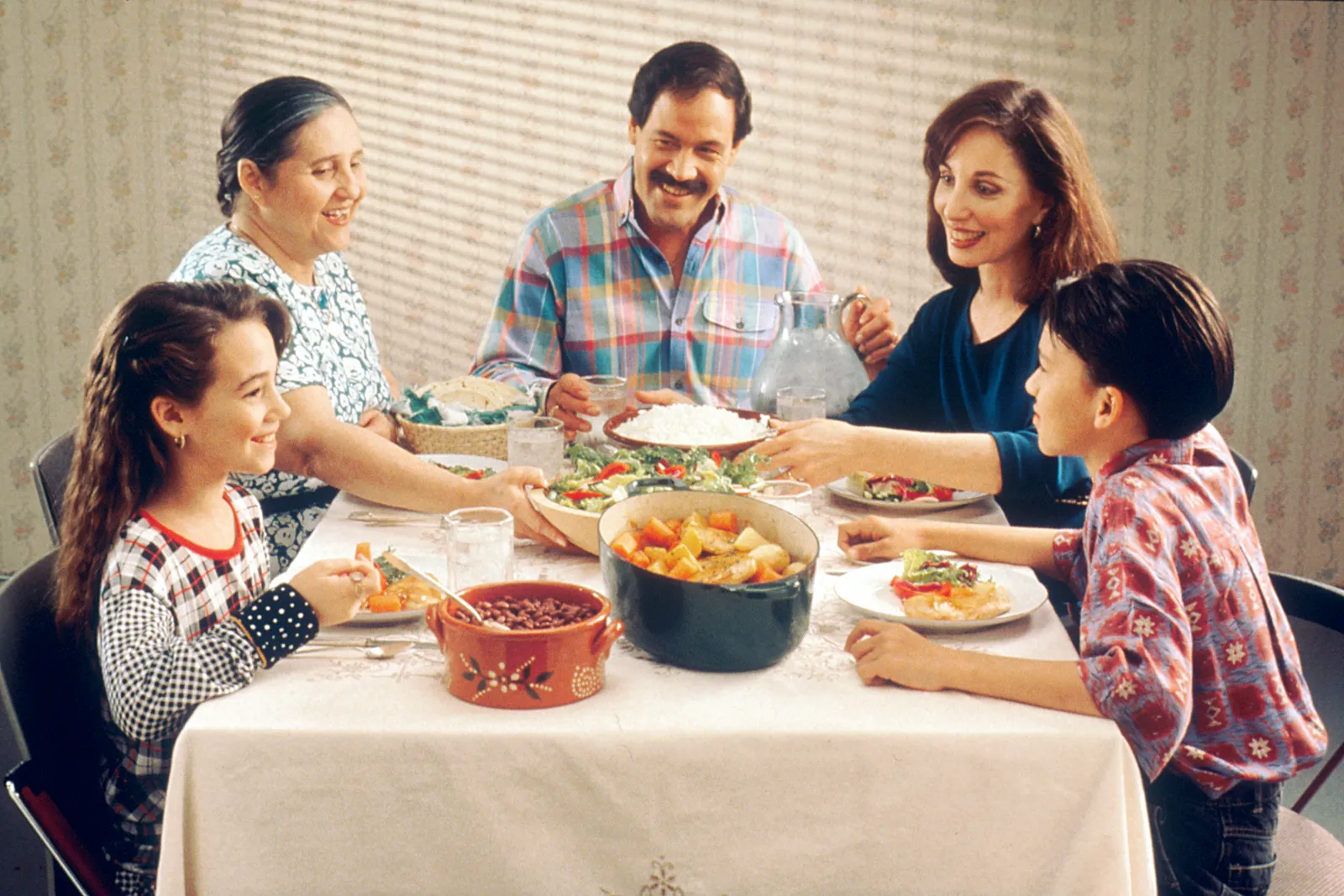
Enjoying a family meal together is associated with better eating overall. Some research suggests that the more often families eat together, the more likely the kids are to have a healthier diet, which can help lay the groundwork for lifelong healthy eating habits.
Studies have found that benefits such as maintenance of normal body weight, healthy eating patterns, and less disordered eating appear when families eat at least three meals per week together. Adolescents who ate meals with their families were also significantly less likely to be overweight ten years later.
Family meals at home typically make it easier to fill plates with food from each food group. Parents who prepare well-balanced meals and model healthy food choices allow children to mirror and adopt similar habits. The table becomes a template for how children will eat for the rest of their lives.
It Reveals Generational Divides in Your Household
The share of consumers cooking dinner declines throughout the week, from roughly 60 percent on Sunday and Monday to around 50 percent on Friday and Saturday, when consumers are significantly more likely to turn to restaurants. On an average weeknight, about half of millennials say they cook dinner from scratch, compared with roughly 70 percent of baby boomers.
Research by the scholar of social capital Robert Putnam indicates that the share of Americans regularly eating family dinner has declined, and that family dinners have become more common among and increasingly confined to the highly educated. Education level, it turns out, shapes the dinner table as much as culture does.
Only about 38 percent of young Americans who do not go to college report having daily family meals together, compared with 54 percent of college graduates. The table, without anyone announcing it, reflects access and opportunity as much as intention.
It Reflects How Your Family Handles Stress and Busyness

Almost three quarters of families reported dining out more in 2024 than the year before, with the main reasons being the desire to save time and to minimize the effort and stress associated with making dinner. Convenience has become the dominant force shaping family mealtimes.
Despite the well-documented benefits of shared meals, many parents experience stress or feel overwhelmed by the demands of providing regular family meals. An empty or rushed table is not always a sign of indifference. Often it is simply a sign of an overloaded schedule.
Not all families have the flexibility or resources to share regular dinners together. For families with limited time, intentionally using available moments such as breakfasts, after-school activities, weekend check-ins, or bedtime rituals may provide similar benefits to youth wellbeing. The spirit of the table can survive even when the table itself goes unused some nights.
It Shows Whether Your Family Talks or Just Coexists

Since the early 1970s, mealtime conversations have emerged as an important research paradigm within family studies. Studies on family dynamics have highlighted the importance of positive communication among family members during mealtimes, though the specific conditions for stimulating those conversations vary considerably across families.
Research from the UK found that 30 percent of children rarely talk to their parents at the table, and fewer than one in five families manage to have dinner together every night. Silence at the table is its own kind of data point, though one that is easier to change than most families assume.
A recent Harvard study showed that 80 percent of teenagers claim family dinner is the time they are most likely to converse with their parents. Research also found that screen time consistently replaced parent-child conversation. The two findings together suggest a simple but uncomfortable truth: the conversation is there if the phones are not.
It Indicates Your Family’s Sense of Ritual and Belonging

More than half of people surveyed associate family meals with feelings of connectedness, including having conversations and more time spent together. The 2025 World Happiness Report found that meal-sharing is linked with social connectedness and subjective wellbeing. These are not soft benefits. They are measurable outcomes.
Findings from research suggest that frequent family meals are associated with better social and emotional health for parents specifically, and that frequent family meals may also serve as a family routine and ritual. Ritual is easy to underestimate until it disappears.
Emotional health is a consistent driver here, with roughly two in five people believing family meals are relaxing and around one in three saying family meals help them feel calm. Nearly two thirds of those surveyed say they are more likely to share family meals having seen the benefits firsthand.
It Tells the Story of Whether You’re Raising Resilient Kids

Regular family meals have been linked to lower risks of substance use and other risky behaviors among children and adolescents. Children of families who eat together tend to have fewer behavioral problems and higher literacy rates. Those two facts alone make a compelling case for even imperfect meals together.
Research cited by the American Enterprise Institute suggests that youths who ate dinner with their parents at least five times a week did better across a wide range of outcomes, including being less likely to smoke, drink, use marijuana, or be suspended from school.
Findings from recent research suggest that efforts to encourage more frequent family dinners should prioritize not only the frequency of family interactions but also the quality of the interactions during time spent together. The bond formed by spending time with family may also provide children with the confidence and security they need to succeed elsewhere. The table, in this light, is less about food and more about foundation.
The Bigger Picture

The kitchen table does not need to be Pinterest-perfect or laden with home-cooked food every single night to matter. What the research consistently shows is that presence and conversation are the active ingredients. The table is simply where those things are most likely to happen naturally.
More than 35 years of research and thousands of studies from around the world document that family meals, however you define family, boost both physical and mental health. The evidence has been accumulating for a long time. What changes is whether families act on it.
In an era of fractured schedules and glowing screens competing for everyone’s attention, the kitchen table remains one of the few places where a family has a genuine shot at being unhurried together. What yours says about your family might be worth considering tonight, even before the food gets cold.
AI Disclaimer: This article was created with the assistance of AI tools and reviewed by a human editor.