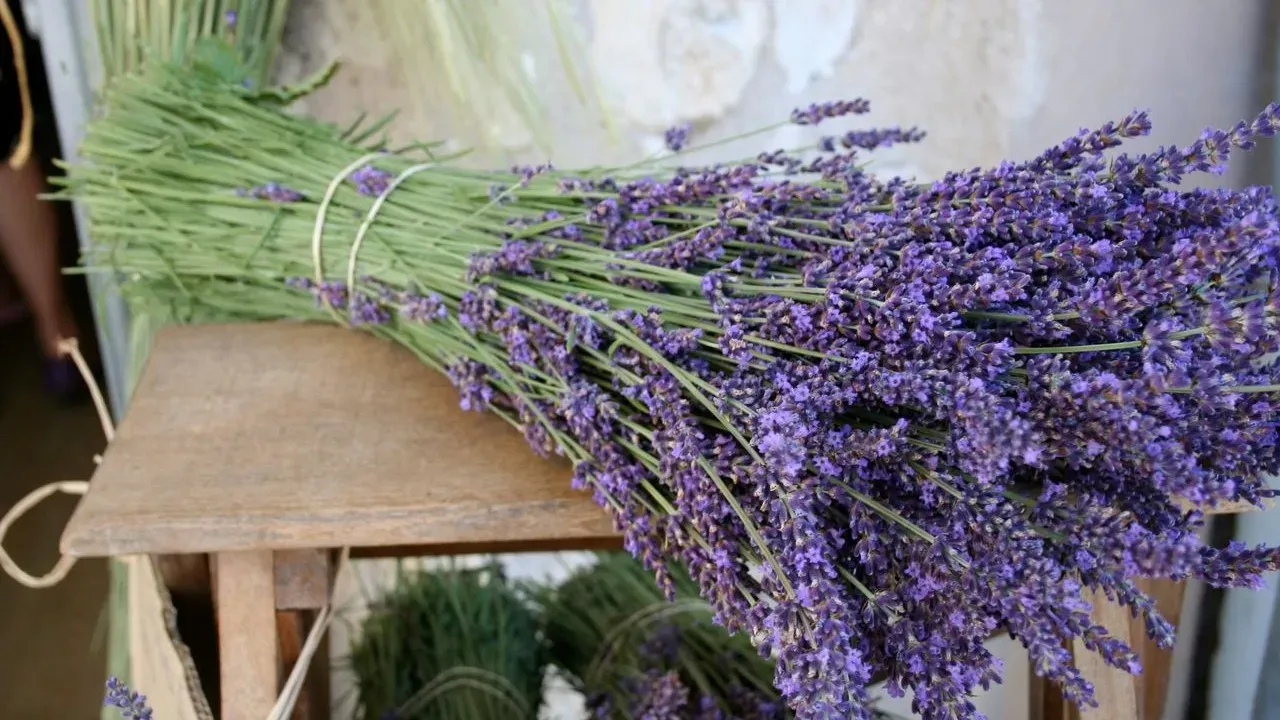

Gardeners value lavender for more than its appearance. The plant draws pollinators to the yard while helping deter common pests. Drying the stems at the right moment locks in both the fragrance and the rich purple tones that make the herb useful long after harvest. ([1])
Timing the Harvest for Best Results
Harvest lavender when the flower buds show full color but have not yet opened completely. This stage captures the strongest oils responsible for scent. Cutting too late often leads to faded blooms and weaker aroma once dried.
Work in the morning after dew has lifted. Select stems with several flower spikes and cut them cleanly near the base of the plant. Gather the stems into small bunches right away to avoid bruising the delicate flowers.
Proper Drying Technique
Hang the bunches upside down in a dark, well-ventilated space. Direct sunlight bleaches the color quickly, while excess moisture encourages mold. A dry attic, closet, or shaded shed works well for most home gardeners.
Leave the bunches undisturbed for two to three weeks. The stems should feel crisp and the flowers should rustle when touched. Once fully dry, strip the buds from the stems or keep the bundles intact for decorative use.
Storing the Dried Bundles
Place the dried lavender in airtight containers or paper bags away from light and heat. Glass jars or tins protect the scent better than open baskets. Label each container with the harvest date to track freshness over the coming months.
Properly stored lavender retains its fragrance for up to a year. Use the buds in sachets, potpourri, or culinary recipes where a mild herbal note is desired. The same bundles can also serve as natural moth repellents in closets and drawers.
Common Mistakes to Avoid
Overcrowding bunches during drying traps moisture and invites mildew. Keep groups small, with no more than ten to fifteen stems per bundle. Avoid drying in humid bathrooms or kitchens where steam lingers.
Never wash the stems before drying. Excess water lengthens the process and dulls color. If dust appears on the plants, a gentle shake or light brush is usually enough before hanging.
AI Disclaimer: This article was created with the assistance of AI tools and reviewed by a human editor.