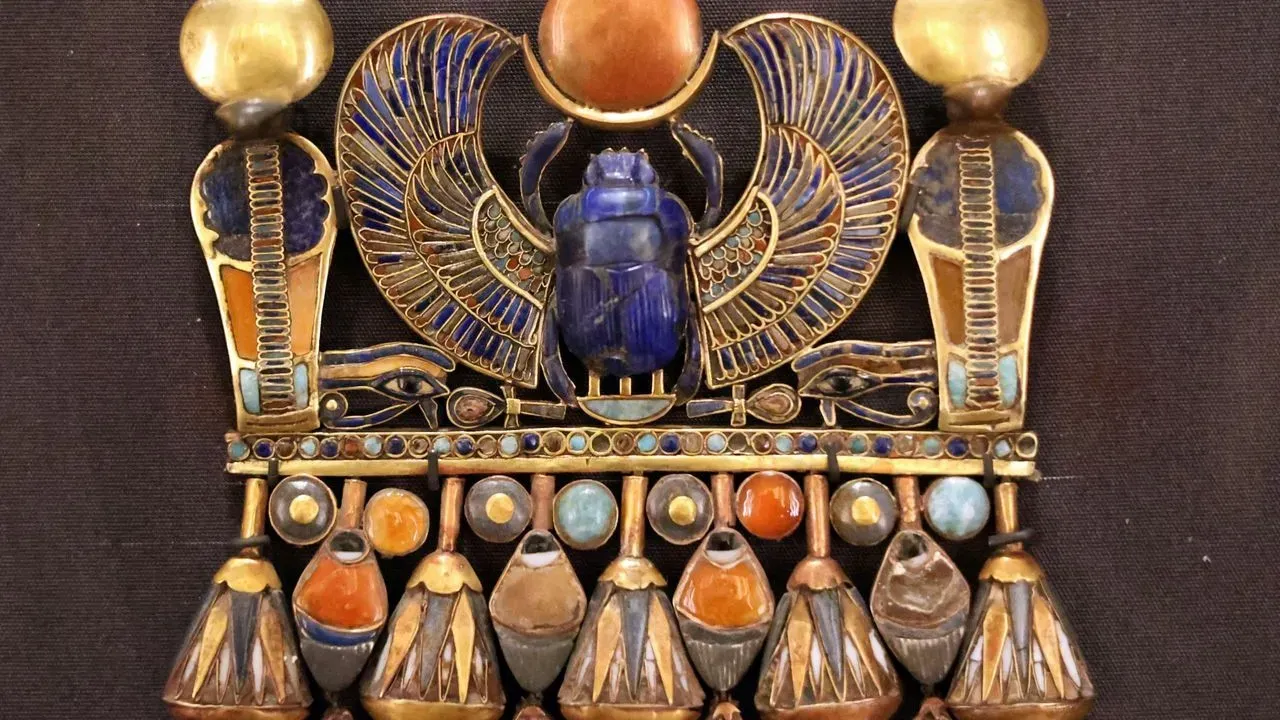

Shiloh Attoun arrived in Israel just two days before his class trip to Tel Gezer National Park. The 17-year-old American high school student was participating in a program through Jewish National Fund-USA’s Muss High School Israel when he spotted the small object on the ground. What began as an ordinary educational outing quickly turned into an unexpected archaeological moment. The Israel Antiquities Authority later confirmed the find as a scarab amulet dating to the Late Bronze Age.
Discovery During First Outing
Attoun noticed the artifact while his group discussed the site’s history. He picked it up and showed it to his guide, recognizing that it appeared old. The student immediately understood the significance of the moment. He and program dean Benji Hain contacted the Israel Antiquities Authority right away. Archaeologist Adam William Asper collected the piece for the national collection. Attoun later received a certificate of appreciation for reporting the discovery properly.
Details of the Ancient Amulet
Professor Ido Koch of Tel Aviv University examined the scarab and dated it to roughly 3,300 years ago. The artifact features two cobras above a semi-ellipse. Koch identified the cobras as the Egyptian Uraeus symbol, a protective royal emblem, and the semi-ellipse as the hieroglyph “nb,” meaning “lord.” Similar scarabs have appeared at other sites, including one with three snakes found at Tel Megiddo. These objects reflect ancient Egypt’s cultural reach into the region during periods of influence and rule. Scarabs themselves were common amulets modeled after the dung beetle, often used as seals and tied to ideas of creation and renewal. Tel Gezer itself was a major Canaanite city that controlled a key crossroads in the Judean Lowlands. The park now preserves the archaeological remains for public education.
Reactions From Officials and Educators
Program leaders described the find as a powerful example of students connecting directly with history. Amit Melman, the IAA’s Central Region educational director, praised Attoun and his instructors for acting responsibly. Israeli Heritage Minister Amichai Eliyahu also commended the student for turning over the artifact to the state. Tali Tzour Avner of Jewish National Fund-USA noted that the discovery aligned with the organization’s goal of giving young visitors a firsthand encounter with the country’s past. The excitement among the students was immediate once the find was recognized as potentially significant.
Proper Handling of Archaeological Finds
The Israel Antiquities Authority used the occasion to remind the public that artifacts should remain in place when discovered. Reporting them promptly allows archaeologists to document the original context. This practice helps preserve information that would otherwise be lost. Attoun’s experience illustrates how routine visits to historic sites can still yield new material for study. The amulet now joins Israel’s national treasures, available for further research and public learning.
AI Disclaimer: This article was created with the assistance of AI tools and reviewed by a human editor.