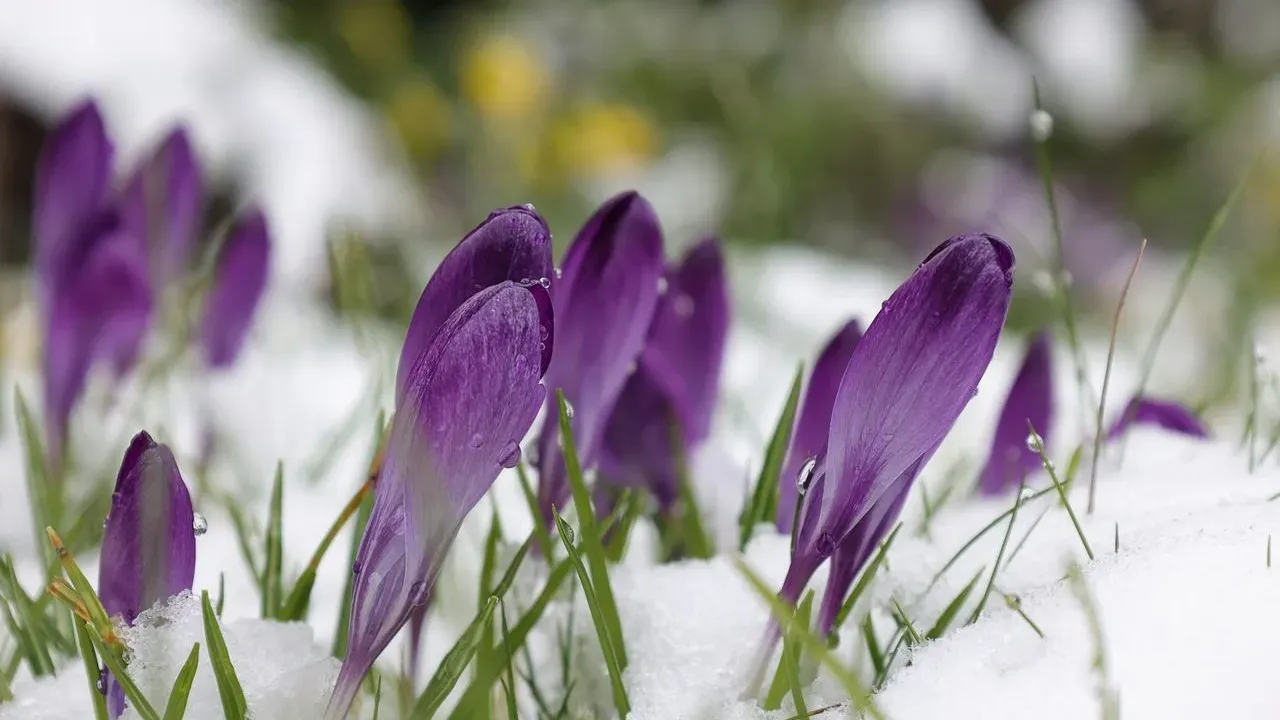

Crocuses emerge with vibrant displays of purple, pink, and yellow just as winter begins to loosen its hold. These small but resilient flowers often appear while snow still covers the ground and temperatures remain near freezing. Gardeners who plant the bulbs in fall can count on early spring color even after late cold snaps or brief blizzards.
Early Blooms Signal Winter’s End
The first crocus flowers frequently push through lingering snow in late winter or very early spring. Their appearance offers one of the earliest signs that the growing season has begun for many regions. The plants tolerate repeated cycles of freezing and thawing without damage to the developing buds. This timing aligns with the natural cycle of the bulbs, which require a period of cold to trigger flowering. Once that requirement is met, the shoots advance quickly when soil temperatures rise slightly above freezing. The result is color in the landscape weeks ahead of most other spring perennials.
Hardiness Through Cold Snaps and Blizzards
Crocuses withstand temperatures well below freezing once established. Their compact growth habit and protective leaf sheaths shield the flowers from wind and ice. Even when a sudden cold front arrives after buds have formed, the plants usually recover and continue blooming once milder conditions return. Gardeners in colder climates often observe crocuses flowering during or immediately after light snow events. The blooms remain upright and open as soon as sunlight reaches them. This ability to endure brief but intense winter weather makes the plants reliable performers where more tender species fail.
Planting for Reliable Spring Displays
Fall planting allows the bulbs to establish roots before the ground freezes. Well-drained soil prevents rot during winter dormancy, while a light mulch layer can moderate temperature swings. Crocuses naturalize readily, forming larger clumps over several seasons when left undisturbed. Site selection matters for best results. Full sun in early spring helps the flowers open fully, and locations that avoid standing water reduce the risk of bulb decay. Once planted, the flowers require little further attention beyond occasional division when clumps become overcrowded.
Practical Benefits for Home Gardens
The early color provided by crocuses extends the visual interest of lawns and borders. Their low stature allows them to grow beneath deciduous trees or among later-emerging perennials without competition. Many varieties also attract early pollinators seeking the first nectar sources of the year. Because the foliage matures and fades by early summer, the plants leave room for summer annuals or later-blooming bulbs. This seasonal rhythm fits neatly into mixed plantings without requiring extra maintenance. Crocuses demonstrate that delicate appearance does not always indicate fragility. Their capacity to flower amid snow and recover from cold snaps gives gardeners a dependable source of spring color in challenging conditions.
AI Disclaimer: This article was created with the assistance of AI tools and reviewed by a human editor.