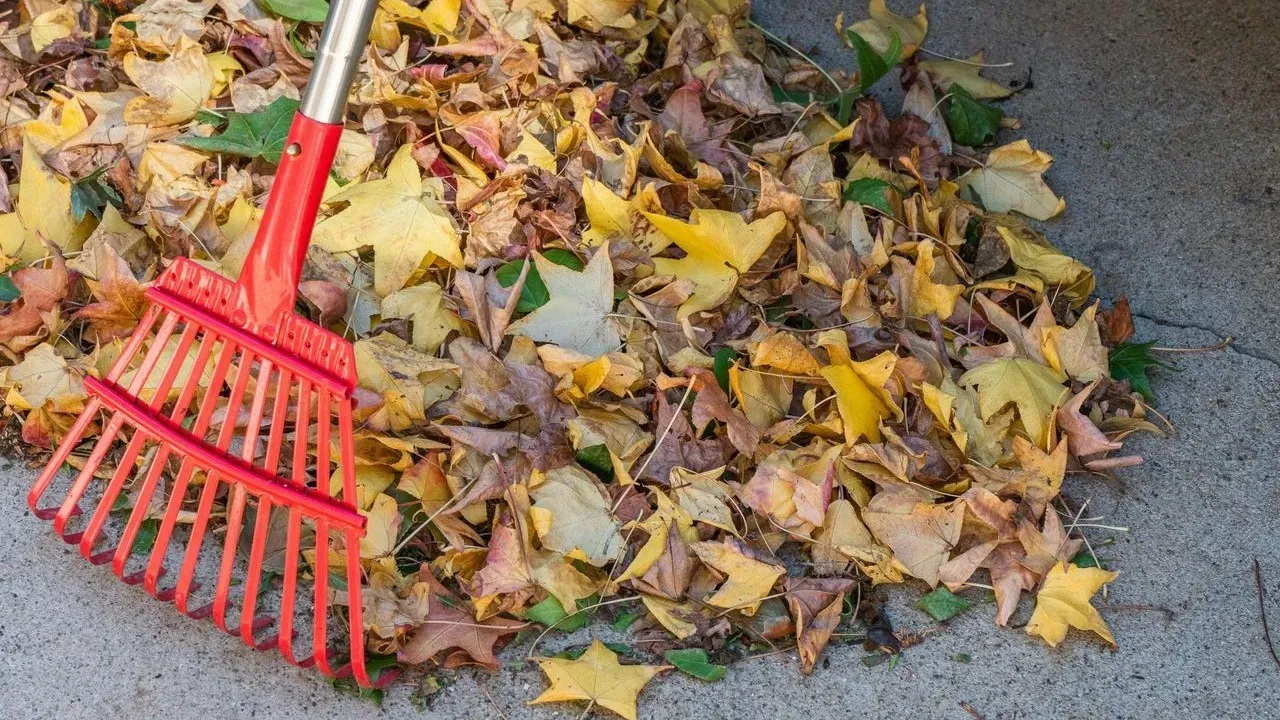

Homeowners facing piles of autumn leaves often reach for either a rake or a leaf blower without realizing that complete removal is not always required. University extension programs and wildlife groups point out that thin layers of leaves can benefit turf when mulched in place, while whole leaves left in garden beds support overwintering insects and other creatures. The choice between tools still matters for efficiency and comfort, yet the bigger decision involves how much to move and where to put what remains.
The clearest difference comes down to yard size and leaf condition
A rake remains the practical choice for smaller properties, wet leaves, or areas near delicate plants where precision counts. It produces no noise beyond the user’s own effort and requires no fuel or charging. A leaf blower, by contrast, covers large open spaces more quickly once the operator wears hearing protection and checks local ordinances on hours or equipment type. Wet leaves still favor the rake in most cases because they clump and resist air flow.
Noise levels and body strain vary by model and technique
Consumer Reports testing shows the quietest blowers stay below 65 decibels at the operator’s ear while louder models exceed 85, the threshold at which the National Institute on Deafness and Other Communication Disorders recommends protection. A preliminary field evaluation by NIOSH found one battery model measured 85 dBA in short readings, underscoring that even cordless units can reach caution levels. Raking avoids noise concerns yet brings its own risks; physicians at the Cleveland Clinic note that lower-back strains account for roughly a quarter of raking-related injuries they treat, often from twisting or lifting heavy loads.
Mulch-mowing thin layers supports lawn health without extra tools
Several university programs agree that established turf tolerates regular mulching of modest leaf cover. Kansas State recommends mowing each time roughly an inch accumulates, while Virginia Tech and the University of Nebraska-Lincoln indicate a mower can process up to six inches across multiple passes depending on equipment. The key is frequency rather than waiting for a thick blanket that blocks light and raises disease risk. This approach returns organic matter to the soil and eliminates the need to haul material away.
Whole leaves in beds provide shelter that shredded material cannot match
The Xerces Society emphasizes that many pollinators and other insects rely on intact leaf litter for cover and insulation through winter. Shredding destroys eggs, caterpillars, and cocoons while reducing the protective value of the remaining debris. Moving whole leaves from turf to planting beds or fence lines therefore serves both lawn maintenance and habitat goals. Leaves should still be kept out of storm drains, where USGS research shows they contribute significant phosphorus loads to urban waterways.
Practical steps combine the best of each method
– Mulch-mow the lawn while the layer stays thin.
– Leave beds and edges undisturbed for wildlife.
– Use a rake or blower only to gather excess leaves into piles.
– Compost the material or follow local collection rules.
– Wear eye and hearing protection whenever operating a blower. The most effective approach matches the tool to the immediate task while recognizing that not every leaf must leave the property. Thin mulching on grass and whole leaves in sheltered spots often deliver better results for both the garden and the creatures that share it.
AI Disclaimer: This article was created with the assistance of AI tools and reviewed by a human editor.