
The Buildup Cycle You Can’t See

Each night, your pillowcase absorbs sebum, dead skin cells, bacteria, and skincare product residue, then presses all of that against your face for six to eight hours. Most people don’t register this as a skin concern, partly because the damage is cumulative rather than immediate.
The contamination cycle is straightforward: your pillowcase absorbs what your face produces, then re-applies it the next night. With each additional night between washes, the concentration of accumulated material increases and skin contact becomes more like applying a progressively dirtier compress to your face for hours at a time.
How Often You Really Need to Change It
The American Academy of Dermatology recommends changing your pillowcase at least once or twice a week, and more frequently if you have oily skin, wear heavy skincare or hair products to bed, or sweat during the night.
For acne-prone skin, the general recommendation from dermatology sources is every two to three days. This is not a clinically established rule derived from a single trial; it is the consensus recommendation based on the known contamination cycle and bacterial transfer. Some dermatologists now push that even further. In the past, experts advised changing pillowcases once a week. That guidance was then shortened to every two to three days. Now, many dermatologists recommend changing pillowcases each night.
The Acne Mechanica Connection

There is a clinical term for breakouts caused by physical rubbing: acne mechanica. It was first documented in athletes dealing with breakouts from helmets, chinstraps, and pads, but the same principle applies to rough pillowcase fabric pulling across your face for hours.
A study from the Journal of Cosmetic Dermatology found that friction, heat, and trapped bacteria on skin, like what happens when you sleep on a dirty pillowcase, can make acne worse. Side and stomach sleepers are the most exposed to this kind of mechanical pressure. Research on skin-textile friction found up to a two-and-a-half-fold difference in friction between the smoothest and roughest fabrics tested.
Bacteria and the Skin Microbiome

A 2018 study found that the bacteria Cutibacterium acnes, which is linked to acne, grows more in warm, moist places like a dirty cotton pillowcase. This is important context because it isn’t just about surface dirt you can see.
Research by Dréno et al. reviewed the role of Cutibacterium acnes in acne pathogenesis and noted that the bacterium’s relationship with the skin microbiome is complex: certain strains are associated with acne while others appear to be protective. What this means practically is that maintaining a cleaner skin contact surface, including pillowcases, reduces the microbial transfer that can tip the balance toward inflammatory strains.
Sleep Wrinkles and Compression Aging

Your pillowcase can subtly contribute to aging your face every night. The reason lies in mechanical compression and friction. Traditional fabrics, especially cotton, tend to be rougher and more absorbent. When your face presses against these surfaces repeatedly, it creates folds in the skin. This repetitive pressure and tugging can cause sleep lines, which initially fade in the morning but may eventually become permanent wrinkles.
Research from the Aesthetic Surgery Journal notes that sleep wrinkles differ from expression lines because they form perpendicular to the muscles’ direction and are caused by external forces like pillow pressure. Dermatologists often refer to this as “compression aging,” and it is one of the leading contributors to fine lines beyond facial expressions.
One-Sided Breakouts: The Sleeping Position Clue

One-sided breakouts that match your sleeping position are a strong sign your pillow is part of the problem. This is one of the clearer diagnostic signals dermatologists use, and it’s something you can observe yourself without any testing.
When you sleep on your side or stomach, your face and chest are compressed against the pillow, leading to creasing and the development of lines on the cheeks, jawline, and décolletage. This can lead to asymmetrical aging or more pronounced wrinkles on one side of the face. If your skin is consistently worse on one side, the answer might be less about your skincare shelf and more about which side you sleep on.
Hair Products Transfer: The Overlooked Trigger

A 2017 article found that hair products with oils and silicones can lead to breakouts along the cheeks, jaw, and hairline when they come into contact with your skin at night. If you use heavy hair products and don’t change your pillowcase often, this might be part of the reason your skin is breaking out.
This is a pattern dermatologists see regularly, particularly in people who can’t trace their jawline or hairline breakouts to anything in their skincare routine. The culprit migrates from hair to pillow to skin while you sleep, making the source easy to miss. Pulling hair back loosely before bed and washing your pillowcase more frequently can interrupt this cycle without changing a single skincare product.
How Fabric Choice Affects Your Skin
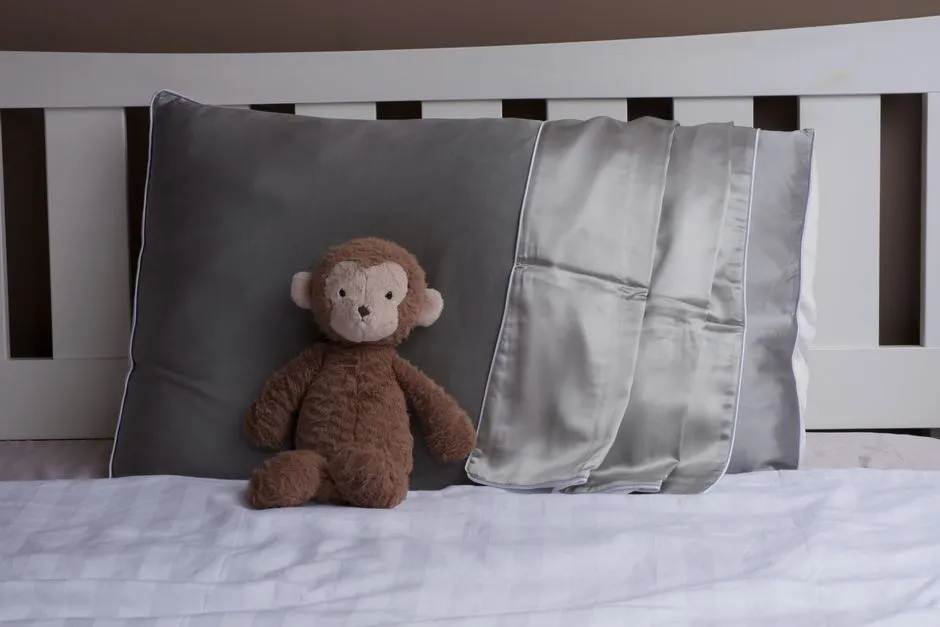
A cotton pillowcase creates friction and pulls moisture from your skin, contributing to sleep creases that can become permanent wrinkle lines. This is a structural issue with the fiber weave itself, not just about cleanliness.
Silk pillowcases are considered microbiome-friendly: they reduce mechanical irritation, stay cleaner longer, and don’t strip natural sebum. The smoother surface minimizes disruption, letting beneficial bacteria thrive while harmful bacteria like C. acnes have less chance to multiply. Many dermatologists recommend silk pillowcases for acne-prone, sensitive, or aging skin, citing lower friction and reduced buildup compared to cotton or synthetic satin.
Detergent and Skincare Product Residue
Those with sensitive, acne-prone skin can react negatively to laundry detergent residue left in pillowcases. As soon as skin reacts negatively to anything, including laundry detergent, the subsequent inflammation will quickly lead to breakouts. Fragrance-free, dye-free detergents are routinely recommended for this reason.
Even if you follow a consistent skincare routine, use gentle cleansers, and invest in high-quality serums, a dirty pillowcase might be undermining your efforts without you realizing it. Dermatologists often point out that lifestyle habits like how often you change your bedding can play a surprisingly important role in overall skin health.
Dead Skin Cells and Dull Complexion
Each night, our skin sheds dead cells, which end up on our pillowcases. If not changed regularly, these dead skin cells mix with oils and bacteria, creating an environment that can lead to breakouts and dull-looking skin. Fresh pillowcases help maintain a clean surface for your skin.
Dull skin is one of those complaints that’s easy to attribute to stress or diet when the actual cause is much more mundane. The accumulation of shed cells on a pillowcase creates a surface that works against the natural renewal cycle your skin is trying to complete overnight. It’s a fixable problem that costs nothing except the habit of washing more frequently.
The Practical Pillowcase Checklist Dermatologists Recommend

Dermatologists consistently point to the same core practices: change your pillowcase every two to three days, use silk or bamboo pillowcases if you have sensitive skin, wash with a gentle fragrance-free detergent, and keep hair away from your face while sleeping.
Fabric is not the only thing that matters; the overall cleanliness of the pillowcase is crucial. Over time, pillowcases accumulate oil, sweat, bacteria, and dead skin cells, all of which can clog pores and lead to breakouts. Keeping a small stack of clean pillowcases accessible is a practical way to remove the friction from building this habit, so the barrier to changing them stays low.
The Takeaway

The pillowcase habit dermatologists keep returning to isn’t complicated: change it more often than feels necessary, pay attention to where your breakouts cluster, and treat the fabric and detergent you choose as part of your skincare environment, not an afterthought.
No serum can fully compensate for eight hours of nightly exposure to accumulated bacteria, oil, and friction. The consistency that actually moves the needle for many people isn’t a new product. It’s the simple, unsexy act of putting on a clean pillowcase.
AI Disclaimer: This article was created with the assistance of AI tools and reviewed by a human editor.