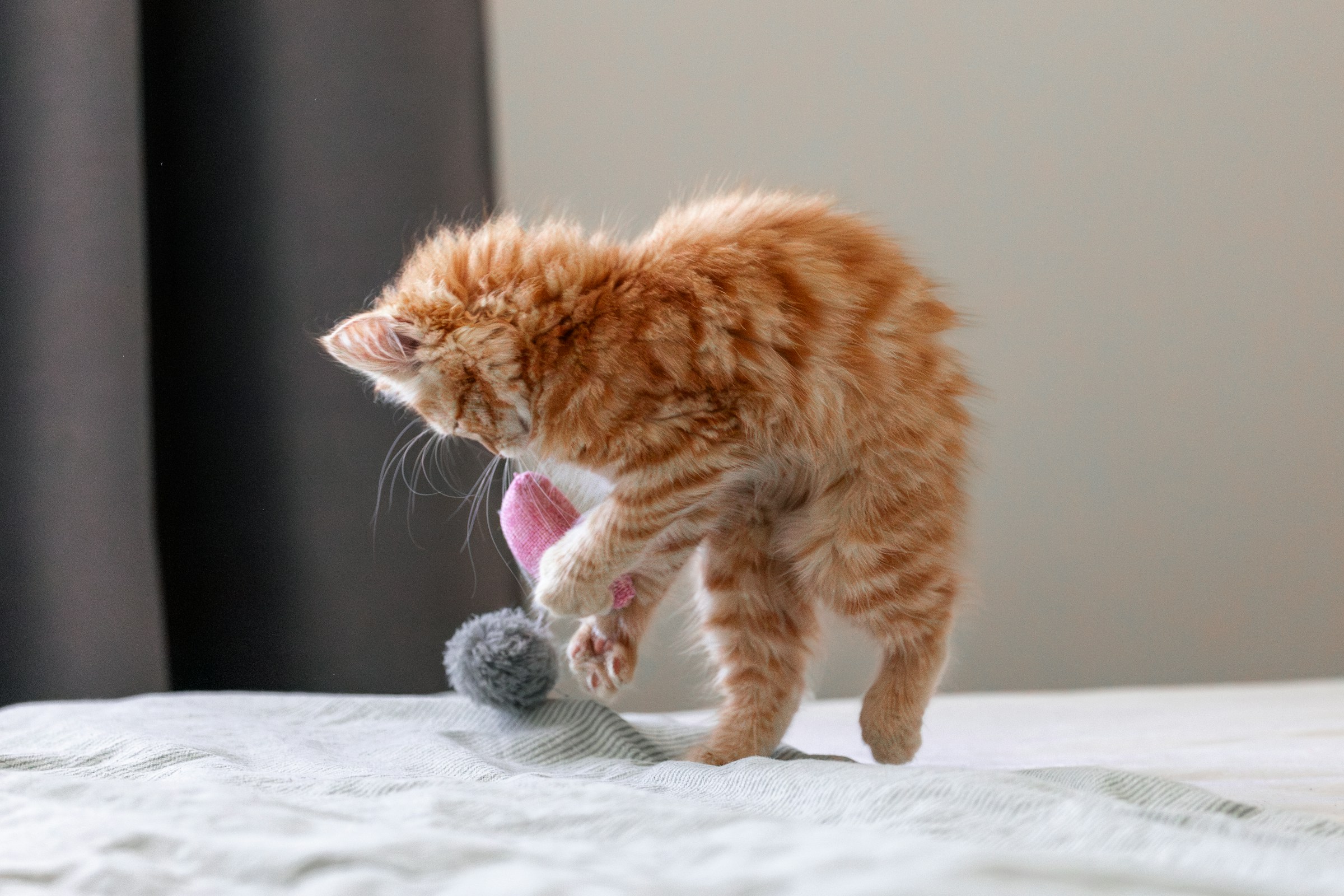

A Move That’s Rooted in Ancient Instinct
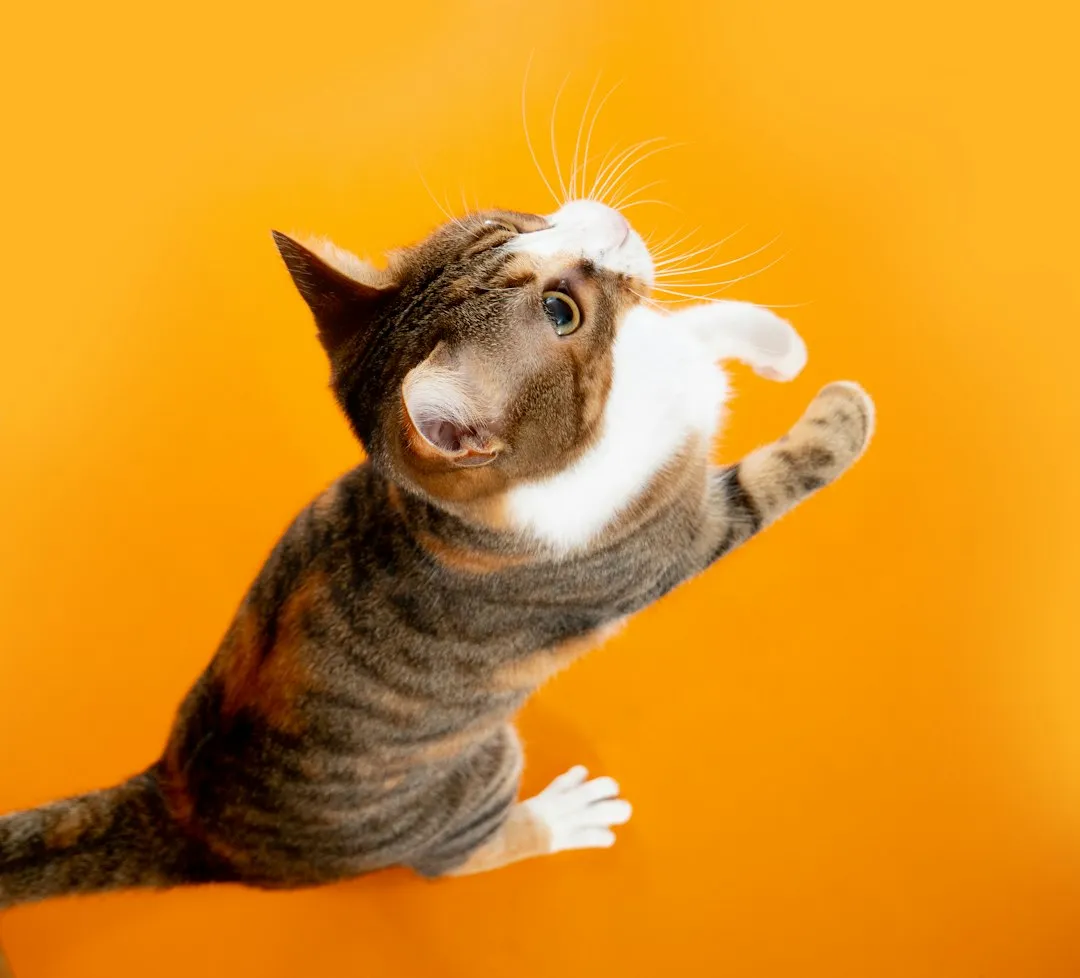
Cats didn’t develop the pre-pounce wiggle in your living room. The wiggle before pouncing is a behavior rooted in biomechanics and hunting instincts. It’s a behavior that stretches back through millions of years of evolutionary history, long before cats ever shared a home with humans.
Domestic cats have retained many of their wild ancestors’ characteristics, making them formidable predators. The rear wiggle is part of that inheritance. This behavior has been observed in big cats like mountain lions, tigers, jaguars, and leopards, which tells us this isn’t just a quirky domestic pet habit. It’s something woven into feline biology across the board.
The Traction Theory: Gripping the Ground Before the Leap
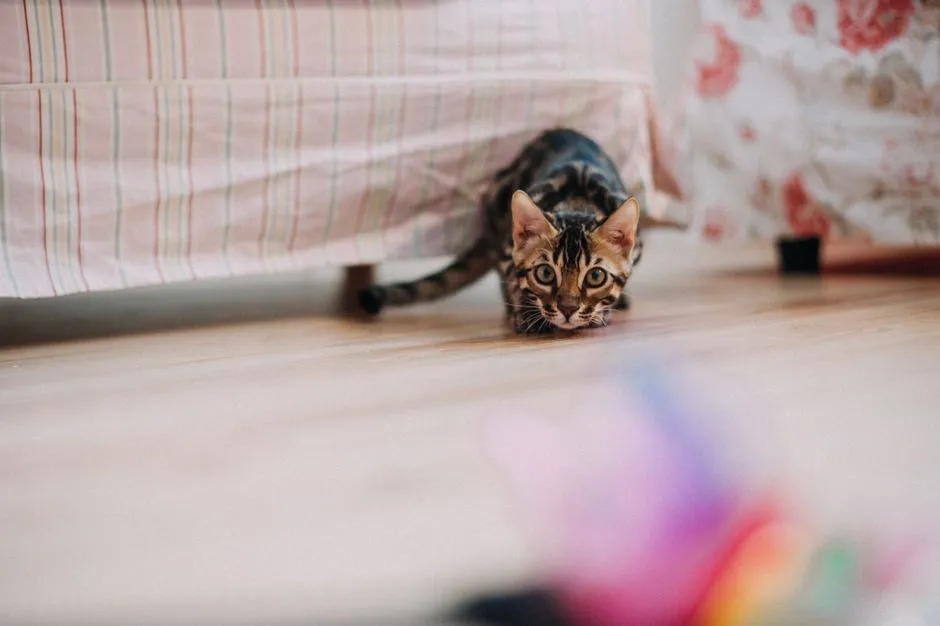
Butt-wiggling may help press the hindlimbs into the ground to give cats added friction, or traction, for pushing them forward in the pounce. This is perhaps the most widely cited theory, and it makes immediate physical sense.
Professor John Hutchinson of the Royal Veterinary College in London theorizes that the hind limb wiggle presses the cat’s paws into the ground and increases friction, improving the traction through the back legs and improving the chances of a successful pounce, much like wearing special sports shoes with a functional tread would improve grip during sport.
The butt wiggle aids in checking ground traction and ensuring stability for a balanced launch and a controlled landing. Good footing prevents slipping, allowing for a full-force leap without waste of energy.
Testing the Ground Beneath Their Paws
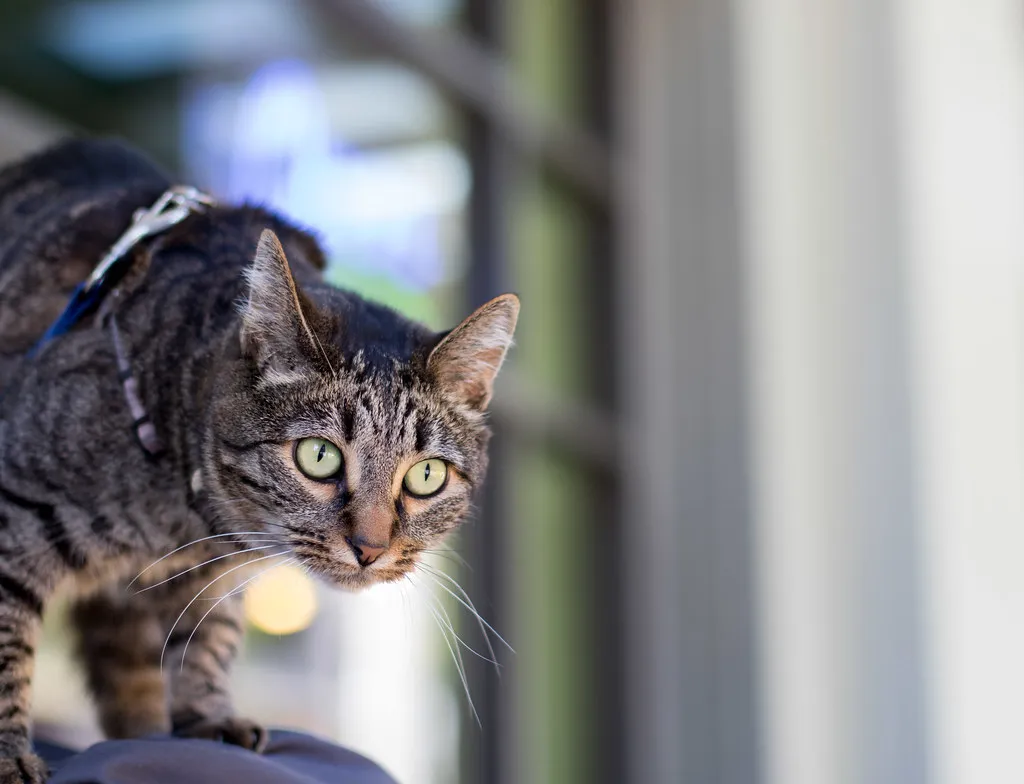
The wiggle allows the cat to test the stability of the ground beneath its feet and ensure a firm launching pad. This matters more than it might seem. A failed pounce isn’t just embarrassing – it could mean lost prey or, in a wild context, actual injury.
When cats pounce to capture prey, they push off the ground with both hind legs at the same time to give the movement more power, speed, and distance. The ground beneath the cat must be sturdy enough to support this coordinated movement of the hind limbs. The wiggle tests the solidness of the ground before making the leap, ensures sufficient traction, and keeps the cat well-balanced before pushing off.
Proprioception: The Body Checking In with Itself
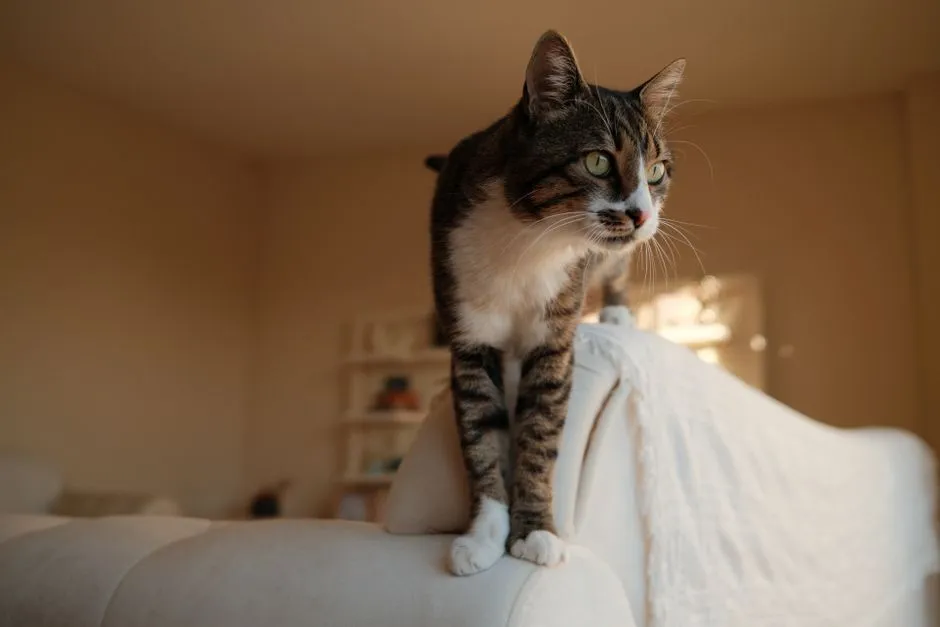
There’s another layer here that’s less visible but just as important. Professor Hutchinson also believes that the butt wiggle confers a proprioceptive advantage. Proprioception is an animal’s ability to know where its limbs are in space and its awareness of its own body’s movement.
By jiggling the back legs, cats are increasing the neural commands to the rear end and improving proprioception, which in turn improves the pounce. Think of it as the body’s internal GPS recalibrating right before a high-speed maneuver. Hutchinson believes this bum wiggle may play a sensory role in preparing a cat for hunting, preparing the vision, proprioception, and muscle traction for the rapid neural commands needed for the pounce.
A Quick Warm-Up for the Muscles
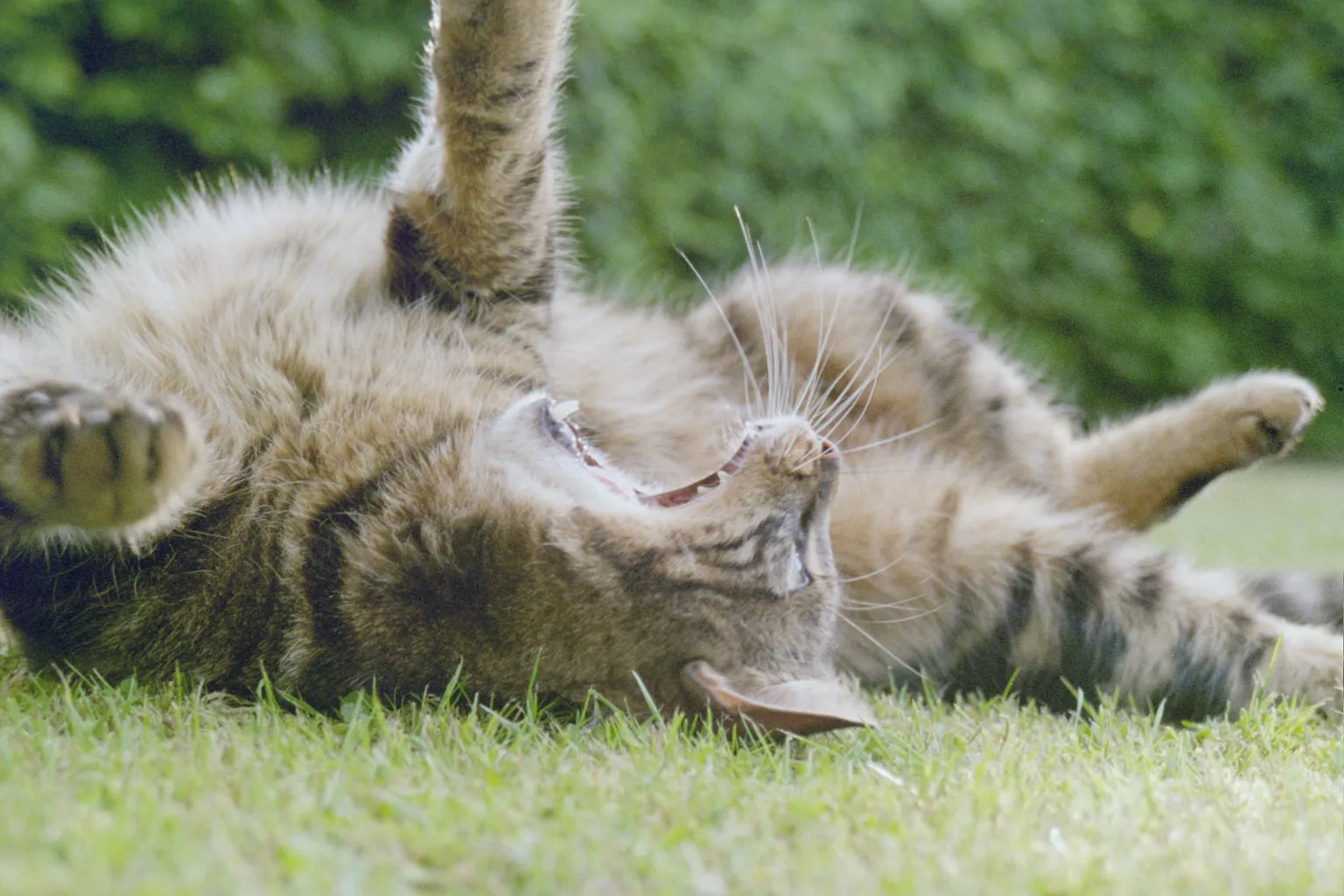
Butt wiggling may also give the cat an aerobic warm-up of sorts, and it probably does stretch the muscles a bit, which might help with pouncing. This is not unlike what human athletes do before explosive physical efforts.
One of the primary reasons cats wiggle their butt before pouncing is to prepare their muscles for the upcoming leap. This wiggling motion helps the cat engage their hind leg muscles, stretching and contracting them in anticipation of the powerful burst of energy required to pounce. By warming up their muscles this way, cats can ensure a more efficient and accurate pounce.
To be able to leap onto their prey successfully, cats must use both hind legs to propel themselves to ensure full takeoff. A little bum wiggle can give a cat a warm-up that prepares its muscles for pouncing and helps avoid injury.
Calibrating Aim and Distance
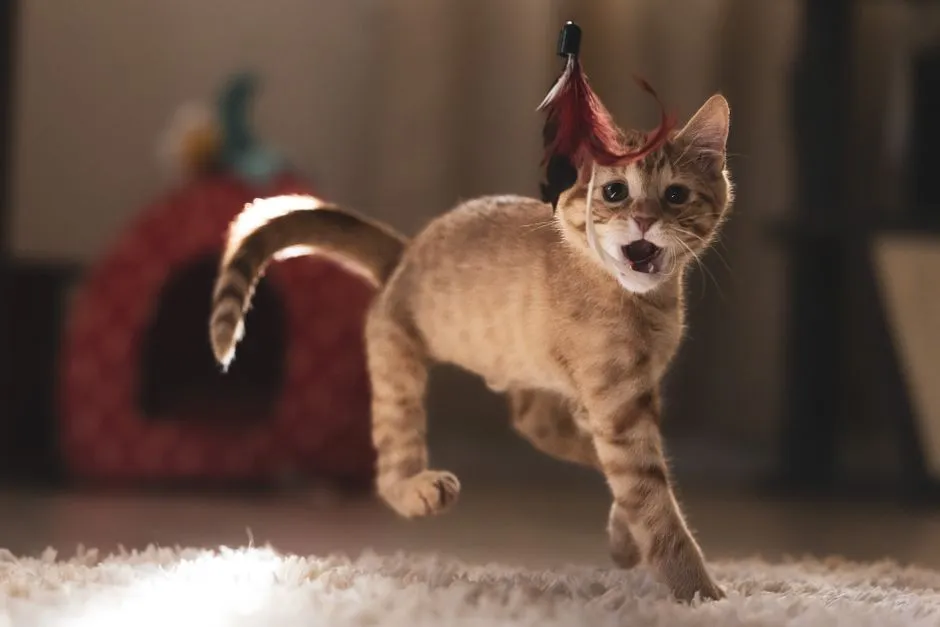
The cat butt wiggle also allows the feline to gauge the distance and trajectory needed for a successful pounce. As they wiggle, cats use their keen sense of sight to determine the precise angle and force required to reach their target.
Similar to a golfer’s practice swing, cats use the wiggle to refine their aim, judge distance, and align trajectory before committing to the strike. As cats stalk their prey, they use their eyes to study every detail of their environment. Their binocular vision allows them to judge distances with remarkable accuracy, enabling them to pounce on unsuspecting prey with precision.
The Dopamine Factor: Pure Excitement
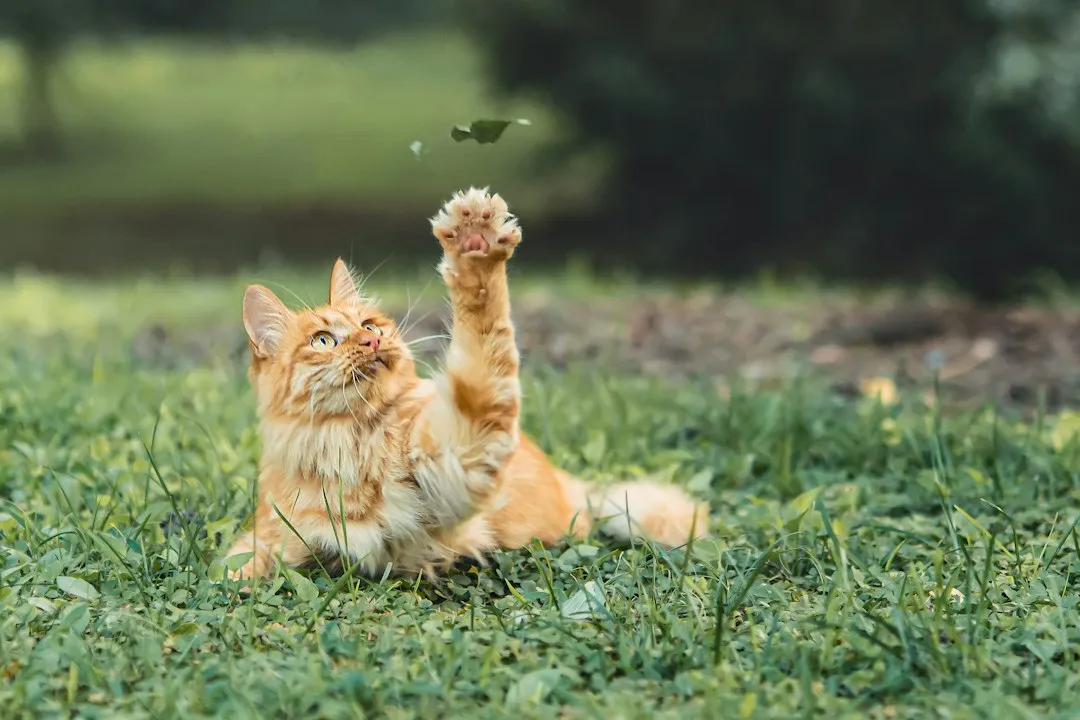
Not everything has to be mechanically purposeful. When cats, or any animal, engage in a behavior they enjoy, the body releases dopamine, the “happy hormone,” which creates feelings of pleasure and satisfaction. The pre-pounce wiggle may be partly an expression of this chemical rush.
We can’t exclude the possibility that it’s just fun for cats, that they do it because they are excited by the thrill of the hunt and prey. It may even be that the dopamine released when a cat plays and hunts just makes them feel good. Excitement doesn’t need to be dressed up as something purely functional to be real.
It Starts Young: Kittens Practice Early
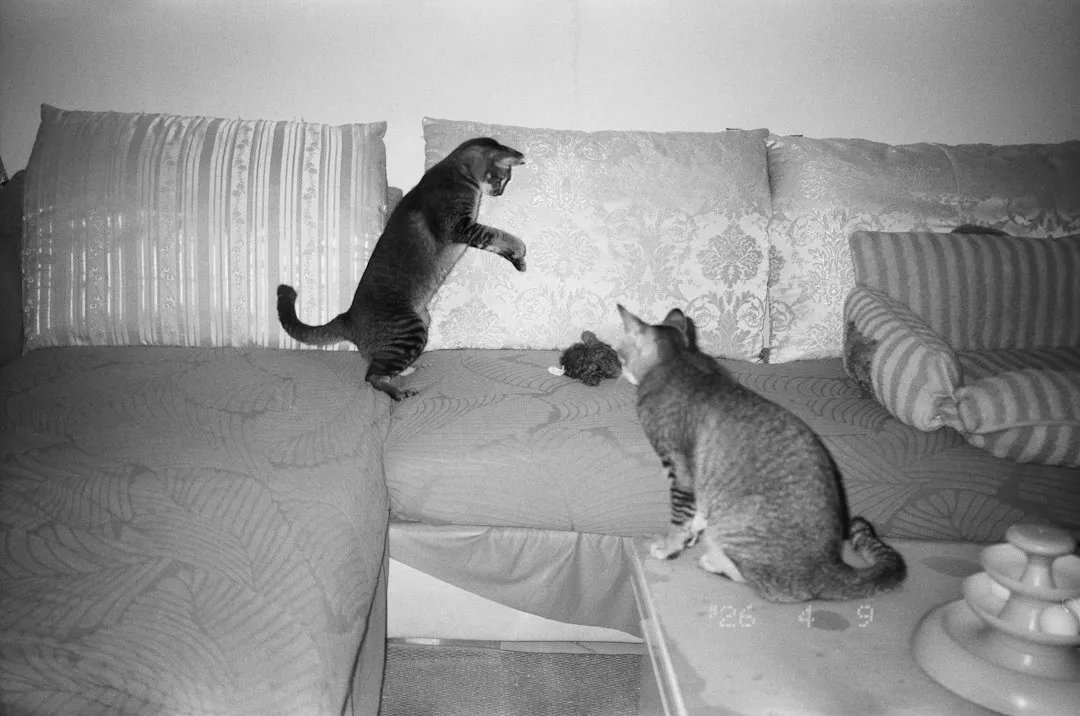
Kittens begin to practice hunting behaviors when they’re as young as six to seven weeks old, and this may include attempts at the butt wiggle seen in older cats. The behavior doesn’t appear out of nowhere in adulthood. It’s rehearsed from the very beginning of a cat’s life.
Feline play behavior, such as chasing a toy or batting at a feather wand, is a rehearsal of the entire predatory sequence. By repeatedly practicing the orientation, stalk, and pounce phases, the cat maintains the neurological pathways and muscle memory associated with successful hunting. The wiggle is part of that rehearsal, built into the muscle memory from the earliest weeks.
Hunting Behavior That Persists Regardless of Hunger
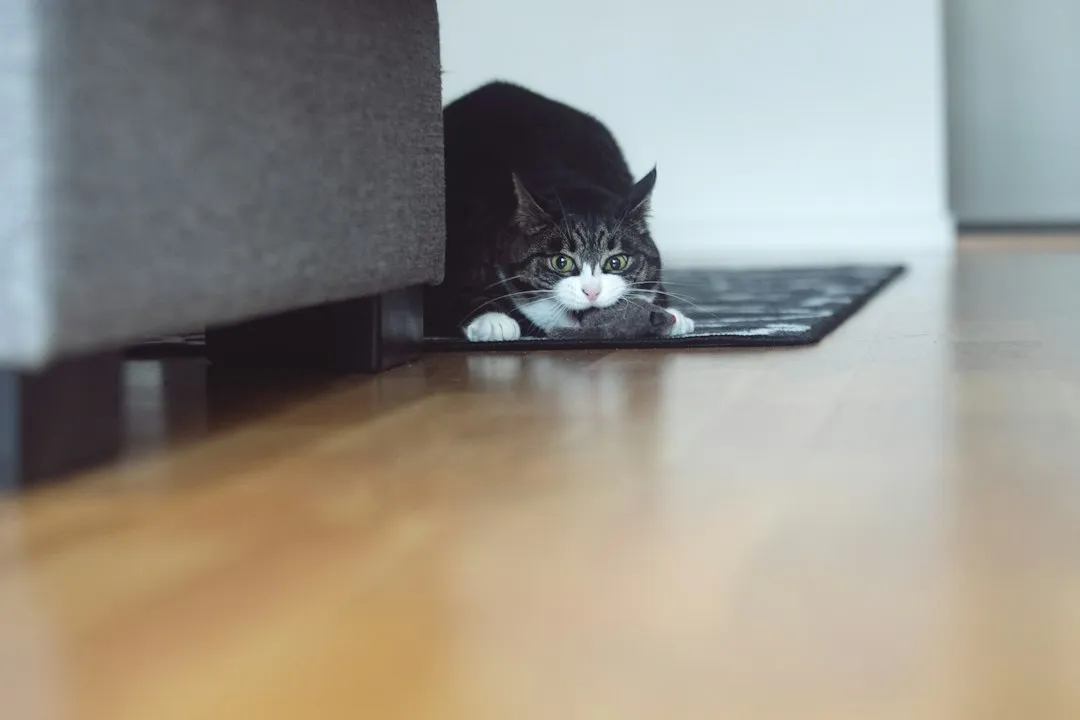
A well-fed house cat will still actively pursue and capture prey, demonstrating that the predatory drive operates independently of the hunger drive. Research confirms that the motivation to hunt is rooted in an innate, hardwired instinct, not primarily in an empty stomach.
Along with the urge to procreate and to defend territory, the hunting instinct is one of the most distinctive behavioral patterns in cats. The desire to hunt is not governed by hormones and therefore does not diminish after neutering. Studies have shown that domestic cats spend up to roughly three-fifths of their waking hours engaged in hunting behavior, with even the most sedentary household pets able to spot and pounce on small prey when given the opportunity.
Shared Across the Entire Cat Family
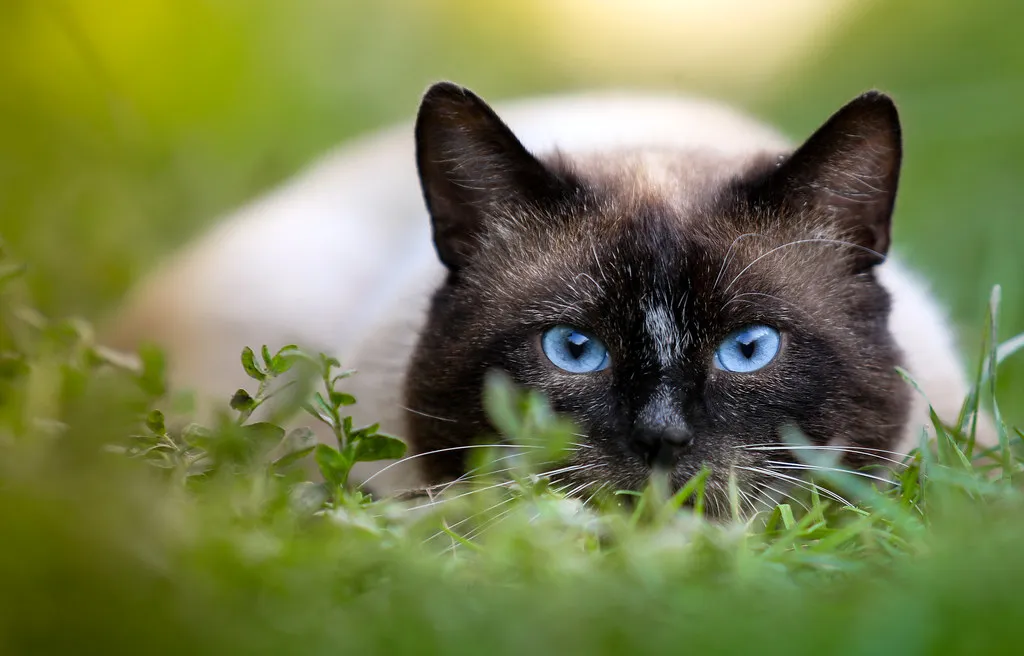
It’s worth pausing on how universal this behavior actually is. Both domestic cats and big cats have a characteristic butt wiggle they perform before springing into action and pouncing. Leopards in the wild, tigers in open grassland, mountain lions on rocky terrain, all do a version of the same thing your cat does before it launches itself at a toy mouse.
Over time, this wiggling action has been refined by evolutionary biomechanics, becoming a seamless part of the cat’s hunting instincts. Such instinctual behaviors are prominent across various species of cats, indicating a successful survival strategy. The fact that it has survived across such a diverse family of animals suggests it genuinely works.
What Science Still Doesn’t Know
There hasn’t been any formal research on this quirky behavior. As professor Hutchinson of the Royal Veterinary College in London put it, “the short answer is science does not know; the butt-wiggling has not been studied, to my knowledge, in an experimental context.”
An ideal experiment would have cats pounce with and without butt-wiggling, so scientists could determine what effect wiggling, or lack thereof, has on their pouncing performance. Until someone designs that study, we’re working with educated reasoning rather than hard data. Given how much about cat cognition and biomechanics remains unexplored, that’s not entirely surprising.
What This Means for Cat Owners
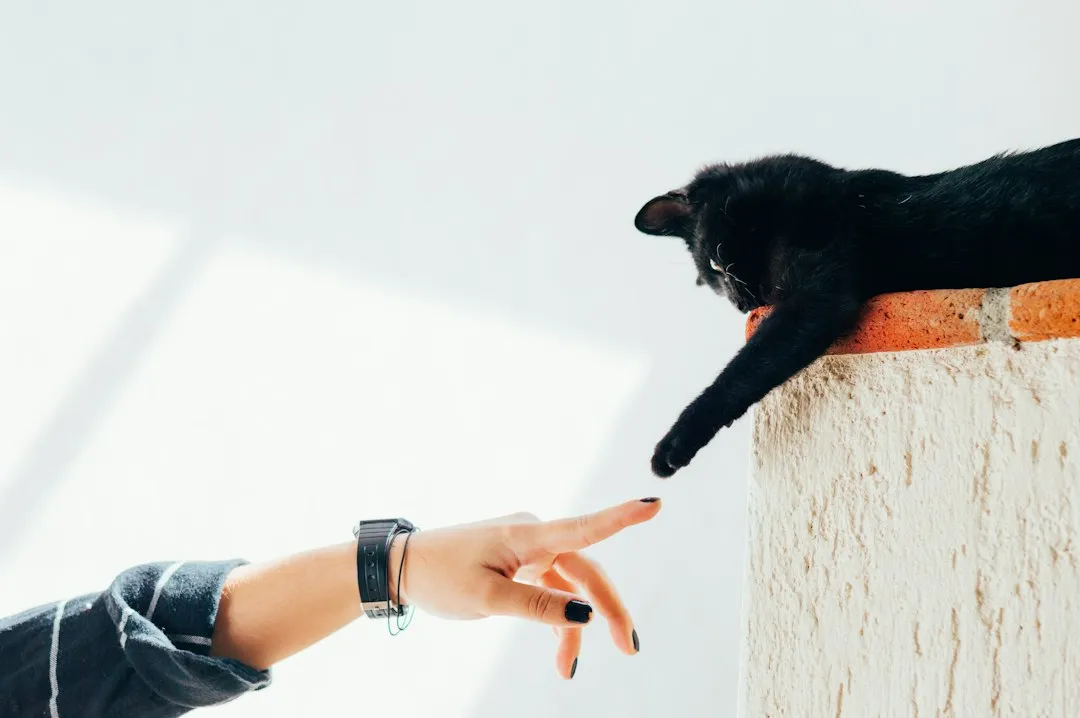
The pre-pounce movement may aid in fine-tuning the cat’s muscle coordination and increase the efficiency of the pounce. The behavior also activates a cat’s hunting instincts and mental focus, preparing them for the chase or capture of prey or toy. Knowing this, the wiggle is less of a quirk and more of a system check.
Your cat experiences genuine satisfaction from completing the hunting sequence: staring, stalking, pouncing, and capturing. When these instincts go unmet, cats often develop behavioral issues like aggression, excessive vocalization, or destructive scratching. Offering toys that mimic prey movement, such as feather wands or small rolling objects, gives cats a healthy outlet to run through the full sequence, wiggle and all.
The Takeaway
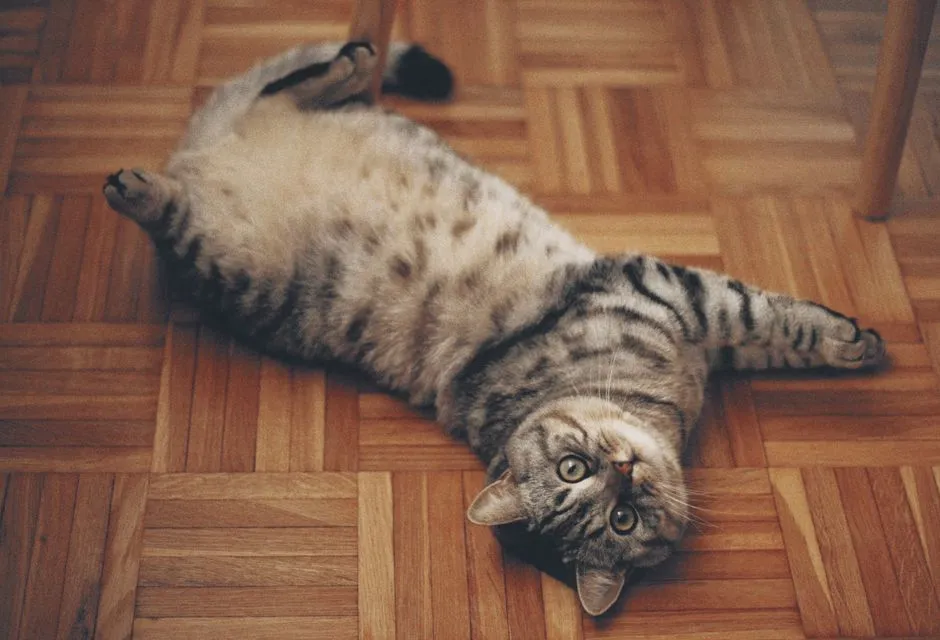
The rear wiggle is one of those behaviors that looks simple from a distance but turns out to be layered. It likely combines traction-testing, muscle activation, proprioceptive recalibration, aim adjustment, and a genuine surge of anticipatory excitement, all compressed into a few seconds of shimmy before the leap.
What’s clear is that the wiggle isn’t random and it isn’t purely cosmetic. It’s a preparatory ritual shaped by millions of years of predatory evolution, still playing out faithfully in the gap between a cat’s locked gaze and its explosive launch. The science may still be catching up, but the cat clearly knows what it’s doing.
AI Disclaimer: This article was created with the assistance of AI tools and reviewed by a human editor.