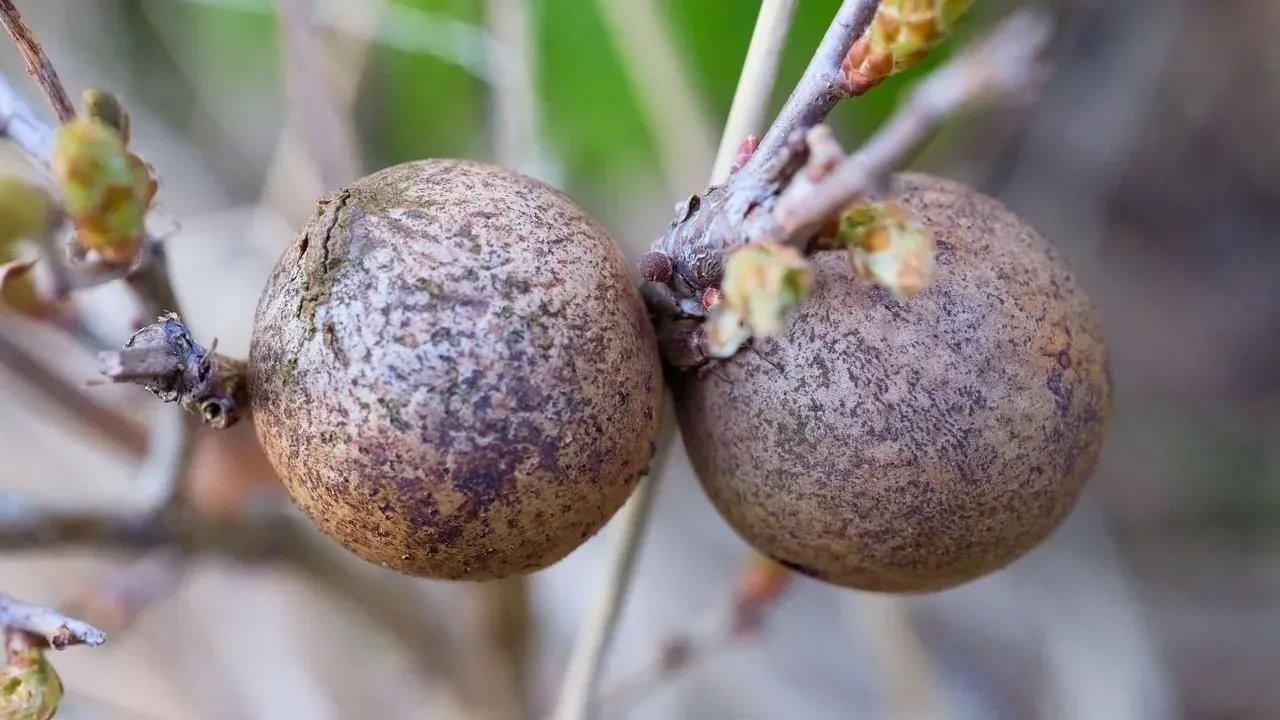

A gardener in the Grocery Row Gardens came across an unexpected find while checking storm damage. His second daughter spotted several unusually large bulbils that had dropped from vines climbing a nearby pear tree. The discovery marked the biggest examples of Dioscorea alata bulbils the family had encountered to date. ([1])
A Chance Planting Takes Hold
The pear tree itself began as a seedling hybrid with traits from Bradford, European, and Asian pears. Its fruit proved too astringent to enjoy, so the gardener tossed a few yam bulbils at its base during the first year on the property. Three years later the tree stands covered in vigorous vines. The bulbils that fell during Hurricane Isaias revealed just how well the plants had established themselves.
Size Signals Stronger Starts
Dioscorea alata, also known as the winged yam or air potato, produces these aerial tubers along its stems. While the bulbils can be cooked and eaten, the gardener notes they offer little in the way of flavor. Their real value lies in the energy reserves they carry. A larger bulbil tends to produce a more robust plant and bigger underground roots in its first season.
From Garden Find to Written Record
The same day the family collected the bulbils, the gardener completed the first draft of a short book on true yams. He sent the manuscript to a fellow author for review. Layout work now falls to him after his usual designer proved unavailable. The project draws directly from years of hands-on experience with these vigorous vines. The oversized bulbils serve as a reminder that even casual plantings can yield surprising results in a home garden setting.
AI Disclaimer: This article was created with the assistance of AI tools and reviewed by a human editor.