
Most people have tried it at least once. Lying in the dark, eyes closed, imagining woolly animals bouncing over a fence one by one. It’s one of the most universally recognized pieces of sleep advice – and also, as it turns out, one of the least useful. The persistence of this folk remedy is a little baffling when you look at what sleep research actually says.
The gap between popular sleep advice and what the science supports is wider than most people realize. Over the past two decades, researchers have pinpointed not just why counting sheep falls flat, but what kinds of mental and physical strategies genuinely move the needle. The difference matters more than ever, given how common sleep problems have become.
The Folk Remedy That Survived Without Evidence

The origin of counting sheep is surprisingly murky. One popular theory traces it to medieval shepherds in Spain, Scotland, and Wales, who counted their flocks using an old Celtic counting system. The idea was that the monotony of counting would send a tired shepherd off to sleep at the end of a long day.
Counting sheep dates back to those medieval shepherds and serves, in theory, as a cognitive distraction to ease stress and promote sleep. Research suggests, however, that it may not be the most effective method. The technique survived through generations of parental bedtime wisdom, not because it worked, but because it sounded plausible.
The Oxford Study That Put It to the Test
In 2002, researchers at Oxford University studied 50 people with insomnia and divided them into three groups. One group was asked to count sheep. Another was asked to imagine a relaxing scene, like a beach or a quiet forest. The third group was given no instructions at all. The group imagining peaceful scenes fell asleep an average of 20 minutes faster than on nights when they used no technique.
Meanwhile, those who were asked to count sheep actually took longer to fall asleep than those who simply went about their normal routine. That is not a minor finding. It means the old remedy is not just neutral – it may actively get in the way.
Why Counting Is Too Boring to Actually Work
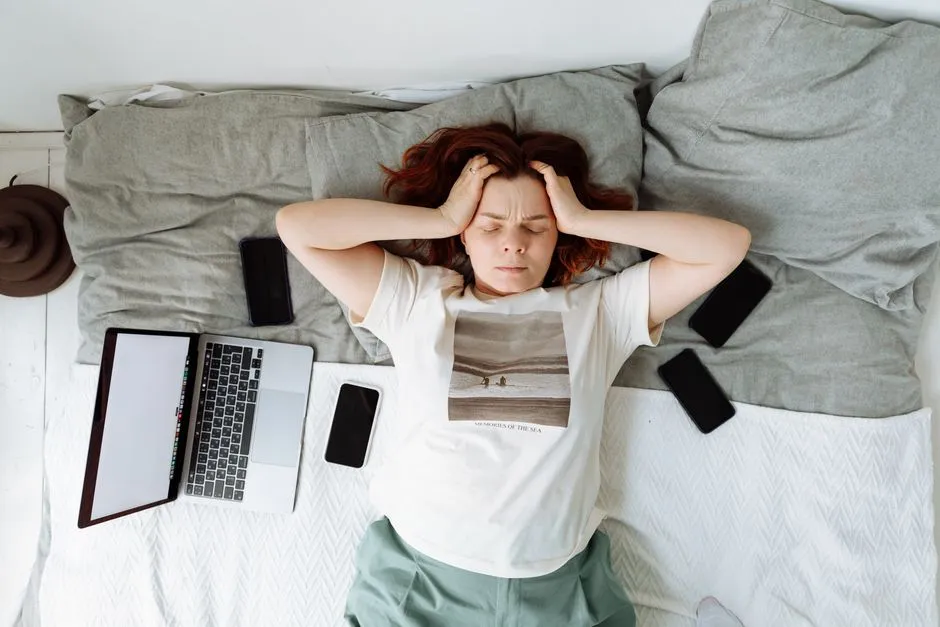
Counting sheep is so simple that it does not prevent your mind from going back to whatever you were worried about. Therefore, counting sheep does not help any more than doing nothing at all.
More recent research into the counting sheep method has found similar results, with researchers arguing that counting can actually increase anxiety about not being able to sleep. Once you start getting into double and triple figures, it can serve as a reminder of just how long it is taking to fall asleep. That is the opposite of relaxation.
Researchers theorize that the act of counting sheep is too monotonous to keep the mind engaged, which leaves room for more stressful thoughts to sneak in. In contrast, vivid mental imagery requires a bit more cognitive effort and can occupy the brain enough to block out anxiety, which is a common cause of insomnia.
The Power of Guided Imagery

One possibility researchers raised is that imagining peaceful nature scenes requires more mental energy and is more stimulating than counting sheep, making it easier to sustain. In other words, counting sheep may simply be too boring to persevere with. They also theorized that expending greater mental energy by imagining tranquil landscapes may induce sleep faster.
The key seems to be occupying just enough of the brain to crowd out anxious thoughts, without stimulating it so much that it becomes alert. The conclusion from the Oxford research: cognitive distraction needs to be engaging enough to hold attention, or the brain defaults back to anxious pre-sleep thoughts.
Cognitive Shuffling: The Technique Sleep Scientists Are Talking About

Dr. Luc Beaudoin of Simon Fraser University is the mind behind the Cognitive Shuffle, a scientifically informed technique designed to outsmart the part of the brain that keeps us tossing and turning. It is the cornerstone of his widely covered work on sleep onset and the foundation for the mySleepButton app, used by people worldwide.
Cognitive shuffling typically involves mentally conjuring up random, impersonal, and non-emotionally charged words. For each letter of a randomly chosen word, you think of as many corresponding words as you can for five to eight seconds each before moving to the next letter.
Cognitive shuffling attempts to mimic the thinking patterns of good sleepers by simulating the dream-like and random thought patterns they generally have before drifting off. Beaudoin’s research describes two types of sleep-related thoughts: insomnolent (anti-sleep) and pro-somnolent (sleep-promoting). By mimicking scattered, disconnected, and random thought patterns, cognitive shuffling may help the brain transition from wakefulness to sleep.
Progressive Muscle Relaxation: Releasing Tension Physically

Progressive muscle relaxation involves slowly tensing and releasing each muscle group in the body, starting at the feet and working up to the head. You hold each muscle contracted for about 30 seconds, then release. This process helps the body physically let go of tension and shifts the nervous system into a more restful state.
Studies have found that more than half of people who practice yoga report sleeping better, largely due to its focus on controlled breathing and the release of physical tension. Meditation, even just 10 minutes before bed, has been shown to lower blood pressure, reduce anxiety, and help people fall asleep faster.
Breathing Techniques That Signal the Body to Rest

Research suggests that slow breathing helps the body shift toward a calmer state by activating the parasympathetic, or “rest and digest,” side of the nervous system. Whatever you do, there is no need to memorize a complicated formula. Research on slow breathing supports aiming for around six breaths per minute, which means inhaling and exhaling for roughly five seconds each.
The 4-7-8 breathing technique, developed by Dr. Andrew Weil and based on ancient pranayama yoga practices, activates the parasympathetic nervous system in a similar way. The mechanics are simple enough to learn in minutes and can be practiced anywhere, requiring no equipment and no app.
The Role of Body Temperature in Falling Asleep
As the body prepares for sleep, core temperature naturally drops. A cool room facilitates this process and helps you fall asleep faster. Research published in the journal Science of the Total Environment found that sleep efficiency dropped by roughly five to ten percent when bedroom temperatures increased significantly. When rooms are too warm, they interfere with natural temperature regulation and can lead to restless, fragmented sleep.
Research from the University of Texas found that taking a warm bath or shower one to two hours before bed can reduce sleep onset latency by up to 10 minutes. The subsequent drop in body temperature mimics the natural cooling that occurs as you fall asleep. It is a counterintuitive move that genuinely has science behind it.
The Military Sleep Method
Developed to help U.S. military personnel fall asleep under adverse conditions, the military sleep method involves a sequential physical and mental relaxation protocol. It begins with relaxing the muscles of the face, then dropping the shoulders, releasing the hands, and working down through the chest, legs, and feet, consciously releasing tension at each point. Once the body is relaxed, the method calls for holding a mental image of a peaceful environment for ten seconds.
The method was reported in Lloyd Bud Winter’s 1981 book Relax and Win and has been cited by military researchers as achieving sleep onset in under two minutes for trained users. Like cognitive shuffling, it combines physical and mental elements rather than relying on either alone.
What a Consistent Schedule Actually Does to Your Brain

Research shows that maintaining a regular sleep schedule is one of the most effective ways to improve sleep quality. The body learns to anticipate sleep at a set bedtime, making it easier to drift off naturally.
A 2023 systematic review published in Chronobiology International found that exposure to blue-wavelength light, the type emitted from phone screens, computers, and LED lighting, can delay the circadian rhythm and reduce time spent in deep, restorative sleep. Keeping a consistent schedule and cutting light exposure work together rather than separately.
New research shows that when caffeine is consumed too late in the day, it may interfere with quality sleep. A research review published in 2023 found that evening or late-day caffeine intake reduced total sleep time by about 45 minutes and lowered sleep efficiency by approximately seven percent.
The Takeaway

Counting sheep has had a long run for an idea with almost no evidence behind it. The appeal makes sense: it is simple, it is free, and it feels like you are doing something. The problem is that doing something pointless at two in the morning is not much better than staring at the ceiling.
What the research consistently points to instead is techniques that strike a careful balance: engaging enough to block anxious thoughts, but not so stimulating that they fire the brain back up. Techniques like deep breathing, cognitive shuffling, and progressive muscle relaxation tend to work better.
The good news is that none of these approaches require expensive equipment or a clinical setting. They just require a willingness to trade in a habit that sounds logical but was never really tested. Sometimes the most useful thing science can do is quietly retire a bad idea that has outstayed its welcome.
AI Disclaimer: This article was created with the assistance of AI tools and reviewed by a human editor.