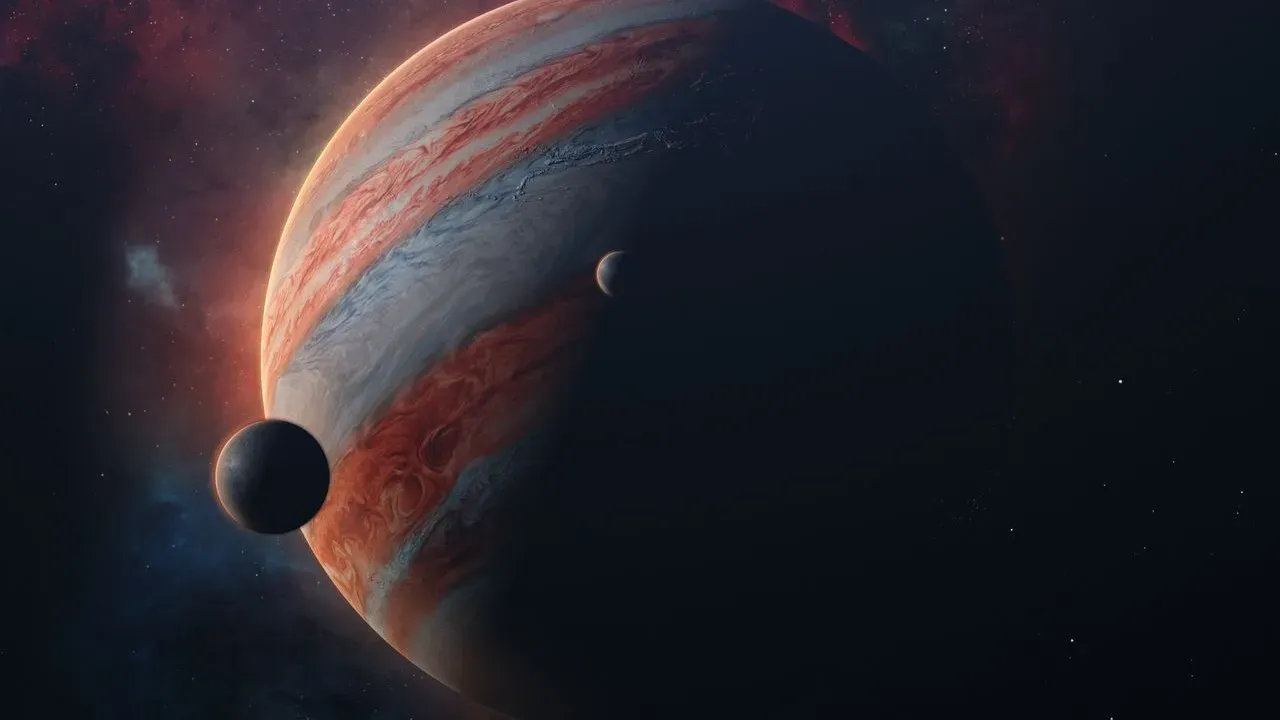

Astronomers have identified a planet that formed after its host star began to die, a rare second-generation world unlike the vast majority of known planets. Most known planets are first-generation planets, formed when a star is born from the same collapsing cloud of gas and dust. This new finding shows that planet formation can continue or restart even as a star reaches the end of its life. The discovery challenges long-held assumptions about when and how planets come into existence.
Standard Planet Formation
Planets typically emerge alongside their stars in the early stages of stellar life. A young star gathers material into a disk, and that disk cools and clumps into rocky or gaseous bodies over millions of years. The process relies on abundant raw material and stable conditions around a newly ignited star. Once the star matures and begins to exhaust its fuel, those conditions usually change dramatically.
Evidence of Later Formation
The newly identified planet appears to have assembled from material released or altered by its aging star. Astronomers detected signs that the world formed from the remnants left behind as the star evolved, rather than from the original birth cloud. This timing places the planet’s creation well after the star’s main formation phase. Observations point to a second round of accretion or condensation triggered by the star’s changing output.
Why the Distinction Matters
A second-generation planet reveals that planetary systems can remain dynamic long after the initial star-forming era. Material ejected or processed during a star’s later stages can still gather into new worlds under the right circumstances. The finding broadens the range of environments where planets might arise, including around stars that have already left the main sequence. It also suggests that some planetary systems could experience multiple episodes of formation separated by significant time.
Looking Ahead
Further observations will help confirm the planet’s age relative to its star and clarify the exact mechanisms at work. Researchers continue to search for similar cases to determine how common second-generation planets may be. Each new example adds detail to models of how stars and planets interact across cosmic time. The discovery underscores that the story of planet formation is more varied than previously understood.
AI Disclaimer: This article was created with the assistance of AI tools and reviewed by a human editor.