

The Scale of the Problem: Numbers That Tell the Story

In 2024 alone, the Better Business Bureau received 2,278 reports of pet scams, with a median loss of $680 per victim. The FBI’s Internet Crime Complaint Center logged roughly 2,600 puppy scam complaints and $5.6 million in losses in the first nine months of 2024 alone.
Peak losses reached $3.3 million in 2020 during the pandemic pet boom, and in the UK, families lost £7.2 million to fake pet listings over the past five years. Analysis of BBB and FTC data shows the average loss per puppy scam hit $1,293 in 2024, roughly a third higher than in 2019, with one reported case topping $60,000.
Cases reported are likely a vast undercount, as one study using Federal Trade Commission data determined only about 4.8% of victims of mass market fraud ever report it to the BBB or a government entity. That means the real numbers could be staggering.
How Scammers Build a Convincing Fake Presence

Scammers begin by registering new domain names that resemble real breeder sites. They build those sites using generic website builders and include high-quality images of puppies, often stolen from legitimate breeders or stock image sites, along with detailed “About Us” pages, FAQs, and pricing information to appear credible.
Using automation tools and domain registrars that offer privacy, scammers can spin up new sites in hours. Once one site is flagged or blacklisted, they simply shift to the next and continue their scheme.
The BBB reports thousands of fake websites and social media pages for pet scams, including many where scammers have stolen a legitimate business’s identity to fool potential buyers. It’s a sophisticated operation, not an amateur one.
Where These Scams Begin: Search Engines and Social Media

Over 50 percent of pet scams, according to BBB Scam Tracker, originate on a website found through a search engine or social media. Petscams.com, a group dedicated to exposing scam websites, identified over 1,000 fake pet sellers in the past year. Parsing through those websites, the group found nearly one third of them were using some form of search engine advertising, meaning their fraudulent websites were more likely to appear at the top of a search for terms like “French bulldog for sale.”
In 2025, nearly 30% of people who reported losing money to a scam said it started on social media, with reported losses reaching $2.1 billion across all social media fraud categories. Reports show that in 2025, people reported losing more money to scams that started on Facebook than on any other social media platform, with WhatsApp and Instagram ranking a distant second and third.
The Breeds Scammers Use as Bait

Over 200 Scam Tracker reports named bulldogs and dachshunds as the breeds buyers were searching for before being scammed. Other popular breeds included chihuahuas, shepherds, pomeranians, and golden doodles.
The BBB says it can be hard to tell the difference between real advertisements and fake ones for popular dog breeds like French bulldogs, dachshunds, and German shepherds, leading many unsuspecting families to be deceived. Golden Retrievers typically cost $1,200 to $3,000 from reputable breeders, yet scammers list them for $300 to $600. That price gap is the hook.
The Classic Playbook: How the Scam Unfolds Step by Step

A puppy scam is a type of online fraud where a fake seller advertises puppies for sale, usually on social media, classified sites, or fraudulent websites, collects payment, and then either delivers no dog at all or demands escalating fees for “shipping,” “insurance,” or “crate deposits” that never end.
A buyer finds a listing that looks like a great deal, pays a deposit, and then gets hit with one extra fee after another for crates, insurance, shots, or emergency vet bills for a puppy that never existed. Pet scams, unlike other online shopping scams, depend on the perpetrator being able to coerce the buyer into sending money several times, until they have lost hundreds or even thousands of dollars.
Scammers create false urgency. They claim multiple people want the puppy, or that you need to send a deposit “today” or lose your spot. It’s a pressure tactic designed to short-circuit careful thinking.
Red Flag: The Price That Seems Too Good to Be True

Purebred puppies from health-tested parents typically cost $1,500 to $3,000 or more depending on the breed. If someone is offering a “registered Golden Retriever” for $500, the deal is almost certainly fake. Scammers use low prices to attract more victims quickly.
Responsible breeders invest heavily in health testing, quality care, and proper breeding practices, and this costs money. A puppy priced far below market value is a major warning sign. If the number makes you feel like you’re winning, pause before proceeding.
Red Flag: Avoiding Phone Calls, Video Chats, and In-Person Visits

Scammers stick to text messages and emails because phone conversations reveal inconsistencies in their stories. Scammers are often located in other countries and can only communicate in ways that conceal their identities, like email. Sometimes, scammers will impersonate real breeders online, and limiting the means of communication is one way to keep the fraud intact.
Always request a live video call where you can see the puppy moving around and interacting. Ask the seller to hold up a specific object or write today’s date on paper during the call to prove it’s happening in real-time. Some scammers will send videos that are actually stolen clips from legitimate breeders. Asking the breeder to do something specific during a live call, like wave a piece of paper with your name on it, is a more reliable test. If they make excuses about bad signal or privacy, it’s a scam.
Red Flag: Unsafe Payment Methods and Stolen Photos

Scammers specifically request payment methods that are difficult or impossible to reverse. Wire transfers, peer-to-peer apps like Zelle and Venmo sent as “Friends and Family,” CashApp, cryptocurrency, and gift cards offer virtually no buyer protection. A legitimate breeder will accept traceable payment methods and provide a written contract.
Scammers frequently steal photos from real breeders’ websites or use stock images. Doing a reverse image search can reveal whether the same pictures appear on other sites. If the identical puppy photo shows up on five different listings, it’s a scam.
Who Gets Targeted and When Scams Peak

The FTC concluded that the vast majority of victims are in their 20s and 30s. These age groups grew up with the internet and may be more likely to search for a pet online instead of going to a local breeder or searching in other ways.
Since the beginning of 2022, December and January have brought in the highest number of scam reports related to pet purchases, with hundreds more rolling in during the holiday months. Experts note this pattern increases as the holidays approach, a time of year when online searches for puppies for sale traditionally see a steep rise. Families shopping for a puppy as a holiday gift are among the most vulnerable targets of all.
Florida, Arizona, California, and Virginia not only rank among the states with the most reported scams in the US, but also rank high for the number of scams per 100,000 people. Collectively, scam victims in California lost over $130,000 during one analyzed period. Texas and Florida came in second and third for total money lost overall.
What Prosecutions Look Like and Where to Report

In one notable case, a Maryland man was sentenced to 30 months in federal prison in connection to a widespread pet scam where he stole nearly $1 million from more than 10 victims. Law enforcement has become more active, but prosecutions remain rare relative to the volume of fraud.
Scammers come from all over the world, but primarily target US citizens. Pursuing justice across international borders is legally complex and slow. Victims can file a complaint with the Federal Trade Commission at reportfraud.ftc.gov, or report the incident to Petscams.com, which tracks complaints, catalogs puppy scammers, and works to get fraudulent websites taken down.
How to Protect Your Family Before You Search

Making an in-person visit, meeting the dog breeder, the puppy, and the parents of the puppy, remains the single most reliable way to confirm you’re dealing with a real seller. Looking for breeders within driving distance allows you to see the animal and meet the breeder before any purchase. You can also pick up the animal yourself when it’s ready, which not only confirms the puppy exists but is also less stressful for the animal than commercial shipping.
Asking friends, family, coworkers, or your veterinarian for a referral to a reputable breeder or rescue remains one of the safest starting points. Humane World for Animals research also notes that more than 2.9 million dogs entered US shelters in 2024, making local rescue adoption a credible and safer alternative for families ready to bring a dog home.
A Note on the Shifting Landscape in 2026
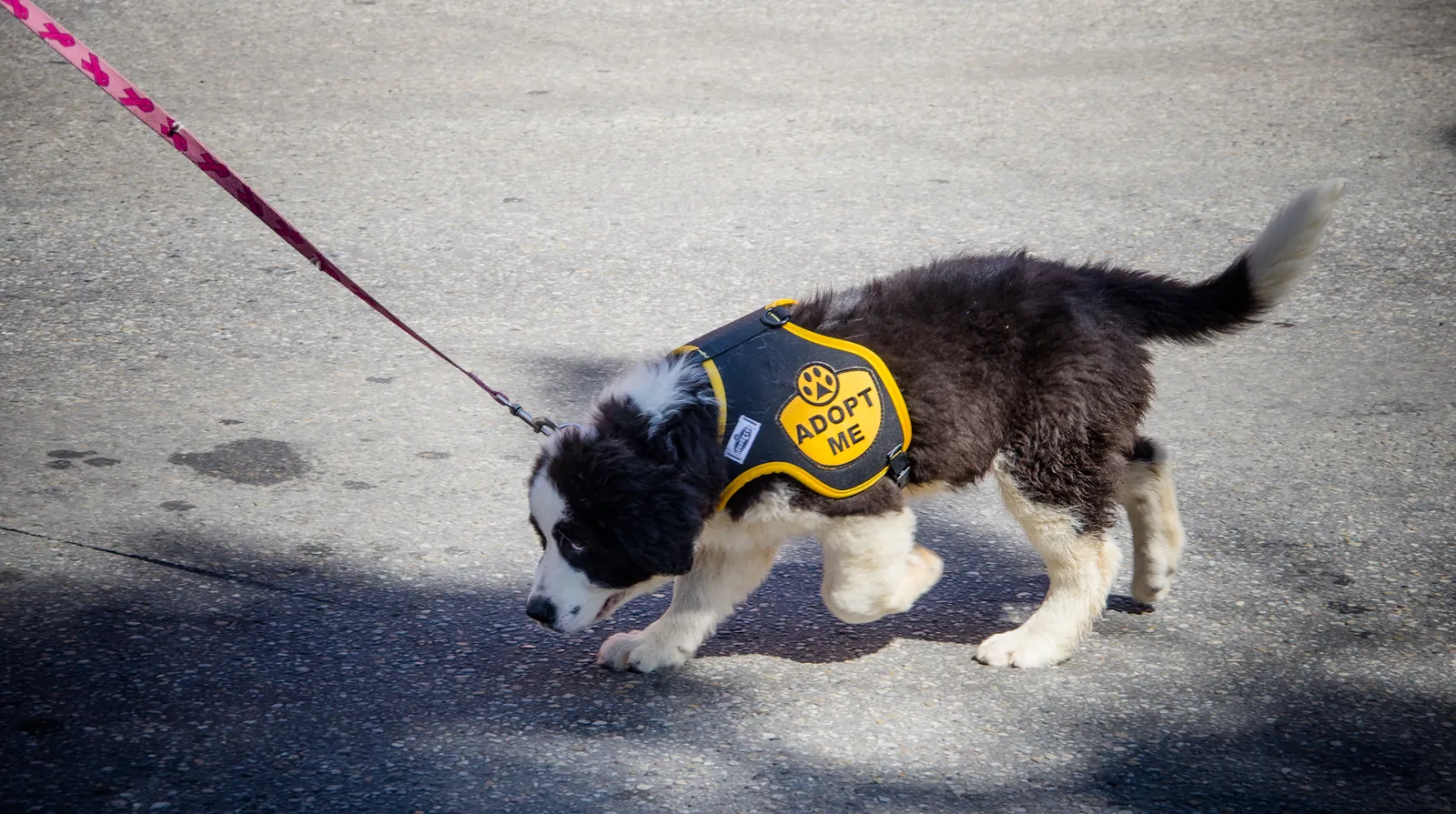
Puppy scams have become more sophisticated over time. In 2026, fraudulent sellers are using fake websites, stolen photos, and convincing stories to trick eager buyers. The BBB and FTC report that puppy scams are more sophisticated than ever, often leveraging AI-generated images and fake “shipping company” trackers to deceive hopeful buyers.
Reverse image search is useful but is no longer enough, as AI-generated or newly edited pet images may not appear anywhere else online. Even a video call is not a full guarantee. Buyers should still verify the source, paperwork, and payment path independently. Technology is making it harder to spot fakes, which makes human verification, visiting in person, getting references, and consulting a vet, more important than ever.
Final Thoughts

The puppy adoption scam works because it exploits something genuinely good: a family’s desire to add a loving animal to their home. Scammers understand that emotional pull better than most marketers do, and they use it with precision.
The data from the BBB, FTC, and FBI all point in the same direction. These schemes are widespread, underreported, and increasingly hard to detect without careful, deliberate verification. The good news is that most scams follow predictable patterns that you can spot before sending any money. Slow down, do a reverse image search, ask for a live call with a specific test, and never pay via gift card or wire transfer. A real puppy, from a real breeder, will still be there after you’ve done your homework.
AI Disclaimer: This article was created with the assistance of AI tools and reviewed by a human editor.