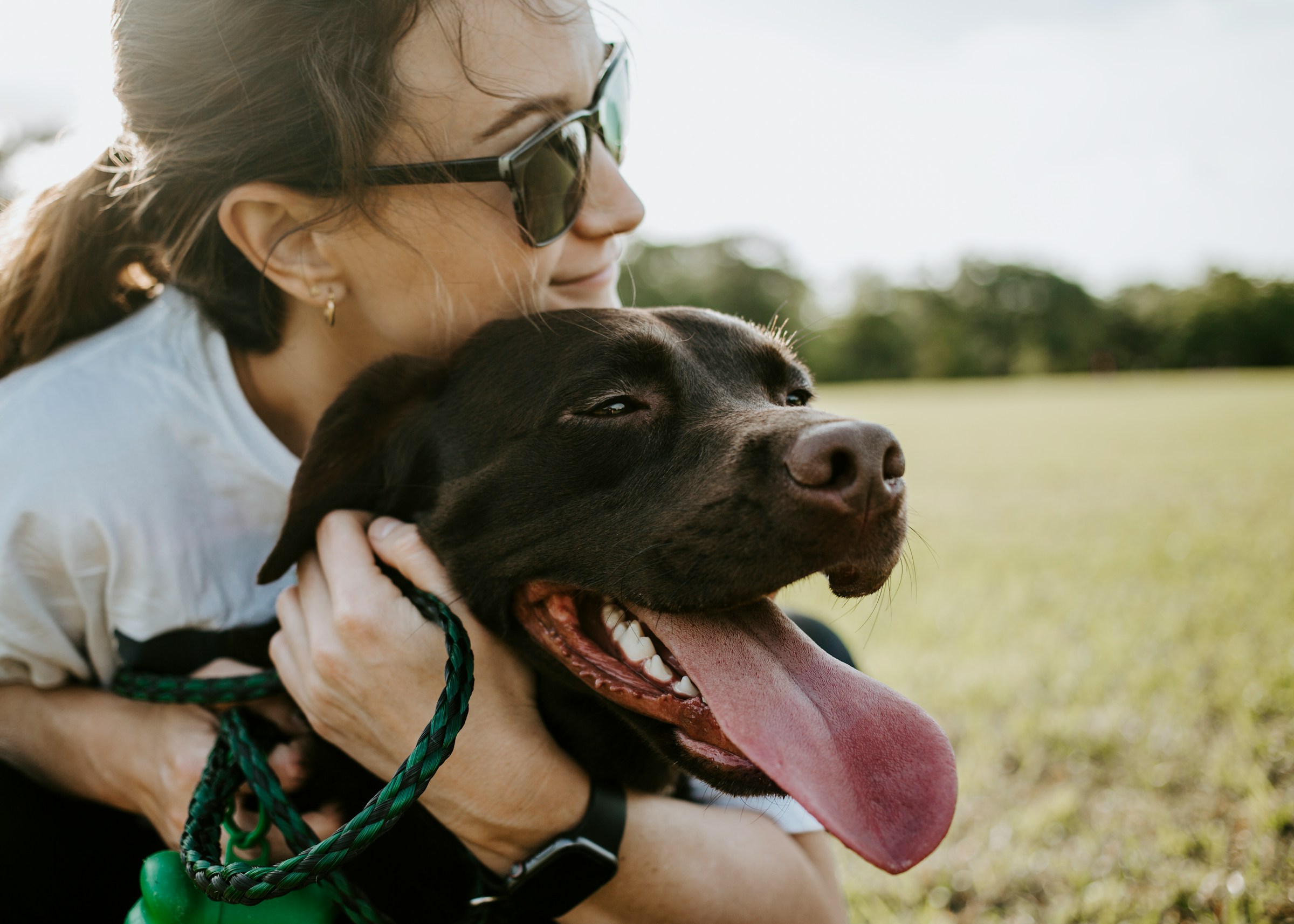

Most dog owners know the moment well. You lean in for a hug, arms wrap around a partner or a friend, and within seconds there’s a warm, furry body pressing insistently between you. It’s equal parts adorable and puzzling. Is your dog worried? Jealous? Just trying to join the fun?
The answer turns out to be layered, and researchers have spent years building a surprisingly rich picture of what’s actually going on. Here are ten well-supported reasons behind that persistent squeeze.
There’s Real Science Behind Dog Jealousy
A landmark study published in PLOS ONE by UC San Diego psychology professor Christine Harris showed that dogs exhibit more jealous behaviors, like snapping and pushing at their owner or a rival, when the owner showed affection to what appeared to be another dog. The behavior wasn’t random or minor. Harris concluded that the dogs were “seeking to break up the connection between the owner and a seeming rival,” suggesting they were motivated to protect an important social relationship.
The findings support the view that jealousy is a primordial emotion seen not only in humans but in other animals as well, and the results also show that jealousy does not require especially complex minds. So when your dog wedges in during a hug, it isn’t just drama. It’s biology.
Your Dog Sees You as a Social Resource Worth Protecting
The function of jealous behavior is to facilitate the maintenance of an important social relationship that is threatened by a third party, a rival individual. Dogs have essentially adapted this ancient social mechanism to their bond with their owners. Based on functional similarity between dog-owner and mother-infant attachments, researchers hypothesized that jealous behavior can be evoked in dogs similarly to children.
If an owner hugs their partner, the pet perceives that their favorite human is being “taken away” or claimed by someone else. It’s not petty behavior. From the dog’s perspective, it’s a reasonable response to a perceived social threat.
The Emotion Can Operate Even Out of Sight
Dogs appear to have the mental capacity to imagine a situation that would make them feel jealous, even if it’s not fully in sight. This is a striking finding. Three human-like signatures of jealous behavior were observed: the behavior only emerged when a perceived social rival was involved, and it emerged even for out-of-sight interactions with that rival.
The implication is that your dog isn’t simply reacting to what it sees in the moment. It is actively tracking where your attention and affection are going, even when it can’t directly observe it.
Dogs Are Wired to Monitor Your Emotional State
Dogs are deeply social animals wired to monitor their attachment figures, and a hug, which involves physical closeness, altered posture, and emotional energy, can trigger alarm, excitement, or demand barking depending on the individual dog. This attentiveness goes right down to the neurological level. Research using MRI imaging from Dr. Gregory Berns at Emory University has shown that the caudate nucleus, a brain region associated with positive emotions and reward anticipation, activates in dogs in response to human social cues, including familiar faces, scents, and voices.
Your dog isn’t passively sitting in the corner. When you hug someone, your dog is reading posture shifts, vocal tone, and energy changes in real time, processing all of it and deciding whether to act.
Oxytocin Deepens the Bond That Makes Interruption Likely
Dogs are highly attuned to oxytocin, the bonding hormone. Studies show that when dogs and their owners make eye contact, oxytocin levels rise in both species, a phenomenon not observed in wolves, suggesting domestication specifically shaped this emotional attunement. The strength of that biochemical bond matters here. Research published in the journal Science revealed that when dogs and their owners gaze into each other’s eyes, both experience a surge in oxytocin levels, the same hormone released when a mother looks at her baby, creating feelings of trust, attachment, and love.
The stronger that bond, the more your dog has to lose when your attention shifts to someone else. A deeply bonded dog is, in a sense, more likely to squeeze in precisely because the relationship matters so much to them.
Hugging Looks Strange to a Dog
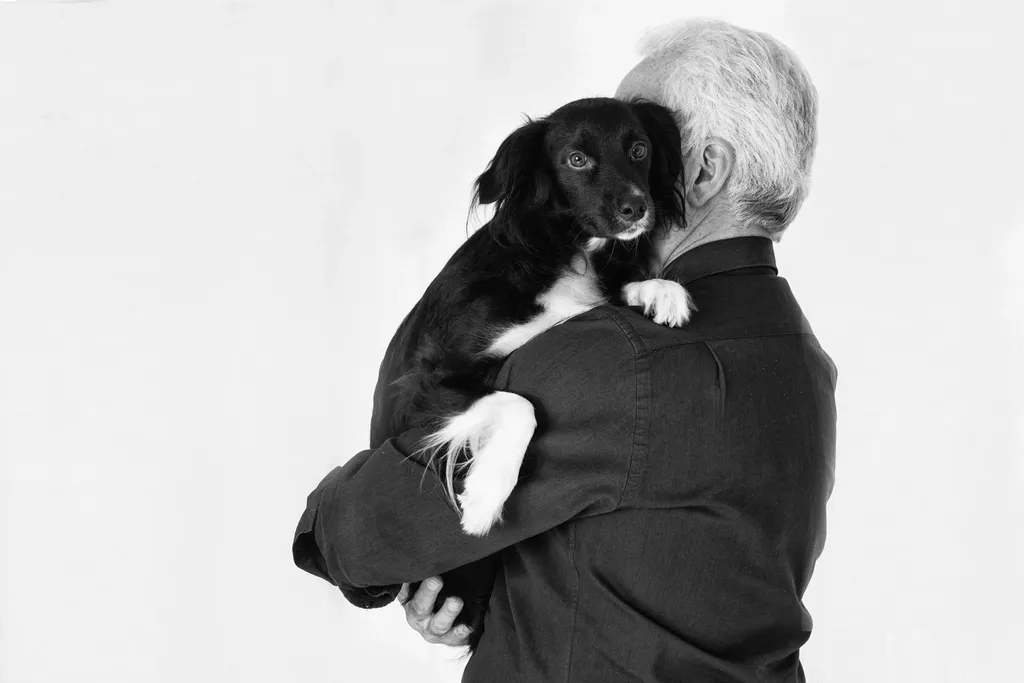
Hugging is a human behavior that is not natural to dogs. Humans wrap their arms around each other and squeeze tightly, and hugs can have a calming effect on humans as a way of showing affection. Dogs, however, tend to show their affection differently. They will put a paw on your knee or rest their head on your lap. Hugging to a dog can be a very peculiar thing, and they interpret it as such.
One way a dog sees a hug is as a threat. You are close to someone and your arms are wrapped around them. That restraint-like posture, combined with the physical closeness of two people, can read as a form of conflict to a dog that has no cultural framework for understanding it as tender.
Some Dogs Are “Splitting” a Perceived Conflict
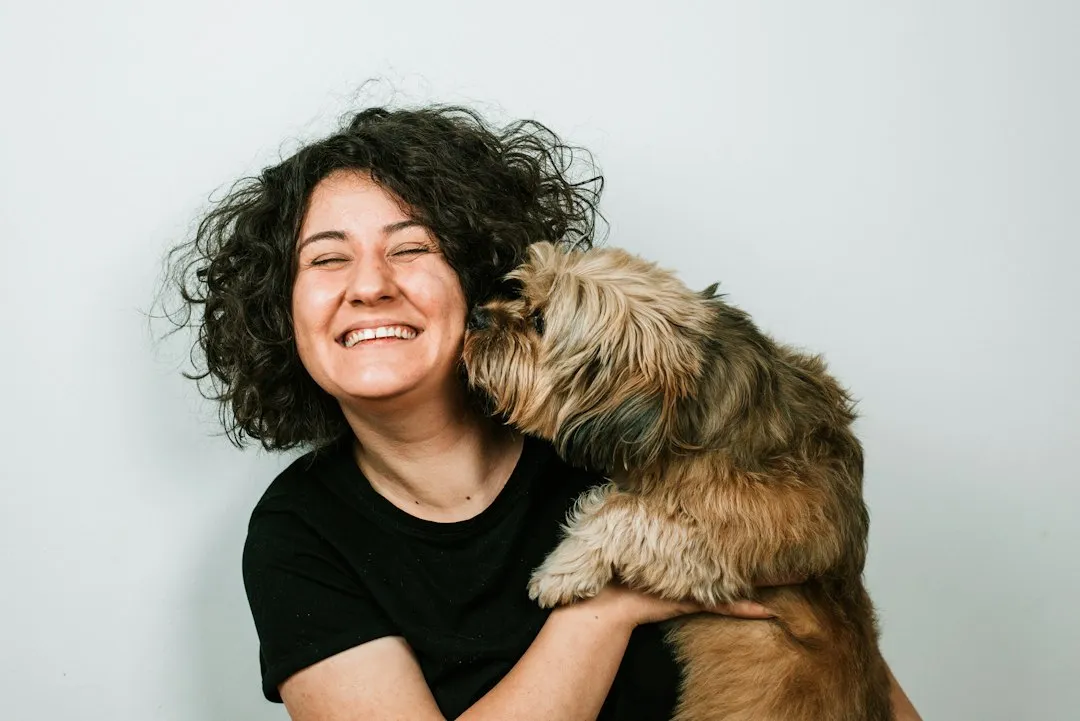
In canine body language, there’s a behavior called “splitting,” where a dog moves physically between two other individuals to reduce tension or prevent conflict. To a dog, a hug might not look like a loving moment. It might look like something they need to interrupt or fix, particularly if there’s tension, restraint, unusual vocal tones, or a shift in the family’s energy.
Dogs that squeeze in aren’t necessarily being naughty. They may be trying to manage a situation they don’t understand, and possibly one that makes them feel unsafe or unsure. Dogs with protective instincts toward their owners are especially prone to this kind of intervention.
Attention-Seeking Behavior Gets Rapidly Reinforced
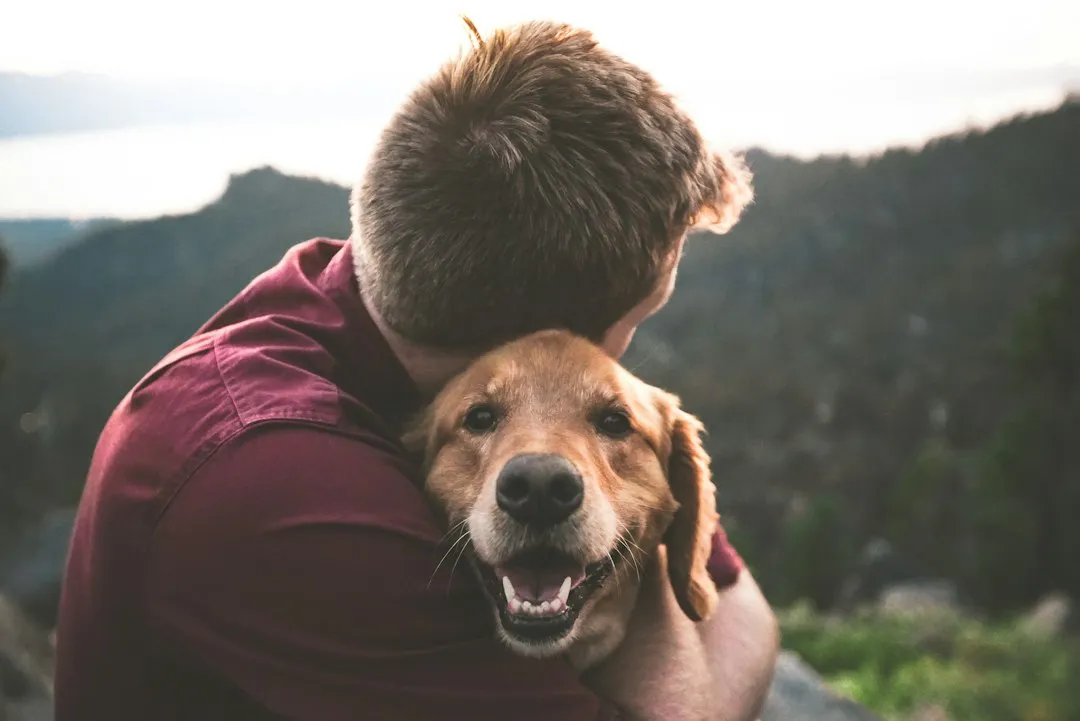
The most frequently reported jealous behavior in dogs is attention seeking, in particular by pushing against the caregiver, in roughly half of reported cases, followed by whining, growling, or barking in a large portion of cases. The behavior tends to stick because it works. Pets quickly learn that acting out during a hug forces the humans to break the moment. The person might look down, talk to the dog, or push them away. Even negative attention, like being told “no,” reinforces the behavior, because the pet learns that interrupting the embrace is a highly effective way to get noticed.
This is a classic reinforcement loop. The dog interrupts, the humans react, the behavior is rewarded. Repeat enough times and squeezing in becomes the dog’s default response to any hug in the room.
The Behavior Varies Significantly by Dog and Context
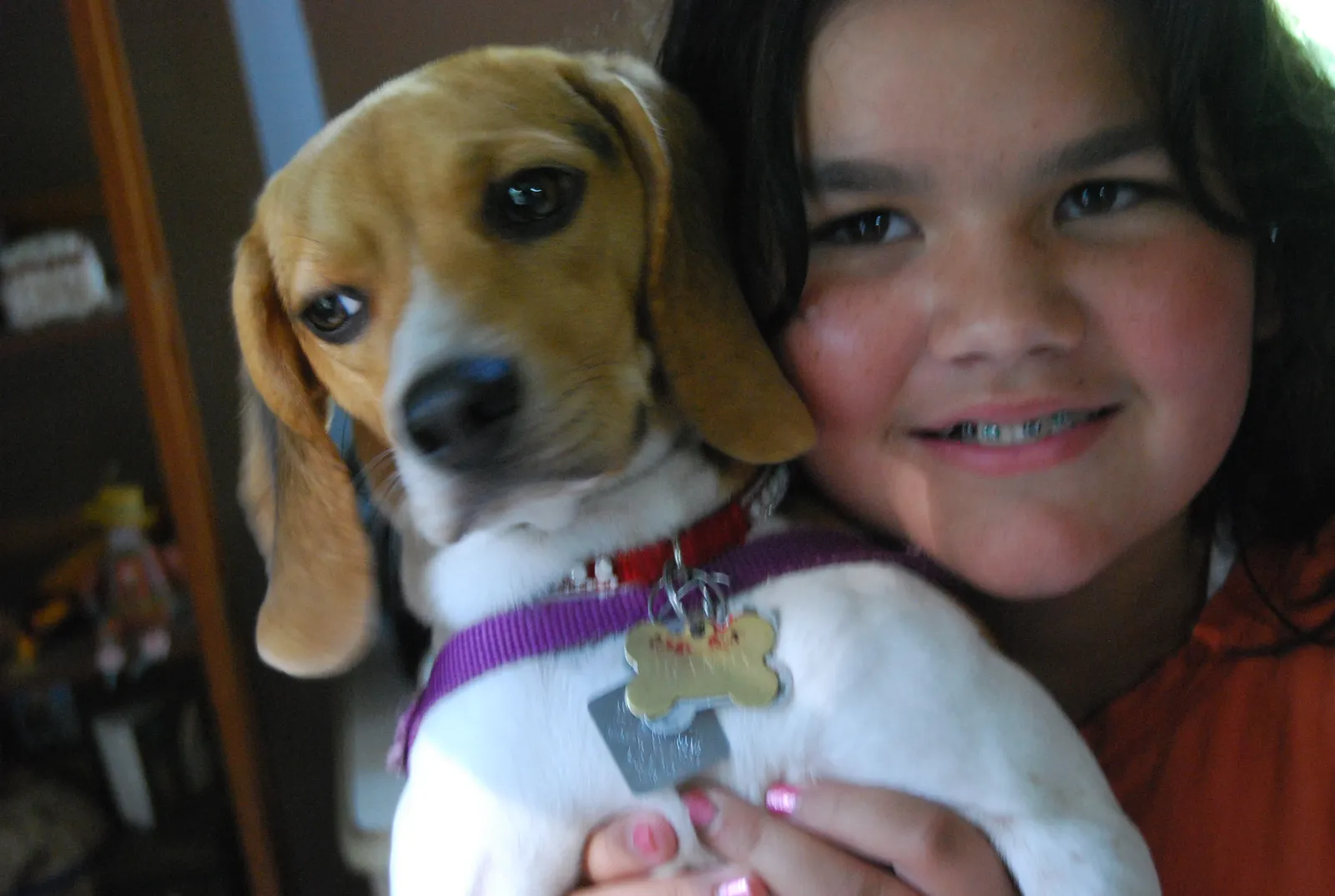
Research shows that dogs’ reactions vary considerably in jealousy-evoking situations. Some dogs passively monitor the owner-rival interaction, while others react actively, interrupting the interaction and staying close to, or acting on, the owner. Breed, early socialization, and the strength of the attachment bond all play a role. In one structured study involving in-depth interviews with dog caregivers, all caregivers stated that their dogs could get jealous, especially when the caregiver was interacting with another person, which was cited in about half of all jealousy reports.
Reactions depend on a dog’s personality, bond with their owner, and socialization history. A confident, well-socialized dog might simply trot over curiously, while an anxious or under-socialized dog might escalate quickly to barking or pushing.
It’s a Sign the Bond Is Genuinely Strong
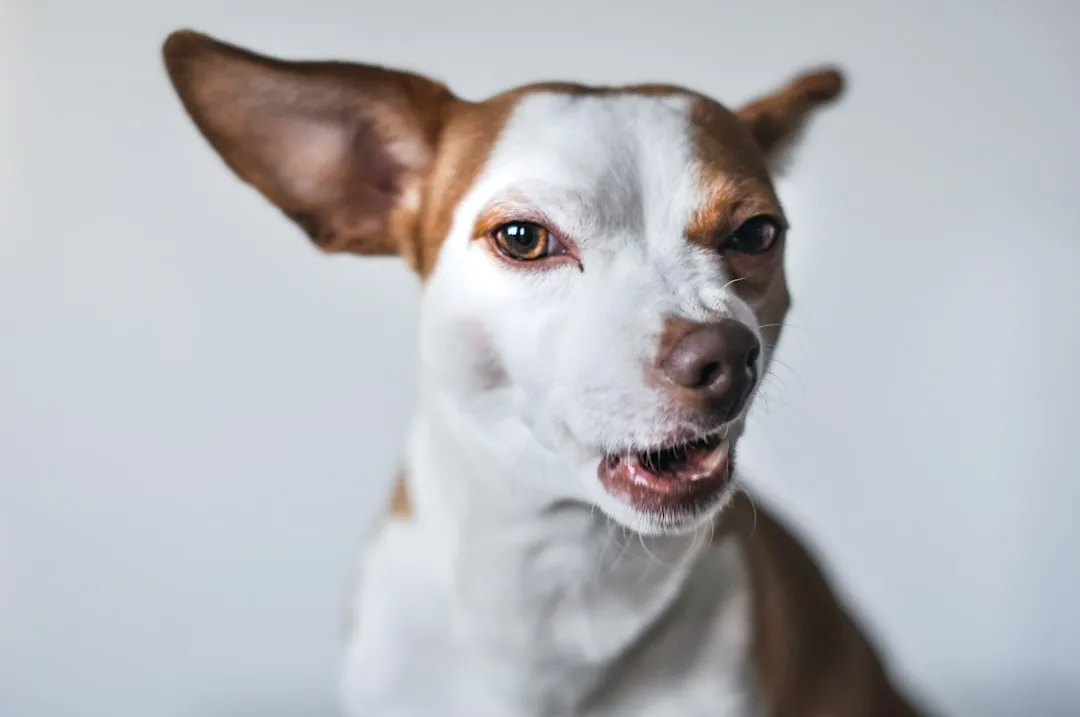
In all cases studied, the consistent trigger for jealousy-like dog behavior was the caregiver’s attention toward a third party, particularly when affection was also expressed. The more emotionally attached the dog, the more acutely they feel the shift. This can be a kind of jealousy. It can be upsetting for a dog when something it wants, like affection, is in jeopardy because attention is focused on someone else, and in response, some dogs use attention-getting behaviors to disrupt the situation.
When owners gave attention and affection to another person or animal, dogs tended to engage in attention-seeking behaviors such as pushing against the owner or getting in between the owner and the rival, along with barking, growling, or whining. It’s worth remembering that the dog doing the squeezing is, in its own way, telling you how much you mean to them.
What You Can Do About It
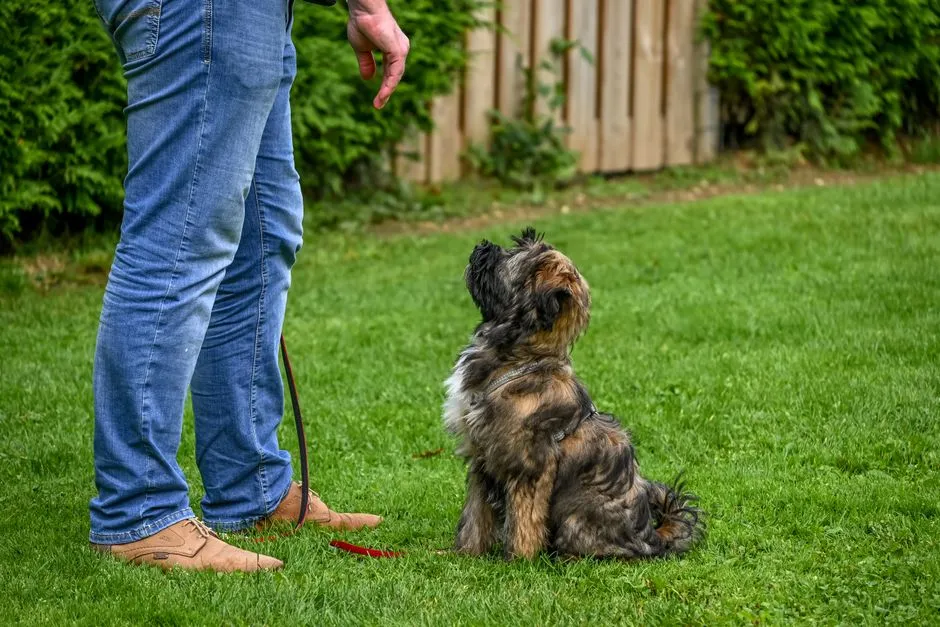
The most common advice from animal behaviorists is to avoid rewarding the interruption with attention, even gentle or scolding attention. Giving your dog a specific place to settle during moments of physical affection, and rewarding calm behavior there, tends to be more effective than simply pushing them away in the moment.
If the behavior is intense or escalating, a certified dog trainer or veterinary behaviorist can help rule out anxiety as an underlying factor and build a structured desensitization plan. Most of the time, though, the behavior is manageable, and understanding where it comes from is the first step toward gently redirecting it.
The Takeaway
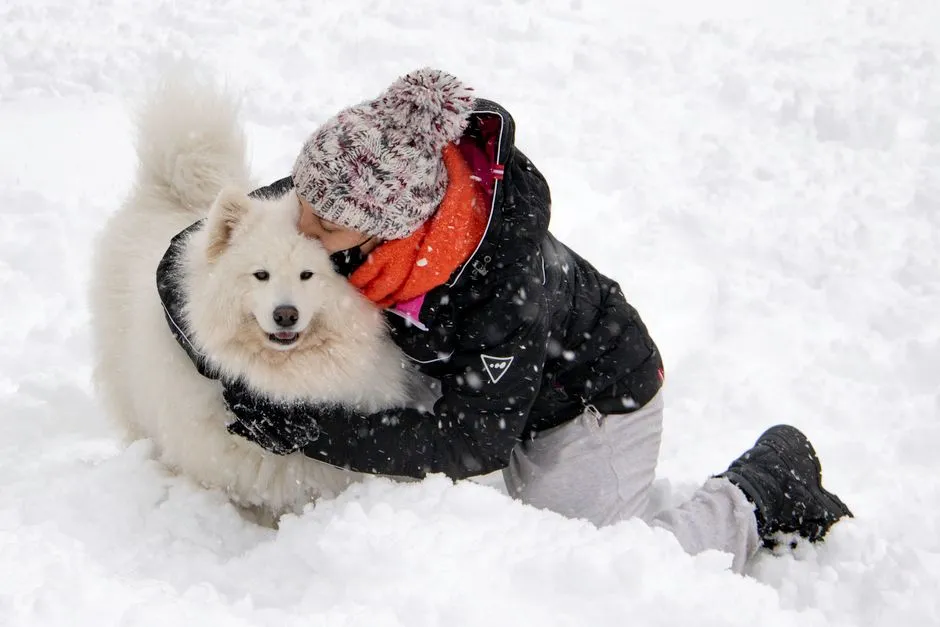
Your dog squeezing in during a hug isn’t random, rude, or simply bad manners. It’s the product of a deep social bond, an evolved sensitivity to your emotions, and a set of behavioral instincts that have been shaped over thousands of years of living alongside humans. The research is consistent: dogs are not passive observers of your social life.
They are invested participants. That furry interruption is, in its way, a compliment. The inconvenient kind, perhaps, but a compliment all the same.
AI Disclaimer: This article was created with the assistance of AI tools and reviewed by a human editor.