

The Brain Actually Forgets Who It Told, Not What It Knows

One of the most important concepts in understanding this behavior comes from memory research, not clinical dementia studies. Older adults are more likely to have destination memory failures, meaning they forget who they’ve shared or not shared information with, according to a study led by Baycrest’s Rotman Research Institute. The story itself stays intact. It’s the social record of who’s already heard it that fades.
In the first experiment for destination memory accuracy, older adults’ performance was 21 percent worse than their younger counterparts. That’s a meaningful gap, but it’s also a completely different category from the kind of memory loss associated with dementia. This type of memory slip is normal aging, not cognitive decline. The event remains vivid and meaningful. Only the social context of who was told what becomes unreliable.
What “Destination Amnesia” Actually Means
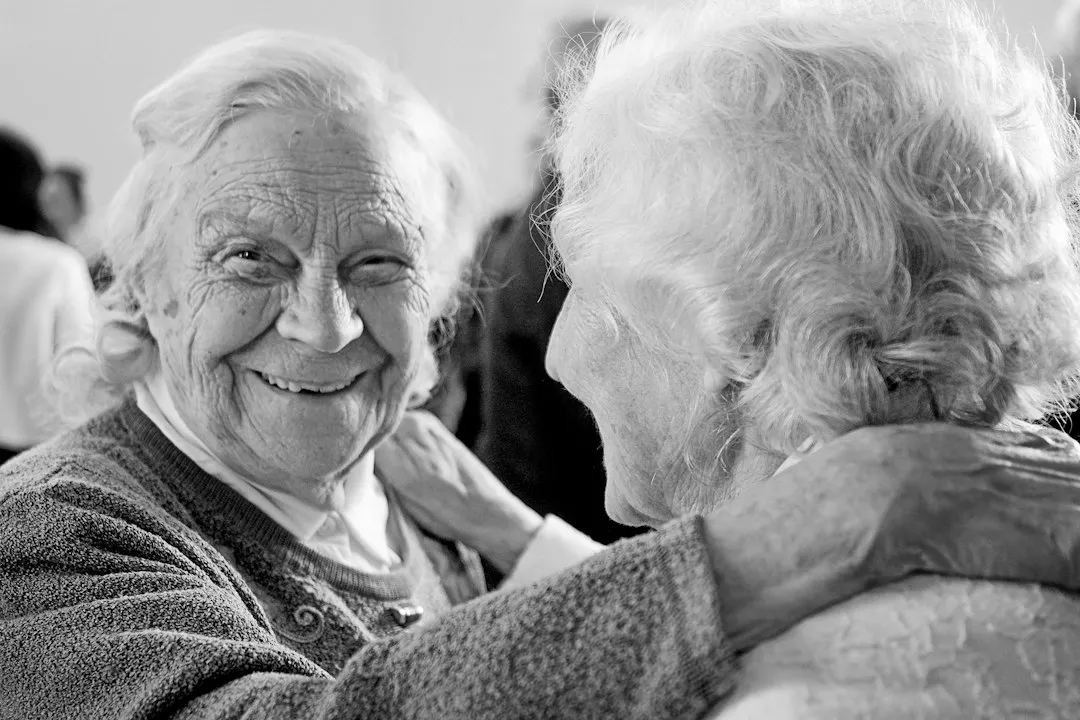
The ability to focus and pay attention declines with age, so older adults use up most of their attentional resources on the telling of information and don’t properly encode the context, meaning who they are speaking to, for later recall. This is called destination amnesia, a term coined by researchers Gopie, Craik, and Hasher at the Rotman Research Institute.
It’s the kind of memory faux pas that can lead to awkward or embarrassing social situations, and ironically, after making these memory errors, older adults remain highly confident in their false beliefs. They aren’t being careless. Their brains are simply not tagging the social destination of a story the way younger brains do. Research found that you could improve destination memory by saying the name of the person you’re speaking to as you tell them something.
The Reminiscence Bump: Why the Old Stories Feel Freshest

A systematic review published in PLOS ONE examined 68 studies on autobiographical memory across the lifespan. Researchers found that as people age, they recall the most vivid memories from roughly between ages 10 and 30. This phenomenon is known as the reminiscence bump, and it helps explain why a parent’s war stories, first job memories, or youthful adventures surface so reliably in conversation.
As we age, our episodic memory, the ability to remember recent specific events, can naturally become a bit less sharp. Meanwhile, long-term memories, especially those with high emotional stakes, remain vivid and easily accessible. The older the memory, in many cases, the brighter it burns. That’s not dysfunction. That’s how human memory is structured.
Stories as Identity, Not Just Information

Part of aging is reflecting on personal history and finding meaning in the past. Everyone wants to find purpose and legacy in their lives, and older seniors are no different. Age provides wisdom and a plethora of memories to sort through. It is not uncommon for older people to reflect on the same few impactful stories to derive new meaning or lessons about themselves and the world.
Sharing memories of their career, their travels, or their parenting years is a way for seniors to remind themselves and you of who they are beyond their current physical limitations. A parent who once ran a business or raised six children doesn’t stop being that person just because the body slowed down. The stories are a living record of who they still are.
Loneliness Can Amplify Repetition

When your parent speaks to very few people, they have limited stories to tell and limited audiences to tell them to. If your weekly visit is one of their only social interactions, they may repeat stories because there’s nothing new to talk about. This isn’t a memory problem. It’s a lack of stimulation.
Social isolation among older adults is a well-documented and growing concern. When the social world shrinks, the same memories circulate more frequently simply because they’re the most available material for connection. Sometimes repeated stories are not just repetition. Sometimes they are a senior asking to be remembered while they are still here to tell it. That reframe matters.
Emotion, Not Facts, Is Often the Real Driver

Families sometimes focus on the repeated information. The senior may not be repeating the story for the facts. They may be returning to the feeling. Pride in a job well done. The specific weight of a grief that never fully lifted. The pleasure of a moment when they felt competent and needed.
This is a useful distinction to hold onto. When your father retells the story of his first car or your mother revisits a particular trip she took at 24, the content is almost secondary. Aging can shrink conversations in a painful way. Suddenly, the person who lived a full life is being asked mostly about symptoms. Old stories bring back the fuller version of them.
How Older Adults Narrate Differently

When young adults tell the same story repeatedly, their narratives become progressively more concise. Although impaired discourse production has been reliably demonstrated in the elderly, changes in narrative production with repetition have not been well studied. Research published in PubMed explored exactly this question using structured storytelling tasks.
For all variables, the compression index for the elderly group was significantly lower than that for young participants. Compared to their younger counterparts, elderly adults were less able to improve the cohesion of their narratives with repetition. These findings suggest that the elderly have a reduced capacity to generate and refine discourse representations. In plain terms: older adults don’t “streamline” repeated stories the way younger people do, which can make the repetition feel more obvious.
When Repetition Stops Being Normal

Repetition in seniors can be a normal part of aging, but it may also be an early warning sign of dementia or Alzheimer’s disease. It happens because of short-term memory loss, anxiety, or difficulty processing new information. The key is to notice how often it happens, whether it is getting worse, and whether other changes are present.
While most repetition is a normal part of ageing, there are moments when it warrants a closer look. It is helpful to distinguish between forgetting a story and forgetting that a conversation just happened. A parent who retells a story from last month is in a very different situation than one who repeats the same question three times within a single ten-minute conversation. Repeating the same question multiple times within a single conversation, with no memory of having asked, is not typical aging and should be evaluated by a doctor.
What the Research Says About Repetition and Dementia

Of the 3,573 participants who began a user profile in one research study, 1,707 fulfilled criteria for analysis. Verbal repetition was identified as a treatment target in nearly half of respondents at 47.3 percent. Verbal repetition was more frequent in individuals with mild dementia compared to those with moderate and severe dementia, and significantly higher in those with Alzheimer’s disease versus other dementias.
The loss of cognitive functioning and behavioral abilities referred to as dementia is not considered a normal part of aging, but it does affect nearly half of all people age 85 and older. The condition ranges in severity, and those with extremely mild forms can still live relatively everyday lives with limited intervention. The presence of repetition alone is never enough to diagnose anything. Context, frequency, and accompanying changes in daily functioning all matter.
Public Perception Often Overstates the Risk

A 2021 nationally representative survey fielded by AARP of adults aged 40 and older showed that nearly six in ten believe that cognitive decline is inevitable, and roughly two thirds believe they will experience cognitive decline as they age. That kind of expectation can cause families to pathologize behaviors that are, in fact, entirely within the range of normal aging.
When nearly half of surveyed adults expect to develop dementia, it’s easy to see why a repeated story triggers alarm. Repetition in elderly parents is the single most common early concern families have about dementia. The truth is that repetition is normal at every age, but the pattern and context of repetition can distinguish ordinary forgetfulness from something that needs medical attention. Anxiety on both sides of the conversation doesn’t help anyone navigate that distinction clearly.
The Takeaway

The next time your parent tells you the same story again, consider what’s actually happening in the moment. They remember the story. They remember how it felt. What they’ve lost track of is that you were the last person they told it to, and that’s a very specific, very human kind of forgetting. When family members understand the importance of an elder retelling personal stories, they tend to be more tolerant of the repetition. It’s important to realize that just because an elder repeats some things doesn’t necessarily mean they have dementia.
Patience becomes easier when you understand the mechanics. Worry becomes more useful when it’s calibrated to actual warning signs rather than the mere fact of repetition. Most repeated stories from aging parents are not a cry for help. They’re a way of staying connected, staying real, and holding onto a self that the world sometimes forgets to ask about.
AI Disclaimer: This article was created with the assistance of AI tools and reviewed by a human editor.