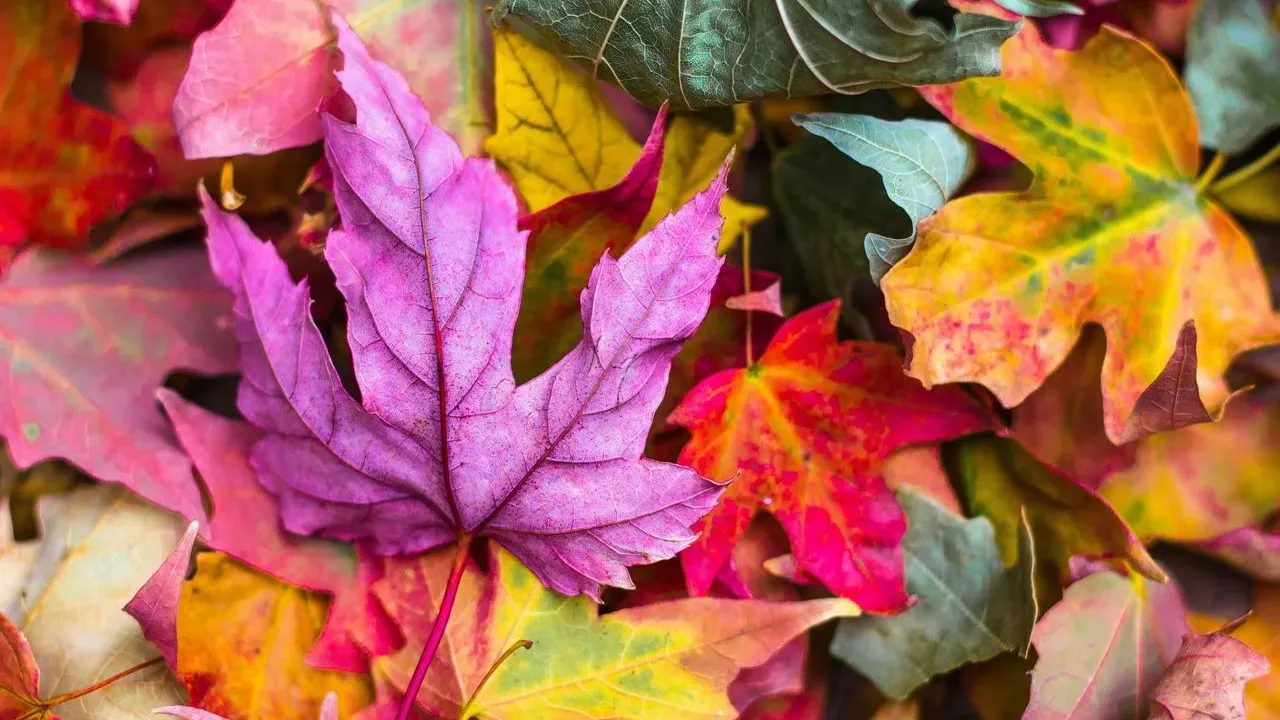

As autumn sets in, many people plan outings specifically to witness the vivid display of changing leaves. The shift from everyday green to striking reds, oranges, yellows, and purples draws widespread attention each year. Researchers continue to examine the processes involved, yet full agreement on every detail has not been reached. ([1])
Green Fades as Days Shorten
Chlorophyll gives leaves their typical green appearance during the growing season. This pigment supports photosynthesis, the process that converts sunlight into energy for the tree. When daylight hours decrease and temperatures drop in autumn, chlorophyll production slows and eventually stops. The existing chlorophyll breaks down, revealing other colors that were present but masked. Trees respond to these environmental cues in consistent ways across many species. The timing aligns closely with the change of seasons rather than random variation. Without the dominant green, underlying pigments become visible to the eye.
New Pigments Appear in Autumn
Carotenoids produce the yellow and orange tones seen in many maples and oaks. These compounds exist in the leaves throughout the summer but only show once chlorophyll declines. Anthocyanins, by contrast, often form anew in the fall and create the deep reds and purples. The production of anthocyanins requires energy from the tree at a time when growth has slowed. This step has prompted particular interest among scientists because it seems counterintuitive. Some species display these colors more intensely than others depending on soil conditions and weather patterns.
Leading Explanations Under Review
One prominent idea suggests anthocyanins act as a form of protection. They may shield leaves from excess light or help recover nutrients before the leaves drop. Another line of thought links the colors to signaling, possibly deterring insects or aiding seed dispersal in certain trees. Studies have tested these possibilities through controlled experiments and field observations. Results vary by region and species, leaving room for additional factors. No single explanation accounts for every observed pattern across different forests.
What Remains Unclear
The precise benefits of investing resources in new pigments during autumn are still under discussion. Some findings indicate environmental stress plays a larger role than previously thought. Others point to genetic differences among tree populations. Further research may clarify how these processes interact with climate variations. Observers can note differences from one year to the next based on rainfall and temperature. The spectacle itself continues regardless of the remaining questions.
AI Disclaimer: This article was created with the assistance of AI tools and reviewed by a human editor.