

Most Roses Are Two Plants in One

The most common way to propagate roses is through grafting, a practice whereby a bud-eye or cutting of a rose is inserted into a rootstock of another variety. This is not a niche technique used by specialists. It’s standard industry practice across North America and Europe.
When a rose reverts to the rootstock, it means the roots are sending up growth from one variety, while the upper growth of the desired variety eventually succumbs. The showy upper portion carries the blooms and attributes of the marketed variety, while the fused rootstock contributes performance, like vigorous growth and sturdy roots that grow across conditions.
Many people are unaware that the underground portion of their rose may be different from what they see above ground. That is, until an unusually cold winter kills the top growth. Come spring, a new rose with different flowers sprouts.
The Bud Union: A Built-In Weak Point
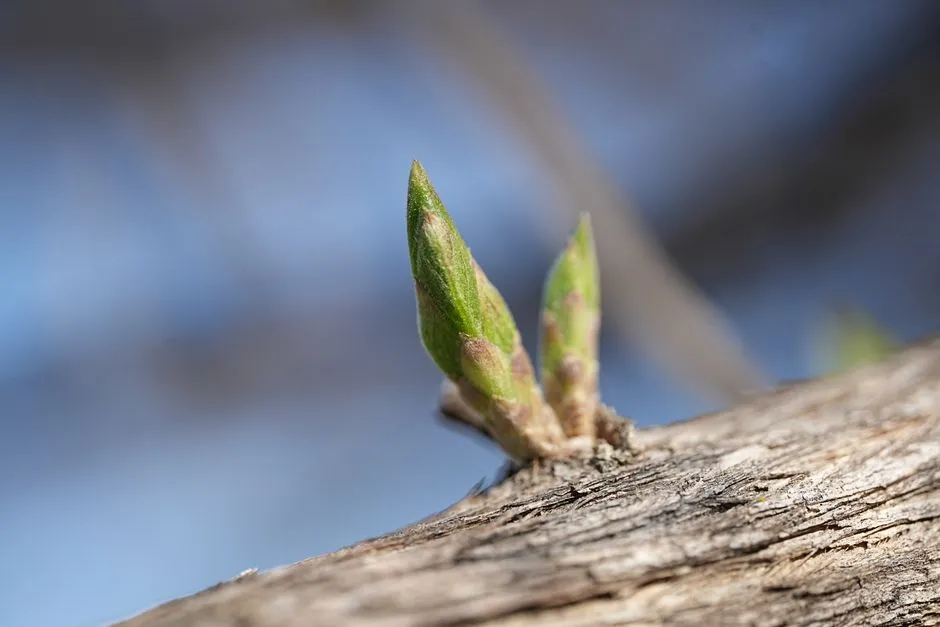
The place where the bud has been added, called the crown or bud union, is a weak area on the plant. A hard, freezing winter can easily damage the crown, leaving only the rootstock to grow.
Some roses have a graft union that is very vulnerable to cold and therefore needs protection during the winter. If the graft union is compromised, the part of the plant above that graft union will die. For many hybrid tea roses, the graft union is near the ground.
This system delivers vigor, adaptability, and uniformity, but it also creates a biological fault line. The graft union is a visible, knobby swelling on the lower stem where vascular tissues fuse imperfectly. That imperfection is exactly where winter cold does its damage.
What Actually Happens During a Severe Winter
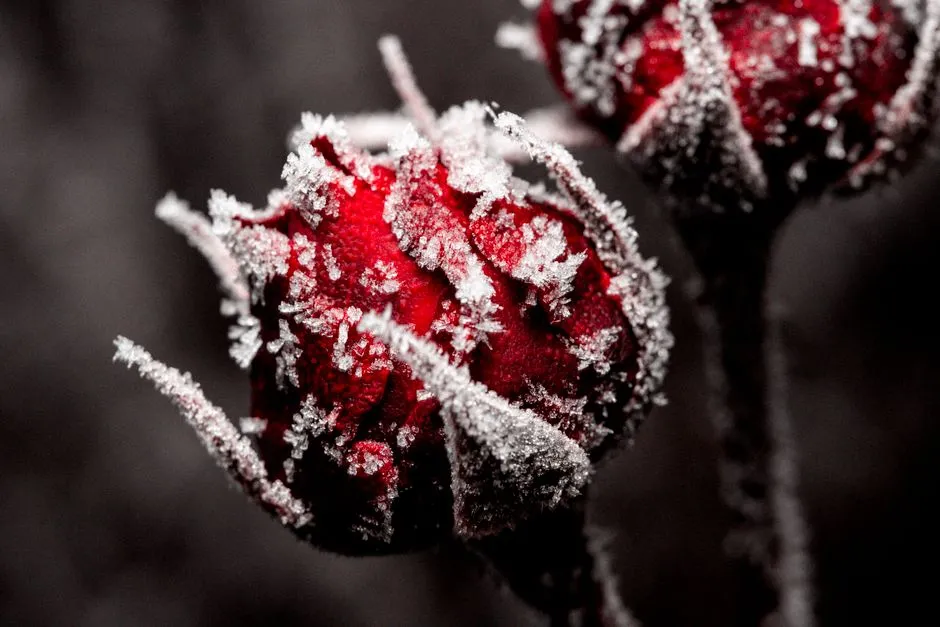
What happens is that the upper part, the grafted rose with its big beautiful blooms, dies during the winter, but its rootstock, a very different rose, survives and sends up shoots of its own.
The graft union, where the upper growth meets the crown, is sensitive to frigid conditions. If the union is cold-damaged, the upper growth suffers. It may die back completely, leaving only the rootstock to survive. The rootstock then produces suckering offshoots, and the rose reverts.
If there is a really harsh winter, the canes will usually die back to the graft, so only the rootstock is alive and not the rose you originally wanted. Most gardeners who experience this are completely blindsided by it.
Meet Dr. Huey: The Rootstock Behind Most of Your Roses
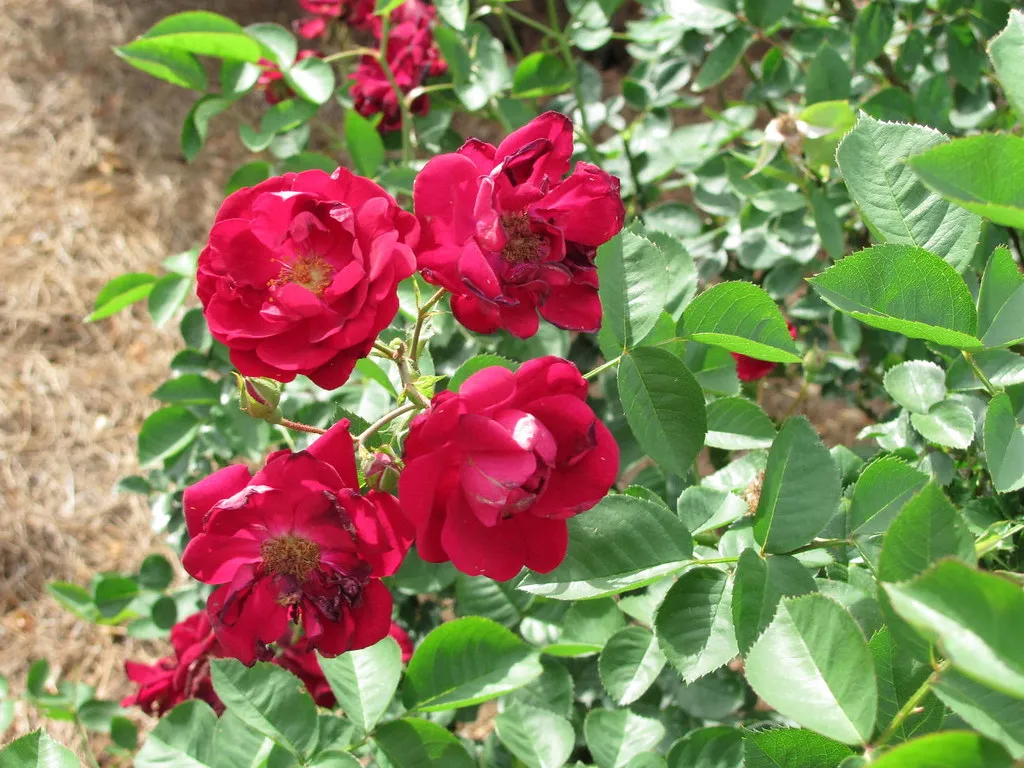
The majority of grafted roses these days use as a rootstock a small rambling rose called Dr. Huey. Rose growers like it because it’s easy and fast to multiply from cuttings and gives good vigor to the roses grafted onto it.
The vast majority of commercial bareroot roses produced in the United States are grown on Dr. Huey. It has been used by Armstrong, Jackson and Perkins, and just about all of the other major rose growers. Wasco, California produces about 80% of this country’s roses, and Dr. Huey does especially well in those growing fields.
The resulting roses that appear after reversion are small-flowered roses: Rosa canina with single pink flowers, R. multiflora with tiny single white flowers, or Dr. Huey with semi-double dark red flowers. That sudden burst of deep red blooms on what used to be a pink or yellow rose is almost always Dr. Huey taking over.
Why the Rootstock Survives When the Top Dies
The rootstock, being planted deep underground, often survives in spite of its limited hardiness. It’s the upper part, the grafted rose, often a hybrid tea, grandiflora, or floribunda, that dies.
Grafted varieties are more susceptible to winter damage or death. Exposed to freezing temperatures, the canes of the desired rose can die back to the bud union, leaving only the rootstock. If the rootstock did not die, it might shoot out rootstock canes below the grafted point, producing completely different blooms and often a more unwieldy growth habit than what you originally bought.
Under stress, especially winter dieback, drought, improper pruning, or physical injury, the scion may decline or die outright. Because the rootstock is genetically programmed for survival, it responds by sending up suckers.
How to Spot the Change Before the Flowers Appear
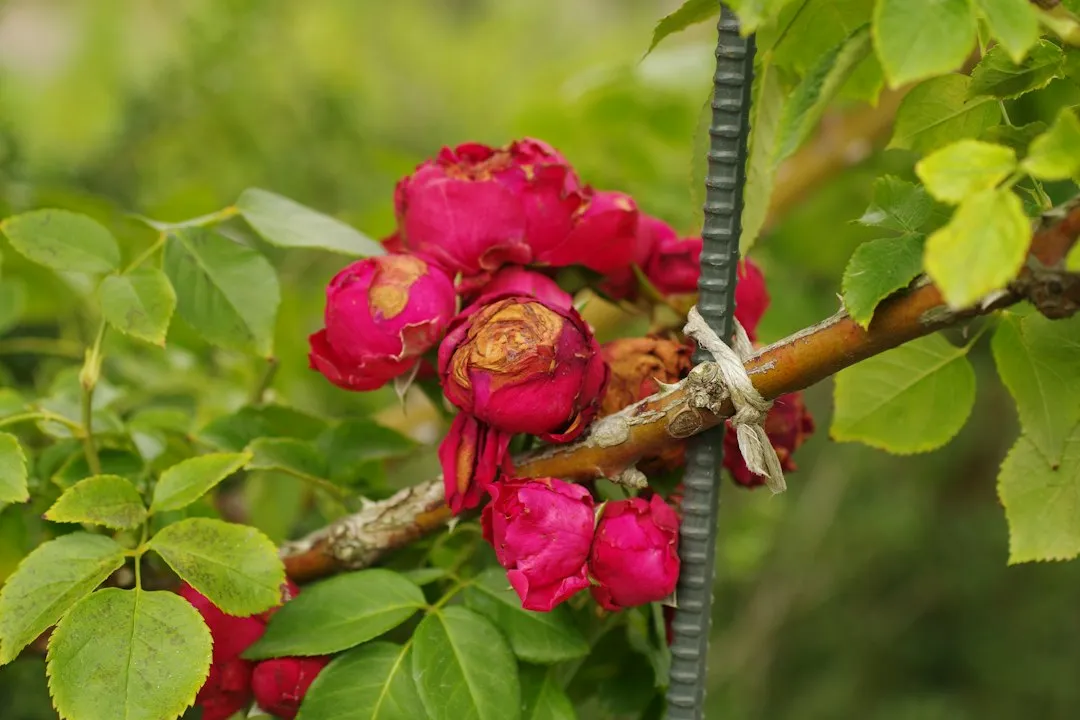
If you are very observant, you can detect the substitution before the new plant flowers: rootstock roses will have thinner, less upright stems than the original, plus the leaves will also be smaller and composed of more leaflets.
The stems that sprout from the roots are often stouter and have more thorns. They may be covered with just leaves, or they may produce flowers that are different from those of the original plant.
If you are unsure whether a shoot is a sucker or normal growth, the most reliable indicator comes from the point of origin. If the shoot is emerging from below the graft union or the soil nearby, it is a sucker. Knowing this distinction early gives you a real chance to act before the rootstock takes over completely.
The Role of Planting Depth

In Northern and Midwest winters, grafted roses are easily lost if the bud union is not planted deep enough. This is one of the most preventable causes of reversion, yet it’s rarely addressed on the label or at the point of sale.
If you have a grafted rose, be sure to plant the graft union at least one or two inches below the soil level. In zones 4 and north, it is common to go even deeper or to tip the whole plant before winter.
Shallow planting leaves the graft union too close to the soil surface and vulnerable to damage from the elements. Stress from heatwaves, drought, or winter damage can force the rootstock to produce new growth. Keeping the graft union insulated will reduce the likelihood of sucker production.
Own-Root Roses: The Cold-Climate Alternative
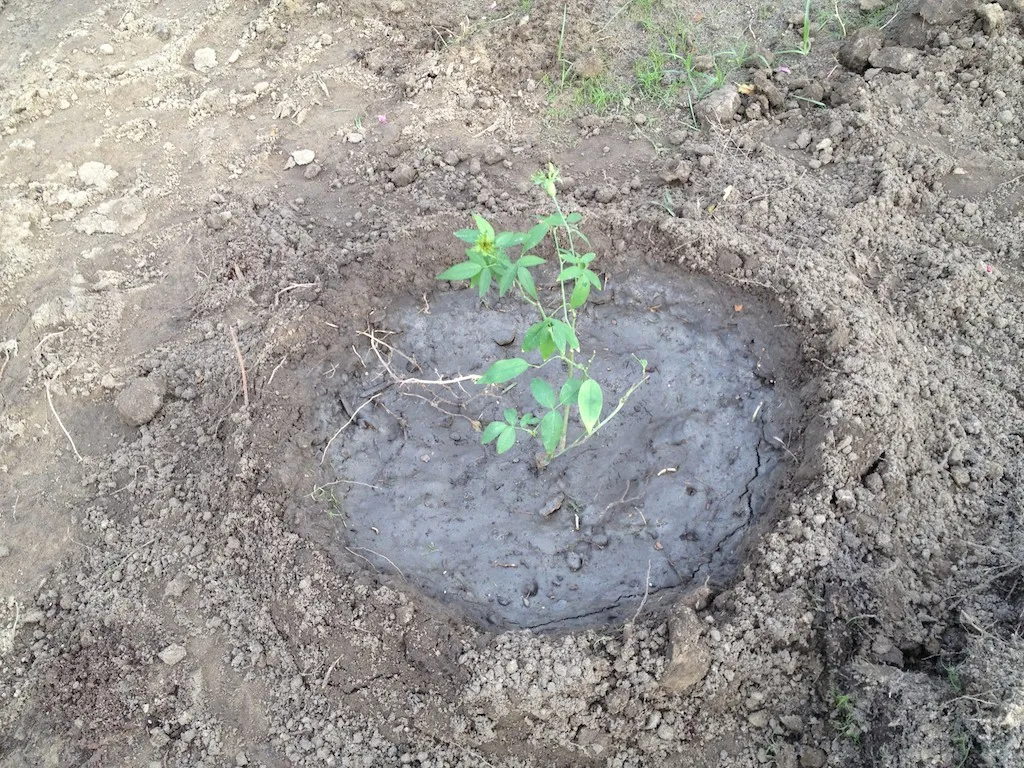
If you planted an own-root, non-grafted rose and the upper part dies during the winter for whatever reason, there is a good chance that it too will regrow from its roots. The difference is that the rose that grows back will be the original ornamental variety, the one you chose.
Own-root roses, which are grown from cuttings taken from stock plants and not grafted onto a different rootstalk, may also need protection depending on their hardiness compared with the garden’s hardiness zone. If the canes of an own-root rose die back, new ones will often emerge from the rose’s deep roots.
Shrub roses, which are the hardiest roses and often hardy to zone 3 or 4, are rarely grafted and instead are usually grown on their own roots. They are the best choices for cold climates. For anyone who has lost a grafted rose to winter cold more than once, switching to own-root varieties is genuinely worth considering.
What to Do If Your Rose Has Already Reverted
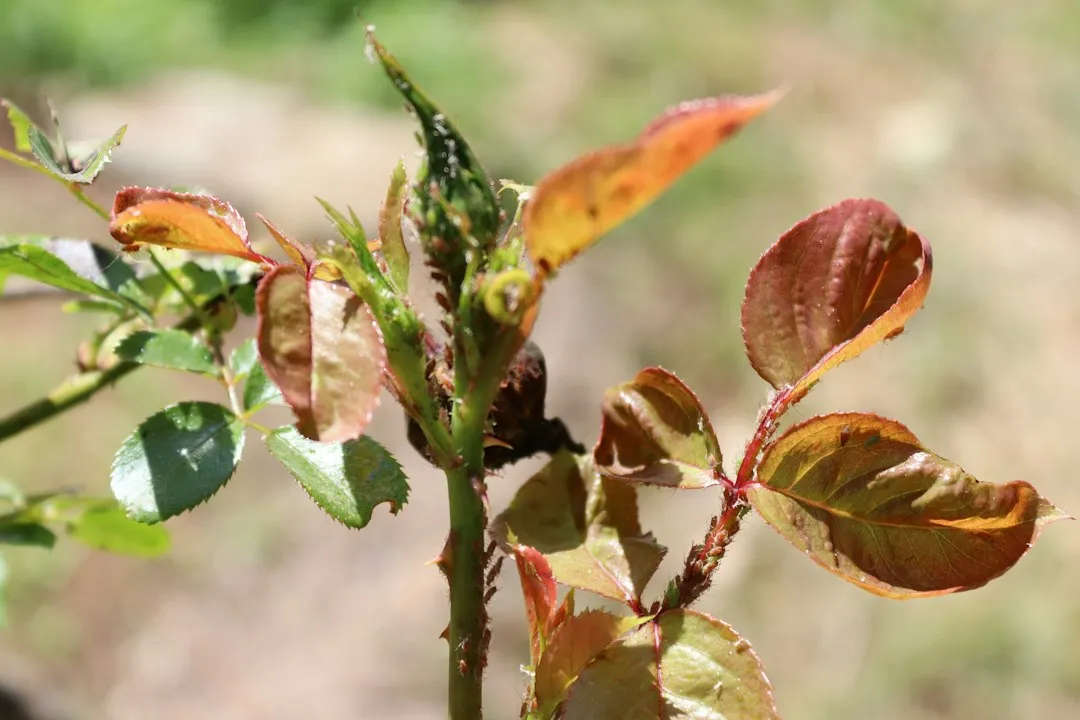
If you have not been paying attention and the rose has partially reverted to the rootstock variety, you might still be able to save it. Roses with many healthy canes that still bloom with the desired rose can generally make it through a large removal of sucker growth.
When suckers appear, they must be removed immediately to prevent them from draining energy from the rose. Use a trowel to gently move the soil and reveal the graft union if necessary. Tear the sucker off as close to the rootstock as possible to remove its growth cells and prevent regrowth.
If your rose is completely reverted or weakened, you will have to choose whether to grow the rootstock, which can sometimes be surprisingly beautiful, or remove it entirely. Neither option is a failure. It is simply the natural outcome of a plant structure that was always more complicated than it looked.
Why Grafting Is Still Standard Practice Despite the Risks
This method of propagation is fast and inexpensive compared to growing rooted cuttings. By inserting the bud of a good garden rose onto the stem of a fast-growing, vigorous but less attractive variety, the grower obtains a salable plant faster. A cutting-grown rose may be hardier and longer-lived, but it takes a year longer to produce.
Grafting in rose production is a standard practice to increase yield, improve flower quality, or reduce root-associated pests and diseases. Those are real advantages, not just commercial shortcuts, and they explain why the technique has dominated the industry for well over a century.
Grafting has been the primary method of producing roses ever since the first Hybrid Tea rose was introduced in the late 1800s. The tradeoffs that come with it, including the risk of reversion after a punishing winter, are simply part of the bargain that most gardeners never knew they were making.
A Quiet Lesson in What You Actually Planted

There is something quietly humbling about realizing that the rose you carefully chose, tended, and possibly named in your head was, in a botanical sense, always living on borrowed time once the cold set in. The plant that emerges after a brutal winter is not an imposter. It is, in its own way, the truer survivor of the two.
For most gardeners, the practical takeaway is straightforward: know whether your rose is grafted or own-root, plant the bud union deep enough for your climate zone, and inspect for suckers every spring. Continued observation is the key to tackling the problem before it gets out of hand. Keep an eye on grafted roses, especially after a harsh winter that could cause dieback to the rootstock.
The flower that surprises you in spring is not magic. It is just the other half of the plant finally having its say.
AI Disclaimer: This article was created with the assistance of AI tools and reviewed by a human editor.