
The Plant in Your Home Is Probably a Thanksgiving Cactus
This is where most of the confusion starts. Thanksgiving cacti are often sold as “Christmas cacti,” and these two holiday plants look very similar. They share the same genus, similar care requirements, and almost identical flowers, so most shoppers never realize they’ve bought a different species entirely.
Thanksgiving cactus (Schlumbergera truncata) and Christmas cactus (Schlumbergera xbuckleyi) are popular, fall- and winter-flowering houseplants native to Brazil, available in a wide variety of colors including red, rose, purple, lavender, peach, orange, cream, and white.
Ironically, the most popular species sold at Christmastime is the Thanksgiving cactus. It’s more easily hybridized, grows more vigorously, and produces a wider range of colors, so commercial growers have largely embraced it over the years.
How to Tell Them Apart
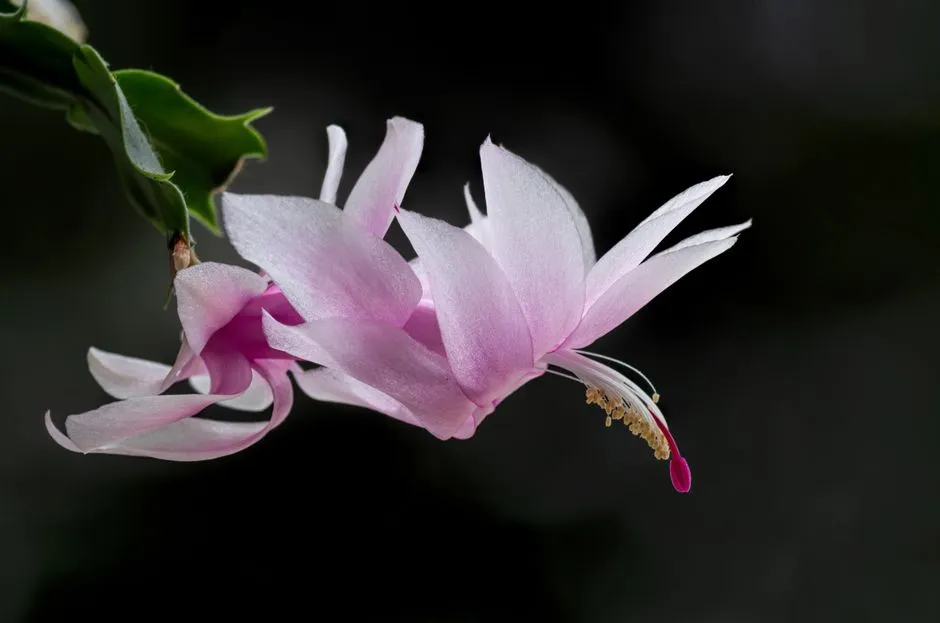
Fortunately, identifying which plant you actually have is straightforward. Christmas cactus stems have smooth, scalloped edges and flowers that hang down, while Thanksgiving cactus stems have pointed, claw-like tips and flowers that grow outward.
To distinguish between the two, look at the shape of the flattened stem segments, which are botanically called phylloclades. On the Thanksgiving cactus, these stem segments each have two to four saw-toothed serrations or projections along the margins, while the stem margins on the Christmas cactus are more rounded.
There’s one more clue hidden inside the flower. A second method to distinguish between these two Schlumbergera species is based on the color of the pollen-bearing anthers. The anthers of the Thanksgiving cactus are yellow, whereas the anthers on the Christmas cactus are purplish-brown.
When Each Holiday Cactus Actually Blooms
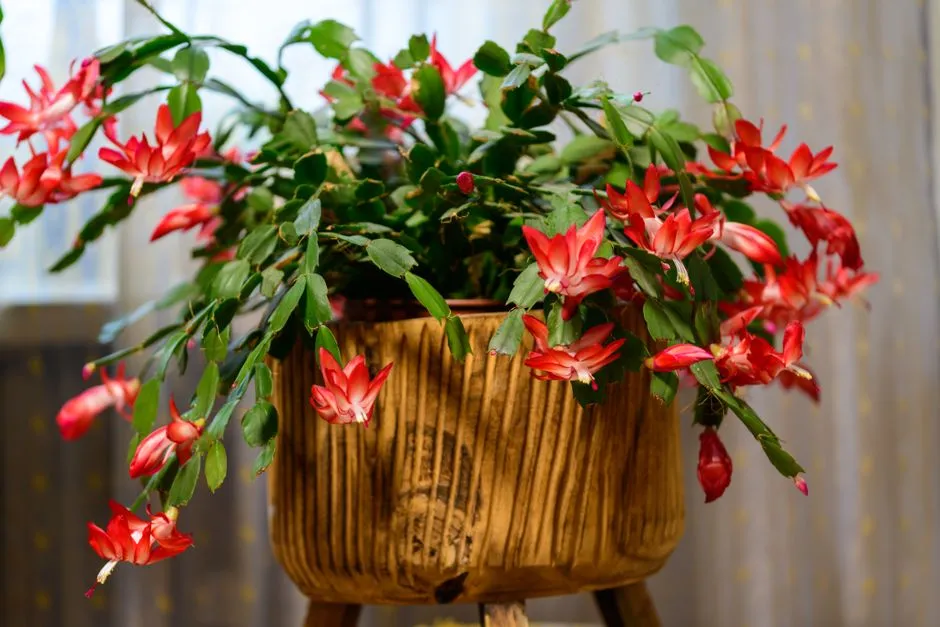
When grown under normal night length conditions, Thanksgiving cacti normally flower near Thanksgiving, approximately a month before Christmas cacti bloom. That timing is built into their biology, not something that goes wrong.
Thanksgiving cacti are the earliest and longest bloomers, typically producing flowers from late fall through midwinter. Christmas cacti tend to bloom from early to midwinter. Easter cacti bloom from late winter to mid-spring. Think of them as a staggered relay of holiday color, each with its own internal clock.
Flowering can last up to seven to eight weeks if the plants are kept at 68°F. That’s a generous display for any houseplant, and part of why these species have remained so popular through generations.
The Science Behind the Early Bloom: Photoperiodism
In many plants, the initiation of flower buds depends upon the amount of daylight the plants receive. The plant response to day length is called “photoperiodism.” Some plants will flower as day length gets shorter, while others flower as day length gets longer.
The amount of light and darkness a plant receives determines when most plants form flowers, according to Oregon State University Extension Service horticulture experts. Botanists once thought the number of daylight hours triggered flowering, but research has shown it’s actually the length of uninterrupted darkness that matters most.
Temperature and day length provide crucial bloom triggers for the Christmas cactus. The term for this response is “thermo-photoperiodic.” In other words, the plant is reading two environmental signals at once, and either one can be enough to set the process in motion.
How Many Hours of Darkness Does It Really Need?

Fourteen hours or more of continuous darkness each night is required before flower bud set will occur. Long nights should start around the middle of September and continue for at least six continuous weeks for complete bud set. As little as two hours of interrupted lighting will inhibit flower bud set.
Flowering is also best with longer periods of total darkness, around thirteen to sixteen hours each night. Flowering should follow about eight weeks of this treatment. The earlier the onset of cool conditions and long nights, the sooner the plant will flower.
That last point is worth sitting with. If fall arrives early in your region, or if your home gets cool earlier than usual, the plant simply responds accordingly. It has no way of knowing what date is on your calendar.
Cool Temperatures Are Just as Important as Darkness
The initiation of flower buds on the Thanksgiving cactus is triggered by both temperature and day length, meaning the short days of fall. If the temperature is lower than 60 degrees Fahrenheit, plants set flower buds regardless of the length of the day or night. That’s a significant detail most gardening guides gloss over.
Flower buds form best when the plant is kept in temperatures between 50° and 60°F. You can even kickstart the budding process by exposing the plant to temperatures of about 45°F for several nights in a row.
Do not let temperatures rise above 90°F once the flower buds are set in the fall. Continuous warm temperatures can cause flower buds to drop. Temperature management matters at both ends of the scale.
Your Indoor Lighting Is Quietly Disrupting the Cycle
Many plant owners are often surprised to learn that if these plants are kept indoors year-round, their normal cycle of daylight exposure can be interrupted by artificial light inside the house. A lamp across the room, the hallway light left on, even a streetlight shining through a curtain can all interfere.
Placing these plants in a room with only natural light exposure near a window, ensuring that artificial lights stay off at night, is one solution. Another option is to keep them outdoors as long as possible in the fall, bringing them indoors just before the threat of freezing temperatures.
If the plants are left in a warm area of the house where temperatures stay above 60°F, photoperiod needs to be regulated. This can be done by covering the plant with black plastic, or moving it in and out of a dark room such as a closet, so that it receives only ten hours of light per day. This short day treatment needs to be done for about four weeks, after which buds will begin appearing.
Commercial Growers Control All of This on Purpose
Commercial holiday cacti growers artificially control photoperiod by using lights to create longer days and dark cloth to cover the plants, creating shorter days. By using the right combination of light and dark, holiday cactus can be induced to bloom almost any time of the year.
Commercial growers can treat both types to bloom at a prescribed time for holiday sales. This is why a plant you bought in full Christmas bloom at the store might reliably revert to blooming at Thanksgiving every single year after that, once it’s back in your home following its natural light cycle.
The plant isn’t broken. It’s just returning to its own schedule once the artificial conditions of the greenhouse are removed. Most owners don’t realize the plant they received was chemically or light-manipulated to time its bloom for maximum retail appeal.
Its Origins in Brazil Explain Everything

Holiday cacti, including the Thanksgiving and Christmas cacti, hail from tropical regions of the world. Though they look like succulents, they’re epiphytes that grow on trees above the ground. Life in the Brazilian rainforest canopy is nothing like life on a living room shelf.
In Brazil, the genus is referred to as Flor de Maio, meaning “May flower,” reflecting the period in which they flower in the Southern Hemisphere. Our autumn is their spring, which is why the plant’s internal rhythm doesn’t map neatly onto Northern Hemisphere holiday schedules.
This group of flowering cacti was originally hybridized by William Buckley in Rio de Janeiro around 1840. The genus was named after a Belgian horticulturist, Frederick Schlumberger. The houseplant sitting on your windowsill carries centuries of botanical history inside it.
How to Delay Blooming Until Christmas If You Want To
Try keeping your plant in a warm, well-lit spot, such as a room you use throughout the evening, for longer into the fall if you’d like it to bloom later in the season. The evening light from a television or lamp will suppress bud formation, giving you more control over timing.
When deciding whether you want blooms for Christmas or Thanksgiving, count backward eight weeks to determine the autumn date to begin preparing the plant for reblooming. That backward-counting method is the most reliable way to hit your target window.
Keeping your Thanksgiving cactus cool, below 60°F day and night, until just before Christmas will slow down the development of its flower buds. Then move the plant into a regularly heated room in mid-December. It takes patience, but it works.
One More Holiday Cactus You Might Not Know About
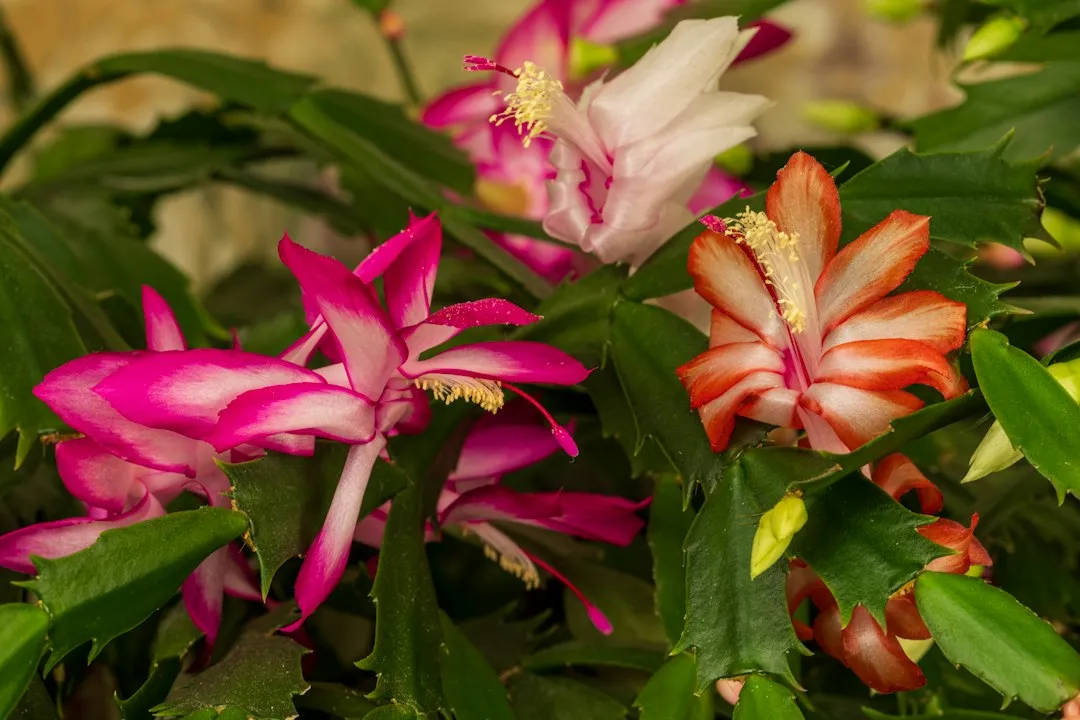
A Christmas cactus is one of three popular holiday cacti: Easter, Thanksgiving, and Christmas. Thanksgiving cacti typically start in late fall and Christmas cacti around a month later. An Easter cactus often starts producing flower buds after the height of winter. Most people are completely unaware the Easter cactus even exists.
The Easter cactus (Rhipsalidopsis gaertneri), which blooms in late winter and early spring, usually from March until May, may be why your holiday cactus bears springtime flowers. If your plant blooms around Easter with no intervention from you, that’s likely what you have.
Easter cactus is in the genus Rhipsalidopsis, which grows in drier forests, making it slightly different in its water and care needs from the Thanksgiving and Christmas varieties. All three are rewarding plants, just on very different schedules.
The Takeaway
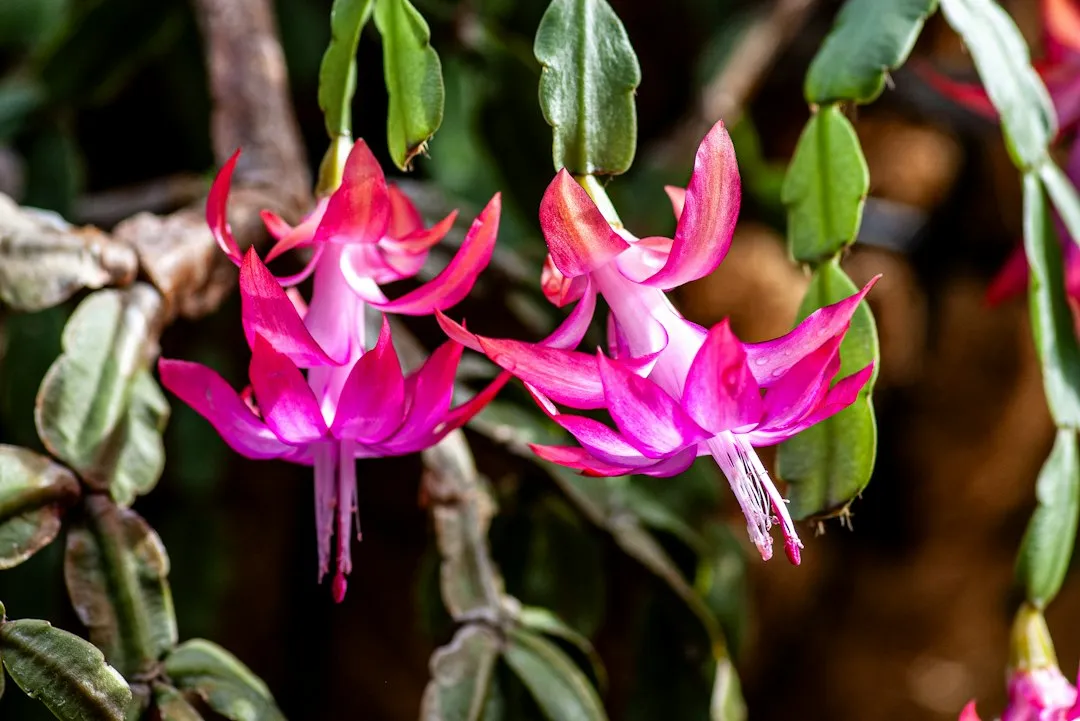
The simplest explanation for early holiday blooms is also the most common one: the plant you own was mislabeled at the store, and it’s doing exactly what it was designed to do. Most holiday cacti are actually the Thanksgiving or crab cactus, with the scientific name Schlumbergera truncata. The true Christmas cactus is Schlumbergera bridgesii.
If you genuinely have the true Christmas species and it’s still blooming early, the answer almost certainly lies in temperature or light. Both factors can push the bloom window forward by weeks, and most homes unintentionally provide those conditions starting in September.
Rather than treating early blooms as a failure, it might be more useful to see them as a window into how finely tuned these plants actually are. They’re reading the environment with a precision most of us can’t match, responding to cues we’ve barely noticed. That’s not a flaw. That’s just a very old plant doing what it has always done.
AI Disclaimer: This article was created with the assistance of AI tools and reviewed by a human editor.