
Pothos Is Locked in a Permanent Juvenile State

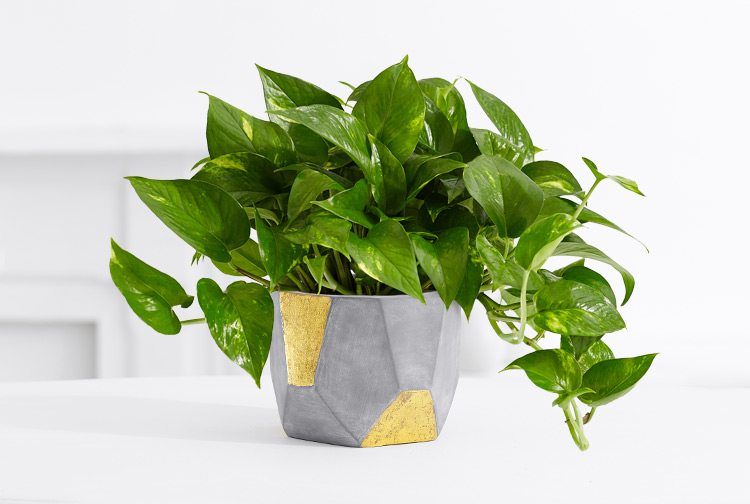
Potted pothos houseplants live almost indefinitely in the juvenile phase, with small heart-shaped leaves with smooth margins and no flowers. This isn’t a temporary condition that better care can reverse. It’s the plant’s default mode indoors, and most never leave it.
Pothos begins life as a compact, climbing juvenile, then transitions into a mature, tree-climbing phase capable of flowering and fruiting only under very specific environmental triggers. The indoor pot environment simply cannot provide those triggers.
Cultivated pothos plants remain in the juvenile or vegetative stage of their perennial life cycle, typically surviving about 10 years in this stage before the plant dies. Many owners never suspect this is happening, because the foliage stays beautiful throughout.
The Gibberellin Gene Problem
Regardless of where pothos is grown or what the conditions are like, it will apparently not flower due to a genetic impairment of the gibberellin biosynthetic gene EaGA3ox1. This impairment causes the plant to be unable to develop bioactive GAs, which are responsible for the flowering of plants via the floral meristem identity gene EaLFY.
Epipremnum aureum is an extremely popular houseplant belonging to the Araceae family, but it does not flower either in the wild or under cultivation. Researchers uncovered the potential causes of its shy-flowering nature by building a transcriptome using next-generation sequencing and identifying floral-related genes that are differentially expressed between vertical growth and horizontal growth plants. Transcripts of the gibberellin biosynthetic gene EaGA3ox1 and the GA-responsive floral meristem identity gene EaLFY were absent in both plant forms.
Pothos plants have a naturally low level of gibberellin, a plant hormone essential for flowering, which contributes to their infrequent flowering. This isn’t something that soil amendments or special fertilizers can compensate for in any meaningful way.
It Needs Decades, Not Just Years
In the wild, primarily in Mo’orea, French Polynesia, and parts of Southeast Asia, the transition to the flowering phase occurs only after the plant has climbed high into the forest canopy, receiving intense filtered light, consistent humidity above 75%, stable warm temperatures between 24 and 30 degrees Celsius year-round, and uninterrupted growth for 7 to 15 years.
Epipremnum aureum is a juvenile-phase obligate climber that almost never reaches sexual maturity outside its native tropical rainforest habitat. When flowering does occur, typically only after ten or more years of uninterrupted, near-perfect conditions in warm, humid, shaded forest understories, it produces a single inconspicuous spadix enclosed by a pale green spathe, not showy petals.
In nature, pothos may take five to ten years or more to reach maturity and potentially flower. Indoors, they usually stay in juvenile form indefinitely due to pruning and suboptimal conditions. The time requirements alone make indoor flowering a practical impossibility for most growers.
Indoor Environments Can’t Replicate the Tropics
While pothos tolerate low light, flowering requires bright indirect sunlight over long periods. Indoor climates lack the consistent warmth and high humidity above 70 percent found in tropical forests. In nature, pothos climb tall trees and develop larger leaves, whereas indoors they remain compact and trailing.
In their native tropical habitats, Epipremnum aureum can reach significant maturity, growing up to 65 feet long and developing large, sometimes fenestrated leaves as they climb trees. This mature phase, involving substantial growth and specific environmental cues, is a prerequisite for flowering. Indoor conditions typically restrict a pothos from reaching this mature reproductive stage, with limited pot space, lower light intensity, and generally lower humidity levels preventing blooming.
Vegetative Propagation Keeps It Stuck
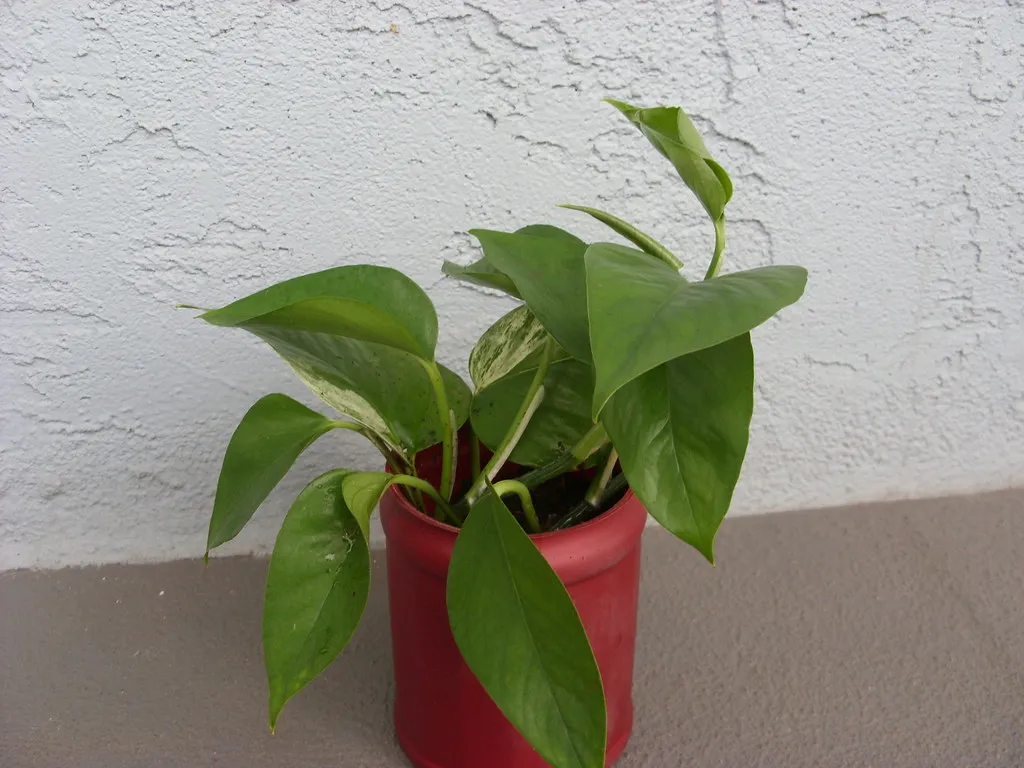
Commercially available houseplants are typically propagated through cuttings, keeping them in a juvenile state that prevents flowering. Every cutting taken from a parent plant carries that juvenile identity forward.
Virtually all commercially available pothos cultivars, including Golden, Marble Queen, Neon, and Jade, are vegetatively propagated clones derived from a narrow genetic base. Decades of selection for variegation, compactness, and disease resistance have unintentionally diluted alleles associated with reproductive competence.
Nurseries in several countries were selling pothos soon after its formal description in 1880, and growers propagated it from cuttings for generations. This means the plant sold in a garden center today is, genetically speaking, a descendant of cuttings that were never given the chance to mature and reproduce sexually.
What a Real Pothos Flower Actually Looks Like
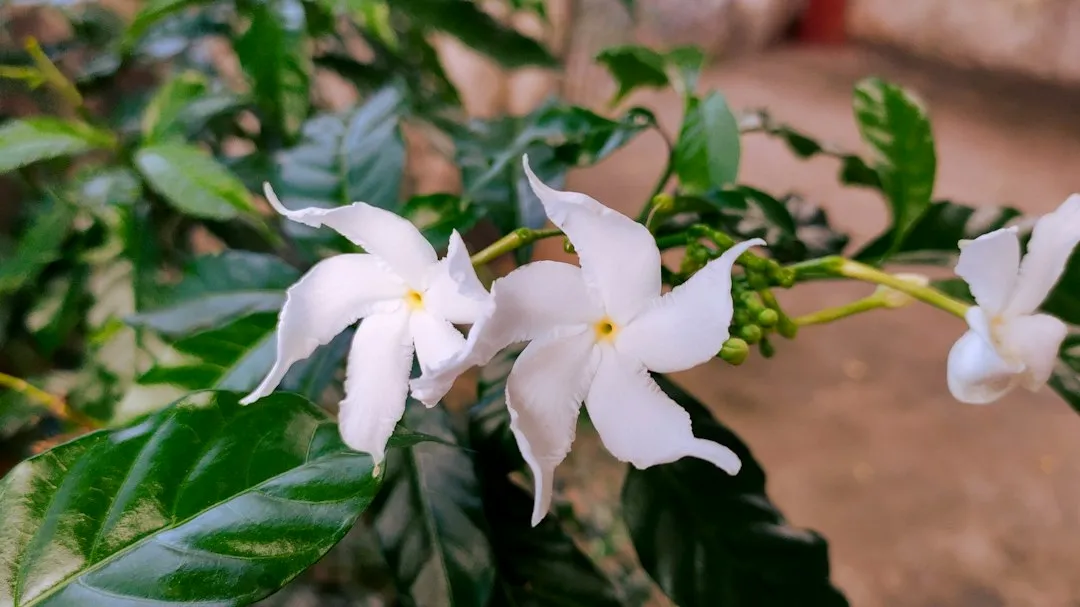
A pothos flower consists of a pale green or creamy white spathe surrounding a central spadix. It resembles a small peace lily bloom but is less ornamental. The actual flowers are tiny and embedded in the spadix.
In verified herbarium records, mature Epipremnum aureum inflorescences measure 8 to 12 centimeters long, with a pale green to ivory spathe and a cream-colored spadix. The spathe is leathery, slightly reflexed at maturity, and emits a faint, sweet-fermented odor to attract beetle pollinators.
Flowering is rare in household conditions, but in its natural habitat or under optimal growth conditions, pothos can produce a spadix surrounded by a green spathe. The bloom time is generally unpredictable. It’s worth noting that anyone hoping for an ornamental display would likely be underwhelmed by the result anyway.
Science Has Induced Flowering Artificially
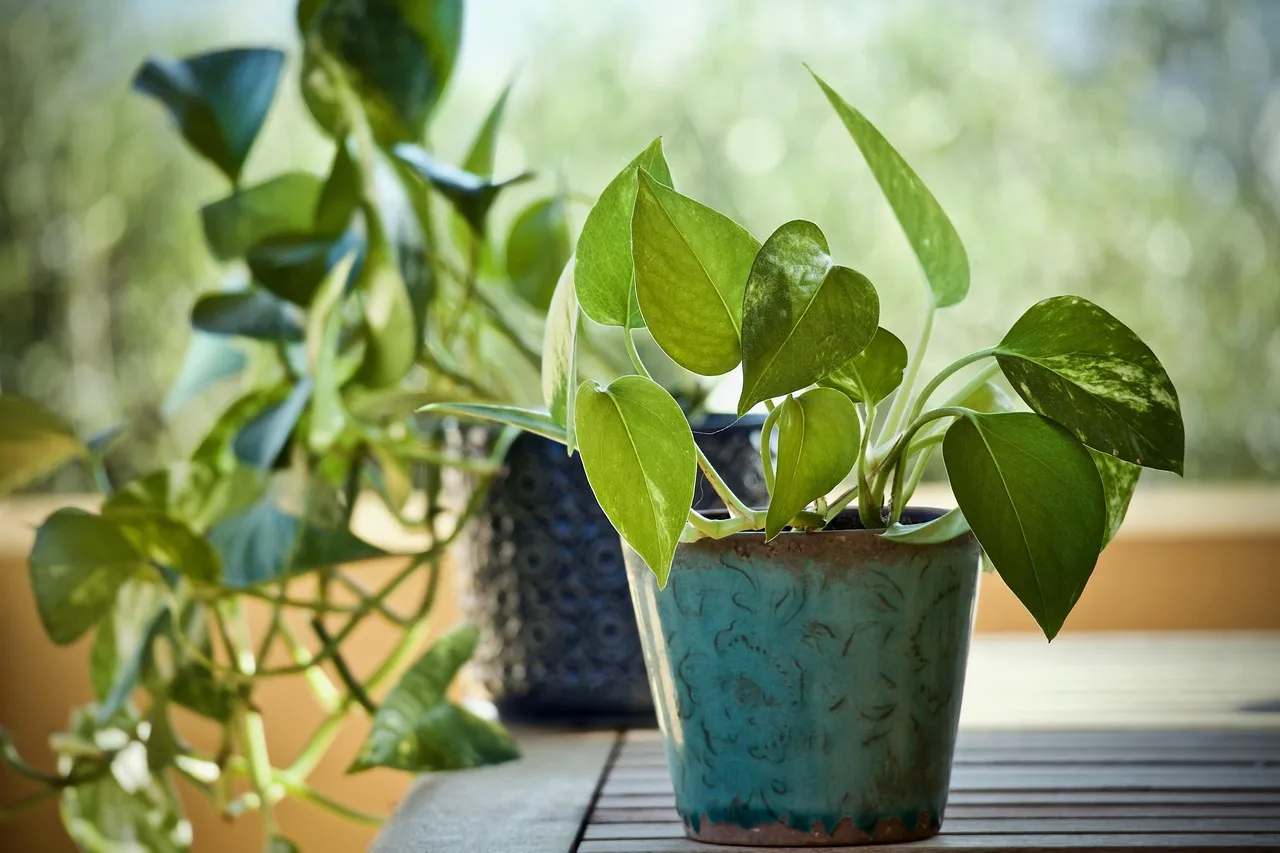
In lab studies, researchers have persuaded pothos plants to flower by artificially dosing them with gibberellins, though they’re still working out the ways that gibberellins interact with the plant’s age, the amount of light, and the time of year to result in flowering.
It was found that when gibberellins were experimentally sprayed onto the plant, flowering was induced. This confirms the hormonal pathway exists, it just doesn’t activate on its own under typical conditions.
Molecular analysis has shown that transcripts for the biosynthesis of GA3 and the GA3-responsive floral meristem gene EaLFY were inactive in pothos. Exogenous application of GA3 has been shown to induce pothos flowering. After the induction of flowering, pollen can be collected and transferred to stigmas to produce seed. This remains a laboratory technique, not something achievable at home.
Most “Flowering Pothos” Online Are Misidentified
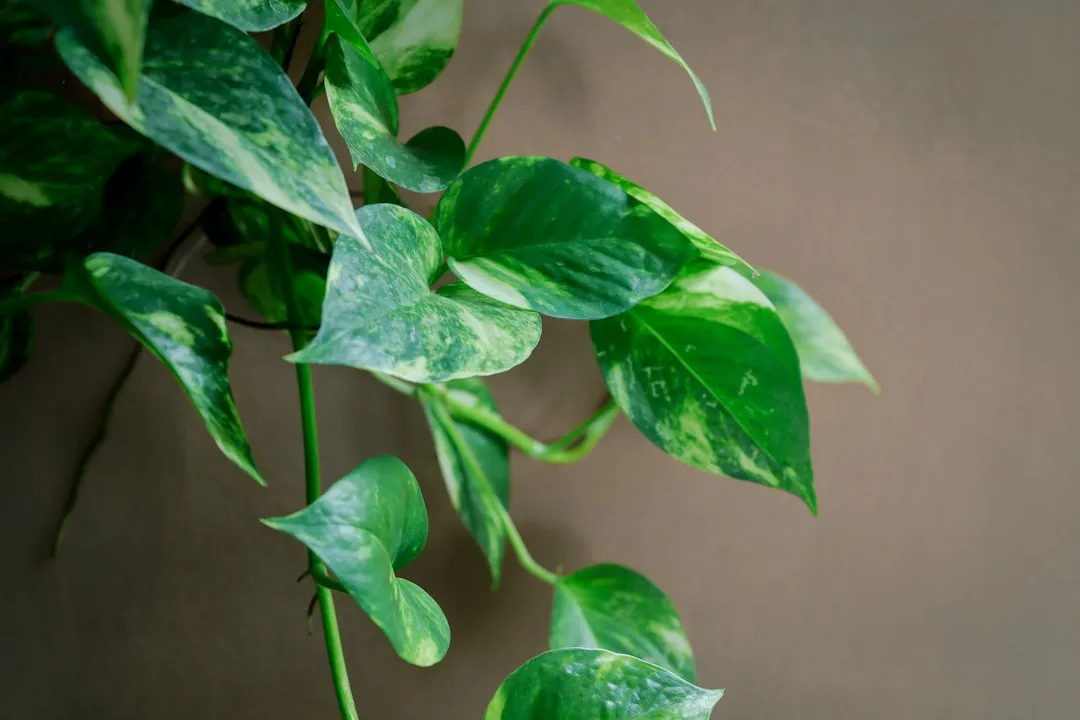
Most “pothos flowers” shared online are misidentified structures: aerial root swellings, senescing leaves, fungal growths, or unrelated plants entirely. The appeal of a rare houseplant event drives a lot of wishful identification on social media.
Many images labeled as “flowering pothos” actually show aerial roots, new growth, or misidentified plants. Some content creators confuse pothos with similar-looking flowering vines like certain philodendron varieties or unrelated flowering plants.
No reputable nursery sells flowering pothos. Listings showing blooms are either mislabeled anthuriums or philodendrons, or use edited photos. The true pothos is always Epipremnum aureum. Checking the botanical name is the fastest way to resolve any confusion.
The Plant Has Lost Its Drive to Reproduce Sexually
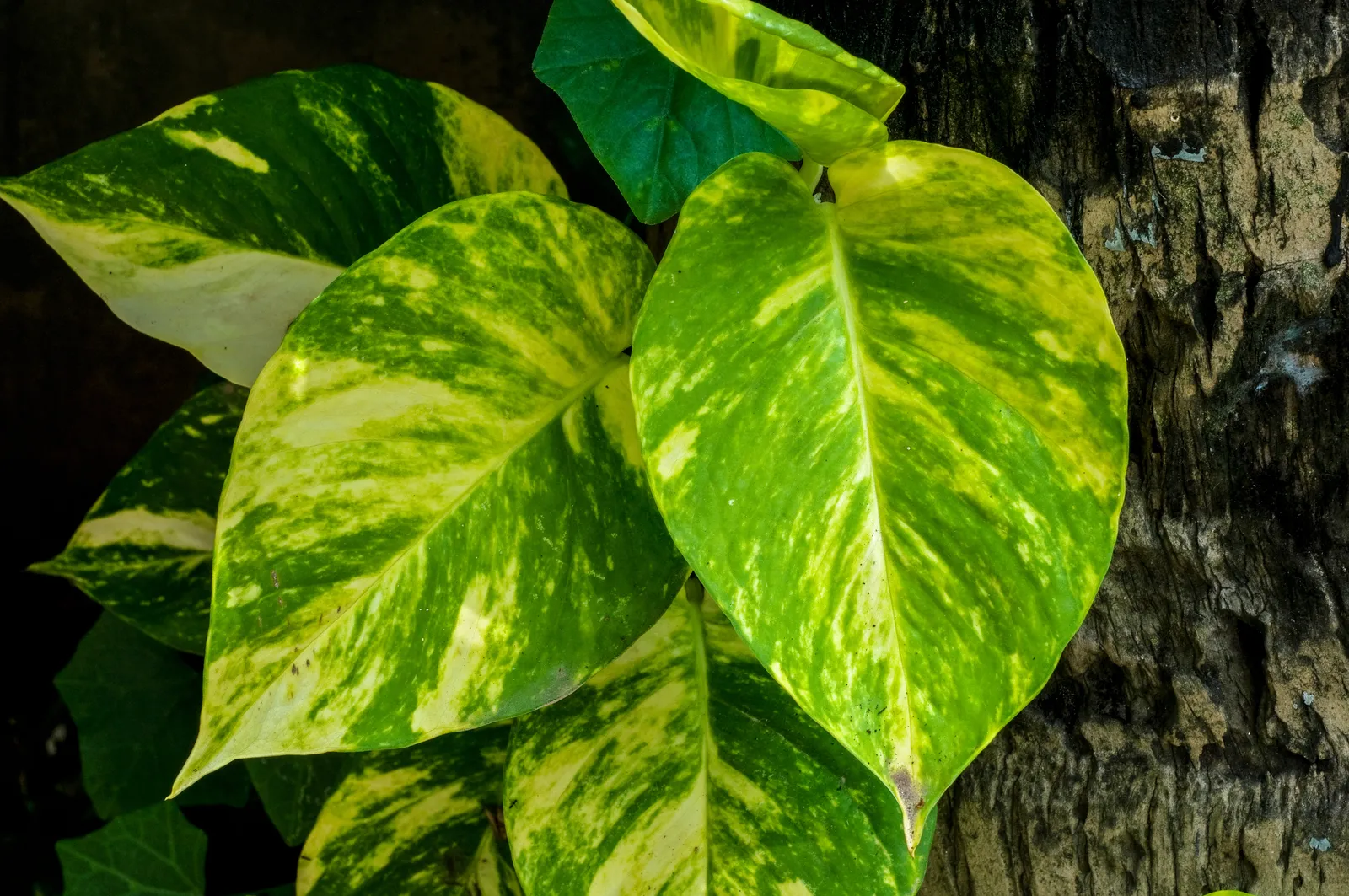
Pothos essentially never flowers in cultivation, and for decades no flowering specimen was known anywhere in the world. It is thought the species lost the gibberellin synthesis pathway needed to trigger flowering and spreads almost entirely by vegetative fragments, making it a tropical invasive in many places for exactly this reason.
Many plants that can reproduce through either flowering or vegetation tend toward vegetation when they live in really dense populations. That’s because if one individual plant is doing great in a particular environment, there’s no biological pressure to change what’s working. Pothos, thriving through vegetative spread alone, has little evolutionary reason to flower.
Among angiosperms, which typically produce flowers at some point in their life cycle, pothos is the only reported species in its family that does not readily bloom, if at all. That’s a notable distinction for such a common plant.
What This Means for Indoor Growers
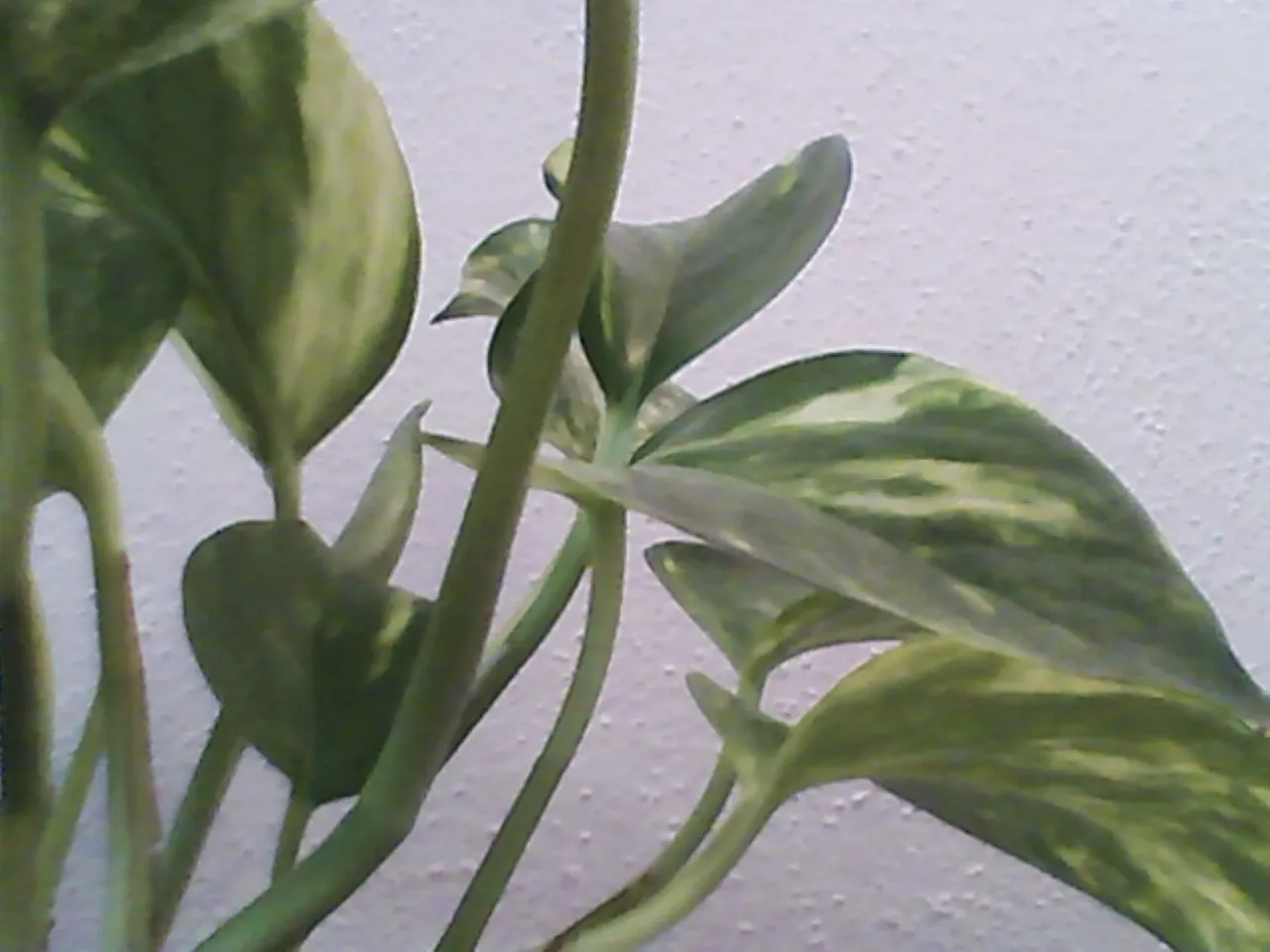
Lack of blooming indicates nothing is wrong with your plant. Pothos are grown for their foliage, not flowers. No flowering does not suggest poor care or any problem at all.
Methods like “bloom boosters” or extreme humidity tents stress the plant without results. Redirecting energy to proven care, such as consistent watering, monthly balanced fertilizer, and pruning leggy vines, produces far better outcomes.
Pothos serves as a natural air purifier, which greatly reduces the amount of ozone in the environment and removes pollutants such as xylene, formaldehyde, and benzene from indoor air. That’s a genuinely useful role, and it has nothing to do with flowering.
The Takeaway
AI Disclaimer: This article was created with the assistance of AI tools and reviewed by a human editor.