
A Simple Object With a Long History
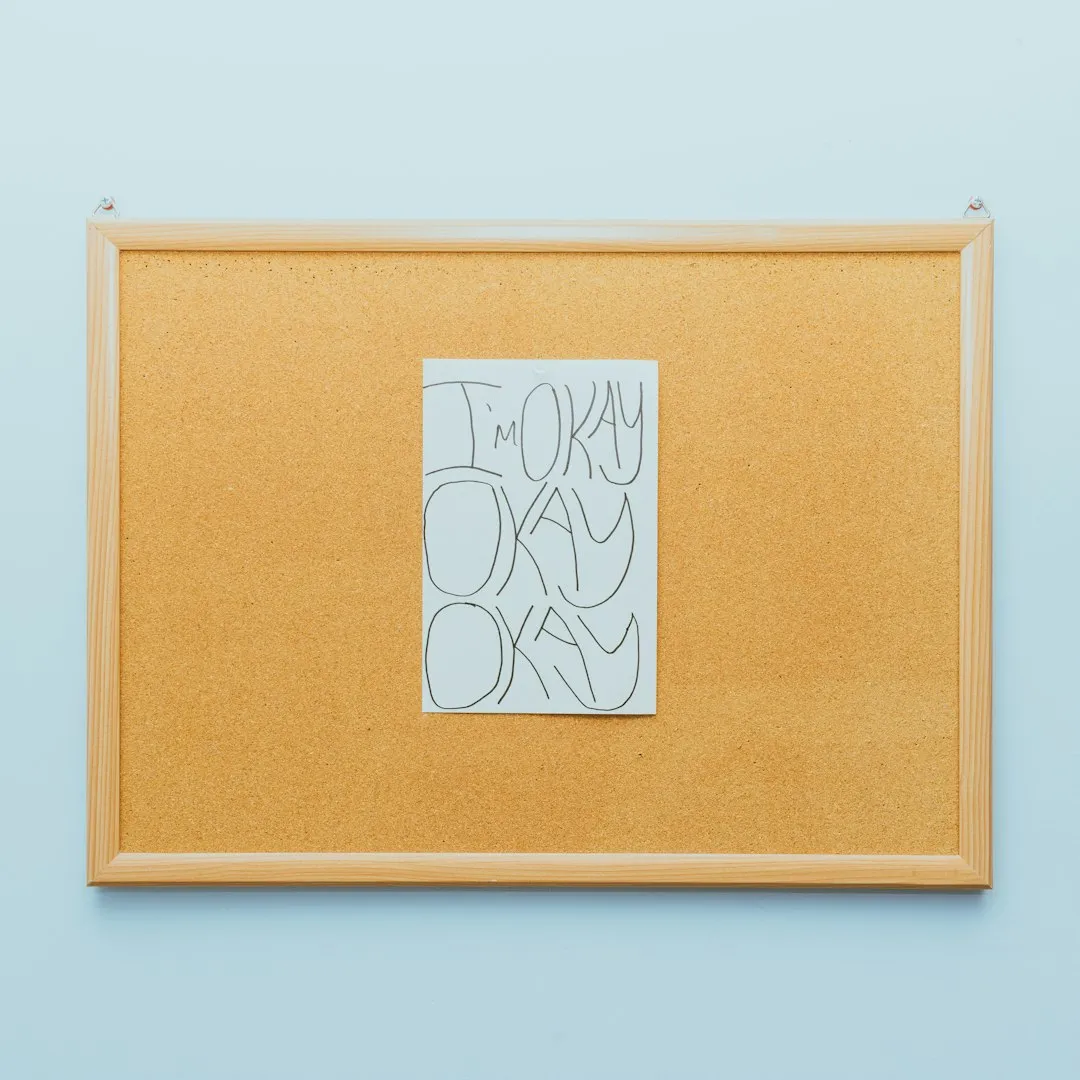
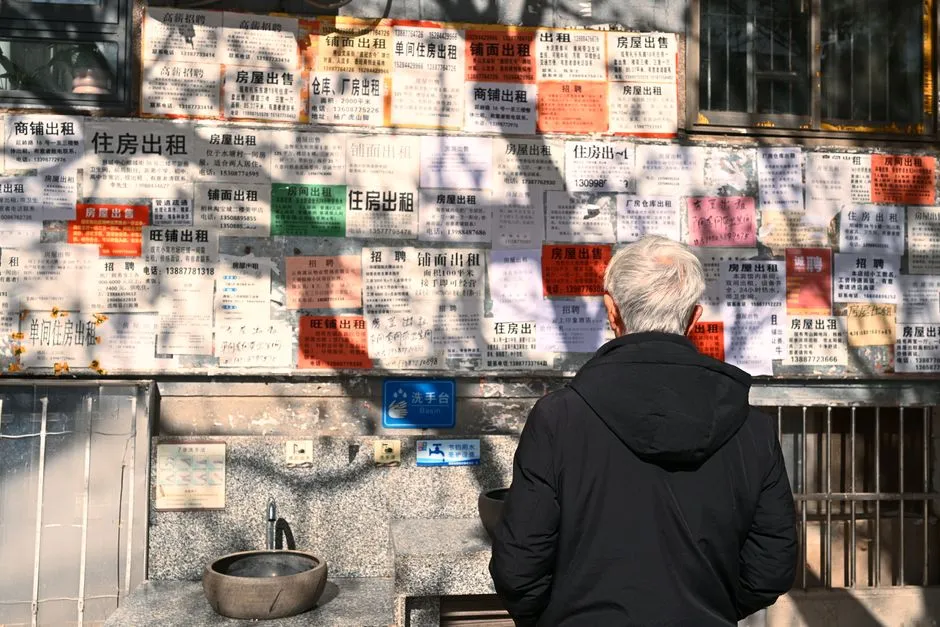
The community bulletin board has been a fixture of public life for centuries in various forms, from medieval town notice boards to the cork-pinned announcements of mid-20th century community centers. They are used by sports groups, extracurricular organizations, local shops, and official notice-givers alike, typically mounted in dormitory corridors, well-trafficked hallways, lobbies, and freestanding kiosks. The object itself is almost deliberately humble: a surface, some pins, and whatever someone thought was worth sharing.
What’s remarkable is not its design but its persistence. The bulletin board has survived the photocopier, the fax machine, the internet, and the smartphone, and it still shows up on walls across the country. It exists because it solves a problem that no app has fully replaced: reaching people who didn’t know they needed the information until they walked past it.
San Francisco’s Unlikely Mapping Project
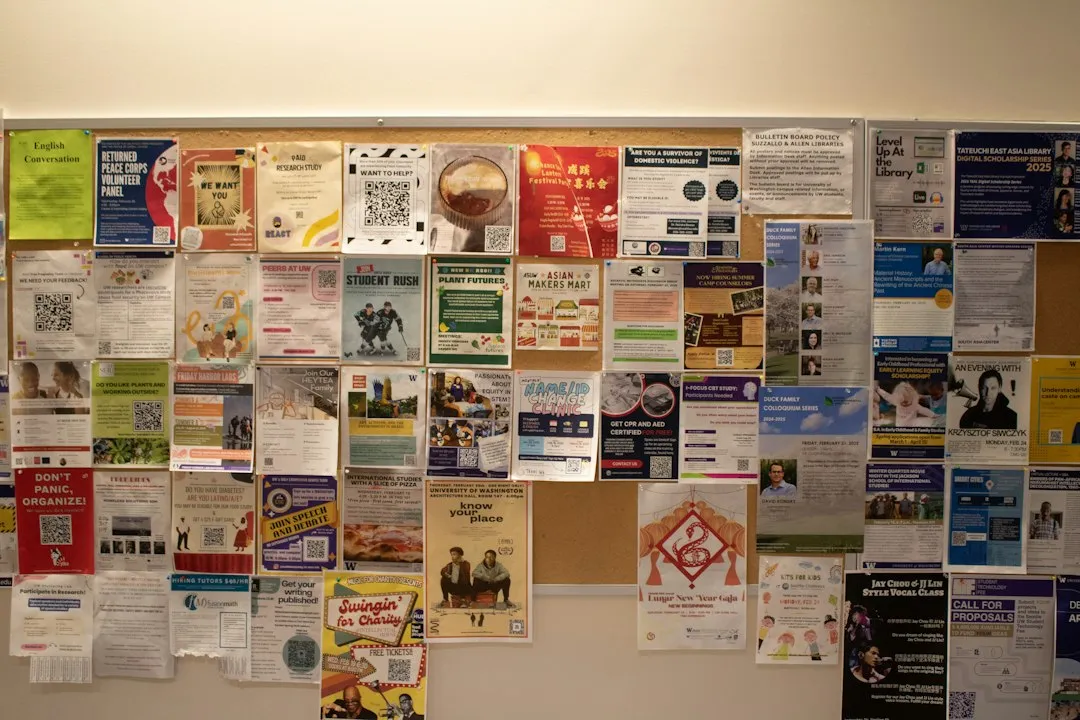
Physical community bulletin boards remain in use for local advertising and neighborhood announcements. In San Francisco, an ongoing project documented in 2025 mapped community bulletin boards in laundromats, cafés, parks, public squares, and other neighborhood spaces. By September 2026, the project had listed 187 locations across 47 neighborhoods. That’s a city-level cartography of something most people walk past without noticing.
The project itself is telling. The fact that someone thought it worth mapping suggests these boards are not disappearing quietly. They’re scattered enough, and alive enough, to warrant documentation. The mapping effort also makes visible something that had always been invisible by design: community infrastructure that works precisely because it isn’t organized from the top down.
What People Actually Post
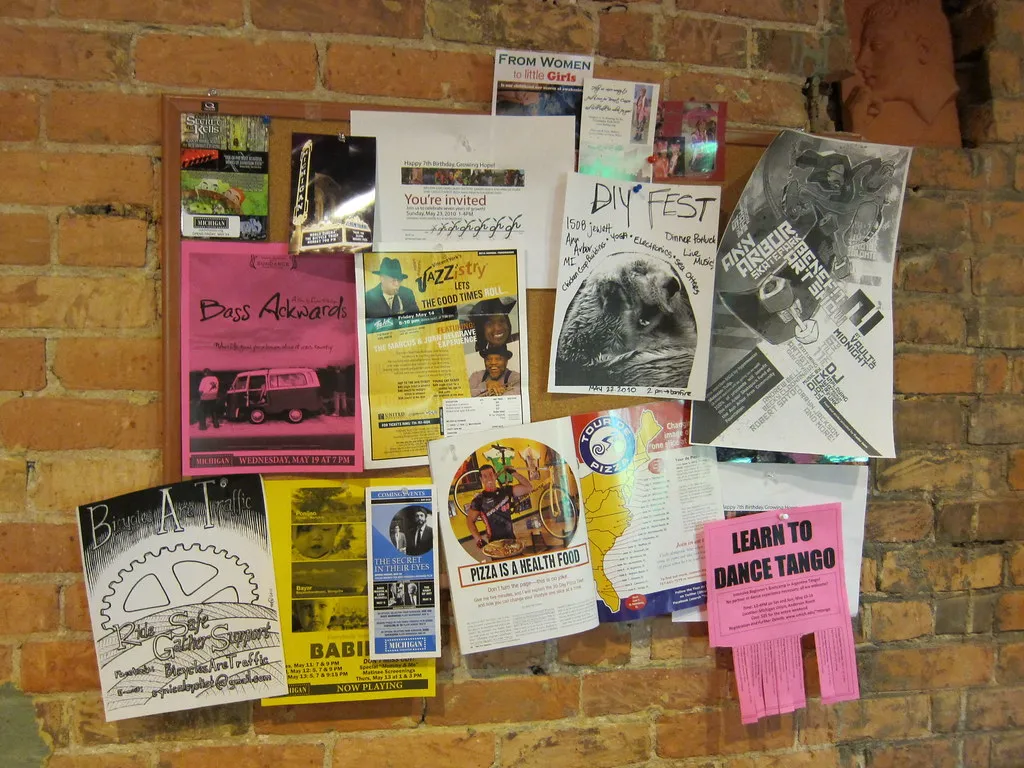
A study analyzing 1,297 postings from 59 bulletin boards across Metro Vancouver over eight weeks found that approximately nearly seven in ten postings were of immediate local relevance, emphasizing community focus over broader regional or international content. That figure matters. It tells us the board isn’t being used as an advertising dump or a general notice wall. It’s genuinely local, genuinely specific.
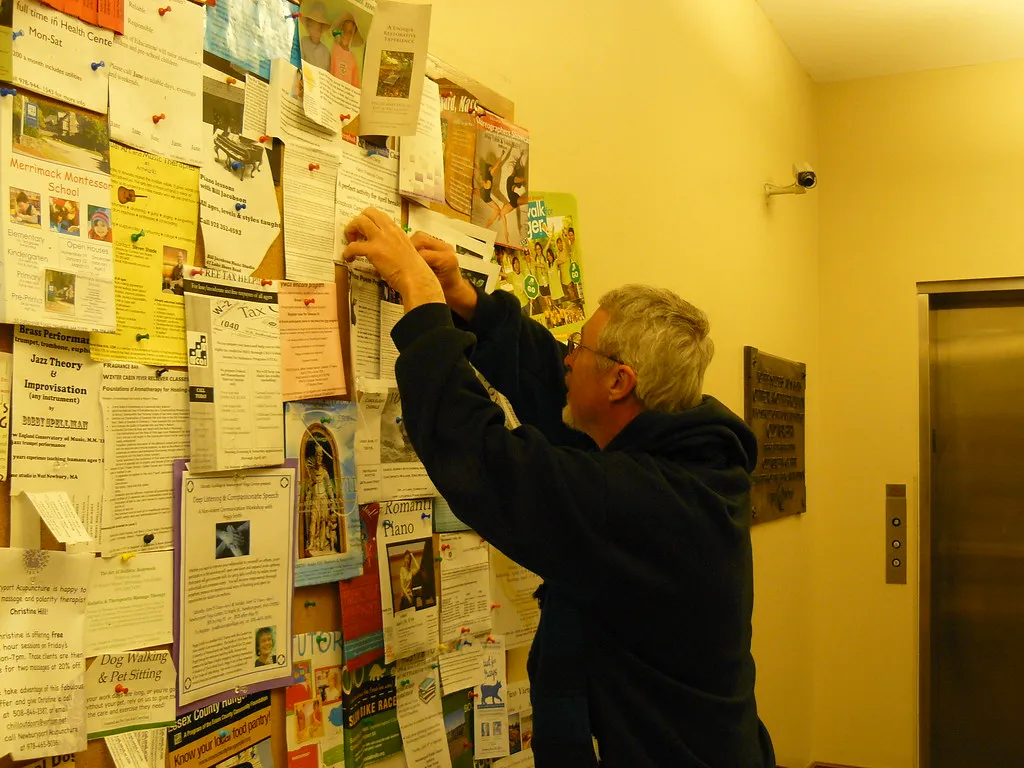
Research exploring community bulletin boards as a type of participatory non-digital display highlights how they are used for content of local and contextual relevance, and how cultures of participation, personalization, location, physical access, and flexibility affect community members’ level of engagement with them. Lost cats, babysitting offers, local elections, garage sales, music lessons, support groups: this is what bulletin boards carry. Small things. Necessary things.
The Loneliness Context That Makes This Matter
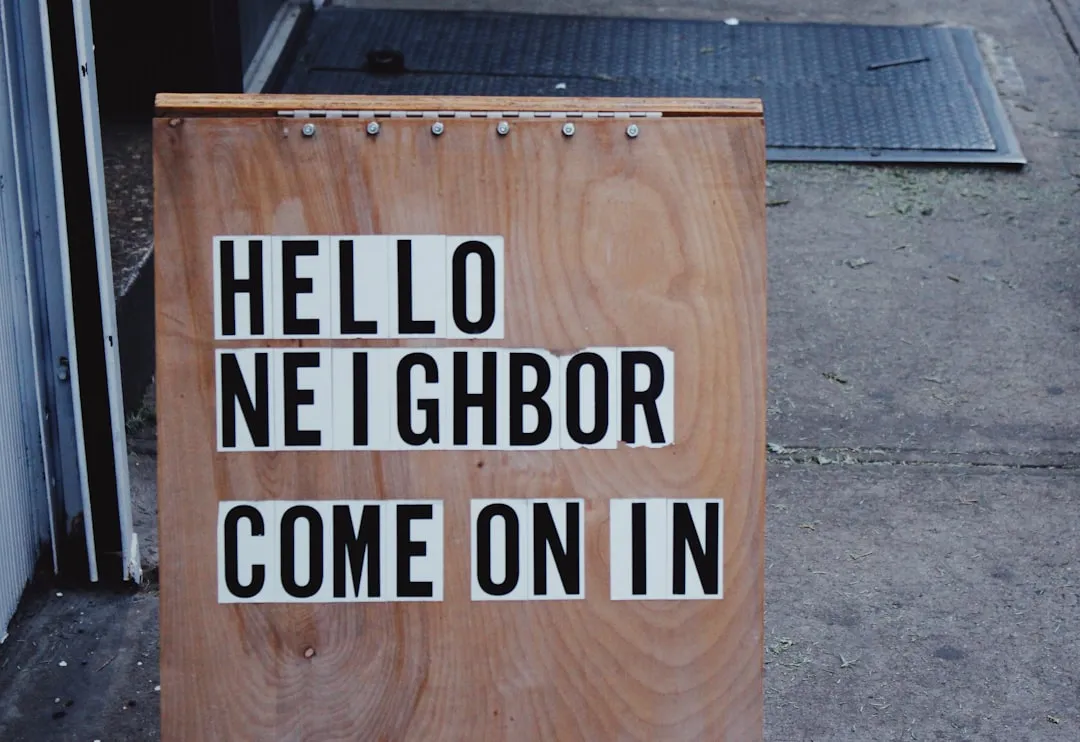
There is a loneliness epidemic in the United States. A 2025 American Psychological Association survey found that over half of U.S. adults felt isolated, left out, or lonely, and nearly seven in ten said they received less emotional support than they needed, up from the prior year. That backdrop makes seemingly small gestures of neighborhood connection worth taking seriously.
Neighborhood social cohesion is recognized as a key social determinant of health, yet its protective role has remained understudied in many contexts. A bulletin board won’t fix an epidemic. Still, it represents the kind of micro-infrastructure that builds cohesion slowly and without fanfare, the kind that researchers increasingly recognize as foundational to community wellbeing.
The Analog Experience Nobody Is Replicating Digitally
In a world increasingly dominated by digital alerts and algorithmic feeds, the neighborhood bulletin board can feel like a relic. But for those who tend it, it’s a relic worth keeping. There’s something grounding about holding a physical folder, walking it down the street, and knowing that, however briefly, you’re part of a quiet, shared rhythm. That quality is genuinely difficult to manufacture online.
Scrolling past a neighborhood post on an app is a passive act. Walking up to a board, reading something stapled there by an actual neighbor, and deciding whether to tear off a phone number tab requires presence. It’s a small physical commitment, and that commitment creates a slightly different quality of attention. Research on community engagement consistently points to this distinction between consuming information and inhabiting a shared space.
The Design Details That Determine Whether They Work
Effective bulletin board design must consider geographic and contextual relevance to foster community participation, with key design factors including flexibility, accessibility, user agency, and the physical environment of the display. In plain terms: a board tucked in a dim corner of a building lobby will see far less use than one positioned at a natural gathering point with good lighting and enough space to actually read what’s posted.
Even when a sense of community and identity exists in a location, the way in which the environment is constructed, such as being overly sterile, can limit the desire of individuals to post content on bulletin boards. This is a practical insight. The boards that thrive tend to be in imperfect, well-worn spaces: coffee shops with mismatched chairs, laundromats with plastic seats, community centers that smell faintly of old carpet. Character invites participation.
Seattle’s Chinatown Board and the Question of Cultural Memory
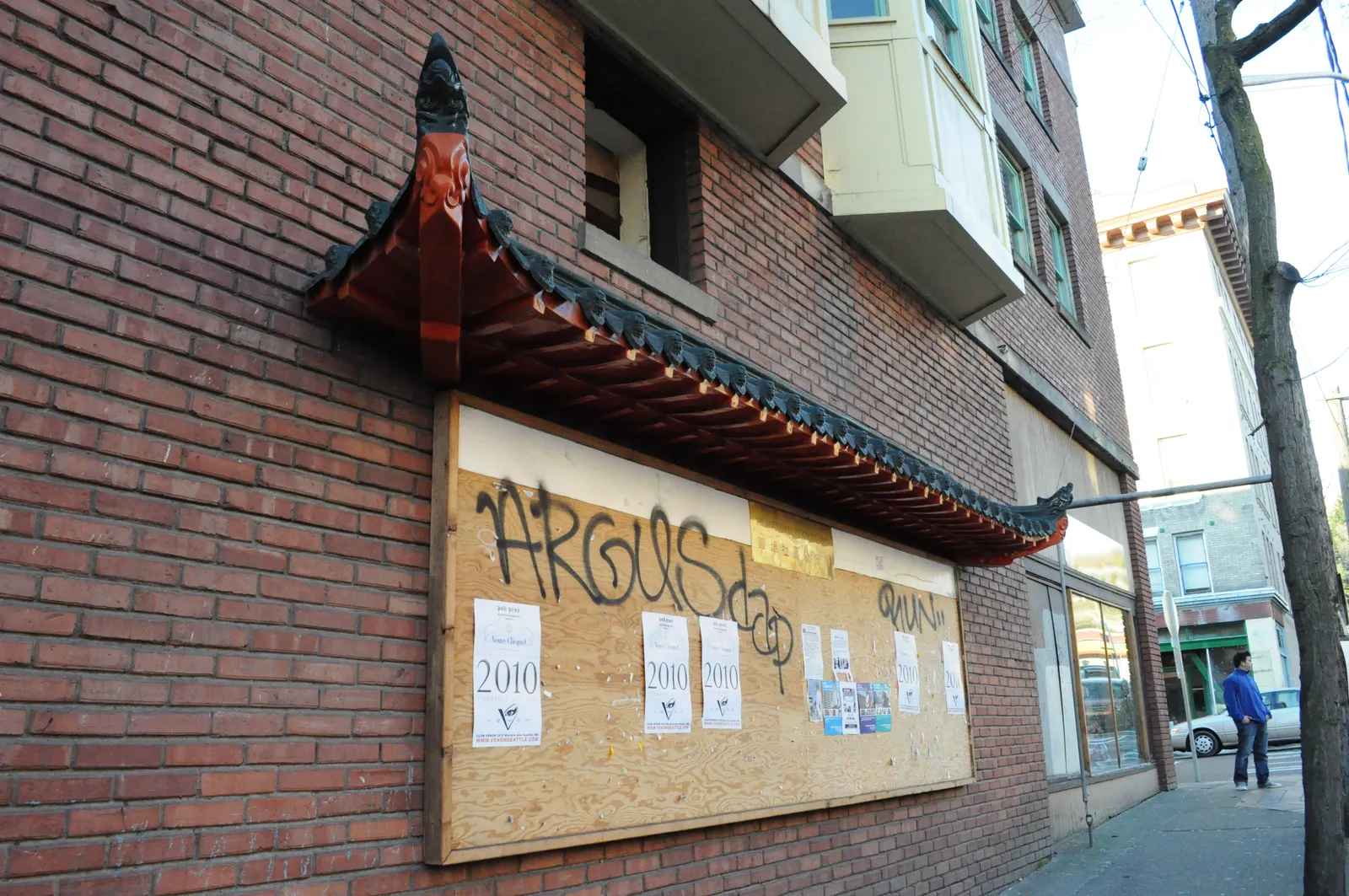
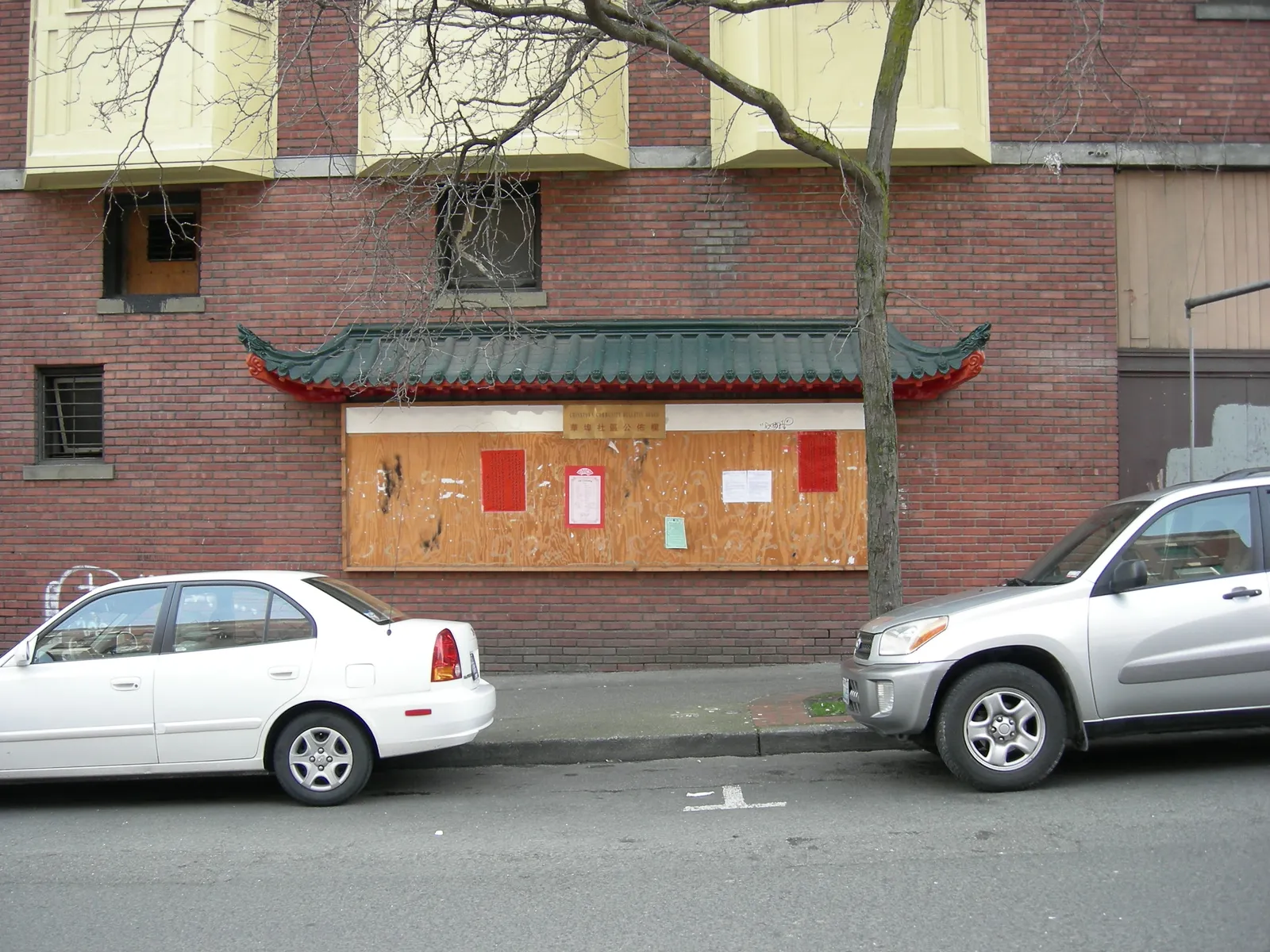
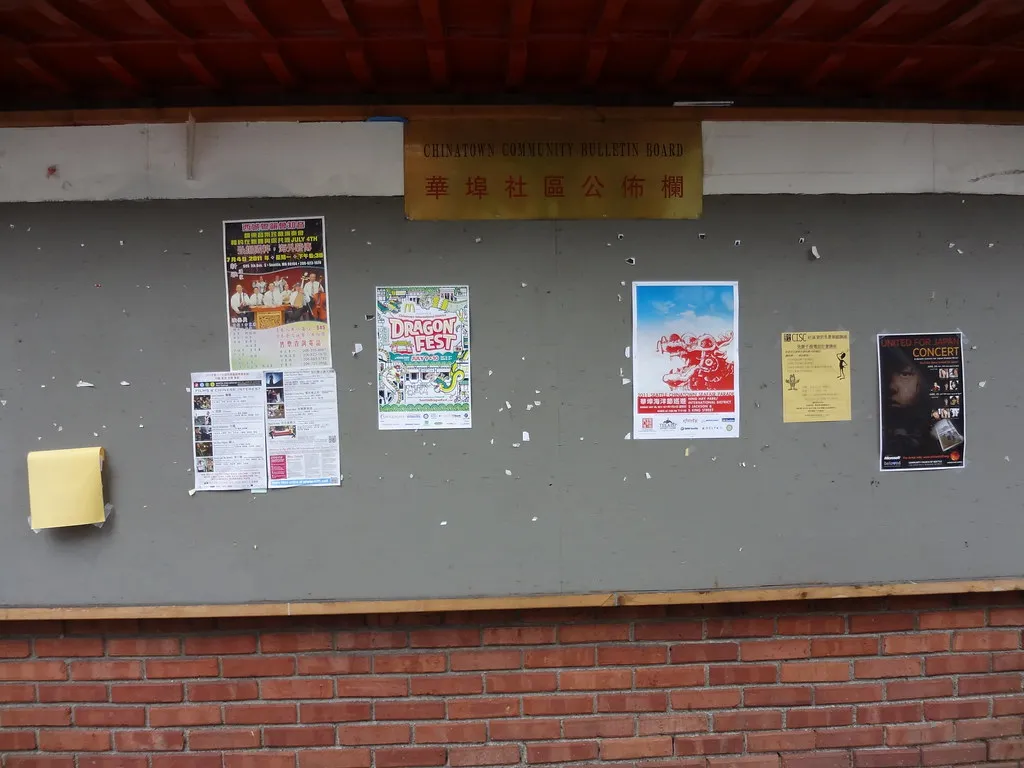
The Chinese Community Bulletin Board, also known as the Chinatown Community Bulletin Board, is installed on the eastern exterior of the Louisa Hotel in Seattle’s Chinatown International District. It’s one of the more well-documented examples of a board that carries cultural weight beyond the purely functional. For decades it has served as a communication hub for a community that has historically had limited access to mainstream media channels.
Boards like this one illustrate something the generic version of the story tends to miss. These aren’t just convenient places to post garage sale notices. For immigrant communities, language-minority neighborhoods, and historically marginalized groups, the physical bulletin board has sometimes been the only locally controlled information space available. Its survival in those contexts is less about nostalgia and more about necessity.
When Neighborhoods Actively Maintain the Tradition
Publications like Boston.com have adapted the concept, running monthly neighborhood bulletin boards as community guides covering events, civic engagement, and volunteer opportunities across the city’s neighborhoods. The format translates, but the original physical version carries something the digital edition cannot: the element of discovery by someone who wasn’t looking.
Some neighborhoods assign rotating coordinators, others rely on informal stewardship. In some residential groups of roughly ten single-family homes, the bulletin board is still very much alive and surprisingly analog. Each month, members collect materials and circulate printed information for neighbors to acknowledge. The ritual of it, the regularity, is what keeps the information flowing and keeps neighbors in mild but meaningful contact with one another.
Cohesion, Health, and the Value of Small Gestures
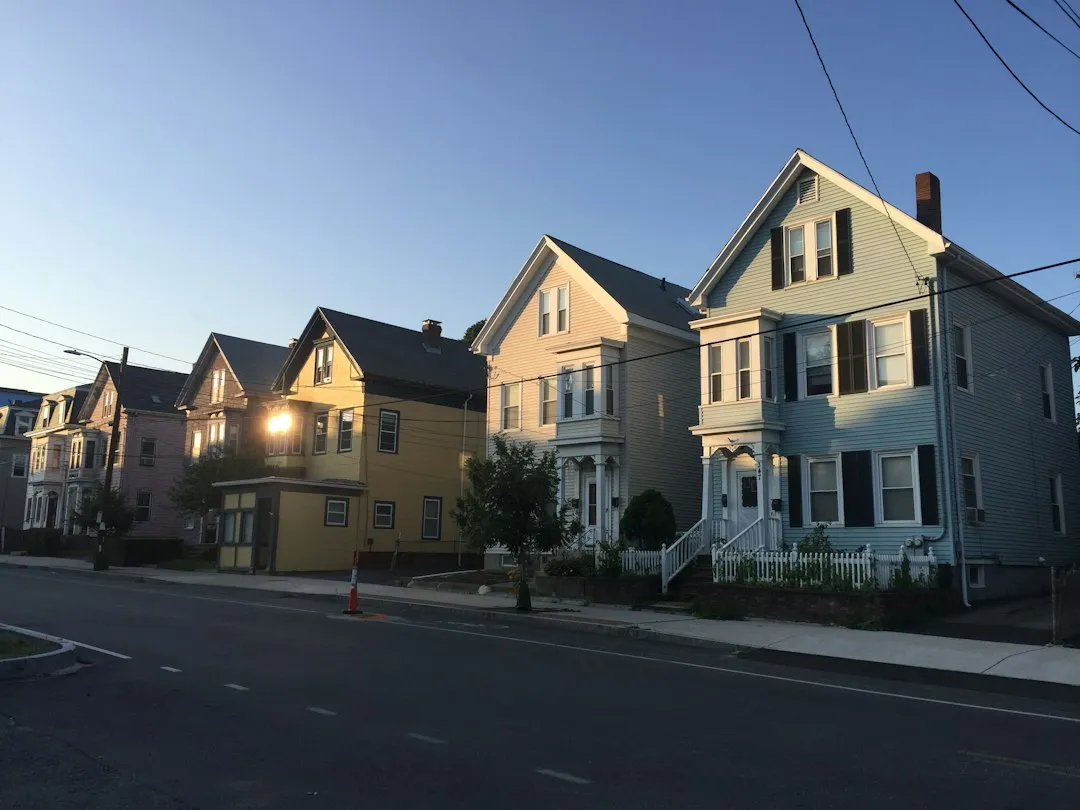
Research has found that neighborhood social cohesion mitigated loneliness across different demographic groups. Loneliness among older adults in particular is a public health concern, with significant effects on physical and mental health. Shared physical spaces where neighbors encounter information about each other’s lives contribute to exactly the kind of low-intensity social fabric that protects against isolation.
Higher residential attachment and higher neighborhood trust have both been associated with lower levels of loneliness in research on older adult populations. The bulletin board, modest as it is, contributes to both. Posting a notice is a small act of trust. Reading one is a small act of paying attention to your neighbors. Repeated over months and years, these small acts add up to something.
Why Some Neighborhoods Simply Won’t Let It Go
In today’s fast-paced world, the sense of community often takes a backseat, leaving many yearning for a stronger connection with their neighbors. Building a strong neighborhood community is not just about geographical proximity; it’s about fostering a sense of belonging, shared responsibility, and mutual support. The bulletin board, in its quiet way, serves all three of those functions without requiring anyone to download anything or create an account.
There’s also a resilience argument. Apps shut down. Platforms change their algorithms. Group chats fragment. A corkboard on a wall in a community center needs only someone willing to keep it up to date. In neighborhoods that have been through displacement, gentrification, or economic disruption, that kind of durable, low-cost infrastructure has real value. Some things survive precisely because they don’t depend on anyone’s business model to keep running.
The Takeaway
The community bulletin board is not making a comeback because it never really left. It simply outlasted several waves of technologies that were supposed to replace it. The neighborhoods that keep the tradition alive are not doing so out of stubbornness or sentiment alone. They’re maintaining something that research, lived experience, and observable community health increasingly suggest has genuine worth.
In 2026, with loneliness a documented public health concern and neighborhood cohesion recognized as a meaningful buffer against it, the humble corkboard deserves a second look. Not as a relic. As infrastructure. The kind that works best when it’s a little worn, a little crowded, and tended by people who live close enough to actually care what’s pinned to it.
AI Disclaimer: This article was created with the assistance of AI tools and reviewed by a human editor.