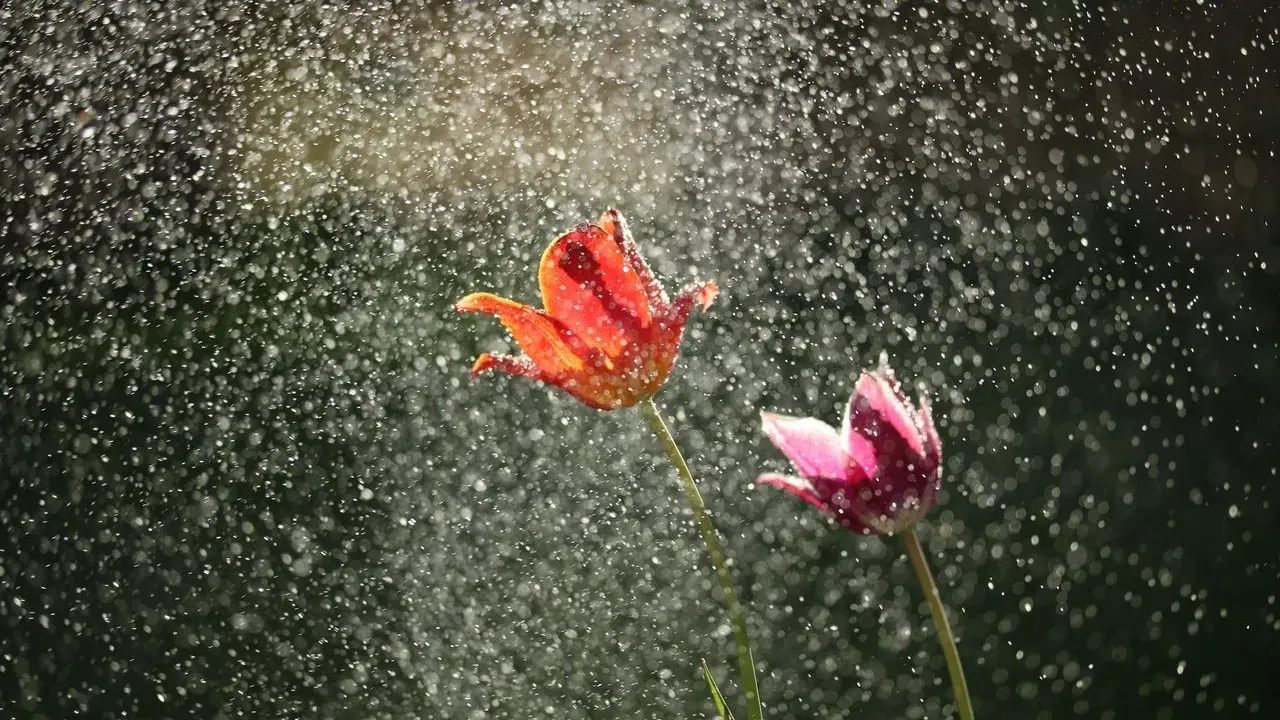

Connecticut gardeners often discover that overcast skies and steady rain bring out richer tones in late-summer plantings than bright sunlight ever does. Dark clouds reduce glare while moisture saturates petals and leaves, turning ordinary beds into striking displays. Rachel’s garden illustrates the effect clearly, where familiar flowers appear more saturated and dramatic under wet conditions. The change happens quickly once rain begins and lingers as long as the foliage stays damp.
Why Overcast Days Alter Color Perception
Light plays a central role in how colors register to the eye. Direct sun creates strong highlights and shadows that can wash out subtle shades. When clouds cover the sky, the light becomes diffused and even, allowing each hue to stand out without competition from bright reflections. Wet surfaces add another layer by reflecting less light and absorbing more, which deepens the apparent saturation of reds, purples, and greens. Garden visitors sometimes notice the shift most in flowers that normally look muted. Petals that seem pale in full sun gain depth once rain settles on them. Foliage darkens as well, creating stronger contrast between blooms and leaves. The result is a temporary intensification that lasts until the plants dry.
Practical Effects for Garden Viewing
The timing of rain matters for anyone planning a garden visit. Late-summer storms often arrive in the afternoon or evening, when temperatures have cooled and colors have had time to develop through the season. A brief shower can refresh an entire border without damaging mature plants. Gardeners who monitor forecasts sometimes delay outdoor tasks to catch these moments. Stakeholders include both the garden owner and occasional visitors who arrive during or right after rain. The owner gains a private show of intensified color, while visitors experience the same beds in an unexpected way. No special equipment is required; the change occurs naturally once moisture reaches the surfaces.
Seasonal Context in Late Summer
By late summer many perennials and annuals have reached peak size and color. The accumulated growth provides more surface area for rain to affect. Cooler nights and occasional showers also help maintain turgor in the plants, keeping them upright and receptive to the light shift. This period offers a narrow window when the weather effect is most noticeable before autumn foliage takes over. The pattern repeats each year in similar climates. Connecticut’s mix of humidity and variable summer weather creates repeated opportunities for the same visual change. Gardeners who observe their own beds over multiple seasons learn to anticipate which plants respond most strongly.
Simple Steps to Observe the Change
– Check the forecast for steady rain rather than brief showers.
– Visit the garden during or immediately after the rain while foliage remains wet.
– Compare the same plants on a sunny day to note the difference in saturation.
– Focus on darker or more saturated varieties first, as they show the effect most clearly. These observations require no tools beyond attention to timing and weather. The experience remains consistent across different gardens that share similar plant palettes and regional conditions.
AI Disclaimer: This article was created with the assistance of AI tools and reviewed by a human editor.