
The Laptop Screen That’s Pulling Your Head Down

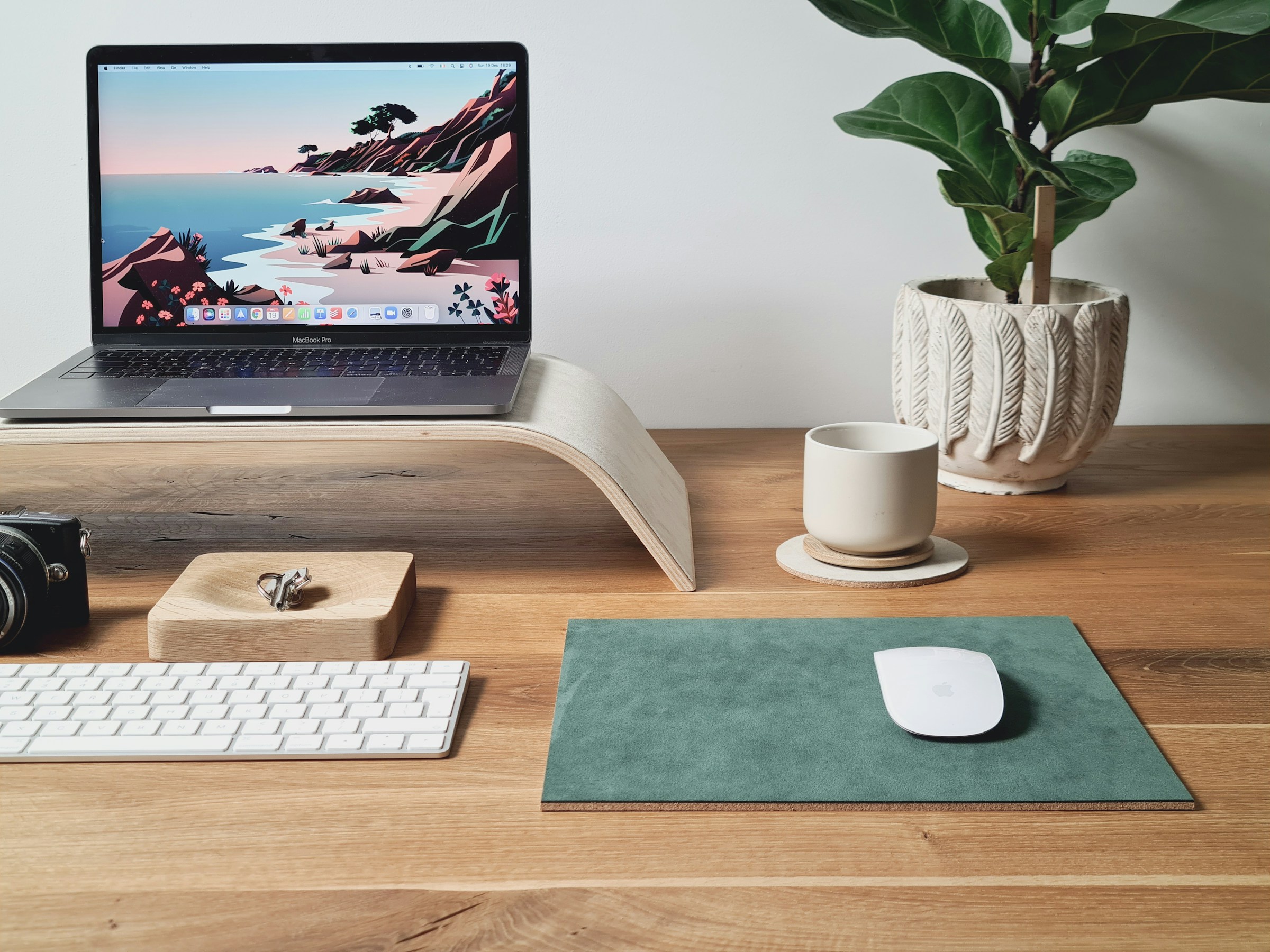
Most home workers use a laptop as their primary machine. That seems convenient, but it carries a structural flaw that no amount of good intentions can fix on its own. Laptops have a built-in ergonomic problem: the screen and keyboard are physically attached. Put the keyboard at a comfortable height for your arms, and the screen sits well below eye level, pulling your head down and forward. Raise the screen to eye level, and your wrists end up typing at chest height.
A laptop used flat on a desk forces roughly 30 to 45 degrees of downward head tilt, which loads the neck with somewhere around 40 to 49 pounds of effective weight. Used that way for full workdays, it reliably produces forward head posture and neck pain.
The position of the laptop screen causes people to hunch forward when working, creating poor neck and back postures – and unlike the discomfort you feel after an intense workout, this kind of strain builds slowly, quietly, and without much warning until it becomes persistent.
Sitting Still Is the Real Problem

A 2025 scoping review focused on sitting time, sitting posture, and sitting behavior among office workers. Across 22 studies involving nearly 8,000 participants, researchers found consistent associations between different sitting patterns and low back pain.
The clearest pattern appeared around sitting behavior. Twelve of 13 studies examining sitting behavior found associations involving factors such as fewer breaks and more static sitting. The position itself matters less than the duration spent locked into it without movement.
Prolonged static sitting at the workplace is considered one of the main risks for the development of musculoskeletal disorders and adverse health effects. When you combine that with a makeshift home setup, the risk compounds quickly.
Home Workers Move Far Less Than They Realize
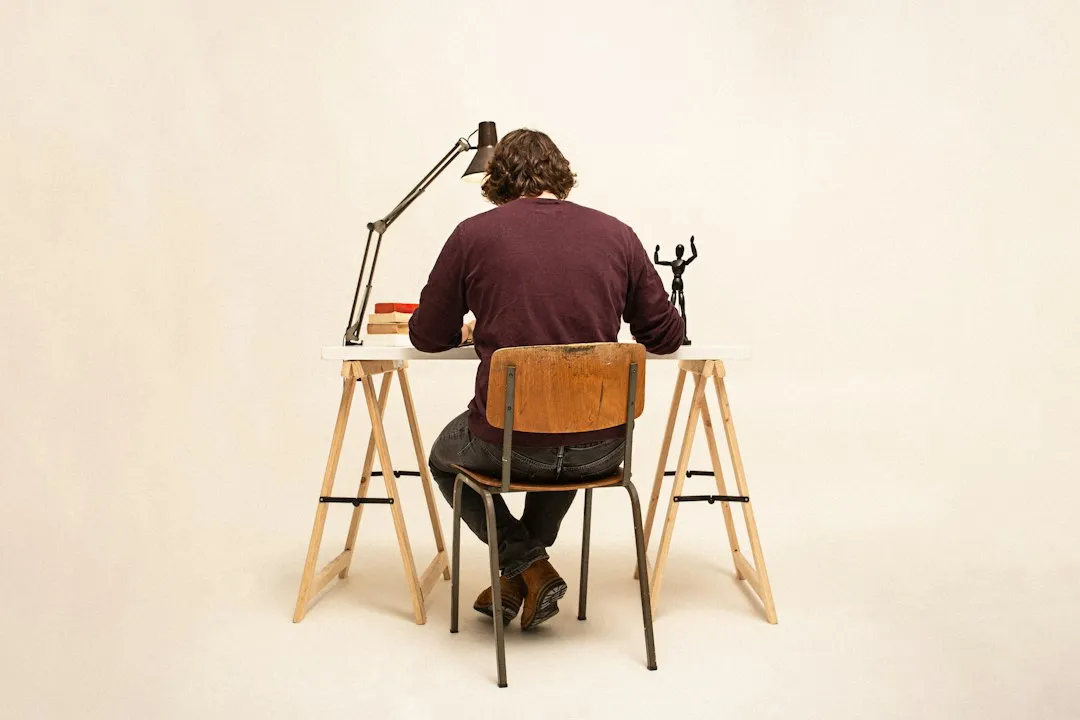
A 2025 accelerometer study found that home-based desk workers took about 1,257 steps during the working day, compared to roughly 2,800 steps in the office, and were sedentary for about 27 minutes longer. That difference may sound small on paper, but it represents the steady erosion of all the incidental movement that office life provides.
The commute disappeared. The walk to a colleague’s desk disappeared. The trip to a different floor for a meeting disappeared. What remained was a much shorter loop between desk, kettle, and back.
Fewer steps means longer unbroken stretches of sitting, which is precisely the behavior the research consistently links to spinal discomfort. Movement isn’t just good for your heart. It’s what prevents your spine from bearing the full load of a fixed posture for hours at a stretch.
The Bent Trunk Posture and What It Actually Does to Your Spine
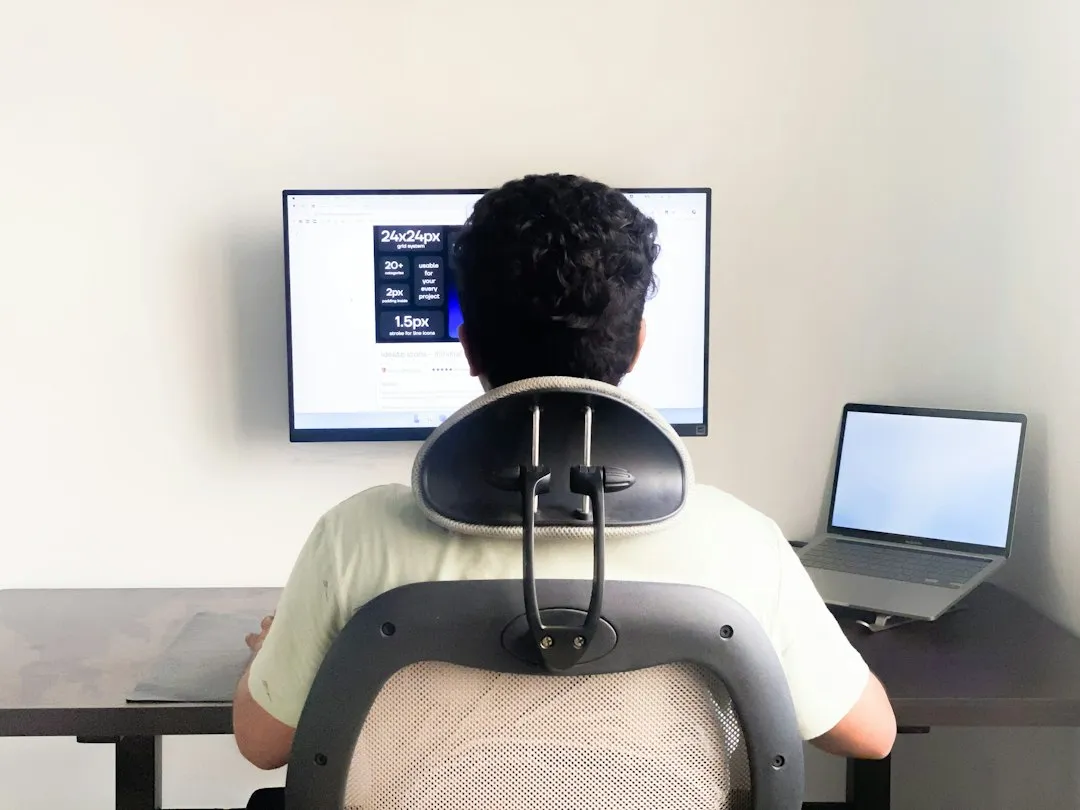
Research published in the Journal of Occupational and Environmental Medicine in December 2024 found that sitting with the trunk a little bent forward, compared to sitting straight with the back against the backrest, was associated with nearly three times the odds of low back pain.
In computer workers predominantly using a home or hybrid work environment, self-reported sitting posture and depressive symptoms were associated with low back pain. Interestingly, the location of work itself was not associated with pain. That’s an important distinction. Working from home doesn’t cause the problem. The posture you adopt while doing it does.
Persistent neck pain has the potential to change the biomechanics of the cervical spine, particularly in people who spend most of their time sitting in front of computer screens. Continuous postural neck pain can lead to forward head posture, which increases load on the posterior structures of the cervical spine, including ligaments, muscles, bones, and joint capsules.
The Couch and Kitchen Table Problem

Approximately 35 percent of U.S. employees now work remotely all the time. In the comfort of their homes, it’s easy to settle for “good enough” when it comes to a home office setup and get lazy about taking proper care of the body.
Working from the couch or a dining chair might feel comfortable for the first twenty minutes. After two hours, that seemingly harmless slouch has compressed spinal discs in ways a proper seat simply wouldn’t allow. The spine needs support at the lumbar curve, and soft cushions provide none of it.
Thighs should be supported by the chair, with hips at a 90 to 110 degree angle. Knees should not touch the edge of the seat. The backrest of the chair should provide lumbar support. A couch satisfies none of these conditions, yet millions of home workers spend entire days in exactly that position.
How Poor Posture Snowballs Into Bigger Problems

Poor posture doesn’t merely cause muscle pain. Research has found that only 15 minutes of sitting in poor posture can result in a decreased ability to perform tasks that engage the back muscles, indicating that even a short period of bad positioning can cause measurable harm.
Long-term poor posture lowers the tolerance of muscle tissues, causing tissue damage and resulting in musculoskeletal disorders. These disorders rarely announce themselves with a single sharp event. They accumulate over weeks and months, which is exactly why home workers often don’t connect their pain to their desk habits until it’s become chronic.
The Bureau of Labor Statistics highlights that poor ergonomics contributes to roughly one third of all workplace-related injuries and illnesses. That figure applies to traditional offices too, but home setups often lack the equipment standards and oversight that corporate spaces enforce.
The Screen Height Nobody Adjusts
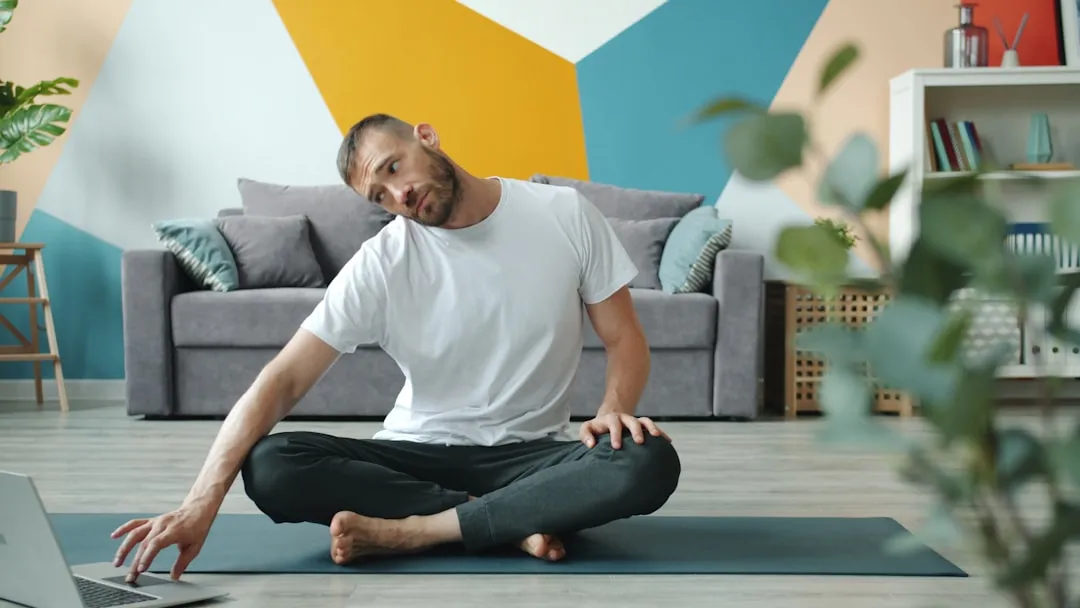
Monitor height is one of the simplest things to get right, and one of the most consistently ignored. The head should be centered over the body and forward facing, which means the top of the screen should sit roughly at eye level. When a screen is too low, the neck flexes forward to meet it, and that angle multiplies the effective load the neck muscles carry with every degree.
Due to unfavorable neck-shoulder muscle loads caused by poor posture, people who use a laptop for a long time face a meaningful risk of neck and shoulder injuries. Research specifically on screen height published in 2024 confirmed that this risk scales with the hours spent in that position.
The fix is genuinely simple. A laptop stand, a stack of books, or an external monitor combined with an external keyboard resolves the problem almost entirely. The barrier isn’t cost or complexity. It’s awareness.
Skipping Breaks Is Its Own Posture Habit

Taking a break can feel like lost productivity. In reality, the opposite is true. In a six-month study published in the Scandinavian Journal of Work, Environment and Health, neck pain incidence fell from 44 percent to 17 percent among workers who took active breaks or changed posture regularly. Low back pain fell from 33 percent to somewhere between 7 and 9 percent. Both intervention groups landed in roughly the same place, suggesting the mechanism is simply not holding one position for very long.
That’s a substantial reduction from what most people would consider an unglamorous intervention. You don’t need a standing desk or a posture corrector wearable. You largely need to stop sitting still for so long.
A practical starting point used in research and clinical settings is standing or moving briefly every 30 to 45 minutes. The goal isn’t to exercise at your desk. It’s simply to interrupt the static load before it compounds.
The Global Inactivity Backdrop

The World Health Organization reported in 2024 that roughly 31 percent of adults globally, about 1.8 billion people, did not meet recommended physical activity levels in 2022, with inactivity projected to reach 35 percent by 2030. Home working, for all its benefits, has quietly contributed to that trend for a significant portion of the workforce.
Research following a university work-from-home program found that up to 70 percent of those surveyed reported pains in the neck, lower back, and shoulders. These symptoms were reported alongside poor postures such as sitting at a table for extended periods and using a laptop in suboptimal positions.
These numbers don’t suggest that remote work is bad. They suggest that remote work without deliberate ergonomic attention is quietly accumulating physical cost across a very large number of people.
What the Research Actually Recommends
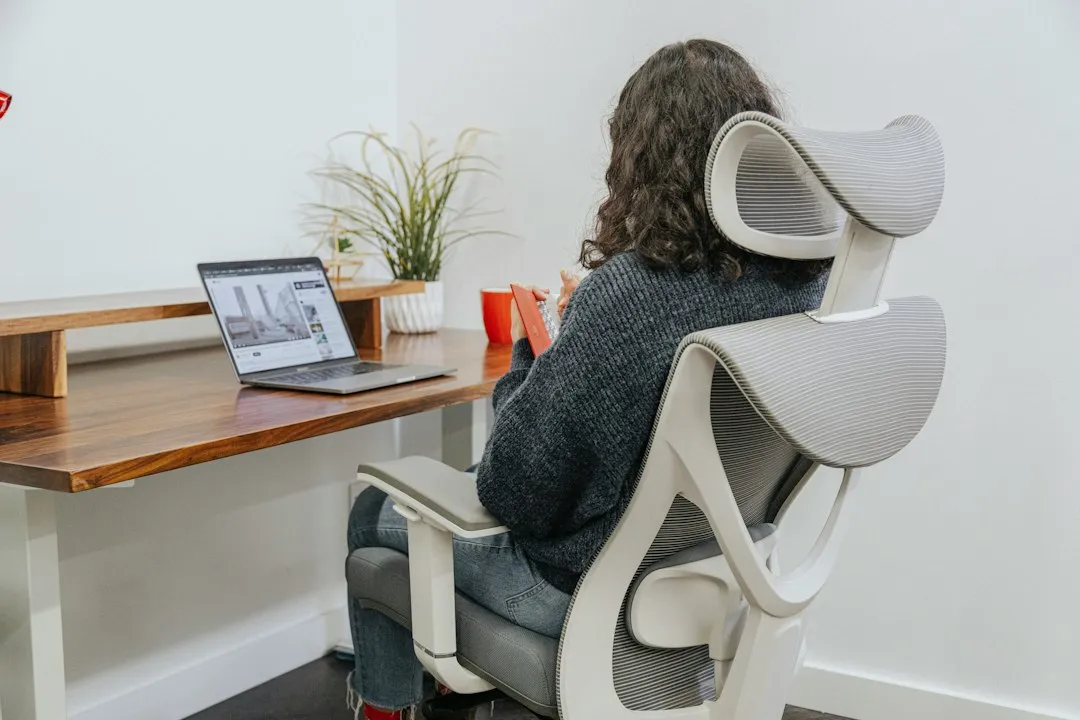
Studies of workplace interventions have found that encouraging posture changes and movement breaks can reduce short-term discomfort or new-onset pain for some workers. For workers, the evidence points toward practical changes: avoid staying in the same position for long periods, create opportunities to move, and adjust the workspace in ways that make regular movement easier.
To prevent musculoskeletal disorders, it is advisable to maintain proper neck angle and overall posture by elevating devices to eye level, which eliminates the need for forward flexion of the neck and reduces strain on muscles and ligaments. Physical activity and exercise can also help in preventing such ailments.
These findings underscore the need for ergonomic guidelines and interventions that address posture in home and office environments. The good news is that most of those interventions are modest, practical, and don’t require expensive equipment to begin.
The Takeaway

The home office habit hurting your posture isn’t dramatic. It’s not a single obvious mistake. It’s the quiet accumulation of hours spent slightly forward, slightly slumped, on a chair that doesn’t fit the task, looking at a screen set a few inches too low, without ever really stopping to reset.
Research from multiple directions, including accelerometer studies, scoping reviews, and clinical trials, consistently points to the same simple truth: the body wasn’t designed to hold one position for hours. Moving regularly, getting screen height right, and supporting the lumbar spine properly aren’t wellness trends. They’re the minimum the spine requires to stay functional through a full working life.
The home office is here to stay for most people. How you sit in it is still a choice you make every single morning.
AI Disclaimer: This article was created with the assistance of AI tools and reviewed by a human editor.