

Most remote workers spend real time thinking about what to say on a video call. Far fewer think about what’s behind them when they say it. That oversight turns out to matter more than most people expect.
The COVID-19 pandemic triggered a global boom in videoconferencing that quickly became a permanent fixture of professional life, with roughly three quarters of business meetings now predicted to occur via video. In that context, your background isn’t decoration. It’s speaking on your behalf, silently, before you open your mouth.
The Mistake Is Simpler Than You Think

The most common video call background mistake isn’t using a chaotic backdrop full of laundry or unwashed dishes. It’s subtler: treating the background as irrelevant. Workers assume that once they’re dressed, lit, and on time, the background is a minor detail. Research consistently shows it is not.
Virtual background can be considered an extension of professional appearance because personal spaces evoke character inferences. Survey research of professionals supports this, with background judged to be more important than clothing choice. That is a striking finding. Most of us agonize over what to wear to a call. Fewer of us glance behind ourselves.
Clutter Quietly Undermines Your Credibility

A study examining student impressions of instructors found that backgrounds directly impacted perceptions of technical skills and overall credibility. When instructors used backgrounds that appeared informal or distracting, participants reported lower levels of trust and engagement. These findings translate well beyond classrooms into everyday professional calls.
Research shows that backgrounds with neat, natural, or branded elements tend to boost perceptions of trustworthiness and competence. Conversely, cluttered, overly personal, or poorly crafted virtual backgrounds can lower perceived professionalism and even raise privacy concerns. The problem isn’t just aesthetics. It’s the silent signal clutter sends about your attention to detail.
Fake Backgrounds Can Backfire Too

Many remote workers reach for a virtual background as a quick fix, swapping in a blurred office or a scenic mountain range. That feels like a safe solution, but the research tells a more complicated story.
Novelty backgrounds reduced ratings of competence and trustworthiness in studies. While this might not surprise everyone, the effect of simulated home backgrounds was more unexpected. Researchers suggest that a simulated home background may imply the individual is being secretive, potentially inducing perceptions of dishonesty. So the virtual background you chose to hide your home might actually make you seem less trustworthy than your home itself would.
Preliminary findings suggest that customers might perceive employees using virtual backgrounds, especially nonrevealing ones, as withholding personal information, potentially impacting trust and satisfaction levels. Worth pausing on that one.
The Psychology of First Impressions on Screen

First impressions form fast in person. On video, they form even faster because there is less sensory information to work with. The background fills a large portion of the visual frame, and the brain processes it immediately, often before consciously registering the speaker’s face.
Research supports the idea that video backgrounds affect trait evaluations in ways parallel to real-world visual cues. For competence perceptions specifically, low ratings occurred for faces in home and novelty backgrounds, consistent with the literature where personal spaces are deemed unprofessional. Perceptions formed this way tend to be sticky. Reversing a poor first impression takes effort that a better background would have avoided entirely.
Lighting Problems Are Part of the Background Problem

The background mistake and the lighting mistake are usually the same mistake, because how you light your space determines what your background looks like on screen. A window behind you throws your face into shadow while blowing out everything else. Backlighting from windows, overhead-only lighting, or sitting in near-darkness with only a desk lamp can make you look unprepared.
The fix is straightforward: position your primary light source in front of you, not behind you. Soft, even light from a window you’re facing, or an inexpensive ring light, changes how your background reads entirely. A mediocre background with good front lighting looks far more professional than an expensive setup with a backlit frame.
Where Most People Actually Work Compounds the Problem

When asked where they work from home, roughly a third of remote workers said they use a home office. Meanwhile, about a fifth work from their bedroom and another fifth from their living room. That means the majority of remote workers are not calling from a purpose-built workspace. They’re calling from rooms filled with personal items, furniture, and visual noise.
Research-backed guidance consistently recommends designating a clear area specifically for work-related tasks to separate work and personal time. A dedicated workspace also solves much of the background problem by default. When your space says “I work here,” your background says the same thing.
Video Call Fatigue and the Background Connection

Nearly half of remote professionals report experiencing significant video call fatigue on a weekly basis. The rate is noticeably higher among women than men. This is relevant to the background conversation because a cluttered or visually busy background adds low-level cognitive load to every participant on the call, not just the person showing it.
Every item visible during a call can either enhance or distract from the message being delivered. Clutter in the background can send mixed signals to clients or colleagues, diluting the impact of what is being said. In a world where meeting fatigue is already widespread, removing visual noise from your background is a small but genuine act of consideration for the people on the other side of the screen.
Branded Backgrounds and Organizational Standards

Some organizations have moved beyond individual choice and established standards for how employees present themselves on camera. The results are measurable. A 2025 study by Microsoft found that companies using consistent branded backgrounds in Teams meetings reported notably higher client satisfaction scores and a meaningful increase in perceived professionalism compared to companies without brand standards for video calls.
When a team shows up to a client meeting with polished, branded backgrounds while competitors use generic scenes or cluttered home offices, a professional advantage is established immediately. It’s a subtle but powerful form of competitive positioning. Most individual workers don’t have access to branded templates, but the underlying principle still applies: a consistent, intentional background communicates something that a random one cannot.
The Real-Background vs. Virtual-Background Debate
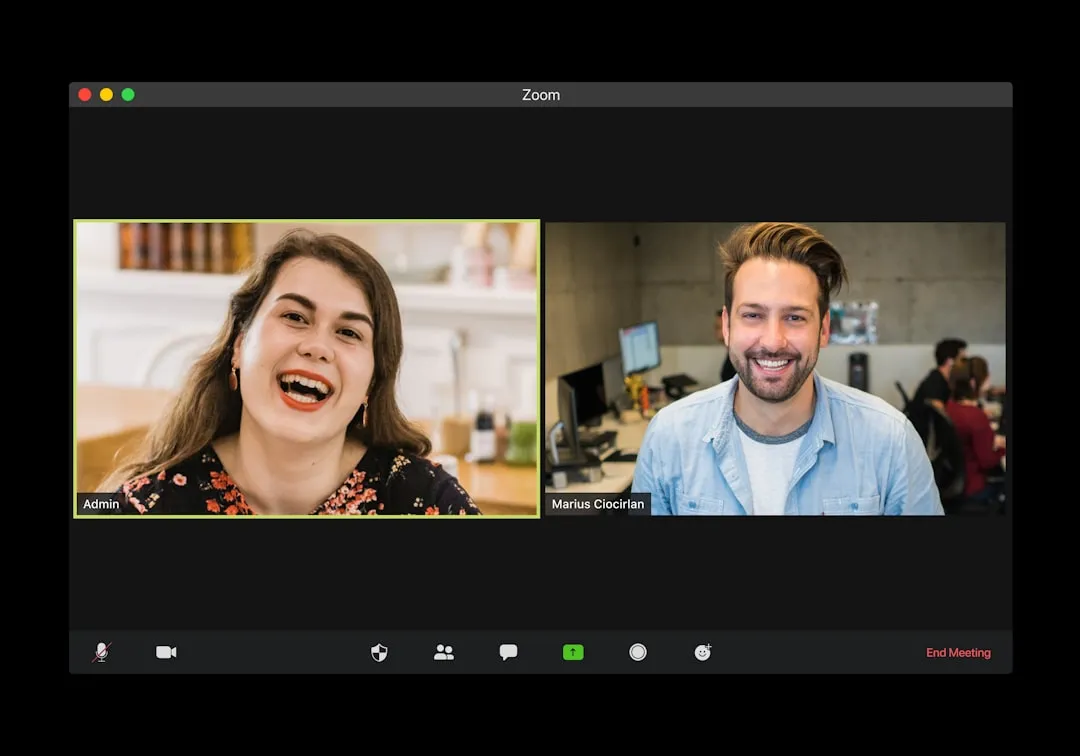
The nuance in the research is genuinely useful here. Studies reveal that nonrevealing backgrounds do not necessarily make employees appear more competent. In fact, findings indicate that revealing backgrounds have the potential to make employees seem friendlier. Sharing glimpses of personal life, such as a cozy kitchen or an interesting bookshelf, can establish warmth and relatability.
The ideal background isn’t necessarily the most sterile one. A real, tidy, and personal space often outperforms a generic virtual backdrop. The key word is tidy. A video conferencing background can make or break first impressions, setting the stage for how others perceive your professionalism and respect for their time. A cluttered or inappropriate background can create a measurable negative psychological impact. Real backgrounds work beautifully when they’re ordered. They work against you when they’re not.
Simple, Actionable Fixes That Actually Work

The good news is that fixing your background doesn’t require a renovation. A neutral wall, a small bookshelf with a few organized items, or a plant positioned thoughtfully are all genuinely effective. Opting for a simple, neutral background keeps the focus on the speaker and ensures participants stay engaged with the meeting content. This approach also minimizes visual distractions and enhances clarity.
Joining any video meeting without testing your setup first is widely cited as one of the most avoidable mistakes. Technical issues waste time and make others question your preparation. Add a background check to that pre-call routine. Glance at your own video thumbnail before the meeting starts. What others see in those first seconds is worth thirty seconds of your attention.
The Takeaway

The video call background mistake most remote workers make isn’t dramatic. It’s the quiet assumption that the background doesn’t matter much, that the work speaks for itself, that no one is really looking. The research says otherwise, clearly and repeatedly.
Your background is part of how you show up professionally. Your background does more than make a first impression. It shapes how others see your professional identity, and research highlights that virtual environments have a particular way of framing user credibility. In a world where so many professionals are now working remotely, the ones who understand this have a quiet but consistent edge. That edge starts with what’s behind you.
AI Disclaimer: This article was created with the assistance of AI tools and reviewed by a human editor.