
A Scam That Sounds Like Someone You Love

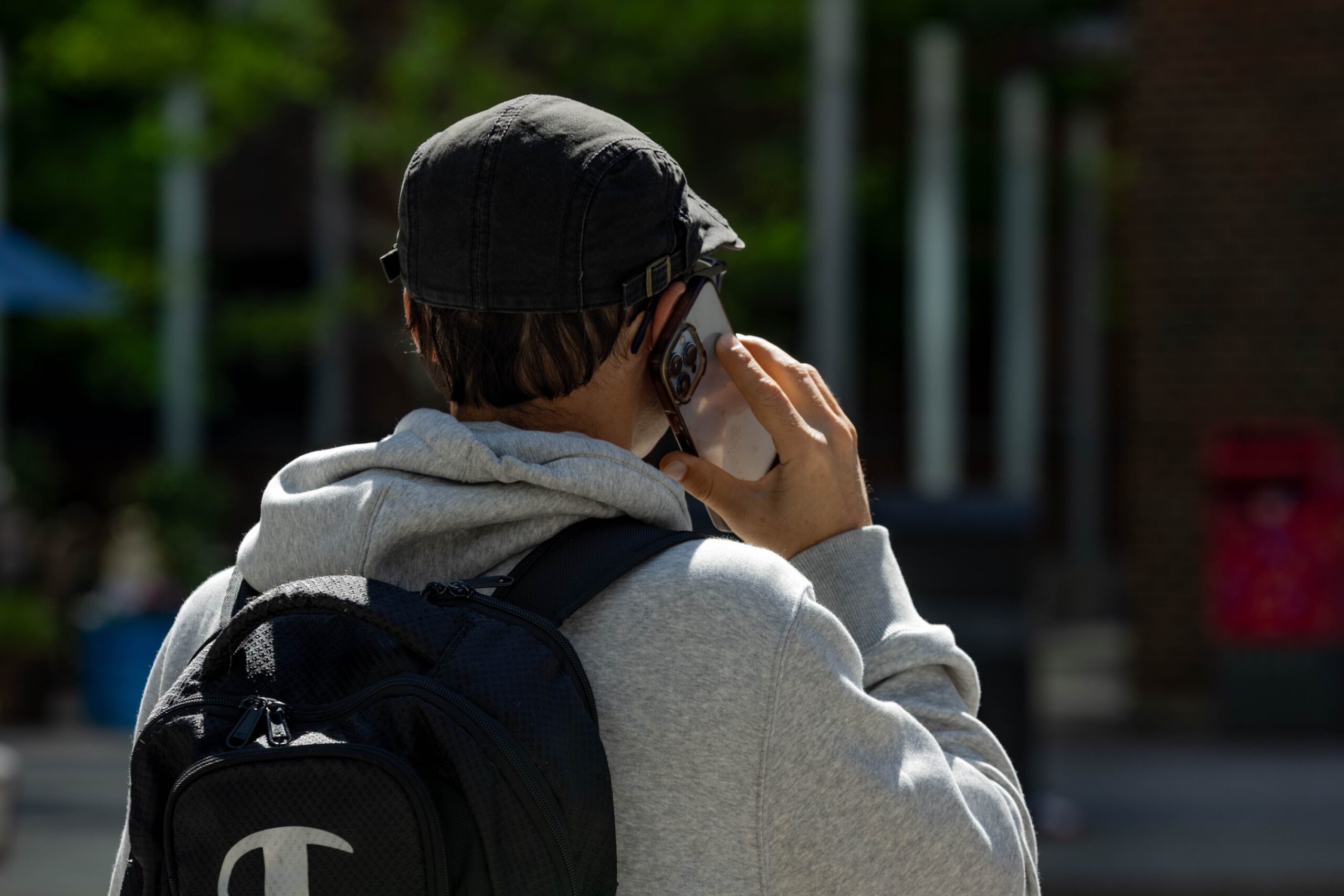
The scams often begin with a phone call in which a victim hears what sounds like a child, spouse, or other loved one in distress. Criminals may claim the person has been arrested, injured, or stranded and needs money immediately. The call feels urgent, chaotic, and completely real. While the family emergency scam isn’t new, the use of AI voice cloning is a twist that makes these scams harder than ever to recognize.
Grandparent scam losses have grown sharply with the adoption of AI voice cloning tools, which dramatically lower the technical barrier to impersonating a specific person. Previously, scammers relied on the victim’s emotion and imagination to fill in the voice; now, the voice itself is convincingly reproduced.
How Little Audio It Actually Takes

Researchers said scammers can now clone a person’s voice using as little as three seconds of audio pulled from social media videos, voicemail greetings, or voice messages. The technology copies tone, speech patterns, and accents closely enough that many people cannot tell the difference between a real voice and a fake one.
Modern voice cloning uses deep neural networks to analyze the unique characteristics of a voice, including pitch, tone, rhythm, breathing patterns, and the subtle inflections that make each person sound distinct. The AI breaks speech into tiny units called phonemes and learns to reproduce them in any combination. Creating a convincing voice clone now costs less than two dollars, which means the financial barrier for criminals has essentially disappeared.
Where Scammers Find the Audio

Roughly nine in ten US teens use YouTube and about six in ten use TikTok and Instagram, per Pew Research Center’s 2025 survey, and every talking video, Story, livestream, podcast appearance, voice note in a public group chat, or clipped game-party exchange is a potential sample.
Attackers harvest audio from YouTube videos, podcast appearances, earnings calls, social media clips, and voicemail greetings. The FBI’s December 2024 public service announcement on generative AI fraud advises families to “limit online content of your image or voice, make social media accounts private, and limit followers to people you know.” It is advice that, for most people, comes too late. Enormous amounts of voice data are already publicly available.
The Scale of Financial Losses

Americans lost more than $5 million in 2025 to AI voice cloning scams in which criminals use artificial intelligence to imitate the voices of family members during fake emergencies, according to new research from Trend Micro, now branded as TrendLife. One in three people who engage with AI-powered scam calls end up losing money, with average losses topping $18,000 in surveyed cases.
The FBI’s 2025 Internet Crime Report broke out artificial intelligence as its own fraud category for the first time in the report’s nearly 25-year history, logging 22,364 complaints and costing Americans nearly $893 million. Most of that was AI-assisted investment fraud, but the report is explicit that voice cloning and other AI tools show up across nearly every category, including family-emergency calls.
Imposter scams were the most reported fraud complaint last year, with cases up about 19 percent to roughly 1 million in 2025 and losses topping $3.5 billion.
Older Adults Are Hit the Hardest

AI-powered scams cost American seniors $352 million in 2025, with over 3,100 victims aged 60 and older reporting losses to the FBI. The FBI found average losses of approximately $38,500 per victim among Americans 60 and older in 2025, nearly double the figure for younger filers.
Older adults are disproportionately hit. The FTC’s own report to Congress found that their reported fraud losses quadrupled from about $600 million in 2020 to $2.4 billion in 2024. The FTC’s December 2025 report to Congress estimated that real losses may have reached $81.5 billion that year, reflecting how severely underreported these crimes remain. Americans between 65 and 74 held a median net worth of $409,900 in 2022, according to the Federal Reserve’s Survey of Consumer Finances, more than ten times the median for adults under 35, which makes them especially attractive targets.
Real Cases, Real Consequences

In one documented case in Florida, a woman lost $15,000 after receiving a call from her “crying daughter.” She withdrew cash and placed it in a box, which a driver came to collect from her house. Another call, and a larger money request, soon followed.
One victim, Deborah Del Mastro, received a terrifying call from a man claiming he had kidnapped her daughter and was demanding $20,000 for her release. The situation became even more convincing when she heard what sounded exactly like her daughter’s voice pleading for help. Believing her daughter was in danger, Del Mastro sent the scammers $5,000 before realizing she had been targeted by a fraud scheme. The money was never recovered.
The Trapp family in the San Francisco Bay Area received a frantic call from their “son” saying he’d been in a car accident, injured a pregnant woman, and needed urgent help. The scammers posed not only as the son but also as police, instructing the mother to quickly withdraw $15,000 and hand it to a courier already on the way. The family became suspicious just in time and called their son directly. They were among the fortunate few.
The Psychology Behind Why It Works

What makes AI voice cloning scams so effective is the psychological pressure applied during the call. Scammers exploit three established psychological triggers: urgency, authority, and familiarity.
Dollar losses per victim are among the highest of any consumer fraud category, because the psychological pressure is unlike anything else. You hear what sounds exactly like your child’s voice. Every instinct you have fires at once. The scammer knows this. The entire architecture of the attack is designed to override your rational thinking before you have a chance to pause and verify.
Caller ID spoofing lets a scammer make the call appear to come from a number you know, including your loved one’s own. So the two signals a panicked brain reaches for first, the voice and the number, are precisely the two a scammer can fake.
How Fast This Threat Is Growing

AI scams surged 1,210 percent in 2025, with voice cloning listed among major enterprise AI scam types. Deepfake-enabled vishing attacks surged by over 1,600 percent in Q1 2025 versus Q4 2024 in the US.
According to Heimdal Security’s Voice Cloning Detection 2025 report, impersonation scams including AI voice cloning spiked 148 percent between April 2024 and March 2025, representing nearly a 1.5x increase in AI voice cloning scams in less than a year. Global AI scam losses could reach $40 billion by 2027. The trajectory is steep, and there is little sign of it leveling off.
What the Law Is Doing About It

The FCC ruled in February 2024 that AI-generated voices in robocalls are “artificial” under the Telephone Consumer Protection Act. Tennessee’s ELVIS Act gave individuals a legal claim against unauthorized cloning of their voice, and a federal NO FAKES Act cleared a Senate committee in June 2026.
The FBI’s 2025 Internet Crime Report shows victims lost $893 million to AI-related scams in 2025, a figure that underscores how quickly synthetic media is being absorbed into familiar fraud schemes. In 2025, the FBI also issued a public alert warning that criminals were using AI-cloned voices to impersonate senior US government officials. Regulatory responses are developing, but enforcement consistently lags behind the speed of the technology itself.
How to Protect Yourself and Your Family
Experts recommend families create a private code word that only close relatives know and use it to verify emergency calls involving money requests. They also advise hanging up and contacting the person directly through a known phone number or different platform before sending money.
Cybersecurity experts said urgency remains one of the strongest warning signs, especially when callers demand payment through wire transfers, cryptocurrency, or gift cards. Treat urgency plus secrecy as the tell, not the voice. The voice can be faked. A scammer’s need to rush you and keep you quiet is much harder to fake convincingly, because it doesn’t match how real emergencies actually unfold.
The FTC found that roughly four in ten older adults who reported losing $10,000 or more to impersonation scams in 2024 said a phone call was the initial point of contact. That single fact should recalibrate how every family handles an unexpected emergency call from a loved one asking for money.
A Quiet Threat Worth Taking Seriously

There is something particularly unsettling about a scam that weaponizes the sound of someone you love. It isn’t just a financial crime. It exploits the deepest instincts of care and protection that people hold for their families. This scam isn’t going away. The tools are getting cheaper and the audio is getting cleaner.
When AI voice cloning first hit the scene, the “grandparent” scam was most common. Now the same tactics are used on parents, spouses, and siblings of all ages. The single most reliable defense is also the simplest: pause, hang up, and call back on a number you already know. A genuine emergency will survive that thirty-second delay. A scam almost never will.
AI Disclaimer: This article was created with the assistance of AI tools and reviewed by a human editor.