

There’s a scene many people over fifty will recognize: a grandparent sitting at a kitchen table, guiding a child’s hand across a lined notebook, correcting the slant of a letter, insisting on neatness. It felt old-fashioned even then. Today, that daily ritual has largely vanished from classrooms, replaced by keyboards, tablets, and touchscreens.
What’s striking is how much science has caught up with what those grandparents seemed to know instinctively. A growing body of research suggests the handwriting habit they enforced was doing far more for young minds than anyone fully understood at the time.
The Slow Disappearance from Classrooms

After more than a century of teaching cursive handwriting to elementary school students, digital keyboarding skills began appearing in curricula in the late 1990s. The shift accelerated after Common Core went into effect in 2010, which emphasized typing skills while quietly omitting cursive writing.
By the mid-2000s, schools were investing heavily in computer labs and keyboarding classes. When Common Core omitted cursive for K-12 education, many districts saw little reason to keep it, even though school curricula are set at the state level in the U.S., and 41 states had agreed on those standards.
Instruction in cursive has been declining since the 1970s, and many teacher education programs don’t address handwriting instruction at all, thereby isolating the skill from its most natural advocates. That’s a long fade, and its effects are now showing up in classrooms in very tangible ways.
What the Brain Does Differently When You Write by Hand

Researchers are learning that handwriting engages the brain in ways typing simply cannot match, raising serious questions about the costs of ditching this age-old practice, especially for young children.
Brain research shows that it is not just any motor activity that facilitates learning, but that accurately coordinating the complex hand movements while carefully shaping each letter when using a pen is what’s crucial. Tapping keys, by comparison, is a flat, repetitive gesture that carries very little of that neurological richness.
The visual and kinetic components of motor execution during handwriting are simultaneous, continuous, and spatiotemporally linked, which supports learning. Typing separates these processes, lacking motor information about stroke formation and failing to integrate visual and kinetic components.
Handwriting and the Reading Connection Nobody Talks About

Specifically, handwriting helps facilitate the storage of alphabetic knowledge, including the shape, formation, name, and sound of letters, which can also be used to learn how to read. That connection between the hand and the reading brain is surprisingly direct.
As noted in a recent systematic review, handwriting instruction during kindergarten can improve both writing and reading outcomes, such as knowledge of letter names and sounds, spelling, and word reading.
In spite of these ties, handwriting is rarely mentioned in the national conversation on how to improve the reading performance of elementary students. That’s a meaningful gap, especially at a time when reading scores are under intense scrutiny across the country.
The Grade Gap Between Writers and Typists

In a landmark 2014 study reinforced by a 2024 meta-analysis, researchers asked college students to take notes either by hand or by laptop while watching video lectures, and then tested their understanding. The 2024 meta-analysis encompassed 24 studies and analyzed academic performance for roughly 3,000 college-age students.
Students who took notes by hand were more likely to earn top grades, while students who typed were more likely to land in the D and F range. Roughly four in ten handwriters earned As and Bs, compared with just three in ten typists. That’s not a trivial gap by any measure.
When students write notes by hand, they’re more likely to slow down and process each idea, which delivers meaningfully better results. Typing encourages transcription. Writing by hand encourages thinking.
Fine Motor Skills Are Quietly Declining
In a January 2026 online survey of 1,163 early educators conducted by the EdWeek Research Center, respondents were asked what changes they had seen in students’ age-appropriate fine motor skills over the past two years. Seventy percent said their students’ fine motor skills had decreased.
In a national 2025 survey of 569 primary school teachers in the United Kingdom, nearly eight in ten respondents said that, compared to the year 2000, students have more difficulty performing tasks that require fine motor skills, such as holding a pencil, drawing, writing, and using scissors.
Many educators blame young children’s worsening fine motor skills on their increasing screen usage. Roughly four in ten U.S. children have their own tablet by the age of two, and the vast majority of parents whose children use screen time don’t apply limits, according to a 2025 report by Common Sense Media.
Letter Learning Is Stronger Through the Pen

A 2025 study published in the Journal of Experimental Child Psychology provides evidence for the contribution of handwriting to learning accurate letter and word representations, showing that prereaders learn letter-sound mappings in a new alphabet more accurately by handwriting than by typing on a computer.
The benefit of handwriting with respect to typing is generalized to word identification, word writing, and word decoding. These are not peripheral skills. They are the core mechanics of literacy.
Research keeps confirming what many teachers have known for years: handwriting is more than just penmanship. It’s an important part of a child’s thinking and literacy development, particularly during the formative years of pre-K through fifth grade.
The Cultural Loss Nobody Anticipated
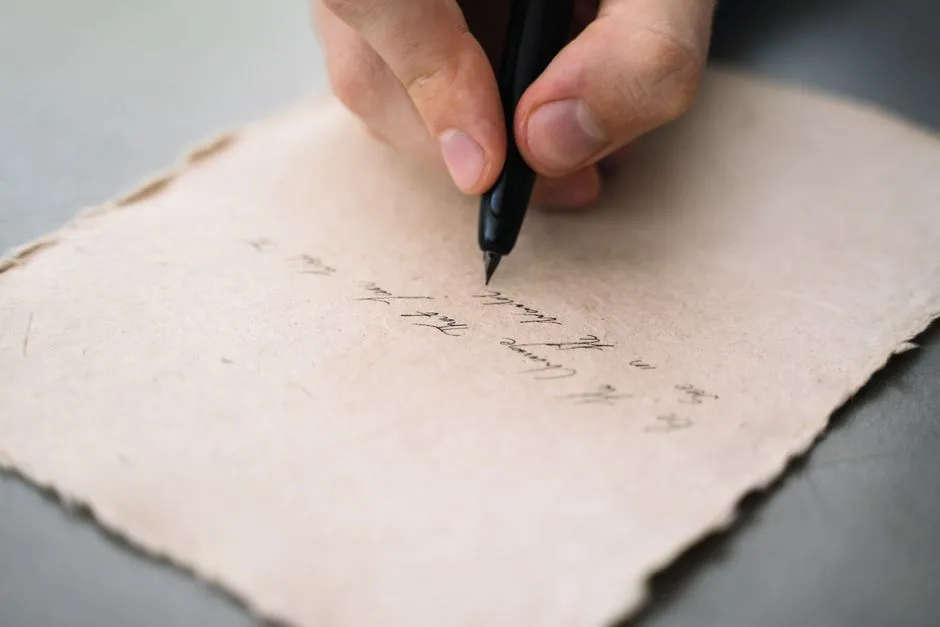
Relying on experts or software to interpret old handwriting puts distance between people and their own history. Even in everyday life, not being able to read a grandparent’s letters or decipher a handwritten recipe represents a small but meaningful rupture in cultural continuity.
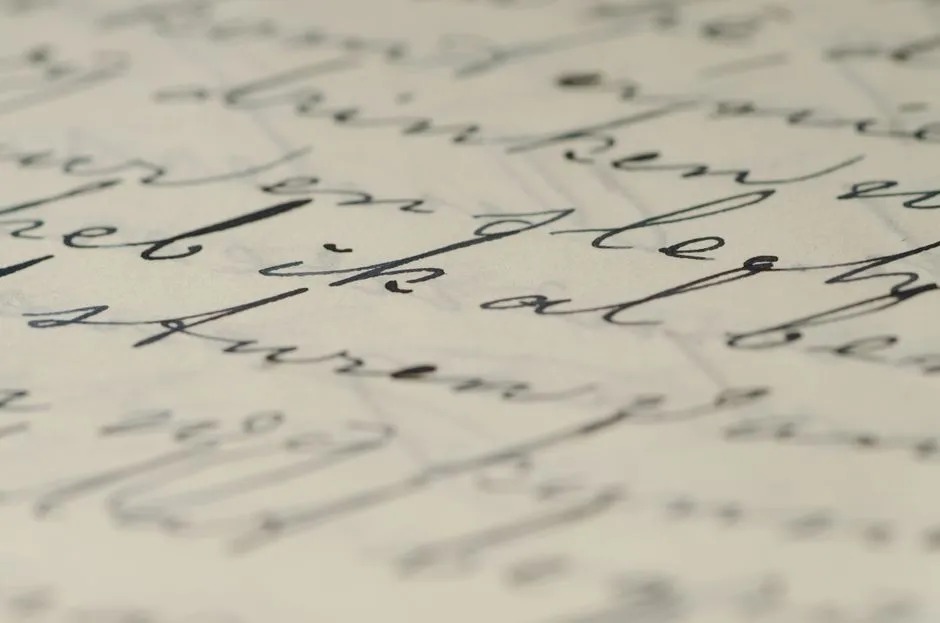
Cursive preserves cultural heritage, representing a shared human tradition and an art form connecting those using the Latin alphabet across modern history, from the Constitution to personal correspondence.
In everyday educational settings, the lack of cursive fluency creates practical communication barriers. Students report being unable to read teacher comments on assignments or even classmates’ papers, undermining collaborative learning processes and creating unnecessary friction in classroom instruction.
States Are Starting to Push Back
As of March 2026, more than half of U.S. states now require or strongly encourage schools to teach students to read and write in cursive, compared to just 14 states a decade ago. That’s a significant policy reversal in a short span of time.
As of 2025, 25 U.S. states require some form of cursive instruction in schools. California, which stopped teaching it in 2010, reinstated the requirement in January 2024 for grades one through six.
Following the Common Core State Standards’ removal of cursive requirements, there has been a strong, demonstrable legislative correction at the state level. By late 2024, the number of U.S. states requiring cursive instruction had grown to 24, representing a significant policy reversal. Legislators appear to be hearing from parents and educators in ways that are actually changing law.
The Challenge for a New Generation of Teachers

As more states require students to learn cursive, it’s becoming a skill that may be entirely new to their teachers, too. Younger-generation teachers were in many cases never taught handwriting when they were in school themselves. That creates a real practical challenge for districts trying to restore the practice.
Research-based tools from the Iowa Reading Research Center now aim to help teachers seamlessly build handwriting into instruction, boosting skills like letter recognition, spelling, and reading. Tools like these may be one of the more realistic paths to scaling handwriting instruction again.
Administrators and teachers can have a lasting impact by ensuring handwriting instruction is explicit, structured, and prioritized in the early grades. By providing educators with the knowledge, tools, and time they need, schools can help ensure every child has the opportunity to develop this essential skill.
What the Research Says About Writing by Hand vs. Screens
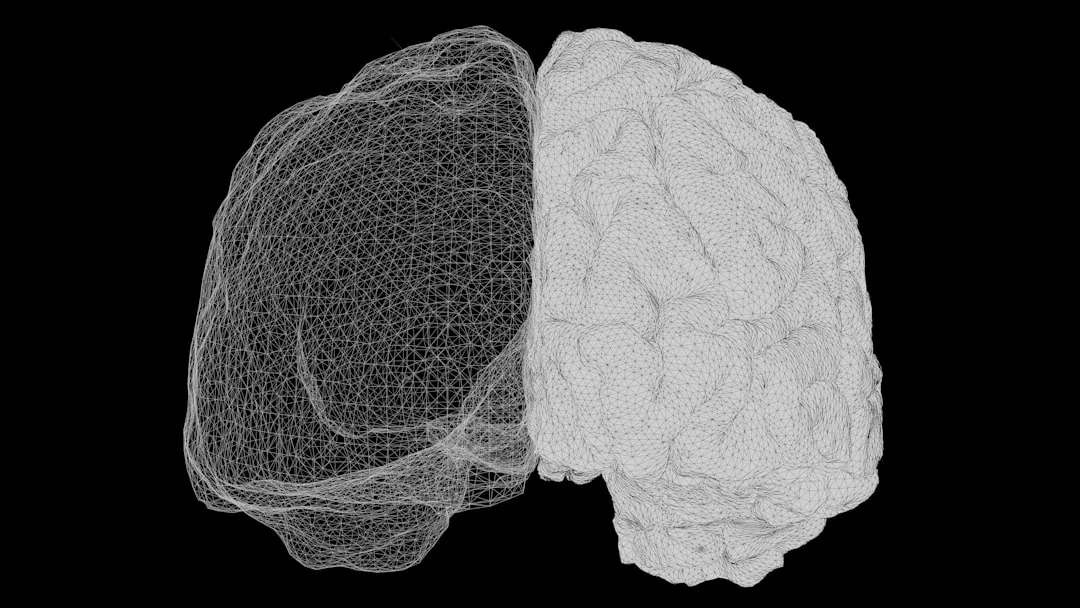
Unlike typing, handwriting movements prime the brain for learning, making those first wobbly acts of letter formation a critical bedrock of literacy. That’s not a sentimental argument. It’s a neurological one, grounded in measurable brain activity.
A study published in Frontiers in Psychology found that students who wrote by hand had higher levels of electrical activity across a wide range of interconnected brain regions responsible for movement, vision, sensory processing, and memory.
So far, evidence suggests that it’s the act of writing by hand that matters most, not whether it’s print or cursive specifically. The physical engagement with the pen or pencil appears to be the key variable, regardless of which style a child uses.
A Quiet Reckoning Worth Taking Seriously

Grandparents didn’t have peer-reviewed neuroscience to back them up. They had practice, repetition, and a belief that slowing down to form a letter carefully was worth the effort. It turns out they were right, just for reasons that took decades of research to articulate properly.
The conversation now isn’t really about nostalgia or analog versus digital. It’s about understanding what the hand does for the brain, and whether classrooms can find room for both a keyboard and a pencil without treating them as mutually exclusive.
Handwriting remains an essential academic skill even with the rising use of digital tools in classroom settings. That may be the most practical summary of where the science stands in 2026, and it’s a reasonable place to start rethinking what we quietly gave up.
AI Disclaimer: This article was created with the assistance of AI tools and reviewed by a human editor.