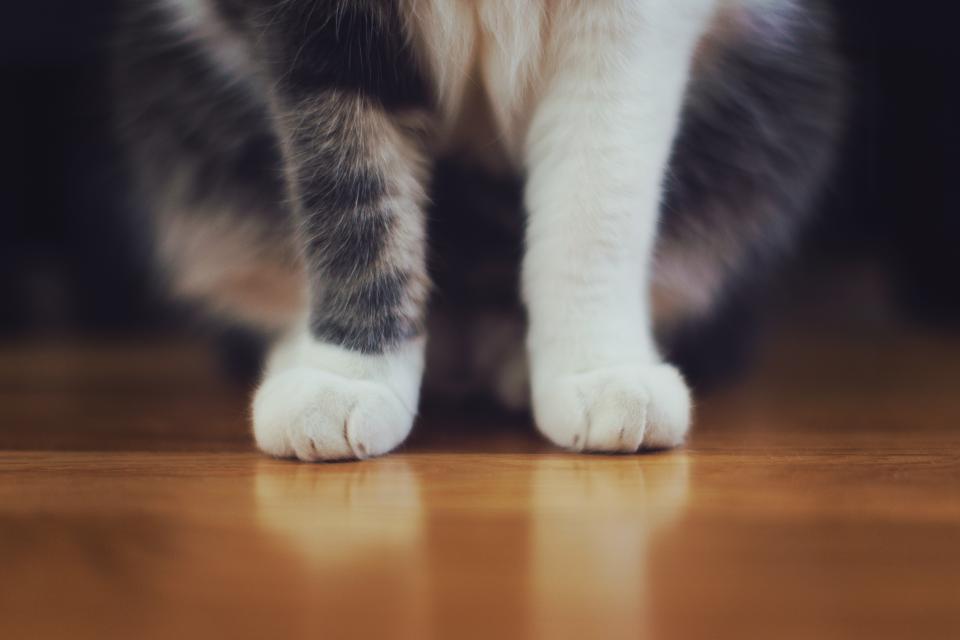

It Starts with a Hunting Sequence That Never Quite Switched Off
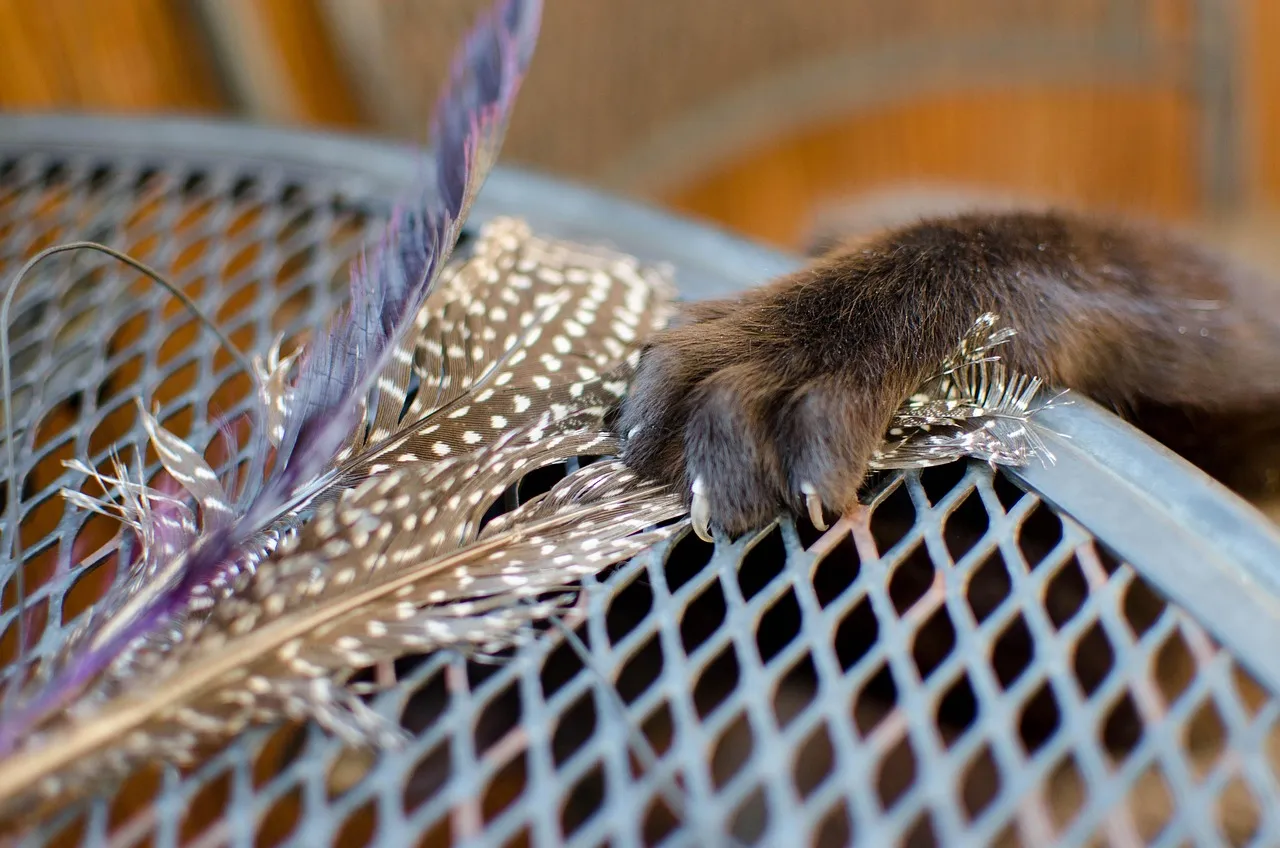
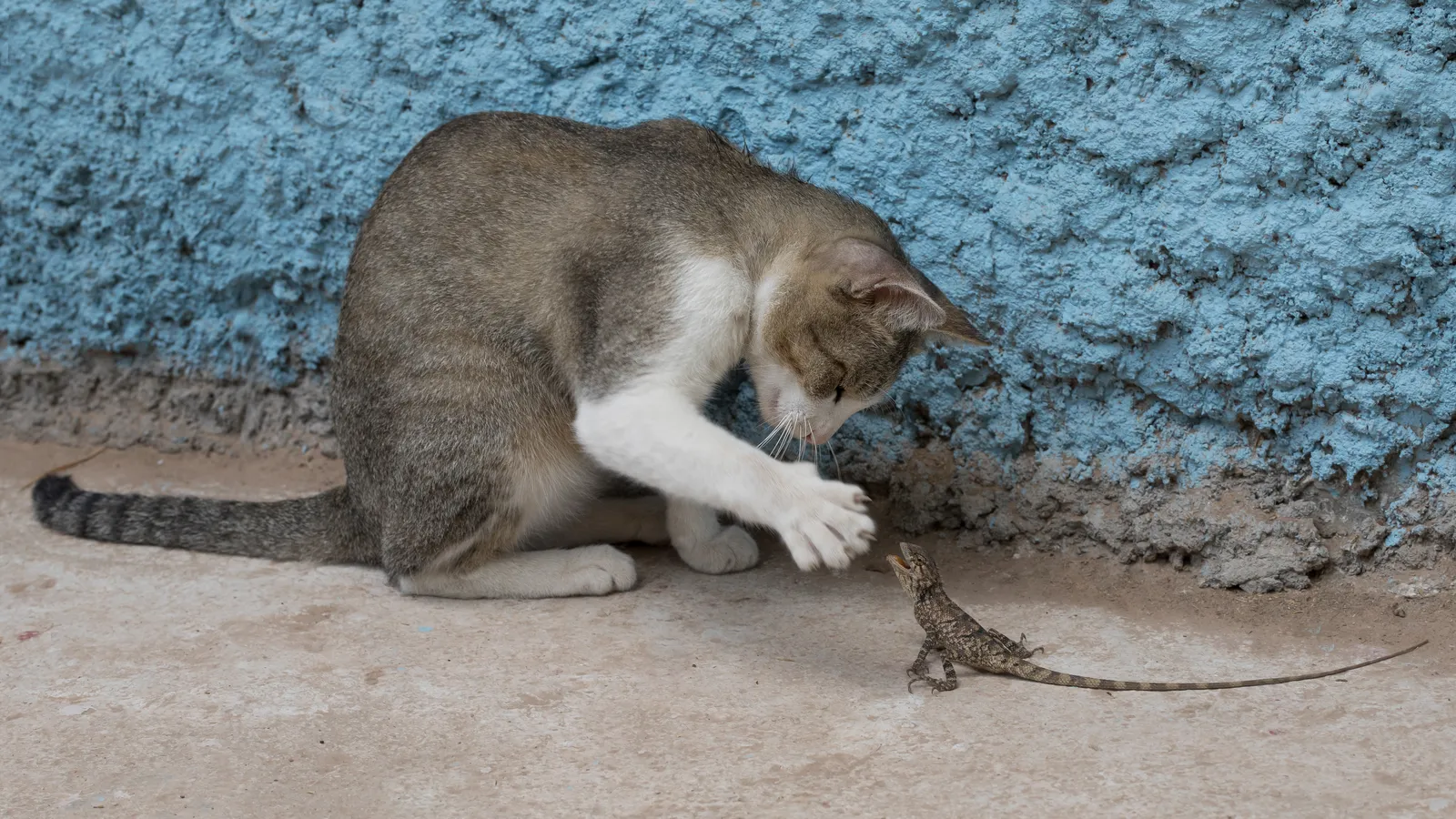
Ethologist Paul Leyhausen documented that a cat’s hunting motor patterns can decouple, meaning a cat can fire up the “bat” phase without ever intending to eat anything. That careful, deliberate nudge you watch your cat deliver to a pen or salt shaker is the same paw motion a wild cat uses to test whether prey is still alive.
Pushing items off elevated surfaces closely mimics behaviors used in prey evaluation. When prey goes still, a cat taps or bats it with a paw to check whether it moves again, essentially asking: “Is this alive? Is it safe? Should I chase it more?” Knocking a keychain off a table is the same kind of paw-tap test.
Wild cats are predators, and domesticated cats retain some of those hunting instincts. They might perceive an object as prey, and knocking it over or batting it can act as a simulated hunting process.
The Stare Is a Deliberate Check on Your Attention
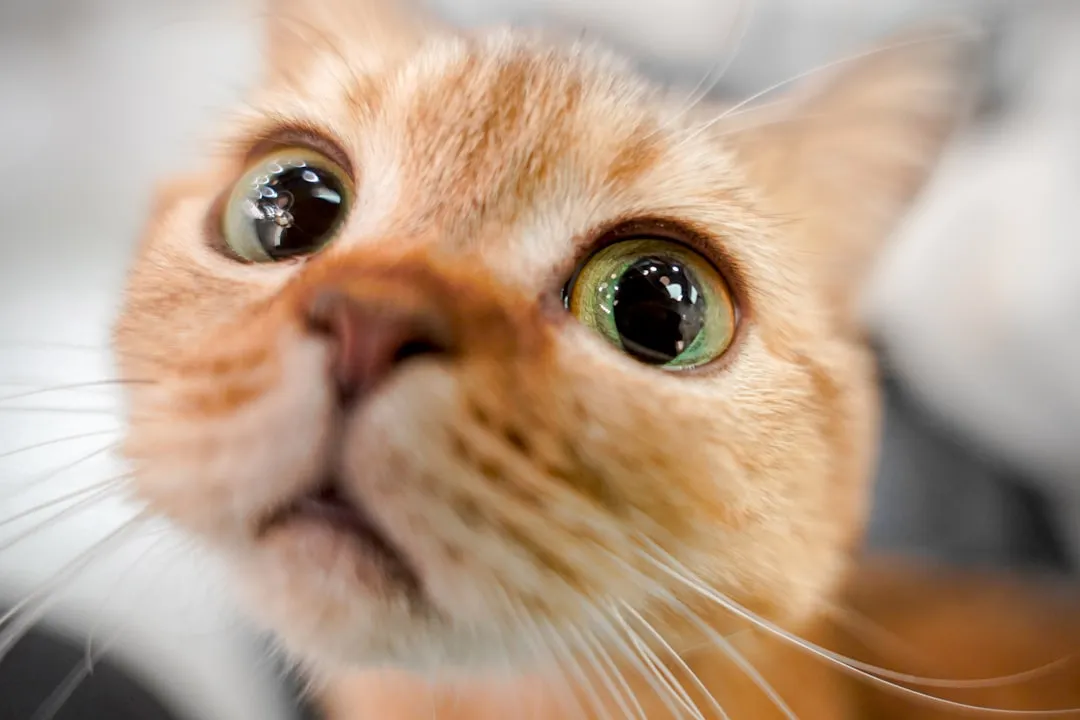
Research published in a peer-reviewed feline cognition study suggests that gaze alternation reliably indicates social referencing in cats, and that cats’ social communication with humans is shaped by whether the person is available for visual interaction. In plain language: your cat looks at you first to see if you’re watching.
Research indicates that cats used human vocal cues only when the human was looking at them, suggesting cats may be able to distinguish between human attentional states, including whether a human can observe the cat or not. The pre-knock stare is your cat confirming the audience is present before the performance begins.
Cats communicate with gaze and will respond to humans gazing at them, changing their behavior in response to emotional cues from their owners. That shared moment of eye contact before the swipe isn’t random. It’s strategic.
Your Cat Probably Understands Gravity Better Than You Think
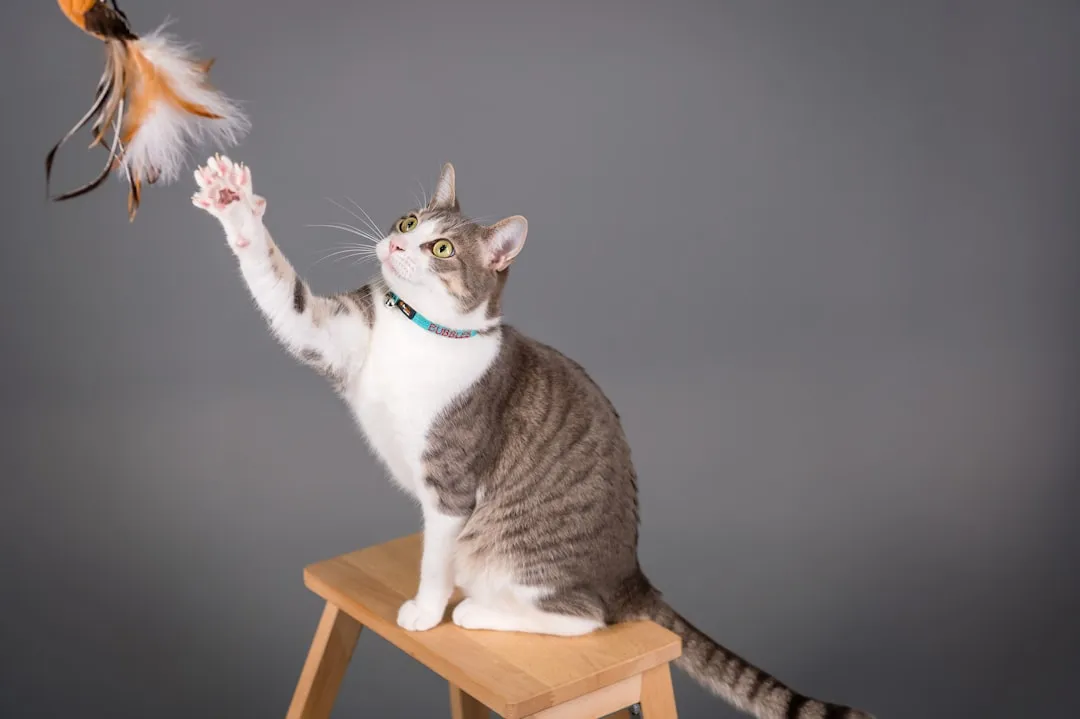
In 2016, researchers at Kyoto University ran an experiment with 30 cats. They shook containers, some with rattling objects inside and some empty, then tipped them over. Sometimes an object fell out as expected, sometimes it didn’t. The cats stared significantly longer at the physics-defying outcomes, much like a person doing a double-take if a dropped ball floated upward.
Lead researcher Saho Takagi concluded that cats use a causal-logical understanding of sounds to predict the appearance of invisible objects. That’s a rudimentary grasp of gravity. Published in Animal Cognition, the study was the first to demonstrate this kind of causal reasoning in domestic cats.
A study from Animal Cognition also found that cats understand object permanence and physical properties, and that knocking objects helps them test both. So when your cat eyes that glass with cool precision, it’s not random. There’s a small but real physics experiment underway.
Sensitive Paws Are Gathering Information
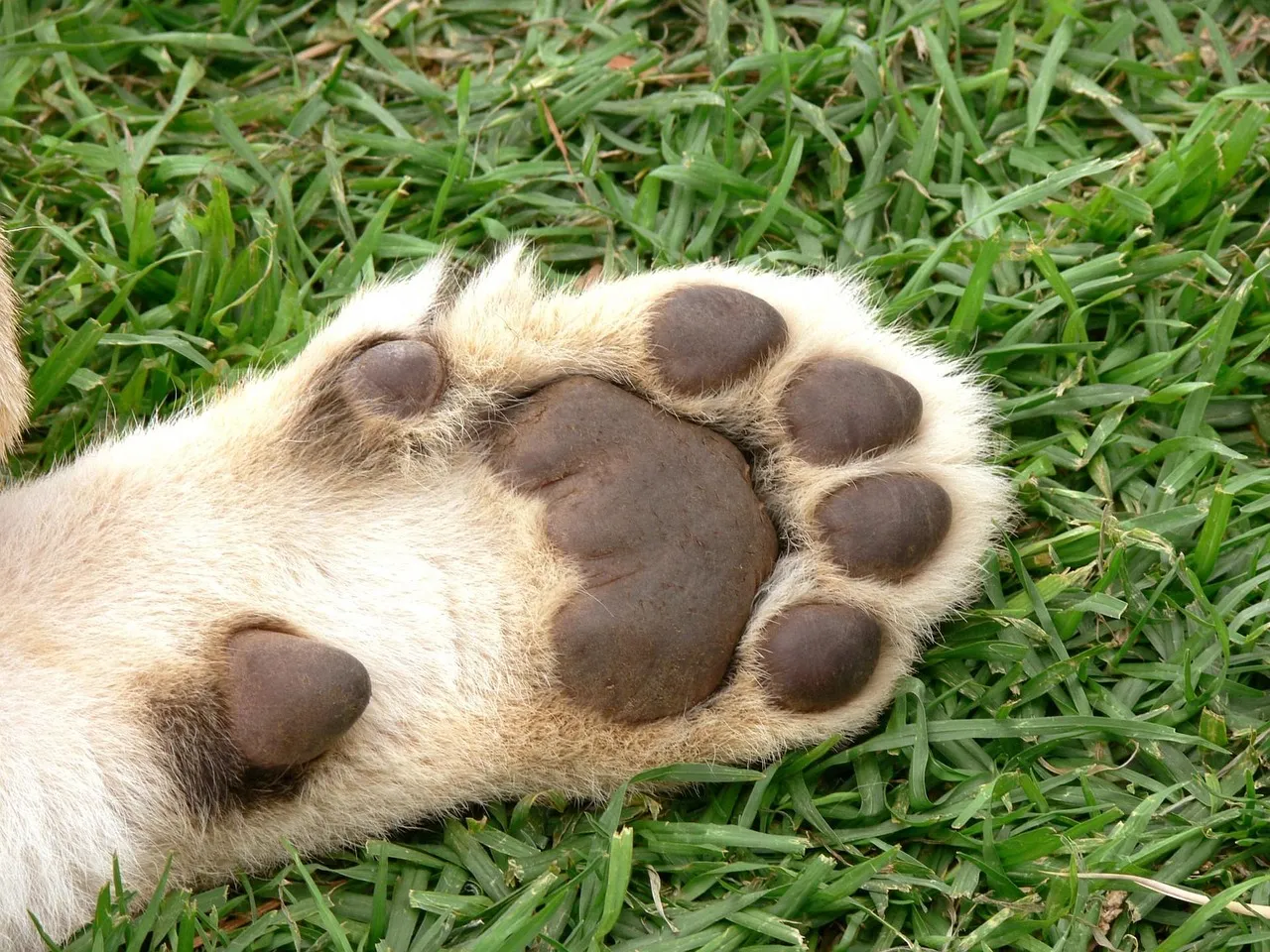
Cats are natural predators, and many of their behaviors link back to ingrained hunting instincts. Cat paws have a high density of nerve endings, which makes them very sensitive. By patting, knocking, and swatting objects, cats gain valuable information that helps them decide whether an object is safe.
Cats explore their environment primarily through touch, using their sensitive paw pads to gather information about the objects around them. When a cat pushes something off a table, they’re essentially conducting a science experiment.
A big reason cats knock things over is their curiosity about how the world around them reacts. It’s not mischief; it’s simply their way of learning. A bottle rolls, a key makes a sound, a cup wobbles, and each little push gives new information, helping them better understand their space.
It’s Also a Finely Tuned Attention Strategy
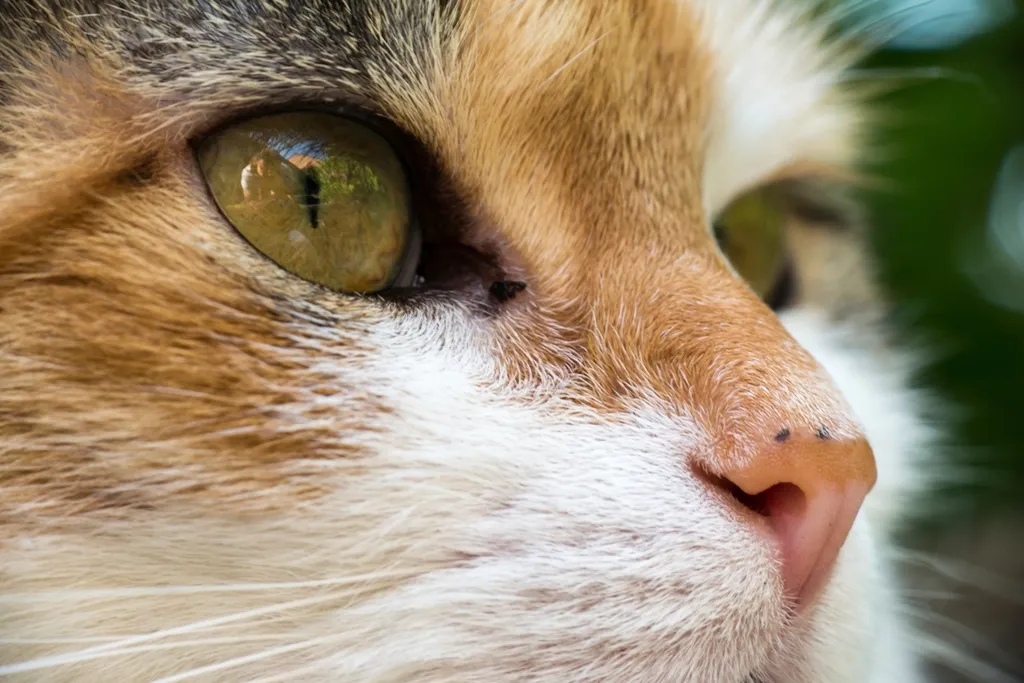
One key reason cats knock things over is to get your attention. Cats are smart and quickly learn that a fallen or broken item will have you running to pick it up. The stare before the swipe is part of the same strategy. It’s a check that you’re in range to react.
If pushing an object results in an immediate human reaction, whether talking, approaching, or chasing, the behavior is reinforced. Cats do not differentiate between positive and negative attention the way dogs do. A loud response, even scolding, can strengthen the behavior or lead to its stealthy continuation.
Some cats have learned that if they start knocking things over around meal times, their owner will feed them as a way of getting them to stop. That’s learned behavior at its most efficient, and honestly a little impressive.
Boredom Plays a Much Bigger Role Than Most Owners Realize
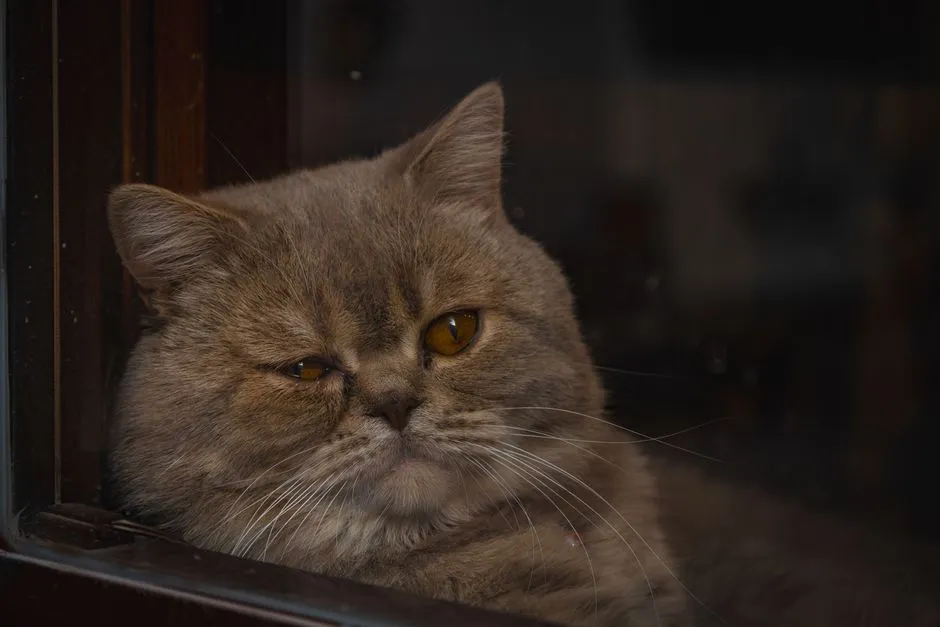
A 2023 study of 1,591 cats found that when play was withheld, roughly a fifth of guardians reported increased attention-seeking behavior. A bored cat who discovers that knocking things off surfaces reliably summons a human has zero reason to stop.
Indoor cats especially, those without access to outdoor environments, often lack sufficient enrichment. Without birds to watch, insects to chase, or new textures to explore, household items become substitutes. A study published in Applied Animal Behaviour Science found that cats in low-stimulation environments were significantly more likely to engage in object manipulation, including knocking things over.
Boredom is a significant contributor to why cats knock things over indoors. Indoor cats without sufficient mental stimulation often invent activities. Knocking objects off provides visual stimulation, auditory feedback, immediate movement, and a reaction from those around them.
The Eye Contact Itself Carries Meaning
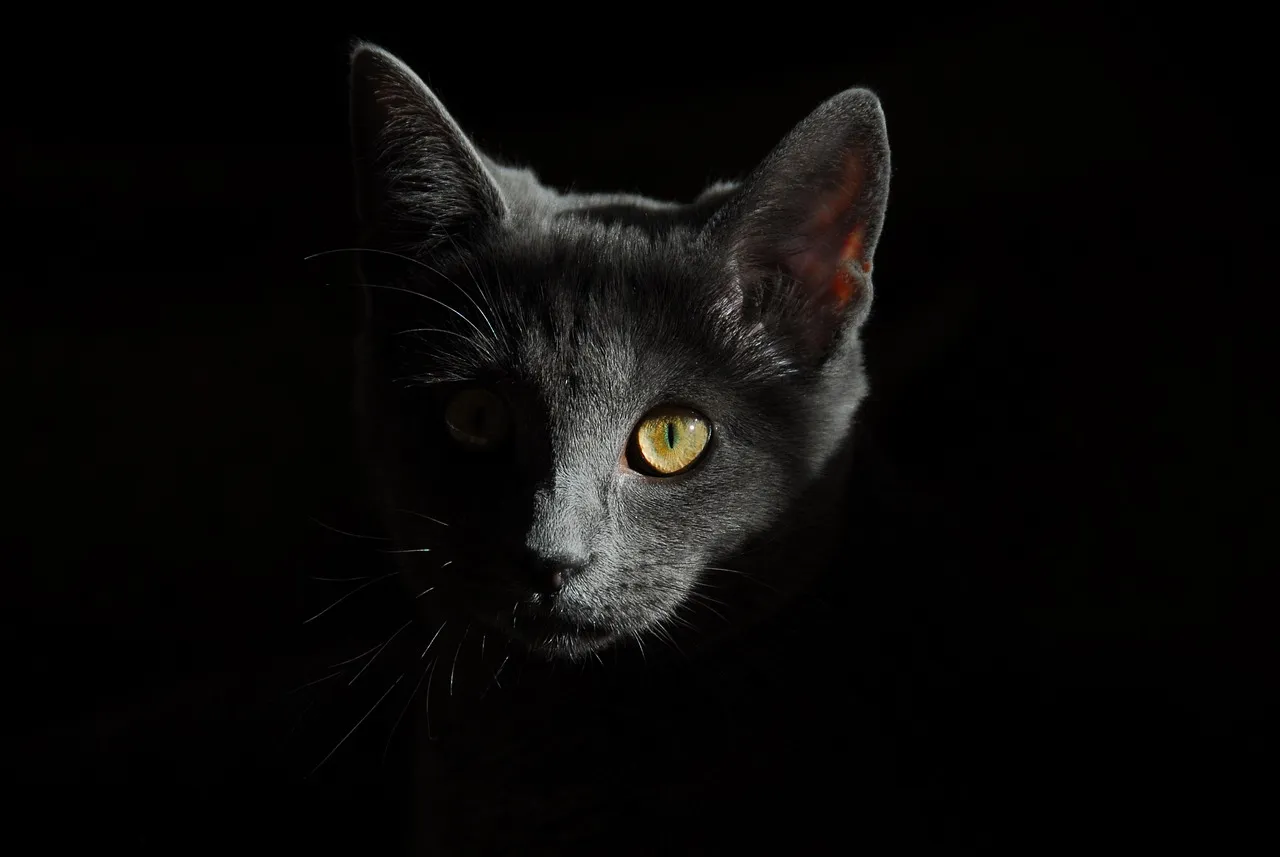
When it comes to cat eye contact, context matters enormously. A soft gaze accompanied by slow blinks usually signals affection, while a hard, unblinking stare might be a sign of aggression or intent. The pre-knock stare tends to fall somewhere in the middle: focused, alert, and waiting for confirmation.
Research testing 41 cats found that on a group level, cats achieved a seventy percent overall success rate at following human gaze as a referential cue, showing they are capable of using gaze to guide their own behavior. So when your cat looks at you before acting, it’s partly reading you, not just performing for you.
Research assessing human-directed gazing by cats in a social referencing paradigm found that most cats do look to their owners when faced with an ambiguous situation. That ambiguous situation could be an object on a shelf, a cup on a counter, or anything that might be worth investigating.
Certain Objects Are Simply Better Targets
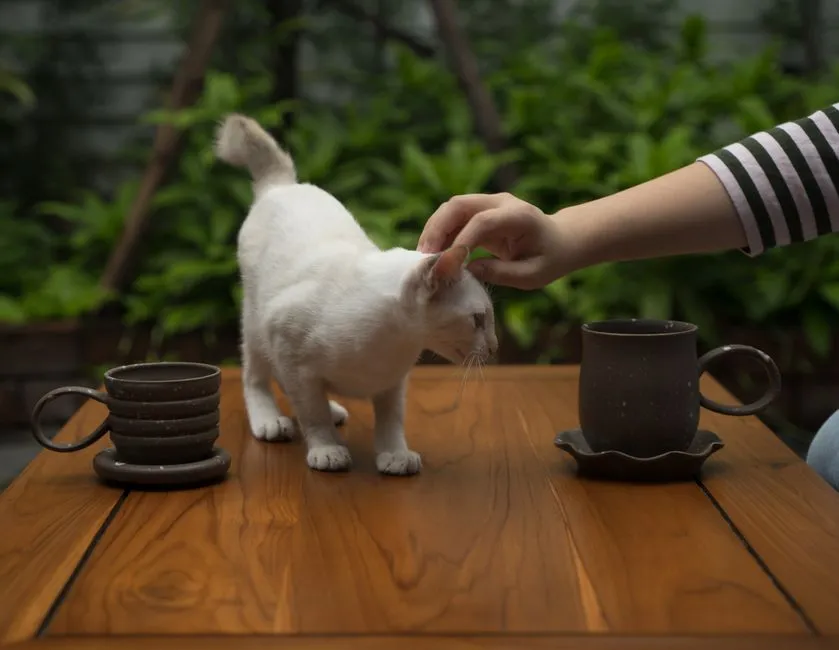
Cats particularly enjoy pushing things like cups off countertops because these objects can roll or bounce. They are typically playing and want to see what happens with a particular object from a high surface. If they find this behavior enjoyable, they will likely repeat it.
When a cat pushes a cup off a table, it’s often testing its environment through tactile exploration. Objects that move unpredictably when touched mimic the erratic motion of insects or small animals, which triggers predatory sequences.
Objects near the edge require less force to overcome static friction, making them perfect candidates for a paw-powered gravity test. That’s why items placed just barely on a surface rarely stay there for long. The cat didn’t choose that spot randomly. It chose efficiency.
Breed and Individual Personality Matter Too
Certain high-energy breeds, like the Siamese, might be more curious than others and seek mental stimulation through knocking things over. Meanwhile, breeds with strong prey drives, like the Bengal, tend to engage more intensely with object manipulation overall.
Some cats will knock things over to get your attention if a need isn’t being met, such as food or water. Highly social breeds like the Sphynx or Abyssinian knock things over just to remind you that they’re there. For these cats, the pre-knock stare is less about hunting and more about demanding a conversation.
This behavior is especially common in younger cats and kittens, who are still refining their motor skills and understanding cause-and-effect relationships. Older cats who keep it up have simply learned that it works, and they’re not wrong.
What You Can Actually Do About It
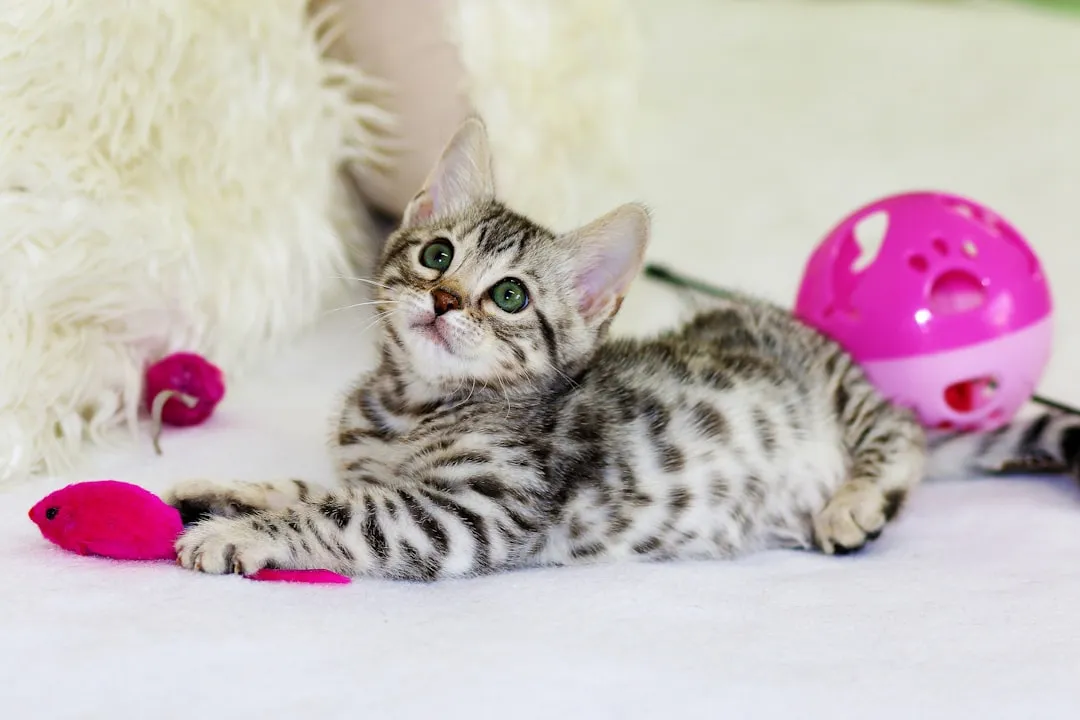
Cats knock things over due to instinct, boredom, or learned behavior. Pet owners may unintentionally reinforce this behavior by responding when their cat knocks something over. Boredom is a major trigger, and environmental enrichment can help curb the behavior.
If pushing an object results in immediate human reaction, the behavior is reinforced. Cats don’t differentiate between positive and negative attention the way dogs do, meaning a loud response can strengthen the behavior just as much as a calm one, or lead to its stealthy continuation. Ignoring the act entirely, while genuinely difficult to do, is usually the most effective response.
This investigative behavior is particularly pronounced in indoor cats who have limited opportunities to explore new environments. Your desk or table becomes their laboratory, and your belongings become test subjects in their ongoing research into how the world works. More interactive play sessions each day, puzzle feeders, and rotating toys give that same curiosity a better outlet.
The Takeaway
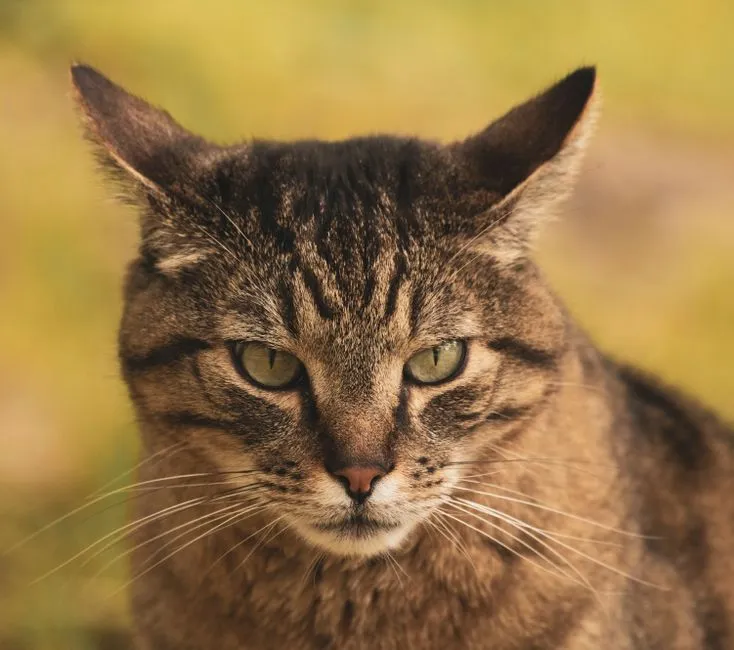
That stare your cat delivers before knocking something over is not empty. It’s a convergence of hunting instinct, social awareness, cause-and-effect reasoning, and learned behavior, all compressed into a single focused moment. The science, from peer-reviewed feline cognition studies to behavioral research, consistently points to a creature that is genuinely calculating, not just randomly destructive.
Understanding why it happens makes the whole thing a little easier to live with, and maybe even a little harder to be annoyed by. Your cat isn’t being spiteful. It’s being exactly what it is: a small, intelligent predator who has figured out that you, too, are predictable.
AI Disclaimer: This article was created with the assistance of AI tools and reviewed by a human editor.