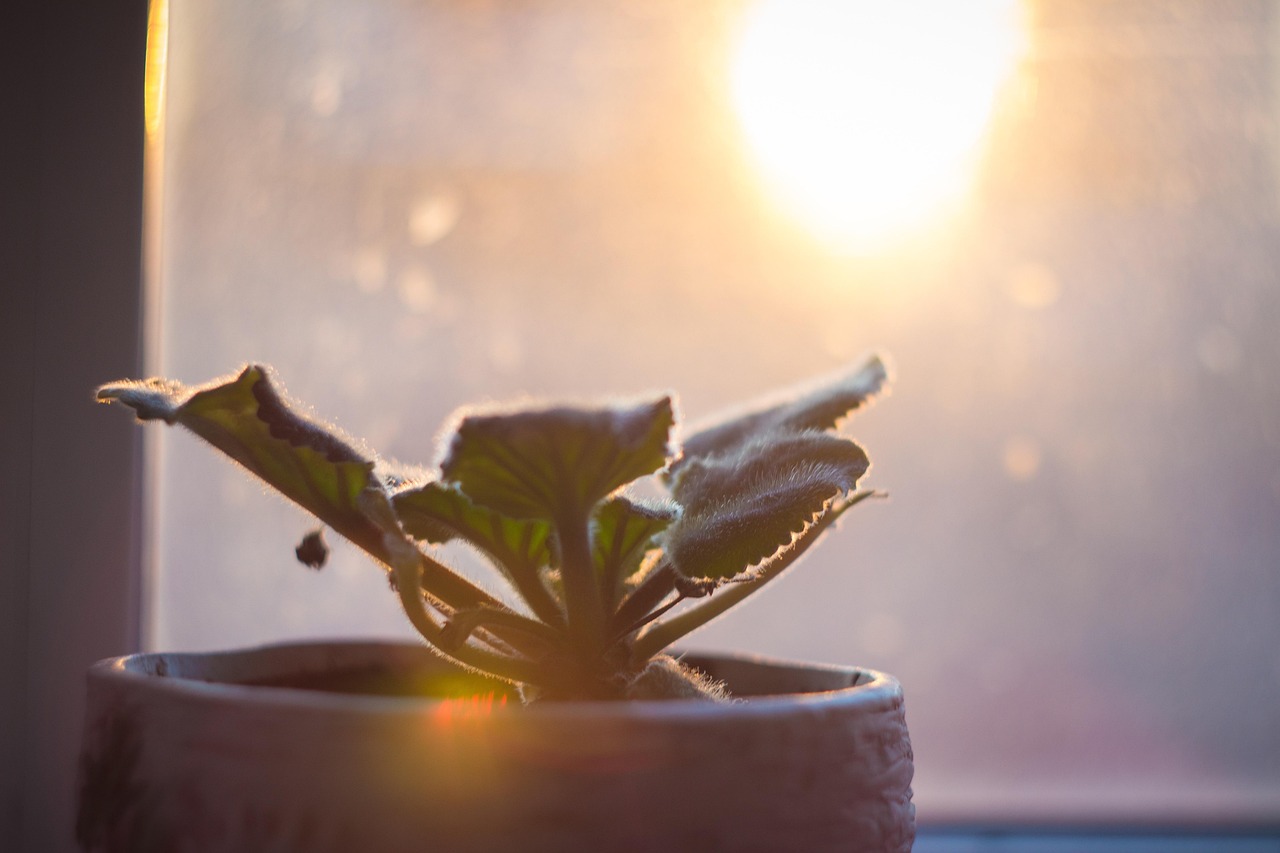

Plants Have Their Own Internal Clock

A circadian rhythm is a natural oscillation that repeats roughly every 24 hours. Plants have had these rhythms for an extraordinarily long time, and they are not simply passive responses to whatever the environment happens to be doing. Biologists have long known that plants have both circadian and circannual rhythms, where their biological functions vary on a daily and annual basis. These rhythms are endogenously generated and self-sustaining, persisting even in the absence of environmental time cues.
A striking example that demonstrates the self-sustaining nature of these rhythms is the sensitive plant Mimosa pudica, whose leaves droop at night even when the plant is kept in constant darkness. In other words, the clock keeps ticking whether or not the sun is out. For houseplants, this means the droop you see at the same time each evening is the result of an internal schedule, not simply a reaction to the room getting darker.
What Nyctinasty Actually Means

The droopy look of leaves and flowers in some plants at night is normal and is caused by a process called nyctinasty. The name comes from the Greek word for night, and it describes a specific type of rhythmic movement that many plant species perform on a near-perfect daily cycle. Most legumes close their leaves in the evening, as if to sleep, and open them in the morning. This is called nyctinasty, and such a circadian rhythmic movement is known to be controlled by the plant’s biological clock.
Leaves of many plant species open during the day and fold at night. This diurnal leaf movement, named nyctinasty, has been of great interest to researchers since Darwin’s time. Charles Darwin himself spent years studying plant movement late in his life, and his observations helped plant this phenomenon firmly in the scientific record. It is far older than modern botany, though. The earliest record of nyctinasty dates back to the reign of Alexander the Great in 400 B.C.
The Pulvinus: The Joint That Makes It Happen
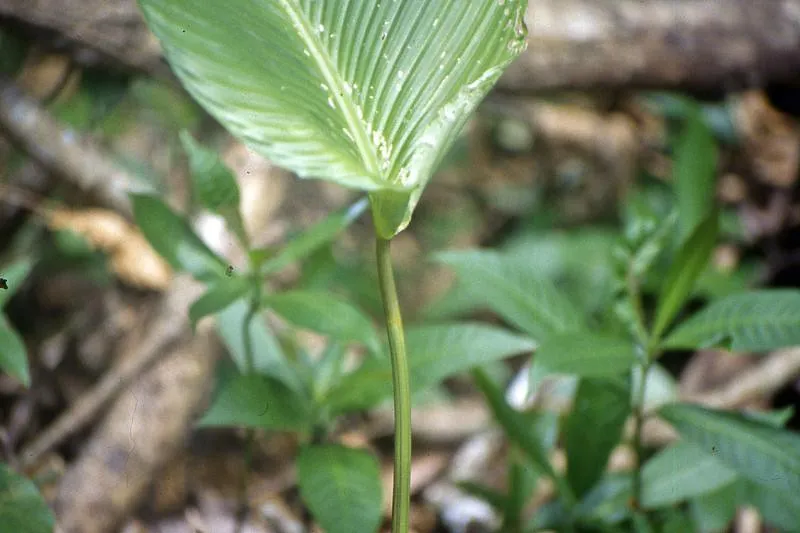
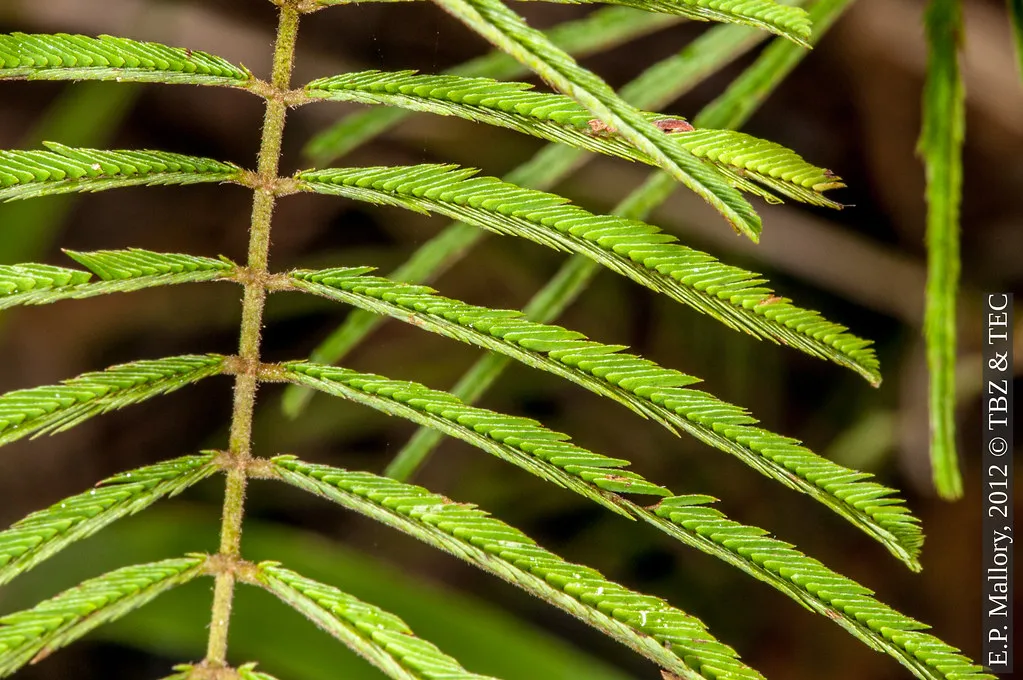
Nyctinastic leaf movement is generated by the pulvinus, a specialized motor organ located at the base of the leaf and leaflet. Think of it as a tiny hydraulic joint. When the cells on one side of it swell or shrink, the leaf bends in the corresponding direction. This nyctinastic movement is mediated by a specialized motor organ, the pulvinus, located at the base of the leaf. Coordinated volume changes in the abaxial and adaxial pulvini drive the opening and closing of the leaves.
Leguminous plants open their leaves during the daytime and close them at night as if sleeping, following circadian rhythms known as nyctinasty. This movement is regulated by drastic volume changes in two kinds of motor cells of the pulvinus, which is located at the bottom of the leaf stalk. The whole system is elegant in its simplicity: two groups of cells working in opposition, like a slow-motion push and pull, to raise and lower the leaf like clockwork.
The Role of Potassium Ions and Water Pressure
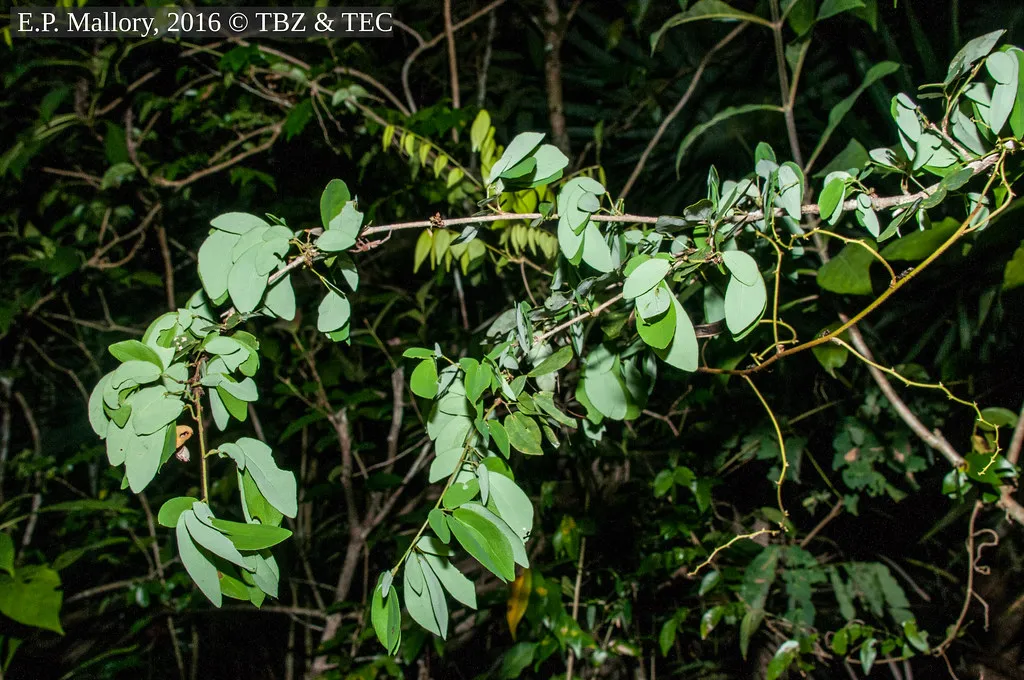
This hydraulic shift is regulated by the movement of potassium and chloride ions. During the evening, the plant’s internal circadian clock triggers the transport of these ions out of the extensor cells. Water follows the ions, causing the cells to lose pressure and the leaf to fold. This is why the droop looks so gradual and soft, rather than sudden. The cells are slowly deflating in response to a chemical signal, not collapsing from stress.
Research has identified genus-specific endogenous chemical factors, leaf-closing factors and leaf-opening factors, that control this rhythmic behavior. In Samanea saman, a model species for nyctinasty research, the leaf-closing factor 12-hydroxyjasmonic acid glucoside induces leaf-folding by selectively targeting extensor motor cells and activating reactive oxygen species-dependent potassium efflux. The chemistry is precise, with specific compounds rising and falling at predictable times across the day.
Turgor Pressure and the Nightly Slowdown
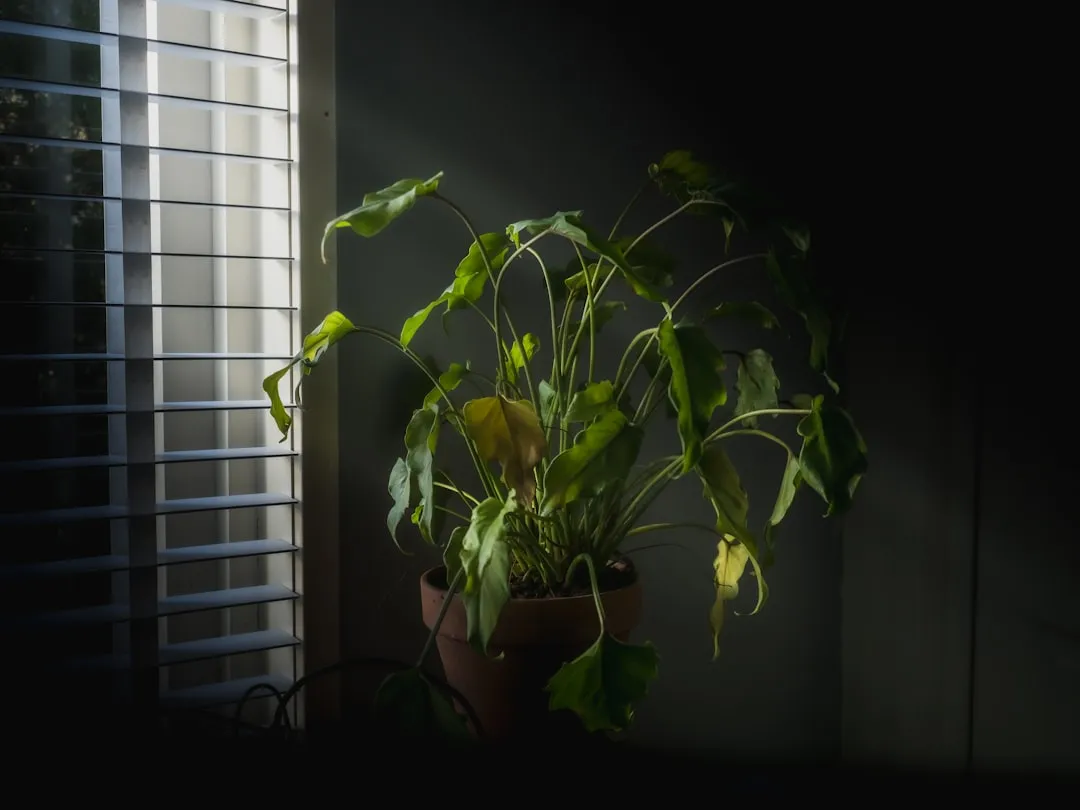
Turgidity, or its opposite flaccidity, is caused by the amount of water being taken up by a plant’s root system. The higher the water uptake, something that occurs during the day, the more turgid or stiff a plant appears. The less a plant absorbs water through its roots, the more flaccid, wilted, or droopy it will appear, a phenomenon that usually occurs at night.
Some plants droop at night because they don’t photosynthesize and transpire after sunset. As a result, they pull in less water at night than during the daytime, since they are no longer producing food due to the lack of sunlight. When photosynthesis shuts down, the entire water-movement system shifts gears. The plant essentially enters a lower-energy state, and the visible drooping is just that state made visible to anyone paying attention.
How Light Signals Trigger the Transition
This cycle is synchronized with the environment through phytochrome receptors, which detect the fading red light of sunset. Phytochromes are the plant’s way of reading the color composition of light rather than just its brightness. As evening light shifts, those receptors report the change to the plant’s internal clock, which then begins its sequence of chemical and hydraulic adjustments. Phytochromes reversibly toggle between a red light-absorbing form and a far-red light-absorbing form by photoconversion.
Stomatal opening and closing are essential mechanisms for plants to balance water loss and carbon dioxide intake during photosynthesis, which influences plant growth, development, and yield. When those stomata close in the evening, it is partly in response to fading light and partly in response to the plant’s own chemical timing system. Guard cells have acquired sensing mechanisms for a variety of internal and external stimuli, resulting in changes in turgor pressure. As a result, stomata open and close, by which the plant actively regulates gas exchange with the environment.
Why Plants Actually Evolved This Behavior
One prominent theory suggests that folding leaves at night reduces the loss of heat through radiation, protecting the plant from evening chills. Another theory argues that it prevents the accumulation of dew on the leaf surface, which can lead to fungal growth or interfere with gas exchange. Both explanations have merit, and they are not mutually exclusive. A single behavior can serve multiple survival purposes at once.
Darwin’s hypothesis states that nyctinastic leaf folding prevents nighttime heat loss from the leaf surface and protects the leaves from frost damage. The discovery of fossilized leaves with symmetrical feeding patterns also suggests this behavior has very deep roots. The recent discovery of fossilized leaves with symmetrical feeding patterns suggests that foliar nyctinasty first appeared roughly 250 million years ago. These leaf fossils are thought to be derived from gigantopterids, an extinct group of seed plants.
Leaf-Closing Substances Rise at Dusk
Extensive studies on nyctinastic plants led to the isolation of a variety of leaf-closing and leaf-opening substances. Based on experiments on these bioactive substances, researchers found that the circadian rhythmic leaf-movement is controlled by a biological clock that regulates the balance of concentration between leaf-opening and leaf-closing substances. It is not simply a mechanical reaction to darkness. There is a whole chemistry shift happening inside the plant tissue before the sun even fully sets.
Analyses of plant extracts over the 24-hour cycle revealed that the ratio of leaf-closing factor to leaf-opening factor changes dramatically in nyctinastic species. For example, in Phyllanthus urinaria, the active leaf-closing factor accumulates at dusk to roughly twenty times its daytime level. That kind of dramatic swing in chemical concentration, happening on a reliable daily schedule, is what makes the evening droop so consistent and so precisely timed.
What Happens When This Process Is Disrupted

Artificial application of leaf-opening factors to the leaves can reverse these rhythms, making plant leaves open at night or close during the daytime. Researchers have explored this experimentally to understand how the system works when forced out of its natural cycle. The results are telling. When leaves were kept from closing at night, they became damaged as a result of this inhibition, and they withered and died within two weeks. This suggests that nyctinastic leaf movement is essential for the health and survival of leguminous plants.
The takeaway is clear: this is not optional behavior. The nightly droop is part of a carefully maintained biological routine, not a luxury the plant can skip without consequences. Disrupting it, whether through constant artificial light, abnormal temperatures, or chemical interference, puts real stress on the plant’s systems over time.
Which Houseplants Show This Most Clearly

Prayer plants are known for their distinctive movement in response to changes in daylight. Their leaves close at night and open during the day. This rhythmic movement is part of the plant’s natural behavior and is influenced by changes in light and the plant’s circadian rhythm. The prayer plant is probably the most dramatic example most people will encounter on a windowsill, with leaves that fold almost vertically by evening.
There are many biological functions in plants that exhibit circadian rhythms, including leaf and flower movement and nectar secretion, as noted in McClung’s widely cited 2001 review in the Annual Review of Plant Physiology. Beyond prayer plants, oxalis, certain clovers, and many legume-family houseplants all show recognizable versions of this behavior. The degree of drooping varies by species, but the underlying mechanism is remarkably consistent across all of them.
A Quiet Reminder That Plants Are Keeping Time

There’s something genuinely interesting about watching a plant droop at the same moment each evening, not because it’s suffering, but because its internal schedule is running exactly as it should. Nyctinasty demonstrates that plants possess a complex internal schedule that allows them to anticipate environmental changes before they occur. That word, anticipate, is worth sitting with. Plants are not simply reacting. They are preparing.
Biochemical changes at the cellular level occur that prepare plants for colder temperatures at night, regulate the opening and closing of stomata for gas exchange, anticipate possible infection by pathogens, produce wax to prevent water loss, and synthesize molecules that will remove reactive oxygen species before sunrise. The evening droop is just one visible piece of a much larger, invisible process of daily preparation. The plant on your shelf is not wilting. It’s winding down for the night, right on time, and it has been doing so for hundreds of millions of years.
AI Disclaimer: This article was created with the assistance of AI tools and reviewed by a human editor.