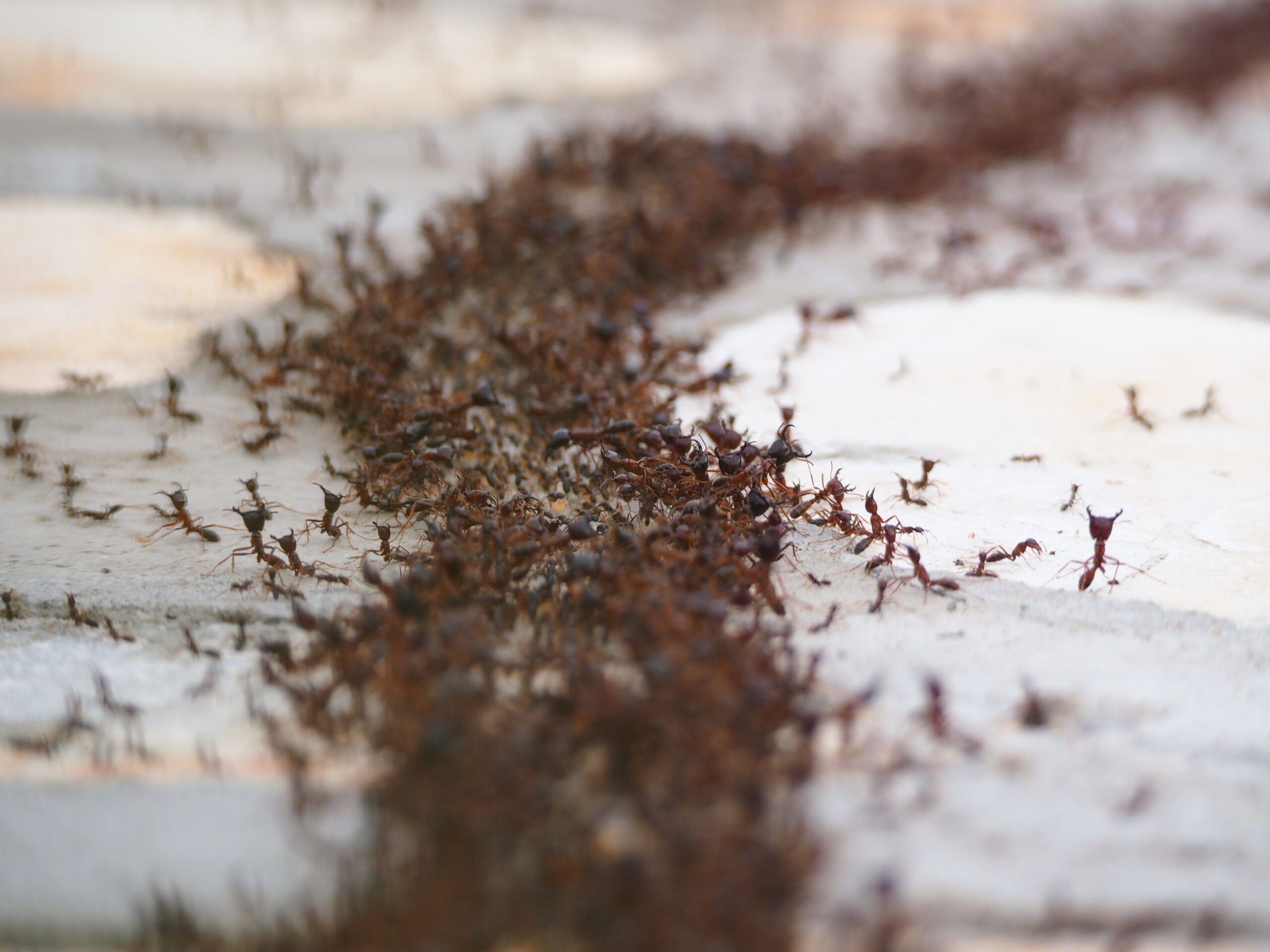

Most people glance at an ant trail and think nothing of it. A line of tiny insects moving across a kitchen counter seems like a minor nuisance. What’s easy to miss is that this line is, in fact, a precise map drawn in chemistry, and it points straight back to where the colony lives.
Understanding how that map works changes how you deal with ant problems entirely. The trail isn’t random. Every turn, every merge point, and every traffic pattern carries real information about the nest’s location, size, and distance. Once you know what to read, the ants essentially tell you everything.
The Chemistry Behind Every Trail
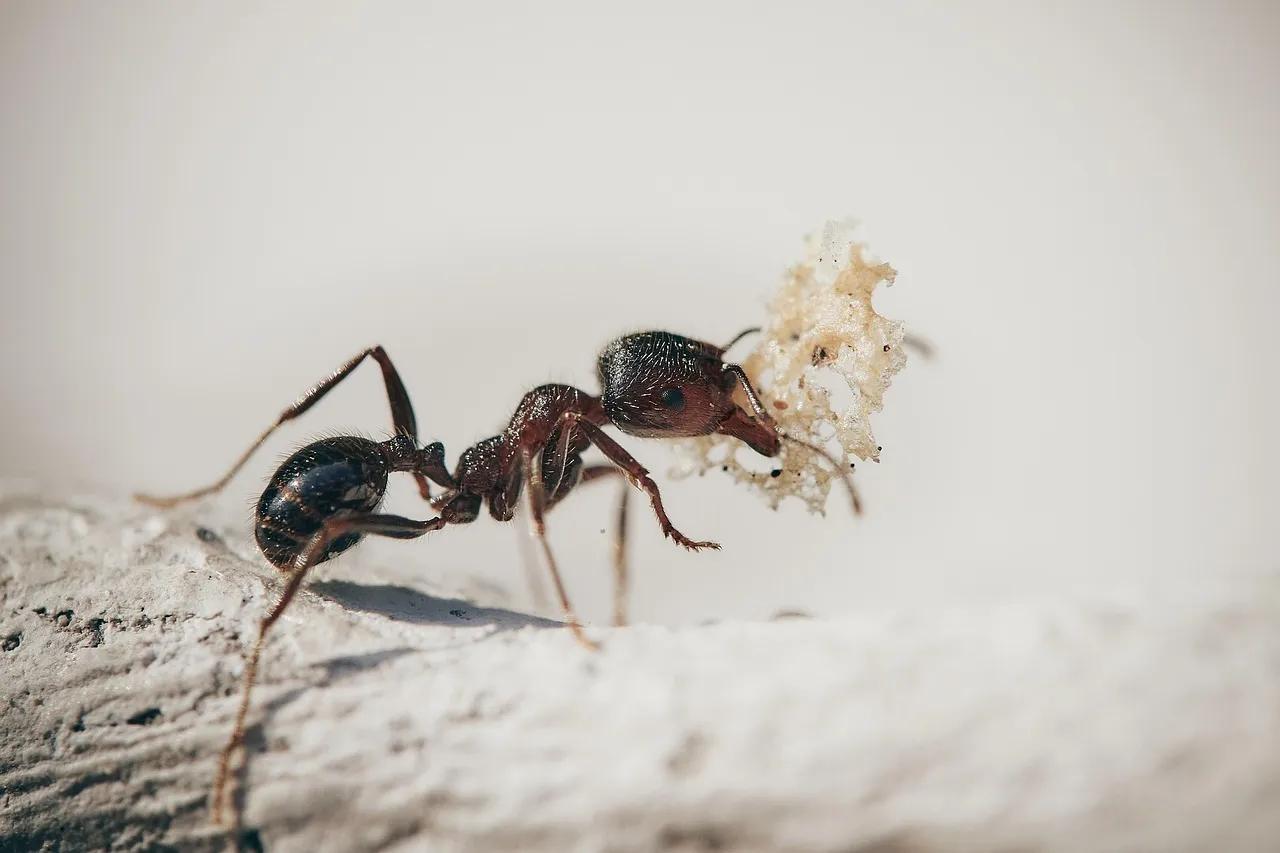
Foraging for resources is an essential process for the daily life of an ant colony, and ants self-organize using chemical pheromones. Once an ant detects a food source, it secretes a chemical trail to lead other ants to the source. This chemical communication forms the invisible backbone of every trail you can see.
In ants, trail pheromones are produced in the hindgut, Dufour’s gland, the venom gland, and the tibial, tarsal, and abdominal glands. The specific blend of chemicals differs between species, which is why different types of ants produce trails with subtly different characteristics.
The greater the pheromone concentration, the higher the probability of an ant following the trail. Each new recruited ant finding the source reacts in the same way, returning to the nest and reinforcing the chemical trail with its own pheromones. This establishes a positive feedback: the more ants are recruited, the more attractive the trail becomes, increasing again the number of ants engaged in the process.
Why Pheromone Strength Signals Distance from the Nest
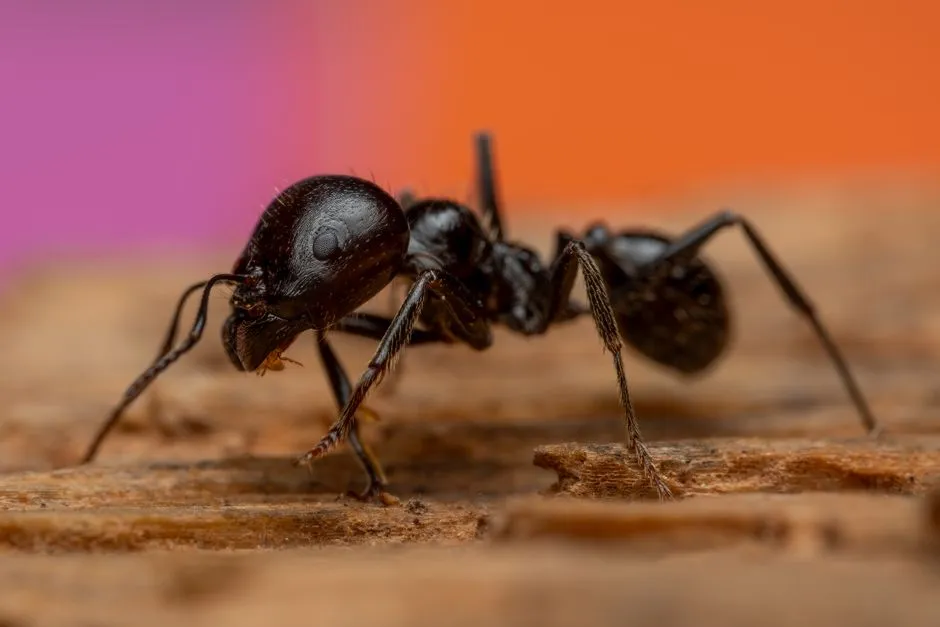
Research published in Insectes Sociaux found that ants deposit up to 22 times more pheromone within 10 cm of a food source compared to when they are about to reach the nest. This asymmetry is a crucial clue for anyone trying to trace a trail back to its origin.
Returning ants secrete less pheromone depending on how close the food source is to the nest. More pheromones create a stronger scent for the ants to follow, a critical factor when the food source is located far from the nest. In practical terms, the portion of the trail closer to food will tend to have more concentrated ant traffic, while the trail thins out as it approaches home.
Returning ants secrete less pheromone depending on how close the food source is to the nest, with more pheromones creating a stronger scent that is a critical factor when food is located far from the nest. If you observe ants becoming progressively less tightly packed along a trail, you’re watching them move toward their nest, not away from it.
Trail Convergence: Where Multiple Paths Meet

Multiple trails converging toward a single spot often point directly to a nest entrance nearby. This is one of the most reliable visual clues available to anyone doing their own inspection, and it requires no tools to spot.
Researchers have discovered that a foraging ant will leave pheromone trails connecting its colony to multiple food sources when they’re available. This means a colony feeding from several points in a room will produce trails that fan out from one central location. Trace those branches back toward their common origin and you’ve found the approximate nest zone.
Over time, ants will selectively travel to the food source that is the shortest distance from their nest in an environment with multiple sources. The trail that appears most heavily trafficked is often the shortest route, making it the most direct line toward the colony.
The Two-Way Traffic Pattern and What It Tells You
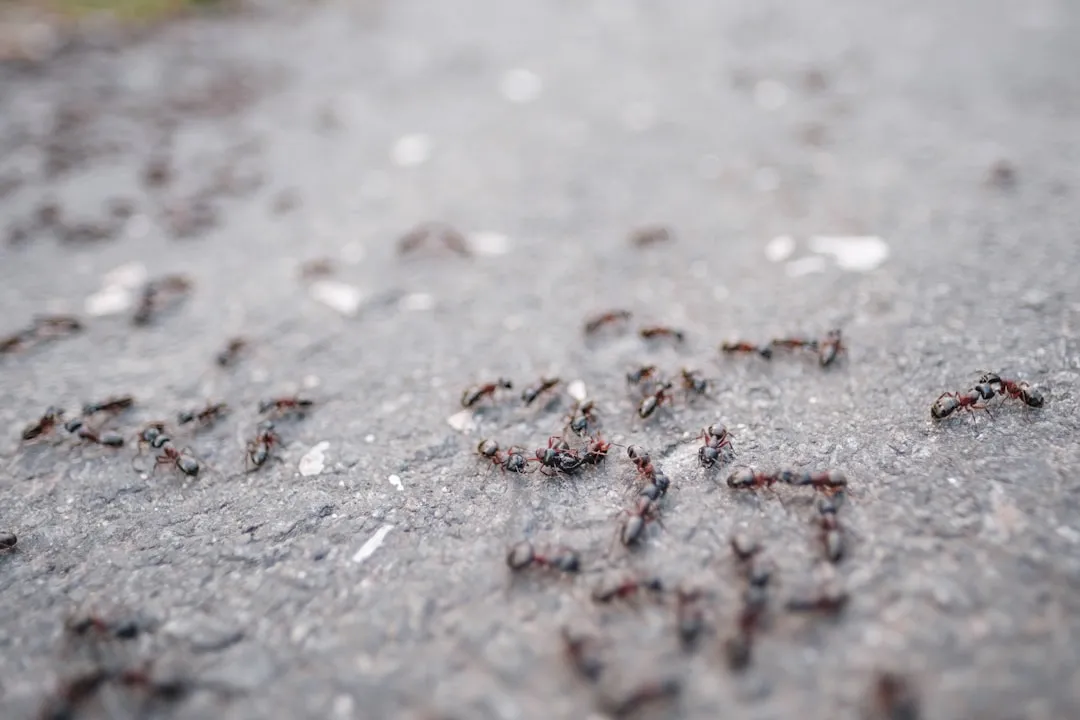
Continuous two-way traffic means the trail is active and regularly supplying resources to the nest. Watching the direction of travel more carefully than the trail itself is what allows you to distinguish outbound foragers from ants heading home.
Research from Florida State University, published in November 2024, found that ant colonies divide into two distinct behavioral subpopulations. Foragers tend to wander around in search of food, while returners always return directly to the nest after finding food, making their motion less random. Returners move with noticeably more direct, purposeful paths, and following them is the most reliable technique for locating a nest.
The purpose of comparing foraging trails involves studying characteristics both leaving the harborage toward a food source and returning from a food source back to the nest. Watching the return direction consistently leads observers toward the actual nesting site rather than the food source.
Path Integration: How Ants Always Know Where Home Is

One important strategy ants use to keep track of where they are on a foraging trip is path integration, in which they continuously update a home vector that gives their estimated distance and direction from the nest. This internal compass runs constantly, and it’s what allows ants to return home efficiently even across complex terrain.
As path integration accumulates errors, it cannot be relied on to bring ants precisely home: such precision is accomplished by using views of the nest acquired before they start foraging. Ants essentially memorize the visual landscape near their nest entrance, which is why trail convergence near structural features like cracks or soil edges is so consistent.
Unlike any other group of animals, all ant species are social: individual ants share the food they gather with their nestmates and consequently must repeatedly leave their nest to find food and return home with it. These back-and-forth foraging trips have been studied for about a century.
Trail Width and Density Reveal Colony Size
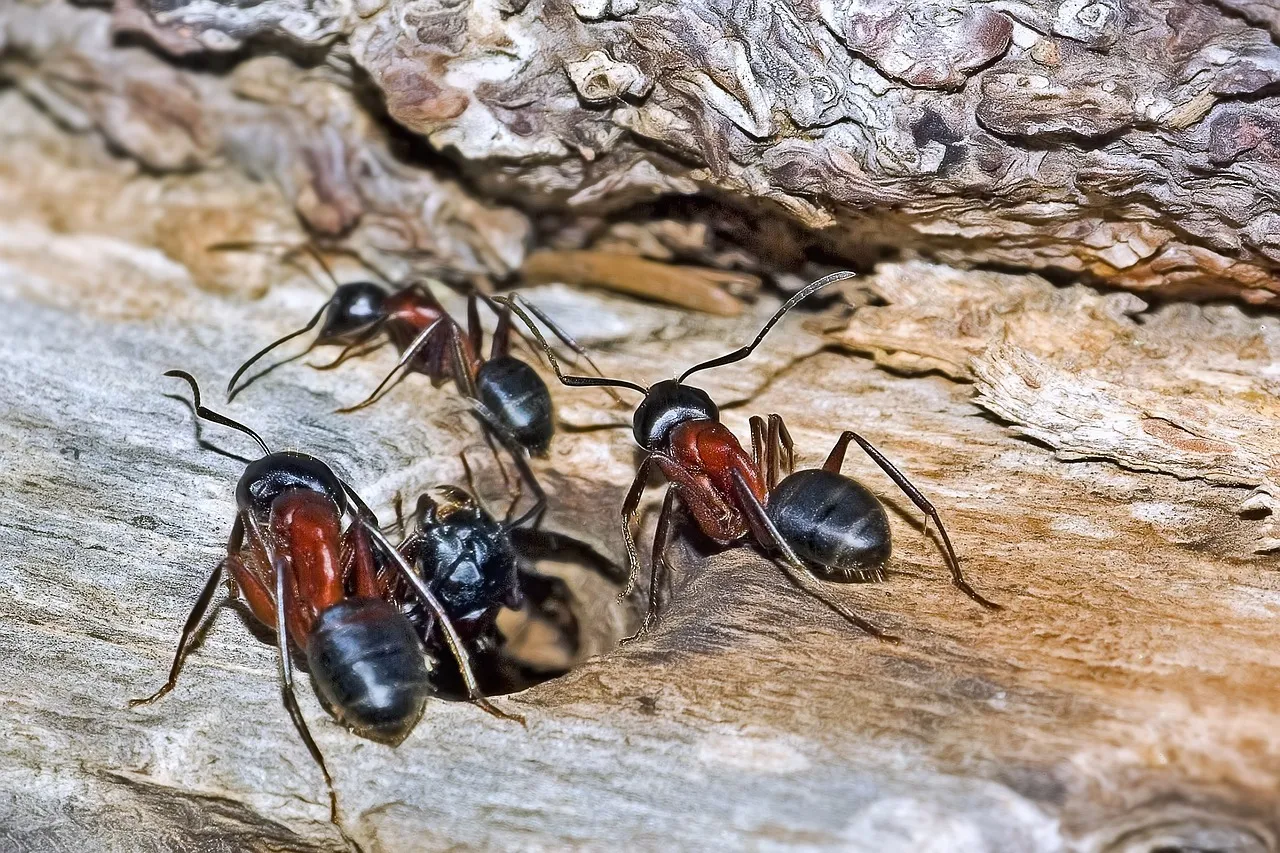
Trail width and density carry meaningful information: a single-file line may indicate a small foraging group, while several parallel lines suggest heavy traffic and a larger colony. A wide, dense trail is not simply more ants doing the same thing. It suggests a mature, well-established nest with significant population.
Successful ant management assumes two directives: find the nest and locate the trails. Pest control professionals treat these as inseparable because the trail’s characteristics directly predict what kind of nest situation you’re dealing with. A thin, irregular trail may mean a satellite colony. A dense, organized highway usually points to the primary nest.
Clear behavioral differences in trail-following patterns are demonstrated for different pest ant species. The most striking difference in measured parameters is trail-following speed, with so-called crazy ants showing a two to three times faster pace than other ants, but also with greater amplitude and lower trail fidelity, resulting in significantly lower trail-following accuracy. Species differences in trail behavior are visible to the careful observer and matter for identifying nest types.
Where Trails Run: Reading the Route for Structural Clues
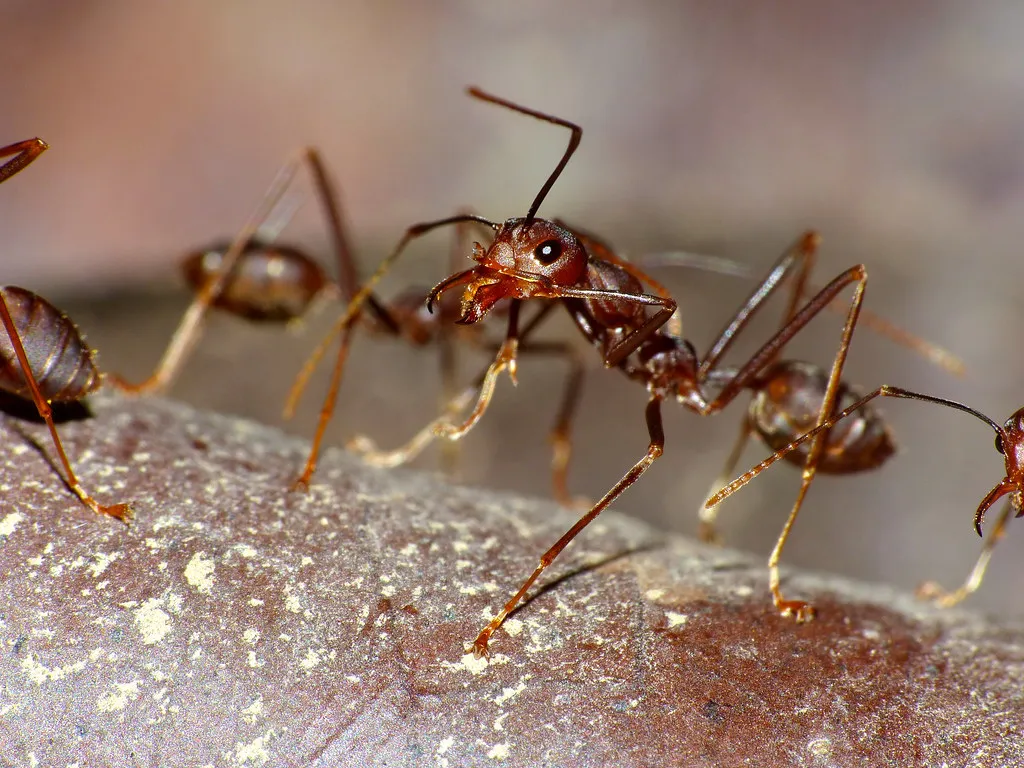
Trails running along foundation seams, under door frames, or into utility openings are red flags for possible indoor incursions. These particular routes almost always indicate that the nest is either embedded in the structure itself or located immediately outside, using the gap as a highway.
Ant trails are one of the most reliable indicators of infestation. These trails usually form along walls, countertops, baseboards, and near food sources. The wall-following behavior isn’t random. Ants use vertical edges as navigational guides, which is why trails consistently hug baseboards or window frames rather than crossing open floor space.
Ants hide in walls, under floors, and near moisture-prone areas. Some species, like carpenter ants, can weaken wood and cause damage. When a trail disappears into a wall void or beneath a floor edge, that’s where the inspection effort should concentrate.
Timing and Activity Windows That Confirm Nest Proximity

Some species prefer night activity while others are most visible in daylight. Frequent sightings at different times can indicate multiple colonies or satellite nests. Monitoring the same trail location across morning, afternoon, and evening hours can reveal activity peaks that correspond to specific species and nesting habits.
Finding the nest is the most important part of any ant control plan. Nighttime observation with a flashlight is especially useful when ants tend to be most active. Species like carpenter ants are predominantly nocturnal foragers, meaning a trail that seems faint during the day becomes a clear, heavy highway after dark.
Weather patterns can wash away pheromone trails, leading ants to quickly rebuild routes to important resources. A trail that reappears in exactly the same location after rainfall is a particularly strong indicator that the nest entrance is fixed and nearby, since ants are navigating partly by memory of the nest site itself.
Satellite Nests and What Branching Trails Mean

Some species maintain more than one nest within a structure, and some, such as carpenter ants, may have satellite colonies apart from the main nest. This is one of the more confusing aspects of ant behavior for homeowners, because treating what appears to be the main trail may only disturb a secondary colony.
When bait is offered on one trail, to which ants recruit, foraging activity can increase on a different trail connected to the same nest. This suggests that the allocation of foragers to different trails is regulated by interactions at the nest. In practical terms, this means disrupting one visible trail can cause a temporary increase in activity along a different route, which is a sign of a single colony with multiple access points rather than multiple colonies.
Locating where trails originate and where they lead helps determine how many colonies may be involved. Without that step, treatments may only address part of the problem while the colony relocates elsewhere in the structure.
Using Trail Behavior to Pinpoint the Nest and Act on It
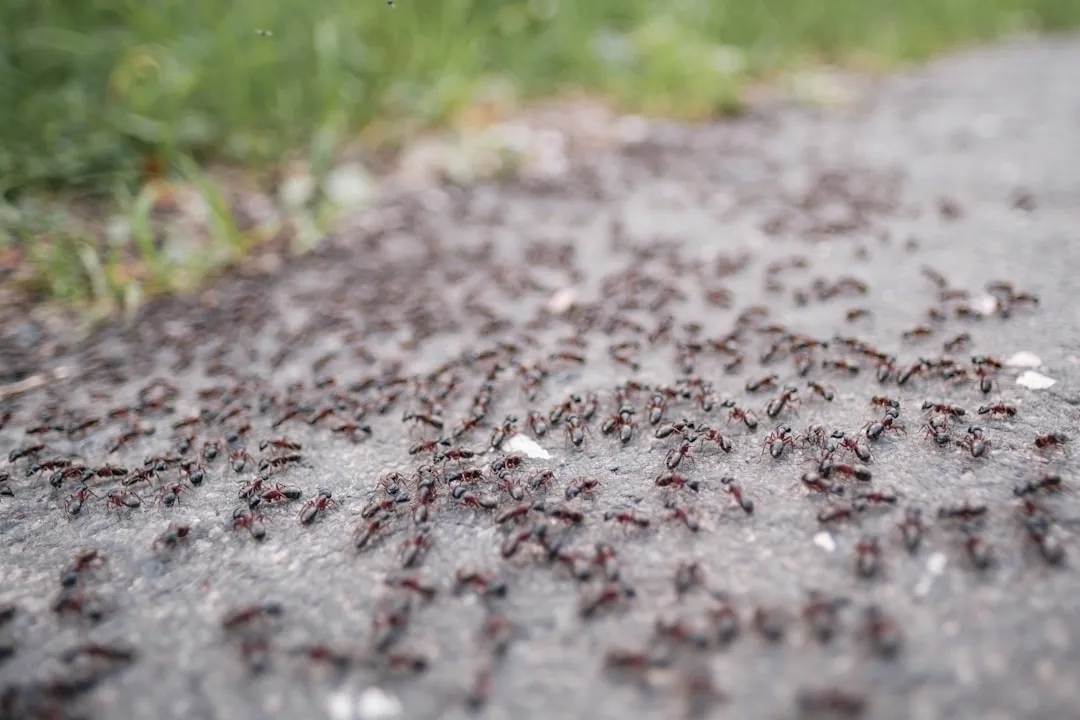
Trails will lead to the discovery of nests, and chemicals applied with trail information can all be applied to management. Ants trail for a number of reasons, and knowledge of the biology of the species involved will help determine the method of attack. Inspection for trails of ants is the most time-consuming factor in ant management.
Pheromone trails serve diverse, context-dependent roles in navigation. Far from being simple or rigid directional signals, pheromone trails serve diverse, context-dependent roles. This means the same trail can shift its character depending on whether ants are scouting, foraging, or moving the colony, and experienced observers learn to distinguish between these phases.
Placing ant baits along trails or near entry points allows workers to carry poisoned bait back to the colony, targeting the queen and nest. This approach only works reliably when the trail has been traced correctly. Bait placed at the food source end of a long trail rarely reaches the queen. Placement near the convergence point or the suspected nest entrance is significantly more effective.
Final Thoughts

The ant trail is not a sign of chaos. It’s a highly organized, chemical communication system built on feedback, memory, and collective intelligence. Once you understand what the density, direction, timing, and convergence of those trails actually mean, you stop guessing and start reading.
To find where ants are coming from, observe their paths carefully and look for clear trails connecting food sources to their entry points. Following the trail backwards is the most direct way to locate the nest or entry area. It sounds simple, but this single practice separates effective ant management from the frustrating cycle of surface-level treatment and rapid return.
The ants leave the answer in plain sight. The trail pattern, read correctly, tells you exactly where they live.
AI Disclaimer: This article was created with the assistance of AI tools and reviewed by a human editor.