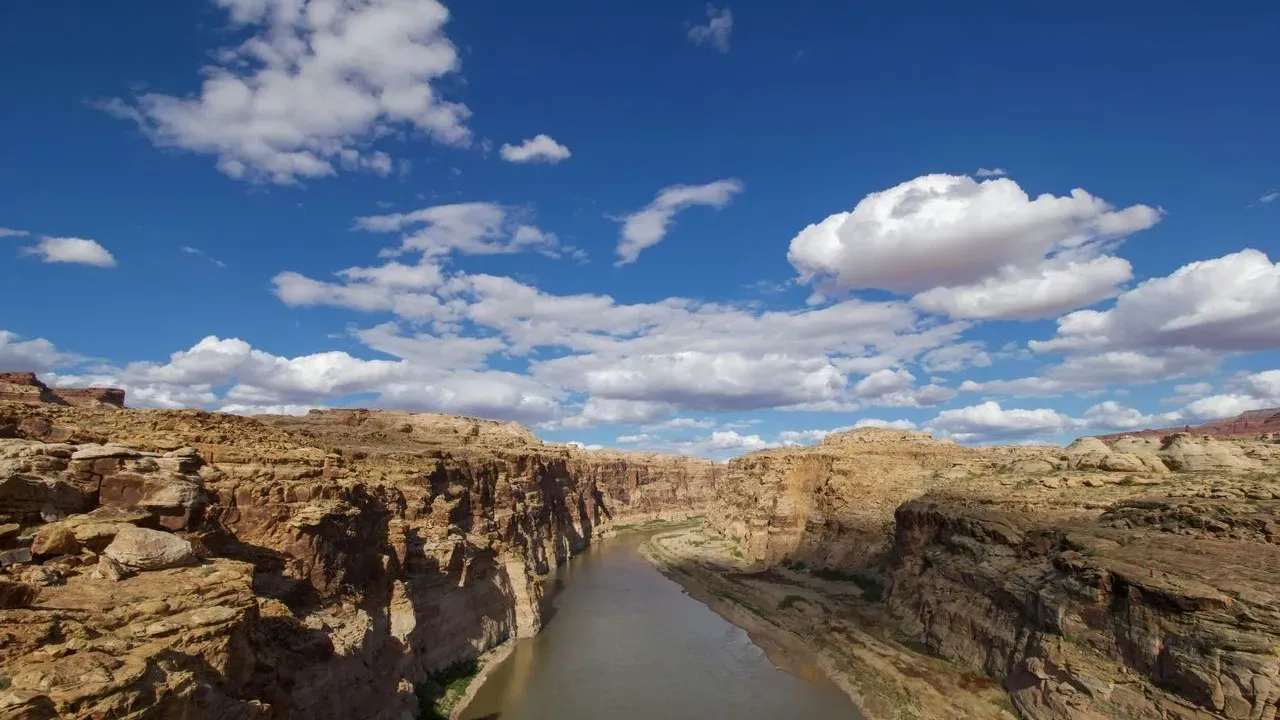

The federal government has finalized a plan to reduce withdrawals from the Colorado River amid ongoing drought conditions. This development has introduced significant uncertainty for communities, farmers, and residents who depend on the river’s water for daily needs and irrigation. The changes come as major reservoirs reach historic lows ([1]).
The Scale of the Reductions
Under the Bureau of Reclamation’s plan, California, Nevada, and Arizona must collectively reduce water use by 1.25 million acre-feet each year for the next two years. Additional cuts remain possible depending on reservoir levels and weather patterns. The other basin states face no mandatory reductions at present but may pursue voluntary measures.
These volumes represent a substantial share of current allocations. Lake Mead and Lake Powell, the system’s two largest reservoirs, both reached record lows this month. Eight other reservoirs operated by the bureau also sit at their lowest levels in at least three decades.
Effects on Agriculture and Cities
Farmers in key growing regions are already adjusting planting decisions. In Yuma, Arizona, producers of winter vegetables and melons hold relatively senior water rights, yet many remain reluctant to expand acreage or invest in long-cycle crops such as citrus and dates. Similar caution appears among tribal farmers along the river who rely on aging irrigation infrastructure.
Cities face parallel pressures. Phoenix could lose a portion of its municipal and industrial supply for the first time and may need to draw on backup sources. Smaller communities like Cave Creek have already capped growth, revived older wells, and negotiated additional deals. Nevada has filed suit against the Interior Department and the Bureau of Reclamation, arguing that planned reductions could leave basic needs in the Las Vegas area unmet.
Preparing Home Landscapes for Tighter Supplies
Homeowners and landscapers in the affected states should expect continued pressure on outdoor water use. Irrigation restrictions or higher rates could become more common as utilities manage reduced deliveries. Lawns and water-intensive plantings may require more frequent monitoring or conversion to drought-tolerant alternatives.
Practical steps include auditing existing irrigation systems for leaks and efficiency, grouping plants by water needs, and prioritizing native or low-water species in new plantings. Soil amendments that improve moisture retention can also reduce the volume required for established beds. Many utilities offer rebates or audits that can offset some of the transition costs.
Outlook for the Coming Seasons
El Niño conditions may bring additional moisture to parts of the basin in the months ahead, yet experts note that a single wet period will not reverse decades of accumulated deficits. The uncertainty surrounding future allocations is likely to persist, prompting ongoing adjustments by both large-scale users and individual households. Residents who rely on Colorado River water for gardens and lawns can best prepare by focusing on efficiency measures that deliver results regardless of the exact size of future cuts.
AI Disclaimer: This article was created with the assistance of AI tools and reviewed by a human editor.