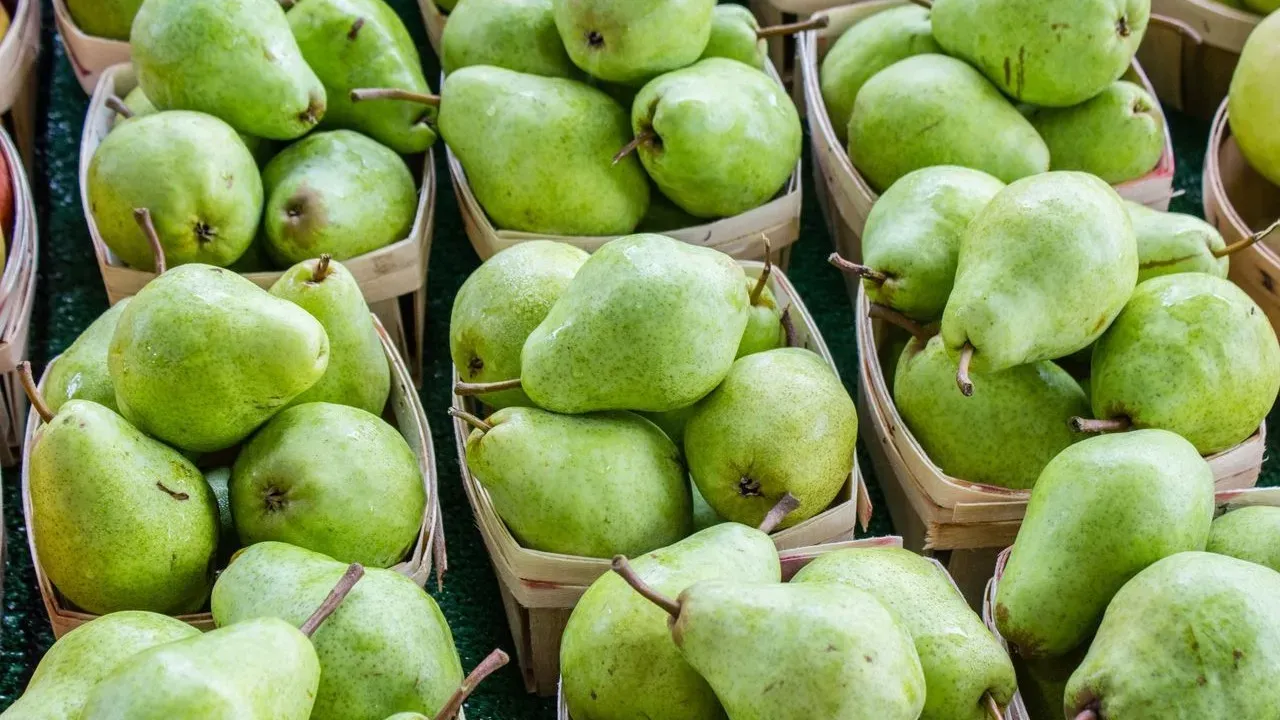

Most backyard fruit trees reward a wait-and-see approach, but pears break that pattern in a way that surprises many first-time growers. Leave them hanging too long and the flesh near the core often turns brown or gritty before the skin even softens. The reliable solution is to pick them while still firm and finish the ripening process indoors.
Why Pears Ripen Differently
Apples, peaches, and plums typically sweeten and soften while still attached to the branch. Pears follow the opposite path. They mature from the inside out, so the area around the core can break down while the exterior still looks green and tight. Gardeners who wait for a soft feel on the tree often discover mealy or discolored centers once the fruit is cut open. Picking at the right stage prevents that outcome and delivers the smooth, buttery texture pears are known for. The difference comes down to how the fruit develops once it reaches full size on the branch.
The Simple Tilt Test
Color changes offer limited help because many varieties stay green even when ready. The most dependable check is the tilt test. Hold a pear gently and lift it to a horizontal position. A mature fruit releases cleanly from the spur with only light pressure. Resistance that requires twisting or tugging means it needs more time on the tree. This method works across varieties and avoids the guesswork that comes from squeezing the body.
Finishing the Ripening Indoors
Once picked, pears continue to soften at room temperature. Some types benefit from a few days in the refrigerator first, while others ripen fully on the counter within about five days. Check ripeness at the neck just below the stem rather than pressing the widest part. A paper bag traps ethylene gas and speeds the process, and placing an apple or banana nearby can shorten the wait even more. The goal is even softening without overripening the core.
Common Pitfalls to Avoid
Pressing the round body of a pear often bruises fruit that is still firm at the stem end. Overripe specimens left on the tree rarely recover their texture, so any that remain should be harvested promptly for cooking if they soften too far. Not every variety signals readiness through color shifts, which is why the tilt test remains the most consistent guide. Following these steps turns an unpredictable harvest into a predictable one for home growers.
AI Disclaimer: This article was created with the assistance of AI tools and reviewed by a human editor.