
It happens to almost everyone. You stand up with a clear purpose, cross the hallway, step through the door, and the thought is simply gone. Not faded, not fuzzy – completely gone. It feels embarrassing, maybe even a little alarming, but the science behind it is genuinely fascinating.
This particular brand of forgetting has a name, a documented mechanism, and decades of research behind it. Understanding what’s actually happening in your brain when you cross that threshold changes the way you think about memory itself.
The Doorway Effect: What It Actually Is

The doorway effect is the well-documented phenomenon of forgetting why you walked into a room, where crossing a doorway acts as an “event boundary,” segmenting memory so that the previous goal becomes harder to retrieve. It’s not a character flaw or a sign of aging. It’s a built-in cognitive process that your brain runs automatically, every single time you cross a threshold.
Neuroscientists have studied how crossing a doorway can disrupt short-term memory by segmenting experiences into distinct episodes. The effect is consistent enough across populations and environments that researchers consider it a reliable, reproducible phenomenon rather than a quirk of individual memory.
Gabriel Radvansky and the University of Notre Dame Studies

Gabriel Radvansky, Professor of Psychology at the University of Notre Dame, spent years investigating how physical movement affects memory, and his research, published across multiple studies in the Quarterly Journal of Experimental Psychology and Memory and Cognition, established what is now widely known as the doorway effect, or more precisely, the location updating effect.
In 2011, Radvansky and his research team conducted a series of studies in both virtual and real-world environments, and the study reports that walking through a doorway, regardless of the size of the room or the distance traveled, was associated with an increased likelihood of participants forgetting the objects they were interacting with or their intended goal.
The Numbers That Made Researchers Take Notice
In controlled experiments, participants were two to three times more likely to forget their intended task after crossing a doorway than after traveling the same distance within a single room. That’s a striking margin for something as ordinary as walking from one room to another.
As detailed in the Quarterly Journal of Experimental Psychology, the explanation follows from a series of experiments where Radvansky assigned a group of study participants the task of selecting an object from one table and exchanging it for an object at a different table in another room, then had a second group perform the same task between tables that were an equal distance apart, but in the same room. The difference in memory performance between the two groups was not subtle.
How Your Brain Organizes Experience Into Episodes
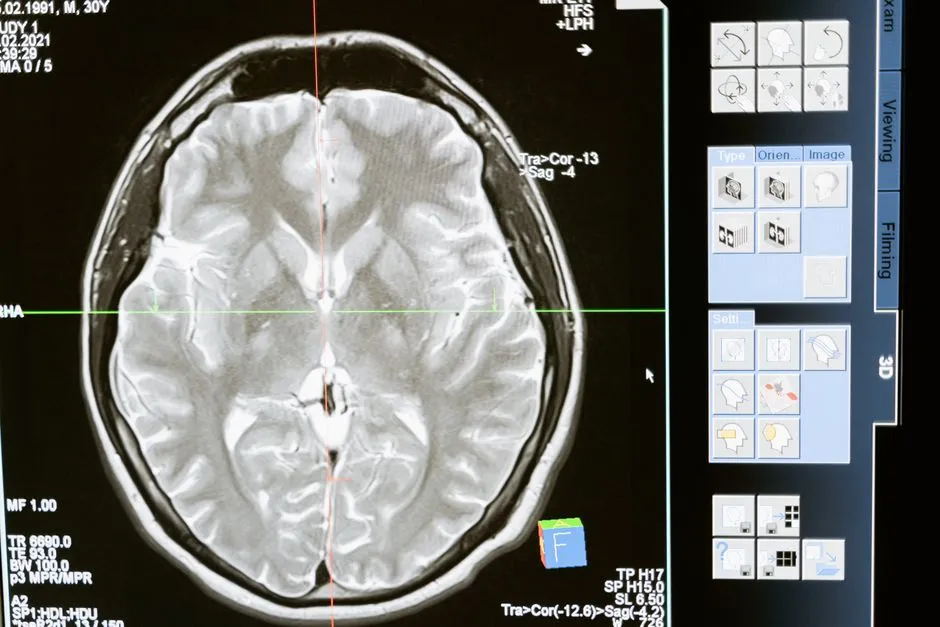
The mechanism works like this: the brain organizes experience into discrete episodes called event models. Each room, each context, each distinct environment represents a separate episode. Walking through a doorway signals a transition between episodes, and the brain files the previous episode away and begins building a new one.
When we move from one room to another, the doorway represents the boundary between one context and another. We use boundaries to help segment our experience into separate events so we can more easily remember them later, and these event boundaries also help define what might be important in one situation from what might be important in another. Your brain isn’t breaking down – it’s reorganizing.
The Brain’s Contextual Update: Efficiency Over Accuracy
As you cross into a new room, researchers propose that the brain performs a “contextual update” and may treat the information needed in the previous room as less immediately relevant. The doorway can act as a trigger influencing how working memory is updated, and the confusion experienced at the threshold may reflect the transition between event models, rather than a permanent loss of information.
Moving from one room to another changes which memories the brain treats as immediately relevant, and adjusts access accordingly. The effect is not a malfunction – it reflects the brain’s efficiency. The intention isn’t erased. It’s just been filed into a less immediately accessible drawer.
It Can Happen Before You Even Cross the Threshold

A particularly surprising finding came from research published in Psychonomic Bulletin and Review, which looked at whether actually passing through a doorway was even necessary for the forgetting to begin. Predictive processing may result in the anticipation of impending events and their boundaries, such that forgetting may be triggered not when an event boundary is crossed per se, but rather when you perceive that you are about to cross such a boundary, as a sort of preparation.
In some ways, this effect seems novel, as those experiments were the first to demonstrate the “doorways cause forgetting” effects without subjects actually passing through the doorways. Your brain can begin clearing the mental slate before you’ve even stepped through the door.
Virtual Reality Confirms the Effect Is Real, Not Just Physical

The effect occurs for active navigation, such as crossing doorways in virtual reality, but also works in entirely visual animations, as when one is just watching oneself walk through a doorway. This rules out the idea that physical movement alone is responsible for the memory lapse.
Across experiments, there was a consistent memory decrement for the first image encoded in the doorway compared to the no-doorway condition, while equating time elapsed, distance traveled, and distractibility of the doorway. The boundary itself, not the physical act of walking, is what triggers the brain’s reorganization.
Stress and Cognitive Load Make It Significantly Worse

Walking into a room and forgetting why is a normal feature of how the brain manages episodic transitions, but it becomes more frequent under stress, fatigue, or high cognitive load – conditions that deplete working memory capacity before the boundary is even crossed. If your day is already full, each doorway you cross carries a higher risk of blanking.
Stress may negatively affect cognition, including working memory, via mechanisms that include the deleterious effect of glucocorticoids and catecholamines on the structure and function of brain regions that are key for working memory, such as the prefrontal cortex and hippocampus. In other words, a stressful afternoon isn’t just unpleasant – it biologically degrades the very system you rely on to remember your intentions.
The 2026 Finding: Not All Forgetting at Boundaries Is Bad

A January 2026 study from Radvansky’s lab, published in Memory and Cognition, adds nuance to the notion. Event boundaries can sometimes improve memory for information encoded immediately around them, and items learned near a transition point are occasionally remembered more clearly than items learned mid-episode. The doorway effect, in other words, is not uniformly suppressive – it reflects a broader process of episodic organization that can cut either way depending on what is being remembered and when.
The memory decrement despite top-down working memory efforts highlights the power of event boundaries to structure what and when we forget. The same system that costs you your train of thought may also be what makes certain memories crisp and durable over time.
When to Worry and When to Relax
Forgetting that warrants medical attention looks different. Repeated difficulty recalling recent conversations, trouble recognizing familiar faces, or forgetting the location of commonly used objects – these patterns suggest something beyond ordinary location updating effects, as does forgetting accompanied by difficulty finding words, spatial disorientation, or significant changes in concentration.
Any of these, when persistent, merits a conversation with a physician. The doorway, by itself, is not the problem. Standing in the kitchen wondering what you came for is one of the most human experiences there is, and the research is clear that it signals a well-functioning brain doing exactly what it was designed to do.
What You Can Actually Do About It

Forming a clear, specific intention before crossing a threshold, rather than relying on ambient memory, reduces the chance of losing it at the boundary. Saying your intention out loud, or repeating it mentally as you approach the door, keeps it active in working memory right through the transition.
A significant change in environment, like going from the living room to the garden, is more likely to trigger forgetting than simply walking through a doorway. The more dramatic the context shift, the harder your brain works to reset – which means more elaborate transitions call for more deliberate mental reinforcement before you take that first step.
The Takeaway
There’s something almost reassuring about all of this. The most frustrating little lapse in daily life turns out to be a window into one of the brain’s most sophisticated organizational systems. Episode boundaries, contextual updates, prospective memory – these aren’t signs of dysfunction. They’re the architecture of how human experience gets stored and retrieved.
The next time you stand blankly in your kitchen, just retrace your steps. Go back to where the thought was born. The brain that filed it away will almost certainly hand it back.
AI Disclaimer: This article was created with the assistance of AI tools and reviewed by a human editor.