

You’re halfway through the house in the dark, trying not to wake anyone, and then it happens. That one board. The creak splits the silence so sharply it feels almost embarrassing, as if the floor itself has decided to announce you. Most people chalk it up to an old house doing old house things, but there’s quite a bit more going on.
The truth sits at the intersection of physics, biology, and how the human brain interprets sound when it has less to compete with. Understanding it doesn’t make the creak any quieter, but it does make the whole experience a lot less mysterious.
The Silence Is the Real Culprit

During daylight hours, your home hums with a continuous backdrop of noise: traffic outside, appliances running, voices, music, and the general mechanical pulse of daily life. Nighttime ambient levels in urban environments are about seven decibels lower than the corresponding daytime levels. That is a meaningful drop, and it changes the acoustic landscape of every room in your house dramatically.
On the decibel scale, the difference isn’t linear. The smallest audible sound is near total silence at zero decibels, and a sound ten times more powerful registers at just ten decibels. So when background noise falls by even a handful of decibels, previously masked sounds move from inaudible to clearly noticeable. The creak doesn’t get louder. The silence gets deeper.
Thermal Expansion: Your House Is Contracting in the Dark

If you hear creaks in your house at night, it’s often due to the way that changes in temperature affect its structure. Building materials like wood, concrete, and steel expand when they get hot and contract when they get cold. This is basic physics, but it plays out constantly and quietly throughout every building you’ve ever lived in.
This process, known as thermal expansion and contraction, naturally occurs as temperatures fluctuate between day and night. Houses tend to be creakier during winter, because the exterior shrinks while the foundation, set into the ground and not as exposed to the elements, does not. The result is a gentle but audible structural argument happening inside your walls and beneath your feet.
If a part of the floor is in a sunny spot during the day, the surface of the wood could be heating up, expanding, and then contracting at night when it’s cooler, meaning it never really settles and stays loose and noisy. That particular board near the window isn’t cursed. It’s just running through its daily thermal cycle.
Humidity Shifts After Sunset

The most common reason for hardwood to make a popping sound specifically at night is a change in humidity. The home cools during the transition from day to night, and that can impact humidity levels in the home. Wood is porous, and it responds to moisture in the air more readily than most people realize.
When the level of humidity in your home increases, it causes the wood in your floorboards to absorb moisture from the air. This absorption leads to swelling and expansion of the wood, resulting in increased noise when you walk on it. In drier conditions, the opposite happens, and the boards shrink slightly, loosening their fit against each other.
During winter, dry air causes shrinkage and gaps between floorboards and the subfloor. In summer, humidity makes wood swell, which causes squeaks. Once the weather shifts, the noises often disappear. The floor is essentially a seasonal instrument, played by the weather.
Friction Between Boards and the Subfloor

Although floors seem solid and stable, they’re constructed from many interconnected parts that interact over time. Floors squeak when two surfaces rub against each other, commonly between the floorboards and the subfloor or the joists underneath. Over time, buildings settle, materials shrink, and natural forces like gravity create tiny shifts and gaps. These adjustments cause friction, which manifests as those familiar sounds.
Over time, nails or screws can loosen, allowing the floorboards to move independently. When you step on a loose board, it rubs against the surrounding boards or the subfloor, creating that telltale creak. This mechanical friction is the actual source of the sound, and it doesn’t require anything dramatic, just the small movements that happen whenever weight is applied.
The Brain’s Nighttime Vigilance Mode

Your ears don’t suddenly improve at night, but your brain’s relationship with incoming sound shifts considerably. Research published in The Journal of Neuroscience reveals that basic sound processing remains active in the brainstem during non-rapid eye movement sleep, but weakens in the auditory cortex as sleep deepens. The study sheds light on how the sleeping brain manages to preserve rest while staying responsive to important sounds.
When you’re lying awake in a quiet house, your brain isn’t in sleep mode, but it’s also not in busy-day mode. When things go creak and bump in the night, it puts us on edge, and your natural stress response becomes a factor. Heightened awareness can trick our ears as well. The nervous system treats unfamiliar or sudden sounds as potential threats, amplifying attention toward them.
How Sleep Spindles and K-Complexes Play a Role

Even when you’re asleep, your brain keeps a quiet watch over the acoustic environment. Brain activity in the face of noise is controlled by specific brain waves during sleep. Waves called sleep spindles prevent the transmission of sounds to auditory brain regions. Conversely, when sounds are associated with brain waves called K-complexes, activation of auditory areas is larger.
The brain is actively balancing two competing needs: staying alert enough to wake up for truly important sounds, like a baby crying or a smoke alarm, while staying asleep to accomplish necessary roles such as restoring the body and consolidating memory. A sudden creak can tip that balance, pulling you from light sleep into full wakefulness with a jolt that feels disproportionate to the sound itself.
There is considerable variation between people in how strongly sleep attenuates their representation of sounds, which might explain why people differ in their sensitivity to nighttime noises. Some people sleep through anything. Others are undone by a single creak down the hall. Both responses have a neurological basis.
New Homes Creak Too, Not Just Old Ones

There’s a common assumption that squeaky floors are a sign of age or poor construction, but that’s not the full picture. Floor noise isn’t limited to older homes. A brand new home’s floors can creak too. New lumber, fresh installation, and materials that haven’t yet acclimated to their environment all contribute to early creaking.
The most likely issue for a new floor that’s noisy is that it needs time to settle. It can take time for the wood to properly acclimate to its new environment and get used to the way that environment will make it move. Give a new house a full year through all four seasons, and many of its louder tendencies calm down on their own.
Loose Fasteners and Subfloor Gaps

Another factor that contributes to creaking floorboards is how they were installed. Nails or other fasteners holding the boards may become loose over time due to regular use or improper installation. Additionally, if the boards were not properly fitted together during installation, they can rub against each other as weight is applied and produce a squeaky sound.
If the tops of the floor joists are not flat and level, the sheets of plywood or subfloor will not be supported evenly. When nailed down, the subfloor will be sucked down unevenly. Over time, the portions of the floor that have been sucked down will try to return to a flat and level position. That constant micro-tension is another quiet engine behind nighttime noise.
Why the Sound Feels Bigger in the Dark

There’s a psychological dimension here that’s worth taking seriously. A large body of experimental evidence supports the idea that the brain maintains some level of responsiveness to auditory stimuli during sleep. Recognizing threatening signals is crucial for determining when to wake up and when to continue vital sleep functions. That evolutionary wiring doesn’t switch off just because you live in a safe house in a quiet neighborhood.
Researchers found that the brain’s response to sound remains powerful during sleep in all parameters but one: the level of alpha-beta waves associated with attention to the auditory input. During sleep, the brain analyzes the auditory input but is unable to focus on the sound or identify it, and therefore no conscious awareness ensues. When you’re half-awake, you’re in neither state cleanly, and unfamiliar sounds get an outsized reaction as a result.
What You Can Actually Do About It
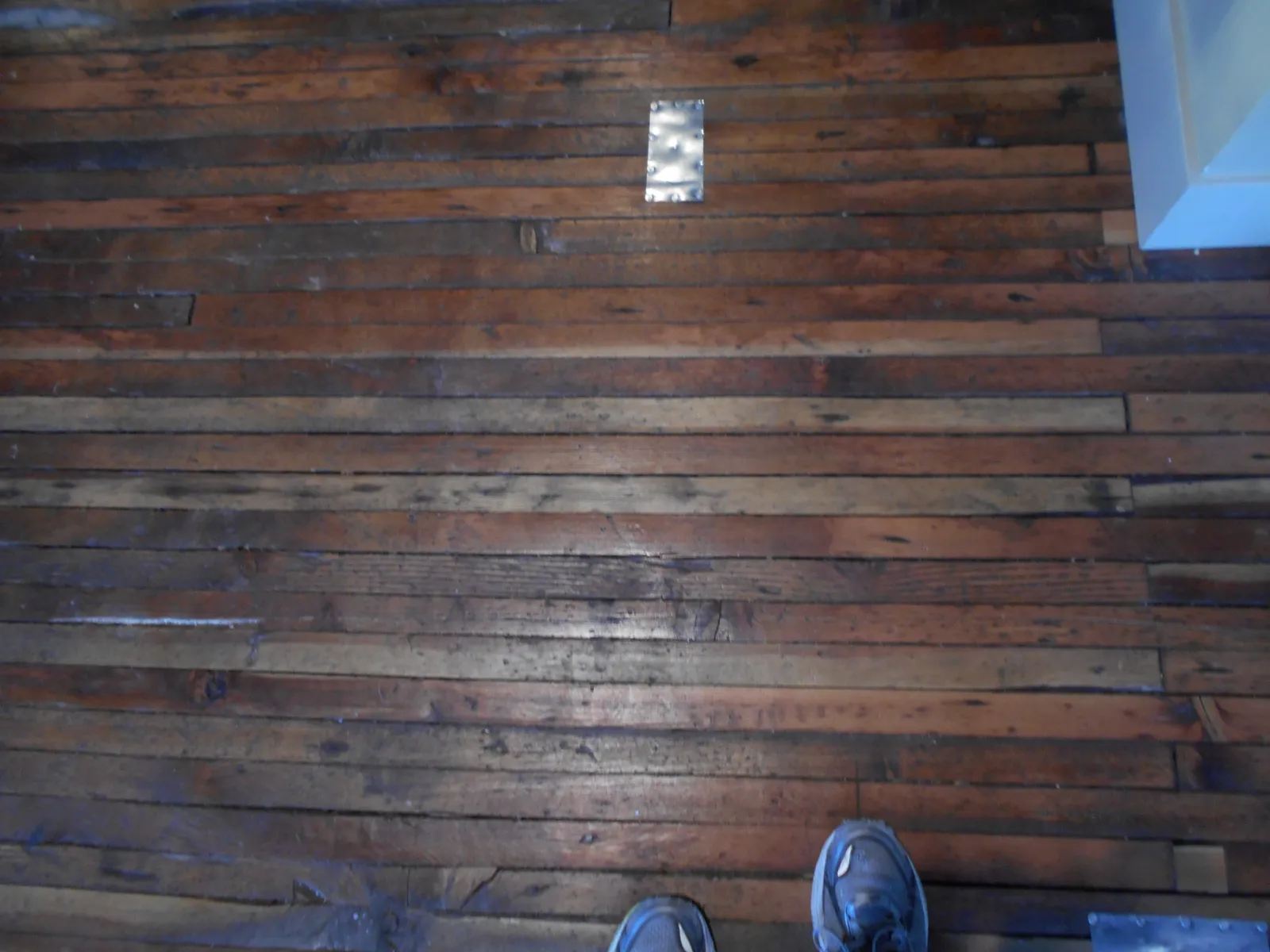
Any floor can creak due to rapid humidity or temperature changes, inadequate subfloor support, or loose floorboards. Knowing the cause is the first step toward a practical fix. Controlling indoor humidity with a dehumidifier or humidifier, depending on the season, is often the most effective single action you can take.
Try to take steps to control the humidity level in the house using air conditioning or a dehumidifier if it’s causing a disturbance. For floorboards that creak due to friction, lubricating the gap with powdered graphite is a low-effort option that many flooring professionals recommend for boards affected by seasonal humidity swings.
Generally speaking, a creaky house is a natural result of the way temperature affects matter. However, if there is a crack anywhere, or the doors and windows no longer fit cleanly where they once did, you may be dealing with more than the normal creaks caused by thermal expansion and contraction. That’s when it’s worth bringing in a professional to assess the subfloor structure.
The Takeaway

A creaky floorboard at night is not a sign of a haunted house or structural failure. It’s the product of thermal physics, moisture, mechanical wear, and a brain that takes quiet very seriously. The floor is doing what floors do. The night is just giving it a much larger stage.
What makes the sound feel so startling isn’t its volume but its context. Strip away the daytime noise, add a nervous system wired for nocturnal alertness, and even a modest creak can feel significant. Understanding that doesn’t always stop the reflex. It does, however, make it easier to roll over and go back to sleep.
AI Disclaimer: This article was created with the assistance of AI tools and reviewed by a human editor.