

Few things stop a person cold like an official-looking document claiming a court is demanding their presence. For homeowners, that instinctive jolt of fear is exactly what criminals are counting on. has been growing steadily across the United States, combining legal-sounding language, spoofed phone numbers, and personal details scraped from public records to make victims feel trapped. The playbook is calculated, the losses are real, and the scale is now enormous.
A Scam That Has Exploded in Scale
The numbers behind this fraud are hard to ignore. In 2023, consumers lost $171 million to government imposter scams according to the Federal Trade Commission. By 2024, that reported loss had surged to $789 million. The jump happened in a single year, which tells you something about how aggressively these operations are scaling up.
The FTC says Americans lost $3.5 billion to impostor scams in 2025, almost triple the total from 2020. These are not isolated incidents committed by lone fraudsters. They represent organized criminal networks running high-volume, high-efficiency deception campaigns, and homeowners are among the most targeted groups.
How the Scam Actually Works

You receive an “urgent” call or email out of the blue from someone claiming to be a U.S. Marshal or a police officer. They say you missed jury duty and that you’ll be arrested unless you pay them immediately. The call feels real because the scammer often already knows your name, home address, and sometimes your date of birth.
Imposter scams are the dominant fraud category in America, with criminals impersonating government officials, law enforcement officers, businesses, or trusted individuals. A common variation involves con artists posing as court representatives, telling people they missed a court date or failed to appear for jury duty, then intimidating victims into paying bogus fines through threats of arrest.
The Fake Court Summons Arrives by Every Channel
Federal courts have received reports of fraudulent emails, telephone calls, and text messages from people who claim to be court employees or law enforcement officers. Often, the caller threatens arrest, demands payment, or attempts to trick the recipient into visiting a malicious website. The scam has no single delivery method. It arrives however it can reach you.
The Kansas Attorney General’s Consumer Protection Division received reports of people receiving emails with subject lines such as “Legal Compliance Required: Court Case #USDC-2026-[Number],” fraudulently claiming the recipient is being formally served with a civil summons. State and federal courts do not serve legal documents via email, and clicking links or opening attachments in these fraudulent messages can have serious consequences.
The Personal Details That Make It Convincing

What makes this scam genuinely frightening is the level of personalization. Scammers may provide convincing information about the victim including addresses and date of birth, the real names of federal judges or court employees, actual court addresses, court phone numbers, and case and badge numbers. They may even spoof the phone number on the caller ID so that the call falsely appears to originate from a court number or another government agency.
The scammers appear well-prepared. They have the names and addresses of their potential victims and will try to convince those victims that they missed jury duty by failing to report to court. This level of research makes it extremely difficult in the moment to dismiss the call as obviously fake.
What Scammers Demand as Payment

To avoid arrest, scammers demand payment of a “fine” for not responding to jury duty. They request payment in cash, gift card, or by providing debit or credit card information. A courier may even respond to pick up the cash or gift cards, or they will instruct the victim to drop off payment at a secondary location.
Callers typically demand payment over the phone through payment methods like gift cards, cryptocurrency, a wire transfer service, or peer-to-peer apps such as Venmo or PayPal. The diversity of demanded payment methods is intentional. Scammers choose options that are difficult or impossible to reverse once the money is sent.
How It Connects to Homeowner-Specific Property Fraud
The fake court summons scam does not always stop at demanding a fine. For homeowners specifically, it can serve as a gateway into a broader category of real estate fraud. Nationwide, from 2019 through 2023, 58,141 victims reported $1.3 billion in losses relating to real estate fraud, according to a 2025 FBI report.
Quit claim deed fraud is a form of identity theft where a scammer files a fake quit claim deed with the county recorder’s office, making it appear that the scammer owns your property. The scammer might forge the homeowner’s signature, use fake identification to pose as the rightful owner, and then take out a mortgage and other loans on the property. Fake court documents can be used to pressure homeowners into signing away rights or to distract them while a parallel property fraud unfolds.
The Massive Cost of Recovering
Once a homeowner is caught in this type of fraud, the financial recovery is brutal. Victims often spend $50,000 to $150,000 in legal fees attempting to restore ownership after a fraudulent deed is recorded, according to fraud prevention company Equity Protect. In some documented cases, the costs have gone even higher.
In one documented case, a victim spent $180,000 in legal fees over three years fighting to reclaim property. The new homeowners, innocent victims themselves, lost their life savings and faced homelessness. After a lengthy court battle, ownership was restored to the rightful heir, but she had to compensate the innocent buyers $400,000 as part of the settlement. The criminals were never caught.
The Red Flags You Should Never Ignore
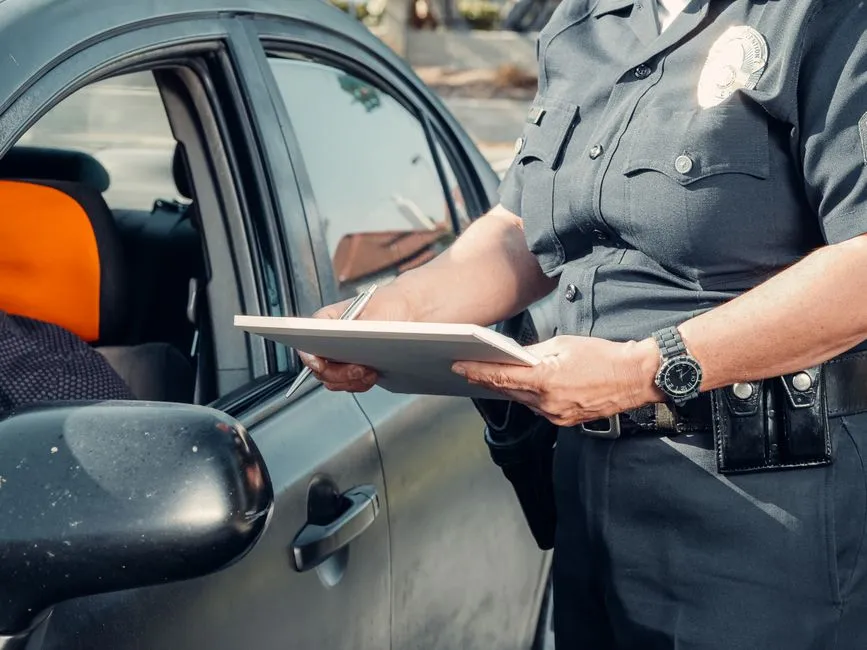
A fake summons can closely resemble an official legal document, but there are indicators that give it away. A legitimate summons will always contain the name and address of the court, a case number, and the names of the parties involved. If this information is missing or appears falsified, that’s a warning sign. Fake court documents may also contain spelling errors, bad grammar, and unusual formatting.
Courts do not communicate with jurors via phone calls, email, or text messages. Jury summons and additional information are communicated through postal mail. If someone claiming to be a court official contacts you by phone demanding money, that alone is definitive proof of a scam.
What the Real Courts Will Never Do

A court will never ask for a credit or debit card number, wire transfers, bank routing numbers, or demand payment over the phone for any purpose. A prospective juror who disregards a summons will be contacted by the District Court Clerk’s Office by mail and may be ordered to appear before a judge. Such an order will always be in writing and signed by the judge.
Fines are never imposed until after an individual appears in court and has the opportunity to discuss the jury absence with the judge. If a fine is imposed, it will be in open court and not over the phone. Knowing these facts ahead of time is genuinely protective. Scammers rely on people not knowing exactly how courts operate.
How to Protect Yourself Right Now
Before taking any action on a summons, verify whether it is genuine. Contact the court listed on the summons directly. If the court has no record of the case or the information does not match what’s on the document, it’s likely fake. Always use a phone number you find independently through an official government website, never one provided by the suspicious caller or document.
As convincing as these scammers may sound, real law enforcement officers won’t text or email you an arrest warrant. They also won’t call and threaten to arrest you. Even if the caller ID appears legitimate, remember that it can be spoofed. For homeowners concerned about property-level fraud, Florida legislation passed in 2024 mandated that all counties in the state offer a property fraud alert system that notifies a homeowner within 48 hours whenever a document is recorded using their name or business name. Other states are moving in a similar direction.
The Takeaway

The fake court summons scam works because it exploits something very human: the fear of legal consequences and the instinct to resolve a threat quickly. Scammers are counting on panic to override judgment. The good news is that the actual rules of how courts operate are simple and consistent, and knowing them takes away most of the scam’s power.
Real courts send summons by mail. Real courts do not demand gift cards or cryptocurrency. Real courts give you time, a judge, and a written record. If anyone calling themselves a court official asks you to do anything that falls outside those lines, the safest response is to hang up, verify independently, and report the contact to the FTC at ReportFraud.ftc.gov. In this scam, informed calm is the most effective defense there is.
AI Disclaimer: This article was created with the assistance of AI tools and reviewed by a human editor.