
Your Brain Processes Fewer “Frames” As You Age
One compelling explanation comes from Duke University engineer Adrian Bejan, who proposed that our internal sense of time is shaped by how fast the brain processes visual information. As the size and complexity of neural networks in the brain increase, electrical signals must travel greater distances, leading to slower signal processing. The result, as Bejan described it, is striking: we perceive fewer “frames per second” as we get older, and therefore time feels like it’s passing more quickly. It’s like a flipbook: the fewer the number of pictures, the quicker you flick to the end.
This is not just a poetic metaphor. It ties directly into the measurable slowing of neural signal transmission that happens naturally with age. The brain is receiving less raw input per unit of clock time, so subjectively, less seems to have happened.
The Neural State Switching Study That Changed Things
Researchers at the Cambridge Centre for Ageing and Neuroscience analyzed fMRI scans from 577 people between 18 and 88 while they watched an eight-minute clip from Alfred Hitchcock Presents. The goal was to track how brains shift between moments of focus, called “neural states,” as a story unfolds. Using a machine-learning model, they found that older participants’ brains switched between these activity states less often.
Older adults’ brains, the researchers suggest, might process continuous experiences with fewer clear breaks, creating the illusion that time is rushing by. Neuroscientist Giorgio Vallortigara of the University of Trento told Live Science that the findings “look very plausible” because they connect a subjective human experience to measurable neural patterns. The study was published in the journal Communications Biology, drawing data from the Cambridge Centre for Ageing and Neuroscience, a long-term brain-aging research project.
New Experiences Create Memory Landmarks, and We Stop Having Them
When we’re young, life is packed with “firsts”: a first job, first love, first trip abroad. These novel experiences create rich, detailed memories that anchor our perception of time, making it feel slower and more expansive. As we age and settle into routines, fewer new experiences mean fewer memory landmarks, causing time to blur and speed by.
Novelty recruits dopamine circuits that flag events as worth learning. Marked events get encoded with richer detail – more frames, more context, more hooks – so they occupy more space in memory and, in retrospect, seem to have lasted longer. A plain Tuesday in adulthood leaves almost no trace. A first day at school is remembered for decades. The difference isn’t the clock. It’s the encoding.
The Proportion Effect: A Year Means Something Different at 5 vs. 50
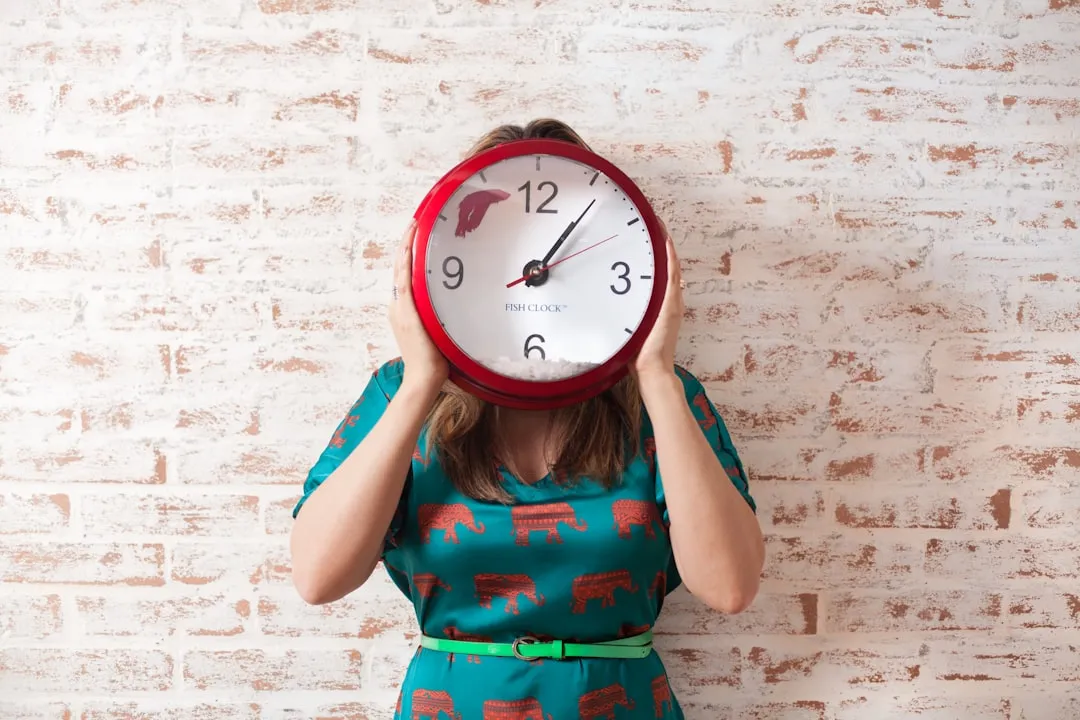
Linguist Joanna Szadura from Maria Curie-Skłodowska University pointed out that our perception of time also changes mathematically. To a five-year-old, a year is roughly twenty percent of their life, while to a fifty-year-old, it’s just two percent. The older we get, the smaller each year feels in proportion to everything that came before it.
The adolescence and childhood period feels longer than the adulthood phase because the same period takes up a larger percentage of the total life experienced by an individual. Time feels condensed by middle age and later years, where each year represents a smaller fraction of the total life experienced. It’s a simple arithmetic truth with a profound psychological weight.
Routine Is the Quiet Thief of Time
Routine doesn’t just compress the past; it also drains the present. Studies tracking holiday seasons in several countries found that people who stuck to predictable daily rhythms felt that Christmas or Ramadan arrived sooner every year. In a study of 918 adults led by psychologist Ruth Ogden, roughly three quarters of respondents agreed that Christmas seems to arrive more rapidly each year, while only nine percent disagreed. Ogden’s co-researchers asked an Iraqi sample the same question about Ramadan and received a very similar response.
The older we get, the more likely it is that we’re clocking up fewer new experiences each year. This is partly because the more we experience, the less new there is to experience. Part of it is also due to human nature: with age, we can become increasingly stuck in old habits and unwilling to pursue novelty.
Dopamine’s Role in the Internal Clock
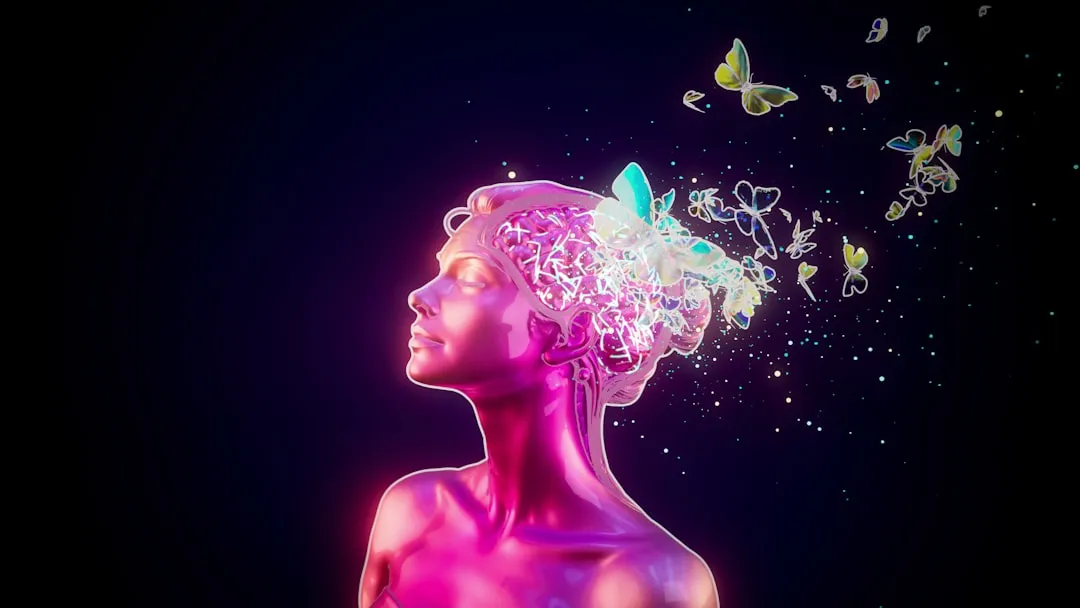
Different brain regions rely on varied neural mechanisms to track the passage of time, and decades of research suggest that the neurotransmitter dopamine plays a critical role in how we perceive time. Evidence from dopamine-related disorders such as Parkinson’s disease suggests that dopamine deficiency impairs time perception. Pharmacological manipulations show that increasing dopamine levels speeds up the internal clock, whereas reducing dopamine levels slows it down.
Reduced dopaminergic activity plays a crucial role in how we perceive time intervals. Since dopamine production naturally declines with age, this is not a trivial factor. A 2019 study in Trends in Neuroscience shed light on the brain mechanisms involved. Novel experiences trigger dopamine release in the hippocampus, the brain’s memory hub, strengthening memory formation and making moments feel more vivid. Different types of novelty activate separate dopamine pathways, each helping to create lasting, rich memories that stretch our perception of time.
Children Change Faster, and That Changes How Time Feels

Children and teenagers experience significantly more change, more frequently, than adults. They grow taller, wear new clothes, switch schools, have different friends, and learn new things in class. It is a world of transition and change. As adults, many of these factors level out and don’t change at all.
During adolescence, which researchers identify as roughly the period between 10 and 25 years of age, the brain undergoes significant change. Researcher Laurence Steinberg calls this adolescent brain one of “opportunity” because it is wide open to learning. When the brain is no longer being constantly rewired, three years can feel like they happened last week. As we get older, our brains aren’t wired to take in as many things from the outside world, or to learn in the same way. Therefore, three years ago can feel like yesterday: not much has changed in our brain, our perception, or our lived experience.
Older Adults Underestimate Time Intervals More Consistently

The perception shift isn’t only retrospective. It also affects how people estimate time in the present moment. Research using immersive virtual reality in 2024 showed that older volunteers underestimated simple time intervals by roughly fifteen percent, highlighting how novelty sharpens the inner clock. This is a measurable distortion, not just a vague feeling.
Normal aging is commonly associated with increased noise and temporal uncertainty as a result of impairments in attention and memory, as well as possible reduction in the accuracy of a central timing mechanism supported by dopamine-glutamate interactions in cortico-striatal circuits. In other words, the brain’s timekeeping hardware gradually becomes less precise. The clock runs at the same speed, but our reading of it drifts.
Emotion and Attention Shape Time from the Inside
Our perception of time is affected by our emotional states and attentional focus, demonstrating the way emotions can distort our experience of time. The phenomenon results from how the human brain interprets time in accordance with emotional state, memory, and sensory inputs. Exhilarating activities tend to slow down time, while routine activities have the effect of accelerating time.
Memory plays a powerful role in shaping our sense of time and our experience of duration. Our subjective experience of time is inextricably linked with memories, as memorable experiences are subjectively longer than dull ones. This is why certain days from childhood feel enormous in the mind while entire adult years can compress into a vague blur. The emotional charge of an event is part of what stamps it into memory with enough detail to seem “long.”
Can Anything Slow It Down?
The research points toward a consistent answer: novelty, attention, and social engagement are the main levers available. Researchers tracking so-called “super-agers” note that those who keep learning new skills and staying socially engaged maintain sharper senses of time, along with stronger memory performance. The mechanism here is the same one that made childhood feel so rich.
Study co-author Linda Geerligs of Radboud University noted that new experiences, travel, and meaningful connections can make time feel richer and more expansive. Shifting things up, whether it’s walking a new way to the shop, dabbling in a new hobby, or listening to a different kind of music, could be the key to elongating each year rather than looking back on an increasingly ill-defined blur. None of this requires a dramatic life overhaul. The brain simply responds to anything it hasn’t seen before.
The Takeaway
Time doesn’t actually accelerate. The clock runs identically at 8 and at 80. What changes is the brain’s relationship with experience: how much it encodes, how richly it stores what it sees, and how deeply each year is carved into memory. As we age, the brain compresses the familiar more efficiently, so days feel smoother and, in hindsight, shorter. The calendar hasn’t moved; our encoding has.
Understanding why this happens doesn’t make the years reappear. But it does point toward something practical. The texture of time is shaped by attention and experience. Choosing unfamiliar routes, staying curious, and resisting pure comfort aren’t just pleasant habits. They’re the closest thing we have to genuinely lengthening a year. When we’re young, every sight, sound, and experience is unfamiliar, so our brains work overtime to record it. That intense mental activity expands our perception of time. There’s no reason that dynamic has to stop entirely with age.
AI Disclaimer: This article was created with the assistance of AI tools and reviewed by a human editor.