
Why Height Placement Is the Central Problem
Research shows that trees staked too high on the trunk and too tight have reduced taper and caliper, which refers to trunk diameter measured at six to twelve inches above ground. That’s not a minor cosmetic issue. Taper is what gives a tree its structural strength, its ability to stand on its own when the stake eventually comes out.
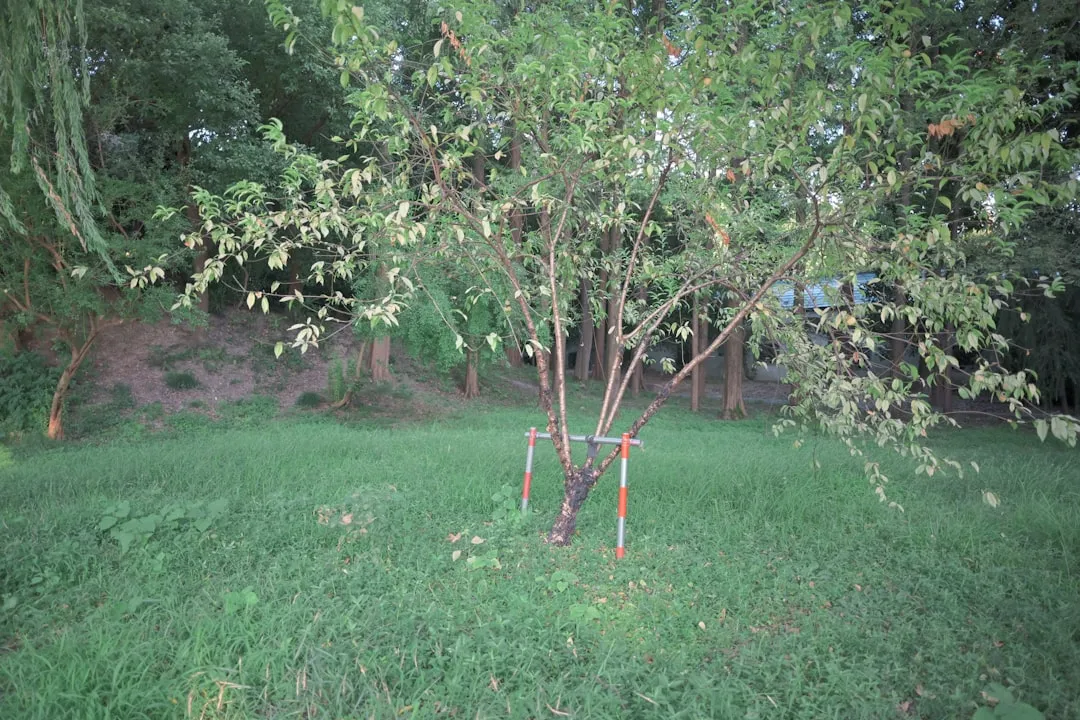
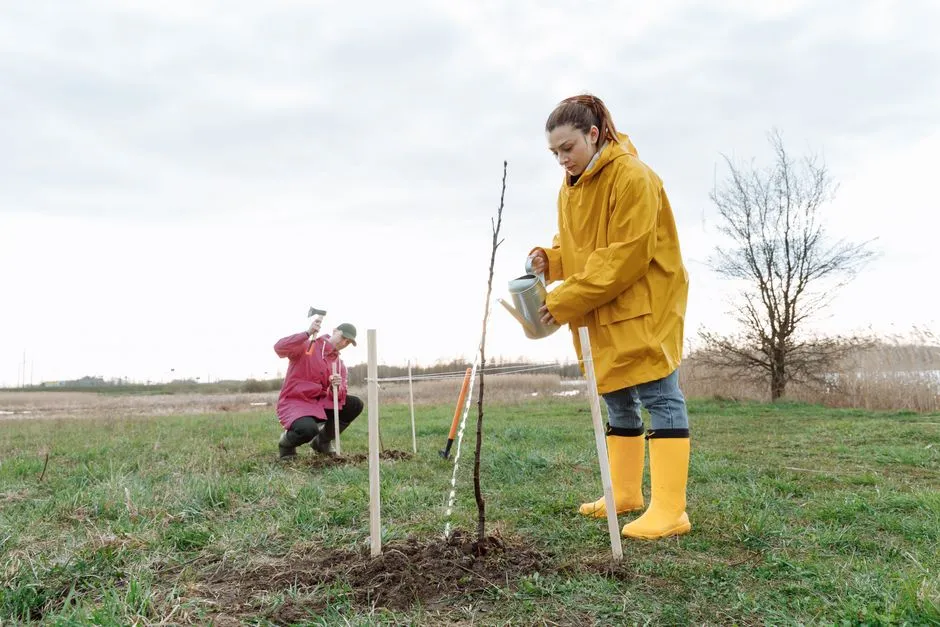
Stakes should be placed as low as possible at the tree’s base, ideally no higher than two thirds the height of the tree. Most amateur gardeners, and even some landscaping crews, routinely place ties much higher than this, often just below the canopy, which is precisely where the damage begins to accumulate silently.
The Physics of Trunk Development
Movement of the trunk helps strengthen it by thickening it and giving it taper from bottom to top, and trunk movement also stimulates root growth. This isn’t folklore. It’s a documented physiological response with a proper scientific name: thigmomorphogenesis.
Thigmomorphogenesis is a slow developmental change in the shape of a plant subjected to continuous mechanical stress. When trees bend in the wind, growth is usually stunted and the trunk thickens. A stake placed too high disrupts this entire process by eliminating the bending stimulus at exactly the zone where it matters most.
Wind stress can keep crown growth contained while increasing root production and stability, meaning trees become more firmly anchored in the soil with less crown wind resistance. Preventing that movement, even with good intentions, reverses those benefits.
Reverse Taper: The Hidden Structural Failure
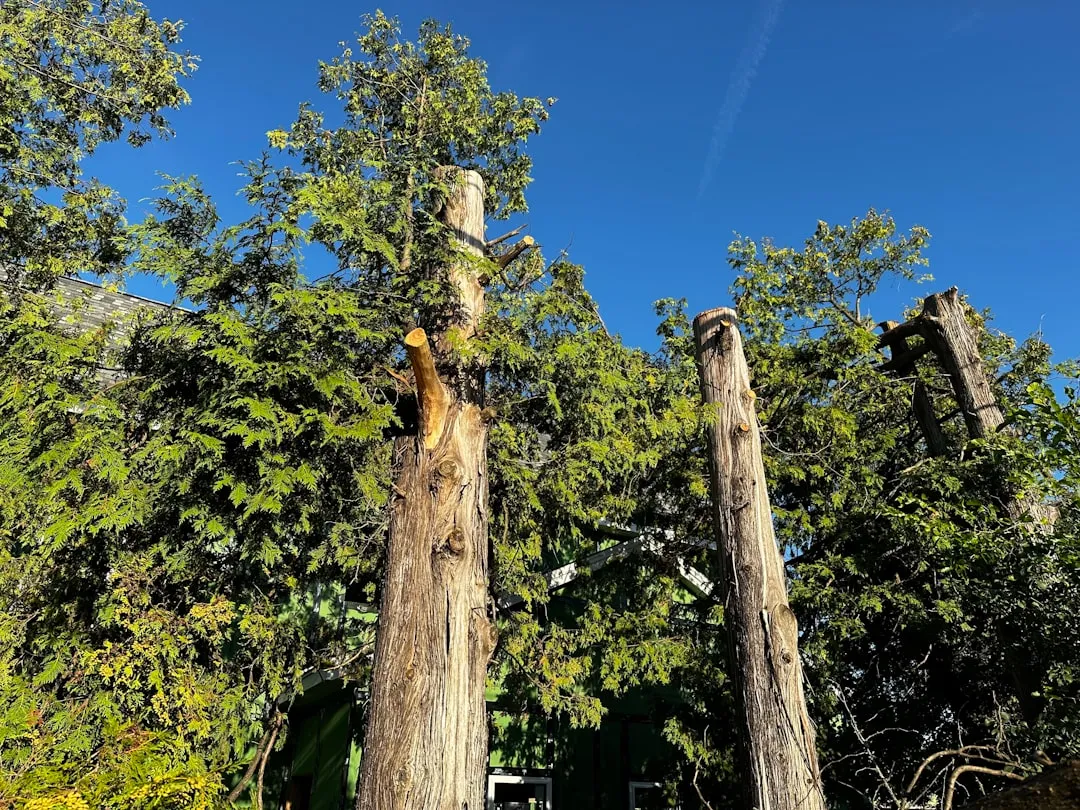
If staked in accordance with conventional high-attachment methods, a young tree will not be permitted to sway below the point where the straps engage the tree, and the development of the tree will thereby be inhibited, with the lower portion of the tree remaining relatively thin – a condition known as “reverse taper.”
A tree experiencing a reverse taper condition may lean or fall over if and when the supporting stakes become broken or are removed. This is the quiet long-term cost of a staking job that looked fine on installation day. The tree grows taller, looks healthy from a distance, and then fails at the base the first time a serious storm arrives.
Staked Trees Grow Taller but Weaker

Although staked trees might grow taller faster than their unstaked counterparts, their trunks are weaker and their root systems are less developed. This is one of those counterintuitive facts that catches people off guard. More growth in height is not always better growth.
When trees cannot move with wind, particularly when staked too tightly or for too long, they grow tall and thin with lots of leaves on top, and this type of growth makes them more likely to break or uproot when the stake is removed. The visual impression of health masks a structural deficit that compounds over time.
The Girdling Risk That Develops Within Months
Staking has been found to damage the trunk as soon as six months after planting, causing girdling and compression injury to the trunk. This is especially true when ties are placed high on the tree and left unchecked, because the trunk at that point is growing actively and can close around tie material faster than most people expect.
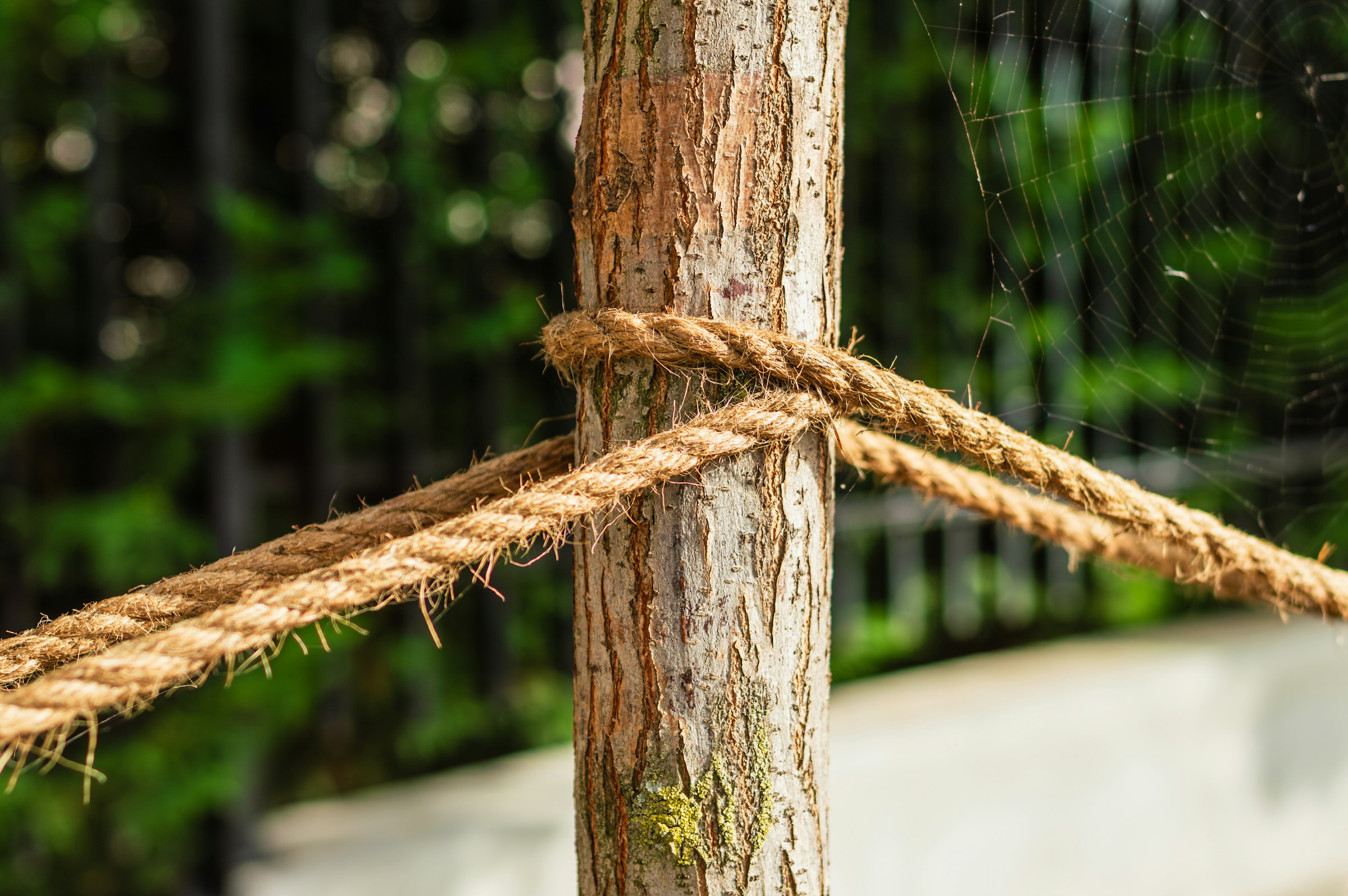
One of the most significant errors is over-tightening the stakes, and when ties are too tight, they can constrict the trunk of the tree, leading to damage or even girdling. A flexible tie placed at a high point on a fast-growing young tree is particularly vulnerable to this, since that portion of the trunk thickens quickly once conditions are favorable.
The tree’s naturally flexible trunk and branches often bend in the wind, and if they hit a rigid stake, the repeated striking and abrasion can result in girdling. When that contact point is high on the stem, the wound is harder to spot during routine inspection.
How Long Stakes Are Left In Place
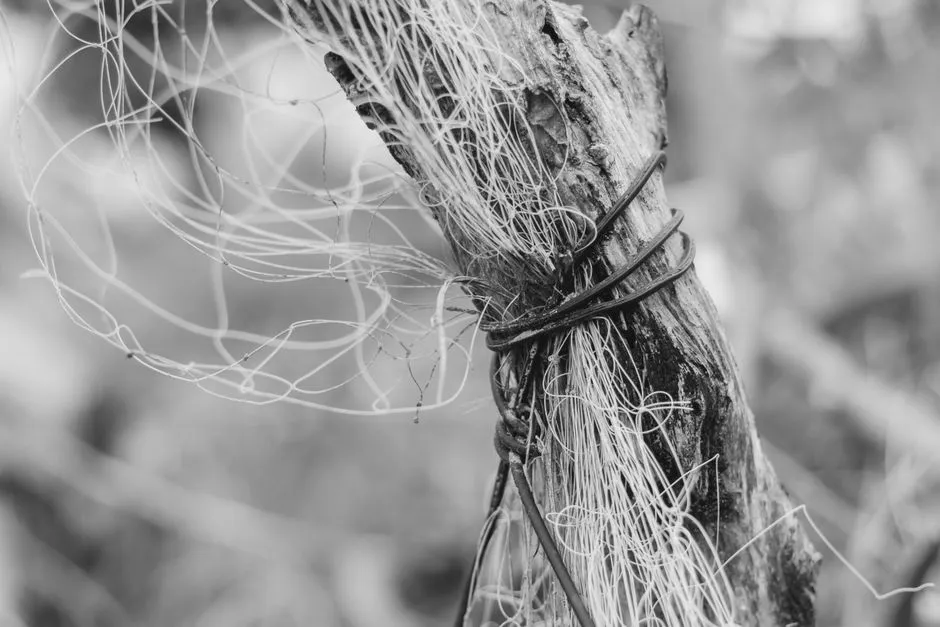
One of the most serious problems associated with staking is the failure to remove the staking materials in a timely manner, and one year is generally long enough for a new tree to be staked; beyond that, not only will tree development be affected, but the tree can be damaged by the wires, ropes, or other materials used to connect the tree to the stakes.
Stakes are often forgotten if left on the tree longer, leading to long-term damage, and materials can girdle or grow into the tree, creating weak points and potential failure. This pattern is especially common in public and commercial landscapes where there’s no clear aftercare plan once the initial planting is done.
The Problem with Single-Stake Installation
Using a single rigid stake behind the trunk causes asymmetric root growth, with roots proliferating only on the unstaked side, creating an unbalanced anchor system. The trunk develops unevenly in response, with stronger wood forming on one side of the stem while the sheltered side remains comparatively weak.
Materials used to tie the tree to the stake should be flexible and allow for movement all the way to the ground so that trunk taper develops correctly. A single rigid stake at mid-to-high height eliminates that movement almost entirely, concentrating stress at the tie point and leaving the base of the trunk chronically underloaded and therefore underdeveloped.
What the Research Recommends Instead

In home landscapes, focus tree staking on stabilizing the root ball and not on preventing the trunk from moving at all in wind, because trunk movement leads to trunk strength and stimulates root growth to improve establishment. This distinction is important. The goal of staking should be root ball stability, not trunk rigidity.
When staking, stake as low on the trunk as possible and for one year only, and after staking, about half or more of the trunk canopy should be able to move with the wind to help develop strong trunk biomechanics. That’s a practical benchmark that most current staking setups simply don’t meet.
In recent years, researchers and the arborist industry have been evaluating methods for stabilizing the root ball without fixing the tree to a rigid staking apparatus. Underground stabilizing systems are increasingly used in professional settings precisely because they secure the root ball without interfering with trunk movement at all.
When Staking Is Actually Necessary

There are situations when a young tree benefits from some mechanical aid, but not as often as many gardeners imagine, and even when staking is beneficial to a newly planted tree, it usually remains so for only a short period of time. The question isn’t whether to stake, it’s whether the specific tree in the specific site genuinely needs it.
Staking will help anchor the root ball, reducing movement and giving the roots time to spread into the surrounding soil – but only in situations where the tree actually lacks the root structure to hold itself in place. Trees with a well-developed root ball from a reputable nursery often don’t qualify. The staking of a tree is unnecessary more often than not.
How to Check Whether Your Staking Is Causing Harm

After the first winter, check the looseness of the ties and check the trunk for any signs of damage, which could be indentations in the trunk or worn areas of bark. These are early warning signs that often go unnoticed until the damage is already significant.
A test of your tree’s stability in windy conditions is a good way to evaluate its need for staking. Temporarily remove the flexible ties and observe the tree’s movement in the wind. If the tree bends and regains its original position, and if the planted root ball shows no sign of being pulled over or displaced, it’s safe to remove all staking.
If the ties are too tight and not allowing the trunk to sway, the trunk will be weak and thinner, which could lead to problems later on. Run a finger around the full circumference of the tie contact point. Any compression or indentation in the bark is a sign that removal or adjustment is already overdue.
The Takeaway for Anyone Planting a Tree
The staking height mistake is frustrating precisely because it comes from a place of care. People stake trees high because they want them to stand straight, and because taller stakes look more authoritative. The problem is that structural tree development doesn’t care about appearances. It responds to mechanical stimuli, and when those stimuli are blocked at the wrong height for too long, the damage accumulates quietly beneath the surface.
The fix isn’t complicated. Stake low, use flexible ties, allow the upper trunk to move freely, and remove everything after one growing season. Improperly staked trees suffer from poor development such as decreased trunk diameters and smaller root systems, and may be unable to stay upright after the supports are taken away. That outcome is preventable with a little awareness and a willingness to revisit the conventional wisdom that taller is always safer.
A tree that learns to stand on its own from the start is always stronger than one that was propped up too long in the wrong place.
AI Disclaimer: This article was created with the assistance of AI tools and reviewed by a human editor.