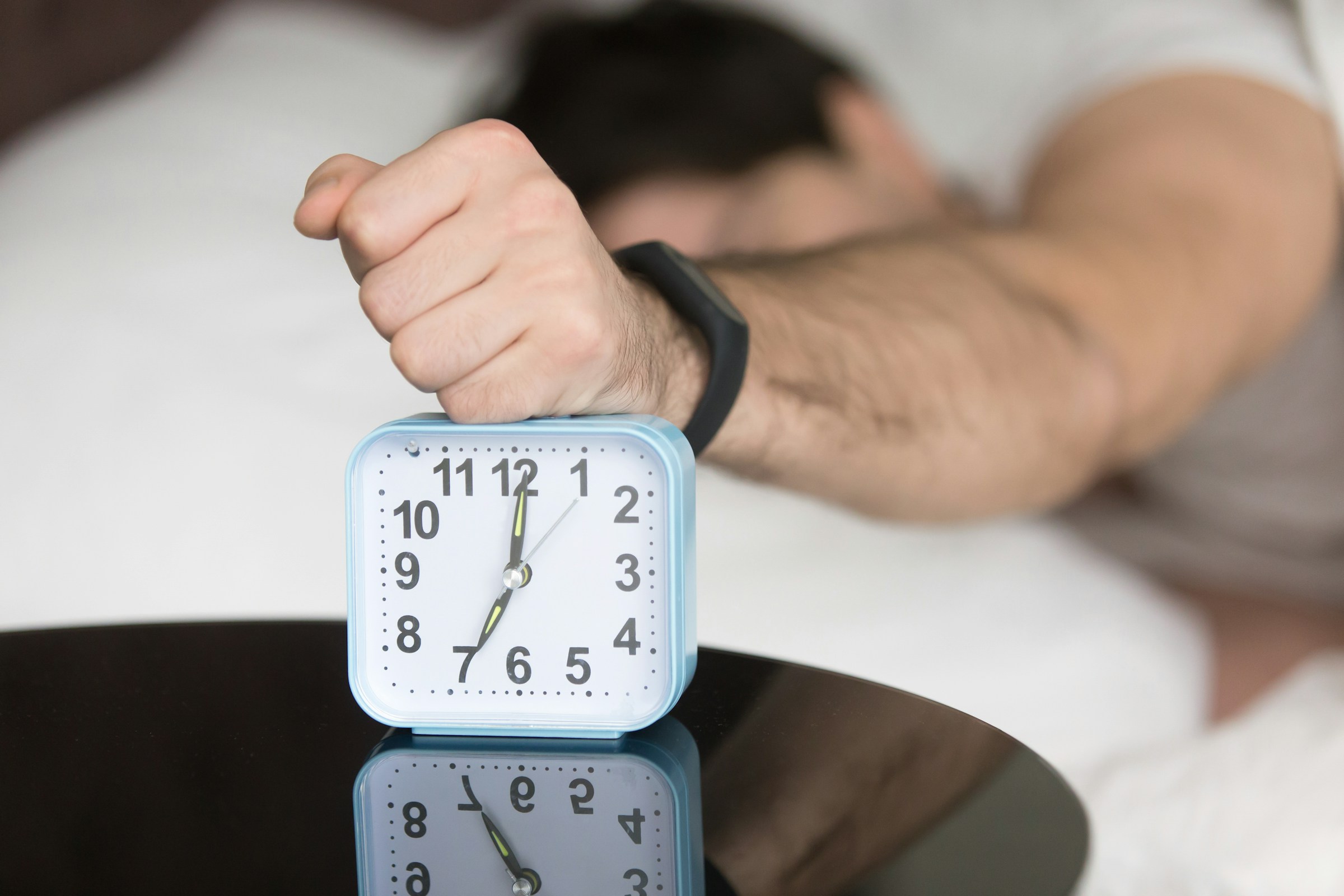

Most people have experienced it at least once. You’re in the middle of a dream, the room is dark, and then your eyes open on their own. You check the time. The alarm is set to go off in two, maybe three minutes. It feels almost eerie, like your body received a private memo that your conscious mind never read.
The truth is, this isn’t coincidence, and it isn’t a quirk. It’s the result of a remarkably sophisticated biological system running quietly in the background while you sleep. Science has spent considerable effort unpacking exactly why it happens, and the answers are worth knowing.
Your Body Has Its Own Master Clock
Deep in the brain sits a small group of neurons called the suprachiasmatic nucleus, often described as the body’s “master clock.” These neurons keep track of time by coordinating internal rhythms such as the circadian rhythm, which is aligned with the 24-hour day, to regulate things like sleep, body temperature, hunger, and digestion.
In the brain, this small group of hypothalamic nerve cells, the suprachiasmatic nucleus, functions as a master circadian pacemaker, controlling the timing of the sleep-wake cycle and coordinating this with circadian rhythms in other brain areas and tissues. It’s an ancient, deeply embedded system, one that evolved long before alarm clocks existed.
The circadian rhythm regulates the sleep cycle through a process controlled by the suprachiasmatic nucleus of the hypothalamus. Circadian rhythms refer to the regulation of physiology and behavior according to the day-night cycle, serving as a biological clock that influences multiple physiological functions, including body temperature, muscular tone, and metabolic activity.
The PER Protein: Your Body’s Internal Timer

A protein called PERIOD, or PER, rises in the morning and goes up through midday, signaling to your body that it’s time to be awake. This molecular rhythm is one of the most fundamental timing mechanisms in human biology.
A vital part of the sleep-wake process is this PER protein, which regulates your sleep-wake cycle. The level of this protein in the body will rise and fall over the course of the day and peak in the evening, becoming its lowest at night. Low levels of this protein then lead to lower blood pressure, which makes you feel sleepy and ready for bed.
Sleep experts note that if you stick to a consistent sleep schedule, your body learns to adapt and increase levels of PER just before your alarm goes off. This peak in PER usually happens around an hour before the alarm, as the body begins to release stress hormones. To avoid feelings of shock or stress when you are woken up by the alarm, your body starts to produce PER earlier in the night, which is one reason you find yourself waking up a few minutes before it goes off.
Cortisol Starts Rising Before You Even Open Your Eyes

In healthy individuals, the majority of cortisol secretion occurs within several hours surrounding morning awakening. A highly studied component of this is the cortisol awakening response, which is the rapid increase in cortisol levels across the first 30 to 45 minutes after waking. This strong cortisol burst at the start of the active phase has been proposed to be functional in preparing the organism for the challenges of the upcoming day.
Shortly after awakening from nocturnal sleep, initial cortisol levels increase by 50% or more, a phenomenon known as the cortisol awakening response. This is a robust and well-documented physiological event, not a fringe idea.
Cortisol is released upon activation of the hypothalamic-pituitary-adrenal axis to meet both anticipated and unexpected demands of cognitive, metabolic, cardiovascular, and immunological systems. It achieves this through the combination of a circadian rhythm that prepares the body in anticipation of the day ahead, and the ability to rapidly respond to acute stressors.
Consistency Is the Key Ingredient
For people who have very consistent rise times and morning light exposure, the master clock learns when they usually get up. Well before their alarm sounds, it gently prepares the body: temperature rises, melatonin levels fall, and cortisol levels start to climb. By the time their alarm is due, the body is already transitioning into wakefulness.
Research published in Nature Communications shows that our bodies start preparing for wakefulness in the hours leading up to our regular wake time, which can cause us to wake up before the alarm, especially if the timing is consistent. Regularity, in other words, trains the system.
Having a regular bedtime and awakening schedule helps train the body’s internal clock, especially when it stays aligned with natural cues in your environment such as changes in light and temperature throughout the day. This makes it easier to fall asleep and wake up feeling refreshed. A regular sleep-wake schedule helps your body keep track of time and can teach it to predict when it’s time to wake up.
Sleep Cycles and the Architecture of Your Night

Sleep isn’t just one long, uninterrupted state of rest. It’s divided into cycles, each made up of different stages: light sleep, deep sleep, and the well-known REM sleep. Understanding these stages helps explain why timing matters so much near morning.
The onset of sleep begins with wakefulness and progresses to REM sleep by approximately 60 to 90 minutes. This is followed by cyclical alternations between REM and NREM every 90 to 120 minutes until awakening. Most REM sleep occurs during the second half of the night.
A study in Frontiers in Psychology explains that these sleep stages are regulated by both homeostatic processes and the circadian rhythm, meaning that as you approach morning, your brain naturally transitions into lighter sleep. This natural drift toward lighter sleep is part of why the body is primed to wake at just the right moment.
Anticipation Plays a Bigger Role Than You’d Think

Stress and anxiety can increase levels of cortisol, the same hormone that naturally increases in the morning to help you wake up, making it harder to stay asleep or triggering early awakening. Anticipation of exciting events can also make it difficult to sleep, as a high state of arousal makes your brain stay alert, leading to lighter sleep and premature awakenings.
The cortisol awakening response is a distinct facet of the circadian cortisol rhythm associated with various health conditions and risk factors. It has repeatedly been suggested that the cortisol awakening response could be a result of the anticipated demands of the upcoming day and could support coping with daily life stress. Think of it as the body bracing itself before you’re even aware of the morning.
The cortisol awakening response has been thought to support anticipation of a day’s most reliable stressor, which is waking up, and to mobilize energy for daily activities. It proactively modulates human emotion and cognition. That pre-alarm stirring, in many cases, is anticipation made physical.
Light Is Still Pulling the Strings

Light is sensed by the eyes and travels on the optic nerve to the suprachiasmatic nucleus in the brain. When light intensity is low, the suprachiasmatic nucleus signals the pineal gland to produce melatonin, which causes the feeling of drowsiness. When light intensity is high, the production of melatonin is inhibited.
One way the body tracks time is by sensing the levels of light around it. Even subtle shifts in early morning light filtering through a window can begin nudging the system toward wakefulness, often before the alarm has any chance to fire.
The availability of artificial light has substantially changed the light environment, especially during evening and night hours. This may increase the risk of developing circadian rhythm sleep-wake disorders, which are often caused by a misalignment of endogenous circadian rhythms and external light-dark cycles. What you expose yourself to in the evening genuinely shapes how well the clock runs the next morning.
What It Means When You Wake Up Feeling Alert vs. Groggy

If you often wake a few minutes before your alarm and feel alert and rested, it’s a sign your circadian rhythm is finely tuned. Your body clock has learned to anticipate your routine and help you transition smoothly from sleep to wakefulness. However, if you wake before your alarm but feel groggy or restless, it might signal poor sleep quality rather than a well-synced rhythm.
Without a consistent sleep pattern, the body will rely on an alarm to wake up, potentially waking you in deeper stages of sleep and leaving you with that groggy feeling known as sleep inertia. That jarring, disoriented sensation after a harsh alarm is the price of a poorly timed wake-up pulled from deep sleep.
When waking naturally without an alarm happens, it’s a strong sign that you’ve had enough rest and that your body clock is healthy and well-aligned. It’s one of those quiet signals worth paying attention to.
When Stress and Anxiety Hijack the Process

Stress and anxiety can increase levels of cortisol, the same hormone that naturally increases in the morning to help you wake up, making it harder to stay asleep or triggering early awakening. Anticipation of exciting events can also make it difficult to sleep, as a high state of arousal makes your brain stay alert, leading to lighter sleep and premature awakenings.
Research shows that the cortisol awakening response exhibits a robust circadian rhythm that persists even after adjusting for prior sleep. These findings may have implications for shift workers who wake up at unusual circadian phases. In other words, the mechanism is powerful enough to override irregular schedules, though it works best when the body is in sync.
These situations are common and are normal from time to time. However, they may cause longer-term sleep problems if they happen too often. Chronic early waking driven by anxiety is worth distinguishing from the healthy, well-regulated version of the same phenomenon.
What You Can Do to Work With Your Body Clock

Reviewing your sleep hygiene and making small changes to your habits can realign your body’s internal clock, helping you wake naturally and feel truly rested. The adjustments don’t need to be dramatic, but they do need to be consistent.
If you have a consistent sleep-wake routine, waking up at the same time every day, your body starts to increase its PER levels, including blood pressure and body temperature, as well as releasing hormones like cortisol that help you deal with stress. The routine, not any special supplement or gadget, is what trains the system most effectively.
Maximizing the beneficial role of the cortisol awakening response could be integrated into the growing area of chronotherapy, seeking to optimize health by aligning behaviors to circadian rhythms. Strategies to restore insufficient cortisol awakening response expression may be explored, such as interventions targeting sleep hygiene and early awakening, or seeking to manipulate cognitive anticipatory processes. Even the medical community is taking the body clock more seriously than ever before.
The Takeaway
Waking up seconds before your alarm isn’t magic. It’s biology doing what it was designed to do, quietly and competently, while you were asleep. The suprachiasmatic nucleus, PER proteins, cortisol rhythms, sleep cycles, and light exposure all work together in a system refined over millions of years of evolution.
The fascinating part isn’t just that it happens. It’s that the reliability of the phenomenon is a direct reflection of how well you’re treating your sleep. A body clock that wakes you gently and on time is one that’s healthy, well-fed, and respected. The alarm clock, for all its usefulness, is ultimately a backup plan for a system that would rather not need it.
AI Disclaimer: This article was created with the assistance of AI tools and reviewed by a human editor.