
You’re in the middle of something completely ordinary, maybe washing dishes or waiting for a train, when it hits you. A scene from a decade ago floods your mind in vivid detail: the wrong thing you said, the face you made, the room full of people. Your cheeks flush even though no one is watching. It’s disorienting, a little absurd, and remarkably common.
This isn’t a glitch. There’s real neuroscience and psychology behind why the brain drags those moments back, uninvited, years later.
Your Brain Was Built to Hold Onto Embarrassing Moments

The reason those cringeworthy memories don’t fade like ordinary ones comes down to how the brain encodes emotionally charged experiences. The tendency for embarrassing moments to stick is deeply rooted in human evolution, brain structure, and emotional learning, with the amygdala’s role in amplifying emotional memories combining with the survival value of avoiding future social mistakes to make embarrassment a particularly sticky form of recollection.
Our brain is wired to remember negative experiences as a survival mechanism, and it often doesn’t retain good things as strongly because they don’t seem crucial for survival. When something negative happens, the brain fixates on it, using it as a tool to help avoid future mistakes. The protective logic is sound. The emotional price, though, is real.
The Amygdala’s Role as Your Internal Alarm Bell
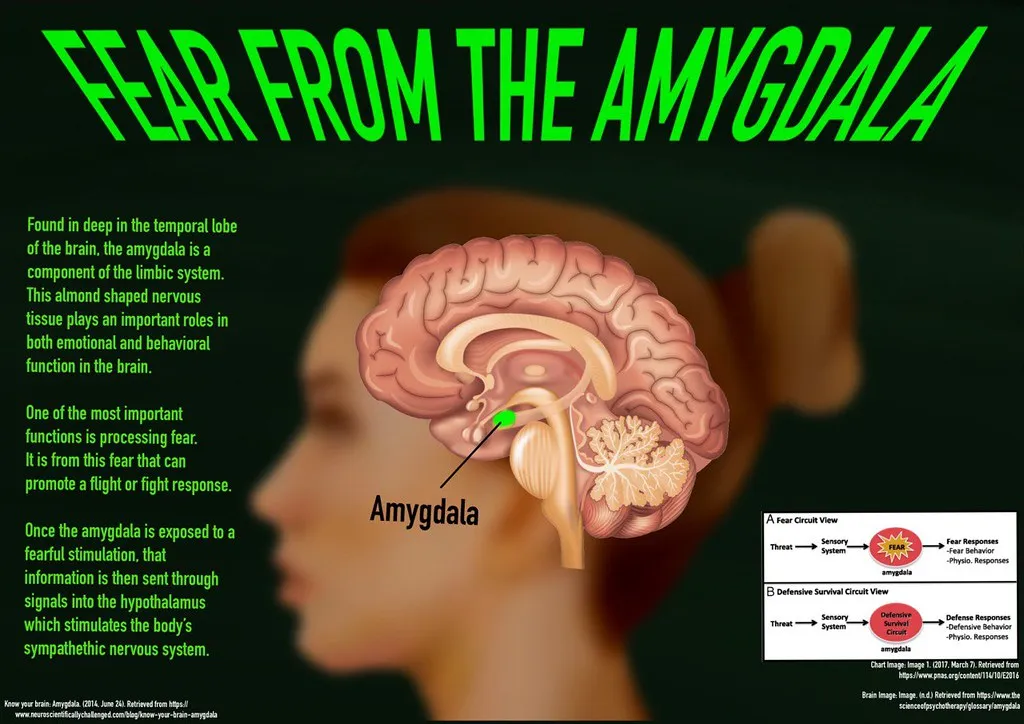
The amygdala, an almond-shaped cluster of neurons deep within the brain, acts as an emotional spotlight, highlighting moments that are especially significant or threatening. When something socially painful happens, it essentially flags that experience for priority storage.
When something threatening or distressing happens, the amygdala immediately flags that experience as important and signals other brain regions to pay close attention. Research confirms that the amygdala responds strongly to emotionally arousing stimuli, and while it’s active for both positive and negative stimuli, evidence shows an especially strong prioritization when threat is perceived. Social humiliation registers as a very real kind of threat.
Norepinephrine: The Chemical That Cements the Memory

Research from Wake Forest University Baptist Medical Center found that in extremely happy or tragic situations, norepinephrine is released in the brain. If embarrassment is felt deeply, that also releases the chemical, which is why we remember embarrassing moments for a very long time. Norepinephrine somehow seems to open the gate for very strong memories.
This chemical process doesn’t just create a record of the event. It deepens the imprint with sensory and emotional detail that ordinary memories simply don’t get. The intensity of the feeling at the time directly predicts how clearly you’ll recall it years later.
Involuntary Memory: When Recall Has No Off Switch

Involuntary autobiographical memories are memories of personal events that come to mind spontaneously, with no preceding attempt at retrieval. You’re not choosing to remember. The memory arrives on its own terms, often triggered by something in your current environment that shares even a small feature with the original event.
Recent evidence shows that involuntary memories of past events are highly frequent in daily life and represent a context-sensitive, associative way of recollecting past events that involves little executive control. They operate by constraints that favor recent events and events with a distinct feature overlap to the current situation, which optimizes the probability of functional relevance to the ongoing situation. In plain terms, your brain is constantly pattern-matching. A familiar smell, a phrase someone uses, or a similar social setting can quietly unlock that memory vault.
Voluntary vs. Involuntary Recall: Different Brain Pathways
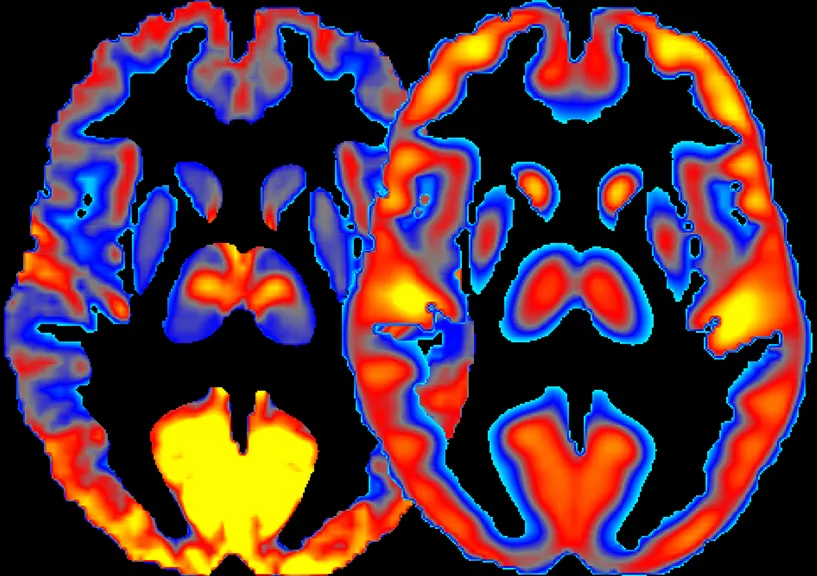
Despite how common and clinically relevant these experiences are, scientists surprisingly know relatively little about how the brain supports voluntary versus involuntary memories. New research published in PLOS Biology has offered important insights, demonstrating through electroencephalography that involuntary and voluntary memory recall rely on different patterns of brain activity.
This is a meaningful distinction. You can intentionally try to remember what you had for lunch last Tuesday and come up mostly blank. Yet an embarrassing moment from your school years can surface unprompted with the full cast, setting, and sensory detail intact. The retrieval mechanisms are genuinely different, and not entirely under your control.
Why Teen Memories Hit Especially Hard

Part of the reason many people only remember bad memories from childhood and adolescence lies in how the teenage brain processes threats. During the teenage years, the amygdala runs at full throttle while the prefrontal cortex, responsible for rational thinking and emotional regulation, is still under construction. This mismatch creates a perfect storm for negativity bias.
A social rejection that an adult might brush off can feel catastrophic to an adolescent brain. These heightened emotional responses get encoded deeply into memory, which is why embarrassing moments from middle school can still make you cringe decades later. The brain wasn’t ready to contextualize them, so it stored them raw.
The Negativity Bias: Your Brain’s Unfair Preference

Psychological research has long documented the negativity bias: our tendency to remember negative experiences more vividly than positive ones. One eye-tracking study of 130 undergraduate students found that people pay more attention to central details in negative emotional events, which makes these memories more deeply encoded.
The negativity bias reflects the cognitive tendency to prioritize negative stimuli, and it’s commonly observed across human psychology and contributes to emotional and cognitive dysregulation. Good memories simply don’t get the same aggressive storage treatment. They’re encoded more casually, and they fade accordingly.
The Body Remembers Too: Physical Reactions to Old Memories

Studies using functional MRI scans have shown that the anterior cingulate cortex and the insula, in addition to the amygdala, light up when people recall socially painful events. This overlap may explain why remembering an embarrassing moment can trigger a physical reaction, such as blushing, sweating, or a pit in the stomach, even years after the event.
Your brain isn’t just recalling the memory; it’s partially reactivating the emotional and physiological state associated with it. When a moment felt humiliating, your stress response kicks in. This is why the cringe can feel so immediate and physical, even though the actual event is a decade behind you.
Rumination Makes It Worse

Cognitive patterns feed the replay. Rumination and mental replay strengthen neural pathways for that memory, making intrusive recollections more likely. If someone tends to catastrophize or assume others judge them harshly, those thinking habits inflate the event’s significance.
Avoidant behaviors, such as skipping places or conversations tied to the incident, prevent new, corrective experiences, so the memory keeps its emotional charge. Every time you replay it, you’re essentially re-encoding it. You’re giving the memory another reason to stay vivid and accessible. The replaying itself is part of the trap.
Social Anxiety Sharpens the Edge of These Memories

Intrusive involuntary memories and images are a cardinal phenomenon in a range of psychological disorders, including social anxiety. Research has examined potential biases when generating involuntary versus voluntary memories in individuals with high and low levels of social anxiety.
High social anxiety was associated with more intense anxiety and embarrassment and greater use of a range of emotion regulation strategies. Involuntary memories and future events were associated with a heightened emotional response, and memories were associated with more embarrassment than imagined future events. People who already tend toward social worry don’t just remember embarrassing moments more often. They experience them with greater emotional sharpness each time.
The Takeaway: It’s Your Brain Protecting You, Not Punishing You

There’s something oddly reassuring in understanding this process. The embarrassing memory that ambushes you a decade later isn’t evidence of a broken mind. It’s evidence of a brain that takes social belonging seriously, because for most of human history, social rejection carried real stakes.
While negativity bias ensures these memories stand out, understanding their purpose can help us make peace with them. The next time you cringe at a memory from years ago, it’s just your brain’s way of trying to protect you, even if it’s a little overzealous. Knowing the mechanism doesn’t always make the cringe disappear. However, it does give you somewhere to stand while you wait for it to pass.
AI Disclaimer: This article was created with the assistance of AI tools and reviewed by a human editor.