

Most backyard accidents don’t happen because someone took a crazy risk. They happen during ordinary weekend tasks: cleaning gutters, trimming tree branches, painting a fence, or hanging something from the eaves. A ladder is involved in nearly all of them, and the person climbing it usually considers themselves a careful, sensible adult.
The habit responsible for the most ladder falls at home isn’t using a broken ladder or skipping basic setup rules. It’s something far more routine, something almost everyone does without thinking. Understanding it, along with the related patterns that make it so dangerous, could be the most useful safety lesson a homeowner ever gets.
Overreaching: The Habit at the Center of Most Falls

Overreaching accounts for roughly a quarter of all ladder tip-overs, making it the single most consequential behavioral habit on a ladder. The mechanics are simple and almost predictable: you stretch slightly to the left or right to avoid climbing down and repositioning the ladder, your center of gravity shifts, and the ladder follows.
The pattern develops gradually. You shift just a little further, then a little further, and suddenly you’re off-balance. It rarely feels dangerous in the moment, which is exactly why it keeps causing injuries.
When working on a ladder, your body acts as the ladder’s center of gravity. When you keep your body centered between the side rails, the center of gravity is optimal. Unfortunately, even a slight overreach can shift the center of gravity, leading to the ladder tipping.
Why It Happens So Often at Home
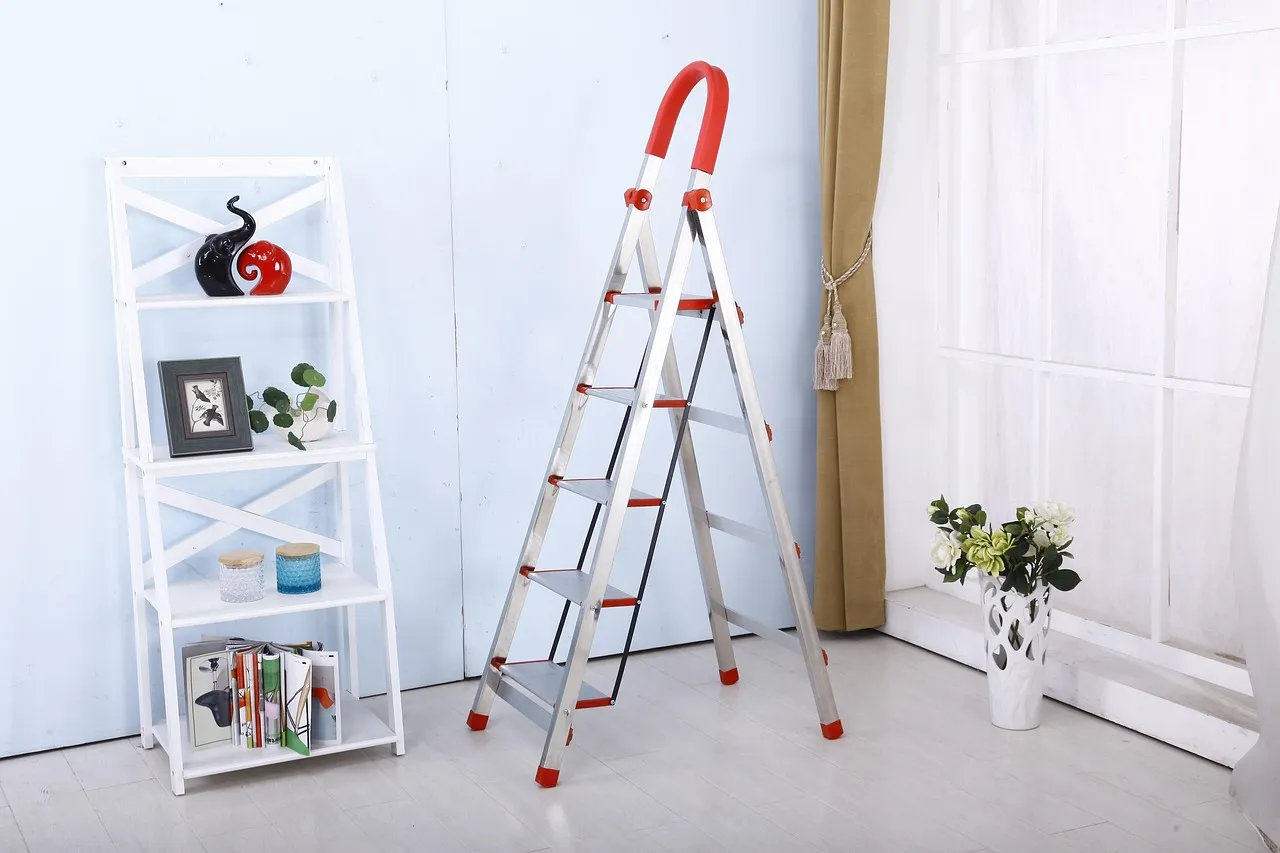
A majority of preventable accidents occur not on the job site, but when homeowners break out their inherited, 30-year-old ladder for a quick roof project. There’s no supervisor present, no safety briefing, and no colleague watching the base. The sense of accountability that sometimes exists on a worksite simply isn’t there.
Residential ladder incidents outnumber workplace incidents by two to one in the U.S. That gap is worth sitting with. Despite all the occupational safety regulations and training that exist for professional workers, the home environment is actually where most injuries occur.
Homeowners represent roughly seven in ten non-occupational ladder injuries. The backyard, the driveway, and the side of the house are where the real risk concentrates.
The Scale of the Problem in Real Numbers
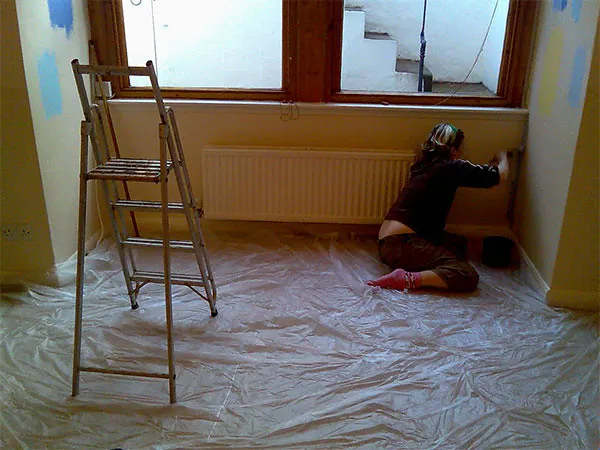
More than half a million people per year are treated for falls from ladders, and over three thousand people die as a result. These are not edge-case statistics. They reflect a steady, recurring pattern that shows up year after year in emergency departments across the country.
According to the National Institute for Occupational Safety and Health, every two days on average, work-related ladder falls result in a death and more than 180 injuries, resulting in 24 billion dollars a year in related costs including work loss and medical, legal, and liability expenses.
In the U.S., ladder injuries total 3.5 million each year, and around nine in ten are nonfatal. Survivable injuries can still mean fractures, surgeries, and months of recovery.
The Wrong Angle Problem: How Most Ladders Are Set Up Incorrectly

In about 40 percent of cases, the cause of the ladder-related injury is a ladder sliding out at the base from an incorrect setup angle. Extension ladders should be set up at about a 75-degree angle. Most homeowners never check this and never know there’s a standard.
For every four feet of height, the base of straight or extension ladders should be one foot away from the structure it is leaned against. This rule is simple and well-established, but rarely communicated outside of professional settings.
A ladder placed too steeply or too flat behaves unpredictably under body weight, especially when overreaching adds a lateral force the setup was never designed to absorb. Angle and overreaching together form a two-part failure that dominates the accident record.
Lacking Three-Point Contact: The Forgotten Rule
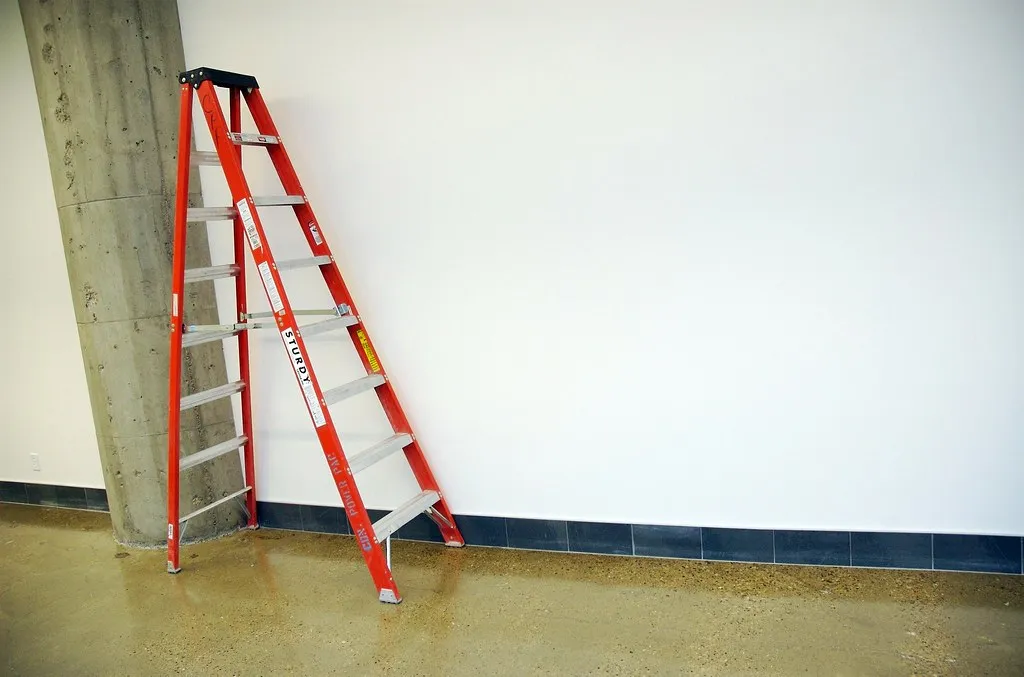
Lack of three-point contact is identified as a cause in roughly four in ten ladder falls. The principle is straightforward: at any moment on a ladder, you should have two hands and one foot in contact with the rungs, or two feet and one hand. The moment you give that up to reach for something, your stability drops sharply.
Users are commonly carrying other tools while climbing, making them less likely to have three points of contact with the ladder. This is one of the most frequent real-world violations of basic ladder safety, and it usually happens with no awareness that it’s dangerous.
Facing the ladder rungs and maintaining three points of contact when climbing up or down is not complicated advice. It simply requires making the conscious decision to put down whatever you’re carrying until you’ve reached your working height.
The Age and Gender Pattern in Backyard Falls

Males account for roughly four in five ladder-related injuries. That figure has remained consistent across multiple data reviews and likely reflects both occupational exposure and the tendency for men to take on DIY tasks at home without asking for help or using a spotter.
Adults aged 50 to 69 have the highest ladder injury rates. This age group is physically capable enough to attempt the work, but recovery from even a moderate fall becomes significantly more complex than it would have been twenty years earlier.
Over 60 percent of ladder fall patients in one study from Australia were men aged 50 to 74, highlighting how DIY projects at home pose a serious danger. The pattern holds internationally, not just in the U.S.
Rushing and Fatigue: The Hidden Multipliers

Rushing tasks is identified as a factor in roughly three in ten preventable ladder accidents. Most backyard jobs are tackled on weekends, often squeezed between other obligations. That time pressure translates directly into skipped steps: no angle check, no spotter, no three-point contact discipline.
Fatigue is a contributing factor in roughly a fifth of late-day ladder falls. The gutter cleaning that started at 10 in the morning looks very different by 3 in the afternoon when your grip is weaker and your attention has drifted.
The combination of a rushed setup and a tired body is particularly risky because both conditions reduce the margin for error. A slightly wrong angle or a single moment of overreaching becomes far more likely to result in a fall when neither the setup nor the person on the ladder is at their best.
Using the Wrong Ladder for the Job

Using the wrong ladder type accounts for roughly one in five ladder incidents. In a backyard context, this often means using a short stepladder for a job that requires an extension ladder, or treating an extension ladder as if it’s a stepladder that doesn’t need to be secured.
Selection of a ladder with the proper size and duty rating is important to avoid instability and structural failure. Many ladder users lack knowledge of proper ladder selection. Duty ratings indicate the maximum load a ladder can safely support, and most homeowners have never thought to check them.
The most common causes of ladder accidents include selecting the wrong type of ladder, using damaged or broken ladders, incorrect use of ladders, and improper placement of ladders. Several of these can be active at the same time on a single backyard project.
Unstable Ground and Slippery Surfaces
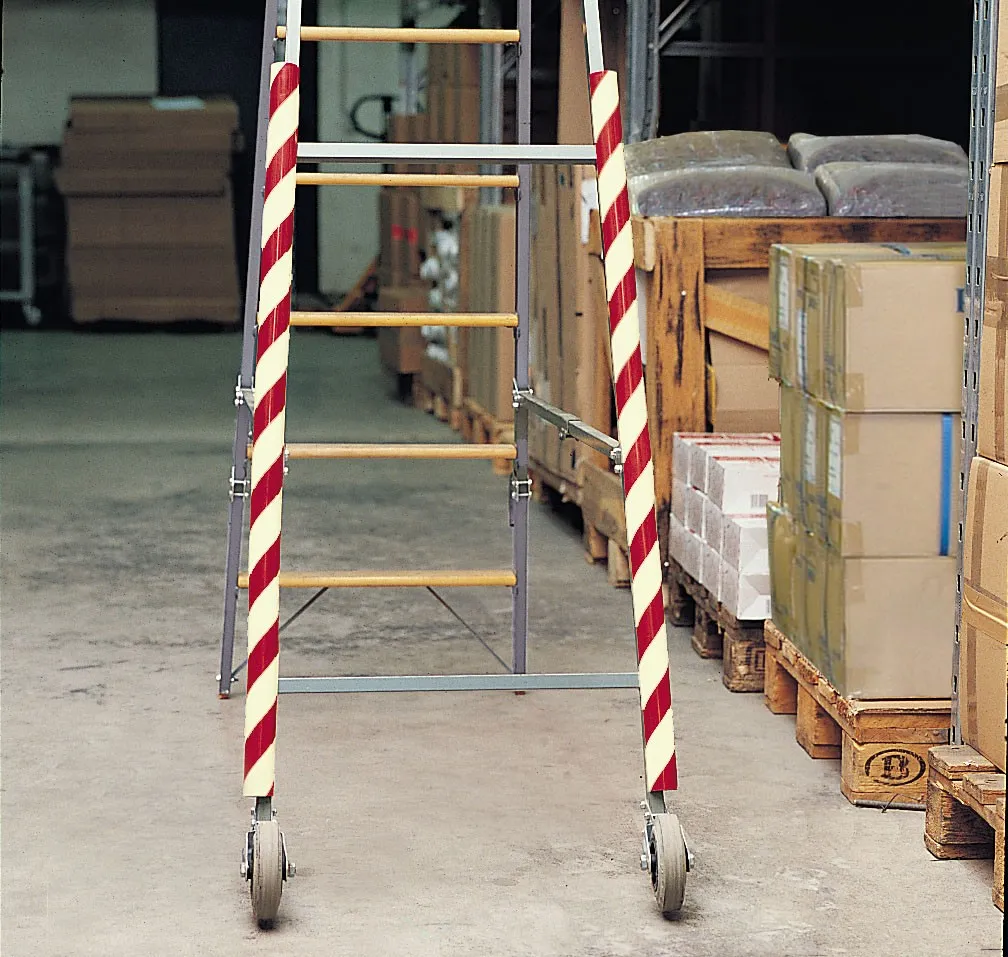
Slippery surfaces are responsible for roughly one in four ladder accidents. Backyards present a particular challenge here: grass, wet concrete, soft soil, and uneven paving are all common, and none of them provides the firm, flat surface a ladder is designed to rest on.
Unstable ground accounts for roughly 15 percent of ladder collapses. A ladder that seems stable when you first set it up can shift once your full weight is on it, especially on ground that compresses or slopes slightly in ways you didn’t notice from standing height.
Placing the ladder on a firm, level, non-slippery surface is one of the most basic rules, yet it’s also one of the most frequently skipped in an informal backyard setting where the goal is just to get the job done quickly.
What the Data Says About Prevention

Safety experts are unanimous in their belief that nearly all ladder accidents can be avoided provided the proper safety measures are taken. That’s a striking claim, and the data broadly supports it. Most accidents share the same small cluster of causes, and those causes are well understood.
If your belt buckle moves beyond the side rails of the ladder, you are leaning too far. Climb down and reposition the ladder instead of stretching to reach your work area. A few extra minutes to adjust your setup can prevent serious injury.
Securing straight or extension ladders at the top and bottom prevents slipping. If you can’t secure the ladder, having another person hold the base adds meaningful stability. These are not elaborate precautions. They’re habits that take seconds to build into routine.
The Takeaway

The habit that causes the most backyard ladder falls isn’t dramatic or unusual. It’s the quiet, practical decision to lean a few more inches rather than climb down and move the ladder. It happens in the middle of ordinary tasks, on perfectly ordinary days, to people who have used ladders their whole lives without incident.
That familiarity is part of the problem. In most cases, people choose to overreach rather than get off the ladder and move it to a new position. The extra two minutes that repositioning takes feels like a waste of time right up until the moment it would have saved everything.
The ladder itself is rarely the villain. The setup, the angle, the ground surface, and the decision to reach just a little further are what turn a routine Saturday chore into a hospital visit. Changing those habits costs nothing and takes almost no time. The data makes a compelling case for making that trade.
AI Disclaimer: This article was created with the assistance of AI tools and reviewed by a human editor.