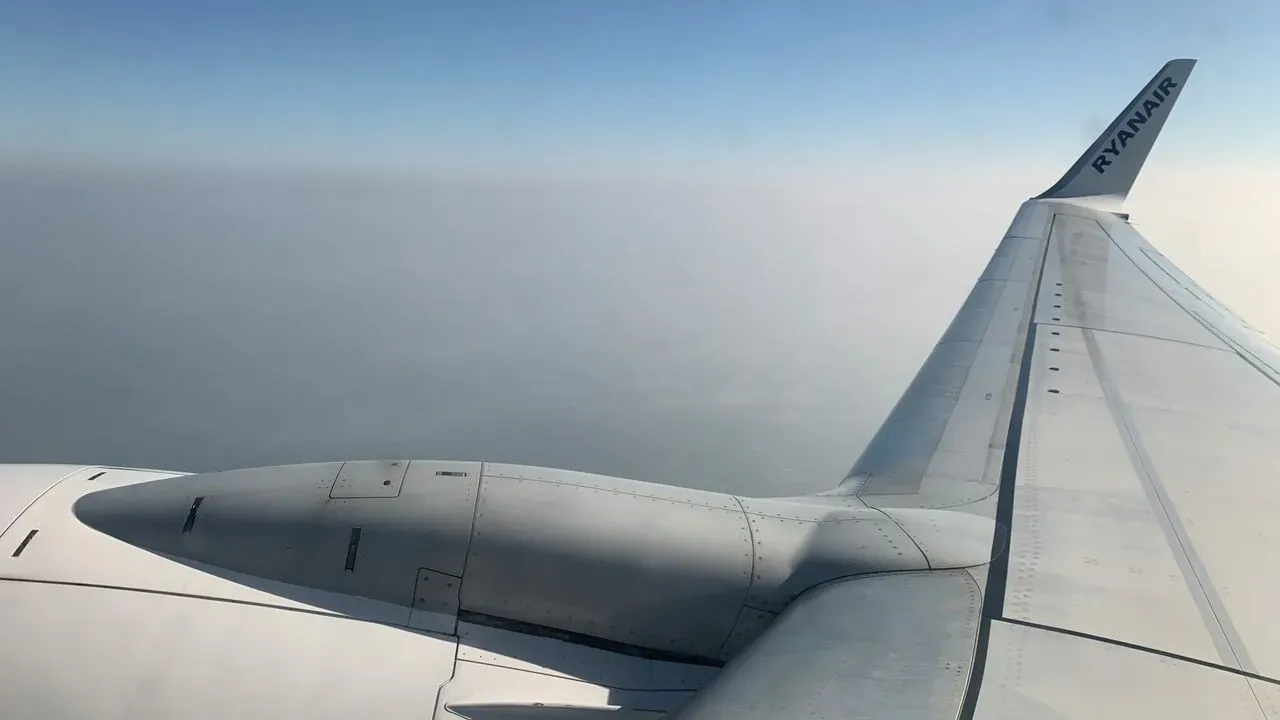

Investigators with the National Transportation Safety Board have released findings on a July incident involving a Ryanair flight that departed from Thessaloniki, Greece. A fan blade in one of the aircraft engines broke loose shortly after takeoff, sending fragments outward that struck the fuselage. The debris shattered a passenger cabin window and caused additional damage along the side of the plane. The event forced the crew to return to Greece for an emergency landing. One passenger seated near the affected window sustained injuries when the sudden pressure change pulled part of their upper body outward.
Sequence of the Mechanical Failure
The NTSB report traces the problem to a single engine component. A fan blade separated during the initial climb phase, and pieces of it traveled rearward at high speed. Those fragments struck the window directly and created multiple impact points on the aircraft skin. The plane, bound for Memmingen in Germany, had only been airborne for a short time when the failure occurred. Crew members responded by declaring an emergency and reversing course. The aircraft landed without further incident once back on the ground in Greece.
Passenger Experience and Immediate Aftermath
The individual next to the shattered window experienced the most direct effects of the rapid decompression. Their head and shoulders were drawn toward the opening before the situation stabilized. Medical attention was provided after landing, and the passenger received treatment for injuries sustained in the event. Other travelers on the flight reported the sudden noise and rush of air but remained in their seats as the crew managed the return. The airline arranged for passengers to continue their journeys or receive alternative arrangements once the situation was resolved on the ground.
Investigation Context and Safety Review
The NTSB involvement stems from standard protocols when U.S. interests or citizens are connected to an international aviation event. Investigators examined the recovered engine parts, the damaged window assembly, and flight data to reconstruct the sequence. Their conclusions point squarely to the broken fan blade as the source of the debris that compromised the cabin. Ryanair has cooperated with the review, and regulators continue to monitor similar engine types across the fleet. Such incidents remain rare, yet they prompt renewed attention to maintenance schedules and component inspection procedures for high-cycle engines. The findings underscore how a single point of failure in a critical system can quickly affect cabin integrity. Aviation authorities will likely incorporate the details into ongoing safety assessments for narrow-body aircraft operating short-haul routes.
AI Disclaimer: This article was created with the assistance of AI tools and reviewed by a human editor.