

Few social reflexes are as automatic as saying “bless you” the moment someone sneezes. Most of us do it without thinking, mid-conversation, across a crowded office, even for a stranger on a bus. It takes roughly a second, it feels obligatory, and yet very few people can actually explain why they do it.
The truth behind this tiny phrase stretches back thousands of years, weaving together plague, religion, ancient superstition, and some genuinely surprising science. What looks like simple good manners turns out to have a remarkably layered origin story.
The Oldest Written Record We Have

The social custom of verbally acknowledging a sneeze predates Pope Gregory by at least several hundred years. In his 77 CE work “Natural History,” Roman philosopher Pliny the Elder mentioned the custom of offering a salutation after someone sneezes. That puts the habit well into the first century AD, already established enough to be referenced in a major scholarly work.
The practice is old enough for mention of it to surface in ancient writings, with the earliest reference from 77 A.D., the generation right after Christ. Yet no one apparently deemed it noteworthy enough to explain why anyone would think to do this. Even then, it was already deeply ingrained. That alone says something about how human beings latch onto protective rituals before they can fully articulate them.
Ancient Rome and the Earliest Blessing

One of the oldest beliefs comes from ancient Rome, where sneezing was seen as a sign of wellness, prompting the expression “Jupiter preserve you” or “salve,” which means good health. So the Romans weren’t especially afraid of a sneeze. They treated it more as a fortunate signal, a moment worth marking with a wish.
Sneezing was at one long-ago time seen as a fortuitous portent. The idea that sneezing could be lucky, rather than ominous, is easy to forget given all the later plague-based fear attached to it. Rome’s version of the tradition was, in its way, the most cheerful interpretation the custom ever had.
Pope Gregory and the Plague Connection
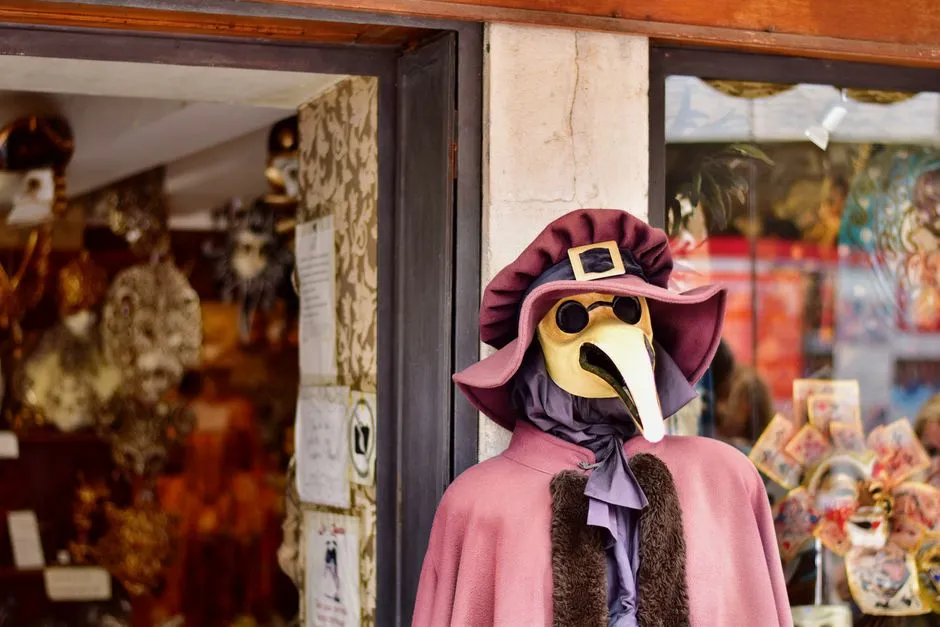
Religion played a pivotal role in popularizing the phrase “God bless you.” During the sixth century, a devastating plague swept across Europe. Pope Gregory I, also known as Gregory the Great, issued a papal decree urging believers to say “God bless you” whenever a person sneezes, invoking divine intercession and protection from evil spirits believed to spread disease.
The tradition is often attributed to Pope Gregory I. He supposedly bestowed such blessings during a bubonic plague outbreak, as it was thought that sneezing signaled imminent death from the disease. When you understand the context, the phrase transforms completely. It wasn’t politeness at the time. It was a genuine prayer for someone’s survival.
The Soul Leaving the Body Theory

At one time, people believed a man’s soul could be inadvertently thrust from his body by an explosive sneeze, thus “Bless you!” was a protective oath uttered to safeguard the temporarily expelled and vulnerable soul from being snatched up by Satan. This belief was held seriously, not metaphorically.
One common theory stems from the ancient belief that sneezing made it possible for evil spirits to enter the body, or could momentarily expel the soul from the body, leaving it vulnerable to evil spirits or illnesses. In all cases, saying “God bless you” was a prayer to God to safeguard the sneezer’s soul and protect them, and anyone in their proximity, from harm. The blessing, in this reading, was a kind of spiritual first aid.
The Expelled Demon Theory

Conversely, the sneeze itself was seen as the expulsion of a demon or evil spirit which had taken up residence in a person. Therefore, the “Bless you!” was again a protective charm meant to protect the sneezer from evil. In this version it was meant to ward off the re-entry of an evil spirit which a tormented soul had just rid itself of.
It was believed that a person’s soul would momentarily leave their body which would leave it vulnerable to being captured by the devil. It was also believed a person who sneezed expelled evil spirits from their body and the blessing was used to prevent the spirits from reentering. Two opposite fears, yet both arriving at the same remedy: bless them quickly.
The Heart-Stopping Myth

People also used to believe that a person’s heart stopped during a sneeze. Others believed that our hearts stop when we sneeze, so we say “God bless you,” as thanks to God, for surviving. It’s a dramatic interpretation, but it explains the urgency people once attached to the blessing.
The truth is that the intrathoracic pressure in your body momentarily increases when you sneeze. This will decrease the blood’s flow back to the heart, and the heart will compensate for this by altering its normal heart rhythms to momentarily adjust. However, the electrical activity of the heart is not affected during the sneeze. So the heart doesn’t stop. It just briefly adapts. Still, for centuries, nobody knew that.
What Sneezing Actually Is, Scientifically

Sternutation, the medical term for sneezing, is a sudden, forceful, involuntary burst of air through the nose and mouth. It can be triggered by irritants in the nose or throat, environmental allergies, or viral upper respiratory infections. More than thirty muscles work together to produce a single sneeze. The diaphragm contracts, chest muscles tighten, the throat and vocal cords close briefly, and the abdominal muscles generate pressure.
Some people even experience photic sneezing, which is sneezing in response to bright light, such as sunlight. The condition is formally known as autosomal dominant compelling helio ophthalmic outburst syndrome. That’s right, ACHOO syndrome. The fact that a reflex this powerful and complex triggered so much spiritual fear makes perfect sense when you consider that people had no idea what was causing it.
How Far a Sneeze Actually Travels

Research from institutions like MIT suggests that sneeze droplets can travel as far as 23 to 27 feet under specific conditions. While the heaviest droplets fall to the ground quickly, the sneeze creates a turbulent gas cloud that keeps smaller aerosols suspended for much longer distances.
Each sneeze releases up to 40,000 tiny droplets containing saliva, mucus, and occasionally pathogens. Larger droplets fall quickly, but the smallest can stay suspended in the air for several minutes. This explains why illnesses like the flu spread so easily in enclosed spaces. The ancients who feared a sneeze as a sign of illness weren’t entirely wrong. They just didn’t know the mechanism behind it.
How Other Cultures Respond to a Sneeze

Germans typically respond to a sneeze with “Gesundheit,” which translates simply to “health.” This practical response wishes good health upon the sneezer, as sneezing was often seen as a precursor to illness. Some Americans say “Gesundheit” in place of “Bless you,” although many Americans don’t even realize it is a German word. The phrase appeared in America thanks to German immigrants.
Not every culture says something after someone sneezes. For instance, in Japan, silence is the norm. Only if you are having a sneeze fit will someone address your health. In Turkey, a “live long and prosper” is the right way to address a person that just sneezed. For Spanish-speakers, a “salud” is quite acceptable. Despite the variety of responses across cultures, the overwhelming majority of traditions focus on wishing health, long life, or divine protection to the sneezer. This convergence highlights how, despite linguistic and cultural differences, societies share fundamental concerns about wellbeing.
“Bless You” as Social Reflex Today

Regardless of the reason for a sneeze, the polite response is commonly “bless you” or “God bless you.” Unlike with other bodily functions, particularly the closely associated cough, it is considered poor manners to let a sneeze go unanswered.
From a young age, many of us are taught to respond to sneezes with “bless you” or quaint alternatives like “Gesundheit.” These lessons, reinforced through years of social interaction, become automatic responses. Habits aren’t formed in a vacuum – they are deeply tied to cultural upbringing. Saying “bless you” reflects social awareness and quiet respect. It shows how even brief exchanges can acknowledge another person’s presence. In the rush of modern routines, that split second of recognition carries more weight than we often realize.
The Honest Answer: Nobody Knows for Certain

Some questions, no matter how simple, don’t have one knowable answer. Though a number of “explanations” exist for this custom, nothing points to any one of them being its definitive origin. That’s the part most people don’t expect. History offers several compelling theories, but no single confirmed reason.
By the time anyone thought to question the reason for the custom, blessing people when they sneeze had already been deeply ingrained in our evolving culture for century upon century. The tradition of saying “bless you” when someone sneezes is a fascinating blend of history, culture and superstition. Despite the advancements in health care, the custom persists, highlighting a human tendency to cling to tradition and the comforting aspects of shared social practices.
The Takeaway

What’s remarkable about “bless you” is how many fears it once carried and how little of that weight it carries now. It started as a protective invocation against plague, demonic entry, and departing souls. It survived centuries of religious and medical upheaval. Today it’s just something decent people say to each other.
That quiet evolution from spiritual shield to social nicety tells you something real about how humans handle fear: they ritualise it, pass it down, and eventually the fear fades while the kindness stays. The next time someone near you sneezes, you’ll still probably say it. The most important takeaway is that kindness never goes out of style. Whether you say “bless you,” “gesundheit,” or nothing at all, empathy is what truly connects us.
AI Disclaimer: This article was created with the assistance of AI tools and reviewed by a human editor.