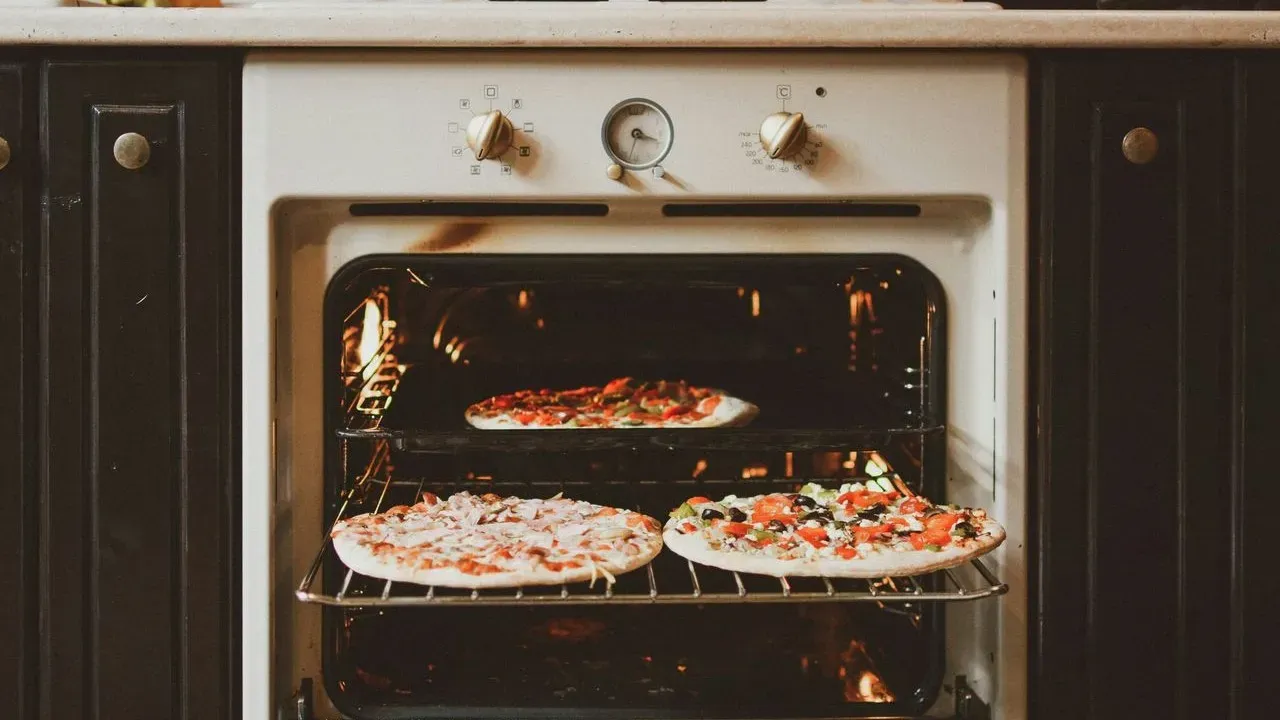

In homes where dinner means juggling multiple dishes and children hover nearby, ovens rarely stay pristine for long. Everyday cooking creates a steady stream of splatters that bake into layers before anyone notices. The result is an appliance that suddenly looks neglected, even when the family has simply followed its usual routine.
The Splashy Pattern Behind the Buildup
Family meals often involve bubbling casseroles, roasting meats, and quick traybakes that send fat and sauce in unexpected directions. A jacket potato can burst without warning, while chicken thighs release rendered fat that lands on every surface inside. These small incidents repeat several times a week, and each layer hardens under repeated heat.
The problem grows because most households skip the brief wipe that would prevent the next layer from sticking. Evening routines focus on clearing plates and homework rather than the oven interior. Over time, what began as a minor spill becomes a thick crust that requires far more effort to remove.
Barriers That Catch Trouble Before It Starts
Simple precautions reduce the volume of mess that reaches the oven floor. Placing baking paper on trays catches drips from sausages or marinated foods, while an empty tray on the shelf below acts as a safety net for anything that overflows. Foil works on trays but should never line the oven base itself, as it can disrupt airflow and create uneven heating.
These steps do not eliminate every spill, yet they cut the frequency of deep cleans. Families that adopt them notice fewer black flakes appearing on food and less smoke during preheating. The effort stays small because it happens before the oven even reaches temperature.
The Two-Minute Wipe That Changes Everything
Once food comes out and the oven is still warm but safe to touch, a quick pass with a damp cloth removes soft grease from the door and front lip. Keeping a dedicated cloth nearby removes the friction of searching for supplies mid-task. This single habit prevents most residue from hardening into the stubborn patches that demand weekend attention
. The payoff appears weeks later during any deeper clean. Less baked-on material means shorter dwell times for cleaners and fewer repeat scrubs. Many households find the oven stays usable longer between full treatments when this step becomes automatic.
Matching Effort to the Actual Mess
A light haze on the walls and door calls for nothing more than warm water and washing-up liquid. Visible smoke on preheat, lingering odors, or flakes on trays signal the need for a full session. Planning the deeper work for a day with open windows and fewer interruptions keeps the job from feeling overwhelming.
Racks benefit from a long soak in hot, soapy water before scrubbing with a non-scratch pad. The oven interior responds best to top-to-bottom work, allowing proper dwell time on greasy areas and a plastic scraper for lifted residue. Glass doors clear up with a final damp wipe and dry buff to remove streaks.
A Realistic Rhythm Most Families Can Maintain
A workable schedule keeps the appliance in steady condition without turning cleaning into a major project. The following pattern works for most households that cook several times a week:
- Weekly: quick wipe of door and front lip while the oven cools.
- Monthly: slightly deeper refresh of visible surfaces.
- Seasonally: full clean of racks, interior, and glass when smoke or odors appear.
Households that batch-cook or roast frequently may shorten the cycle slightly. The goal remains an oven that heats evenly, smells neutral, and does not shed particles onto meals. Small, repeated actions protect the appliance far better than occasional heroic efforts.
AI Disclaimer: This article was created with the assistance of AI tools and reviewed by a human editor.