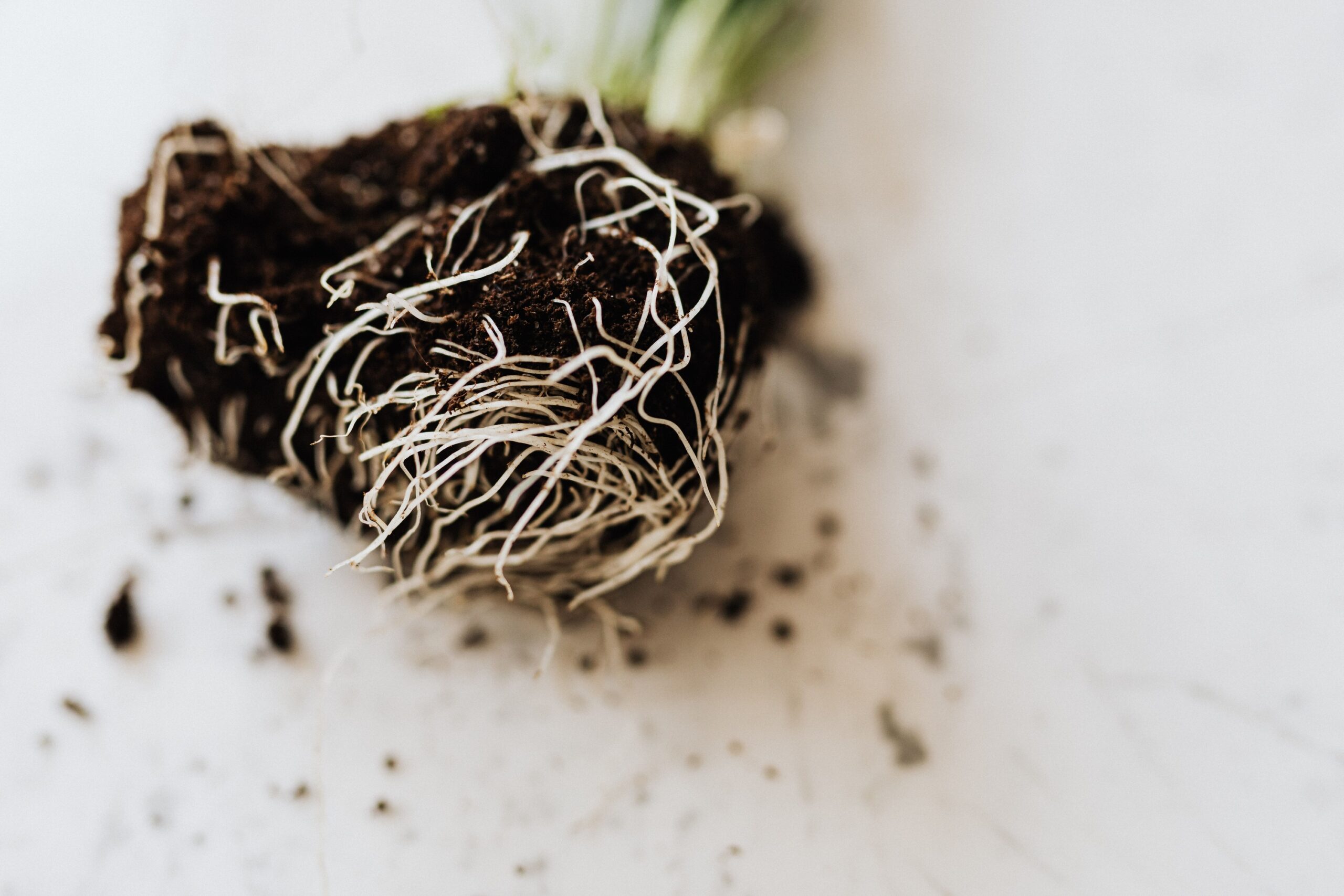

Most of us don’t spend much time thinking about what happens underground. Roots are invisible by design, hidden in soil, salt water, or another plant’s living tissue. That invisibility has allowed some genuinely bizarre root systems to go largely unnoticed by the public, even while entire research careers are built around them.
These five plants have root systems so unusual that they continue to generate peer-reviewed studies, field expeditions, and scientific debates well into 2025 and 2026. Each one bends the rules in a different direction.
1. Red Mangrove (Rhizophora mangle): The Roots That Rebuild Coastlines
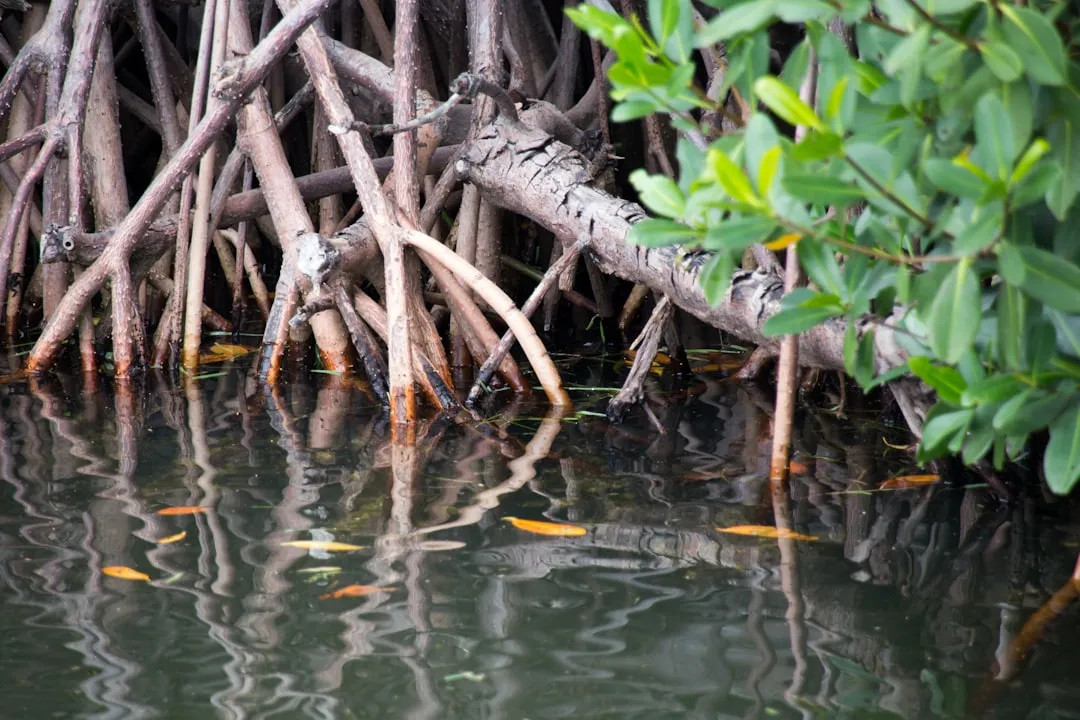
Mangrove roots involve a complex system comprising intricate long tidal creeks and surrounding mangrove swamps which form heavily vegetated floodplains. What makes the red mangrove particularly remarkable, though, is how those roots interact with moving water at a structural level that engineers are actively trying to replicate.
Research has found the mean Young’s modulus of mangrove prop roots is around 15 GPa, which is roughly half the value for concrete, making them unusually stiff for biological material. The stiff structure assumption of mangrove prop roots was proven through tensile and bending tests, and scientists continue to use this data to model coastal protection systems.
Precise prediction of the morphological evolution of coastal areas, in the face of global warming and consequent sea level rise, requires an understanding of interactions between root porosity, water flows, and sediment transport. Water flows around the mangrove prop roots create a complex energetic process that mixes up sediments and generates a depositional region posterior to the roots. This dynamic sediment behavior is still not fully understood, which is why researchers keep returning to it.
Rhizophora trees that grow on a shallow sediment layer tend to produce more prop roots compared with those on a thicker sediment layer, suggesting a morphological response of the prop root system to increase below-ground root biomass where below-ground root development is physically constrained. That kind of adaptive flexibility in root architecture continues to puzzle and inspire plant biologists.
2. Welwitschia mirabilis: The Living Fossil With an Underground Secret
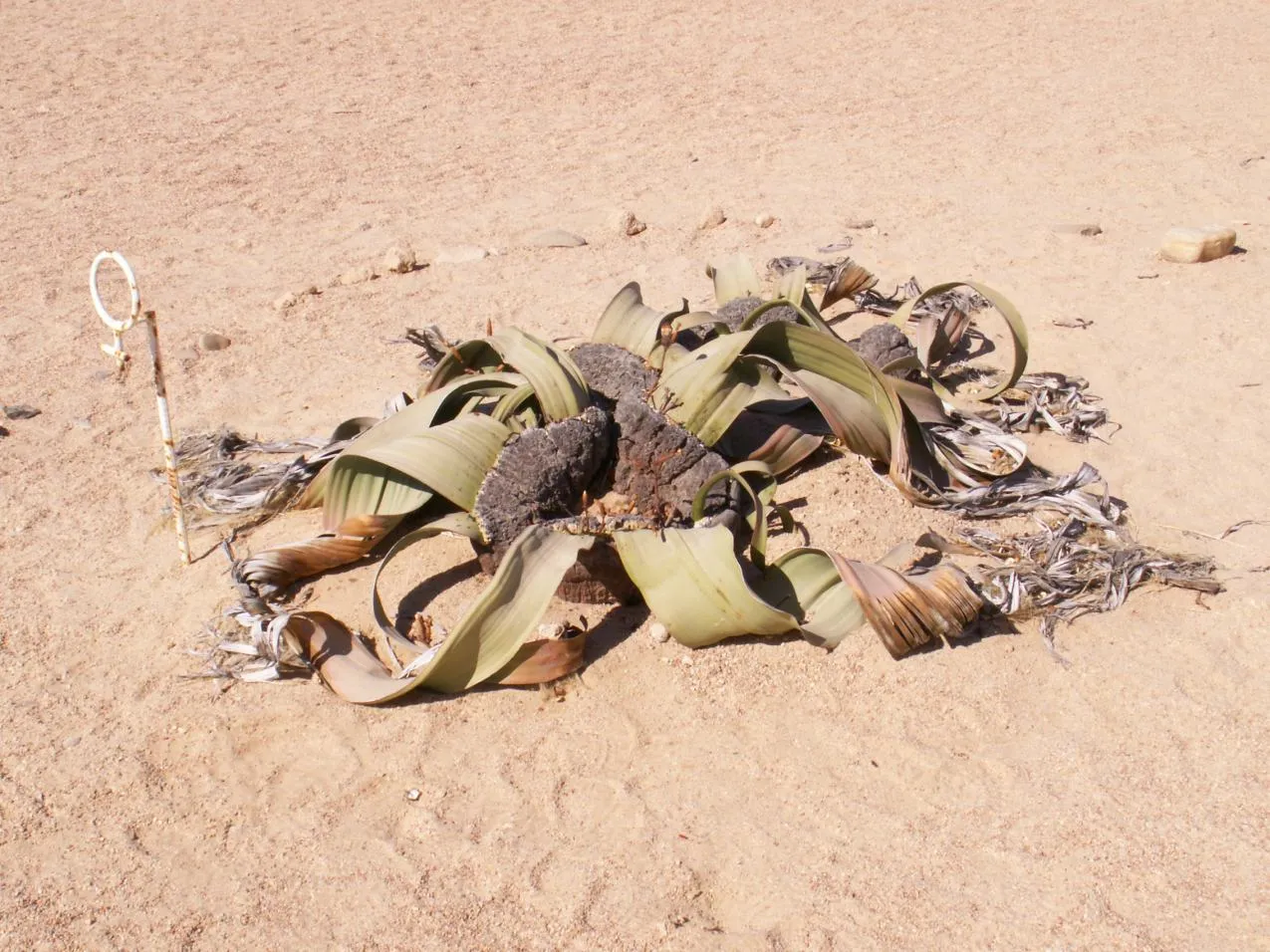
Welwitschia mirabilis is a unique species confined to a narrow, hyper-arid strip of land in the Namib Desert along the coasts of Namibia and Angola. This plant has developed remarkable survival mechanisms, allowing it to endure where rainfall is minimal, often less than 50 millimeters per year. What keeps scientists busy is its root system, which turned out to work very differently from what was assumed for decades.
At the research site, rainfall is rare, with a mean annual precipitation of just 31 mm, groundwater deep at 57 to 75 meters, and fog frequent at 50 to 90 events per year. By examining root architecture in relation to soil moisture and analyzing the isotopic composition of hydrogen and oxygen of plant and soil water, researchers established whether Welwitschia sources water from deep groundwater, shallow fog and dew moisture, or rainwater at infiltration depth. Isotopes suggested rainwater as the principal water source.
Most major roots and fine roots occurred in 10 to 66 centimeter deep layers of gypsum containing roughly ten percent moisture. The stem shows a continuous transition into a broad taproot that rapidly gets thinner with depth within the first meter. Further away from the stem, one to four smaller roots of only one to three centimeters in diameter typically spread horizontally but also exploit deeper soil layers, and roots with horizontal lengths of 15 meters have been found.
Fossil records indicate that ancestors of Welwitschia existed over 100 million years ago, cementing its status as a “living fossil.” For researchers, a plant this old with a root strategy this unexpected is difficult to walk away from.
3. Balanophora: The Plant That Abandoned Its Own Roots
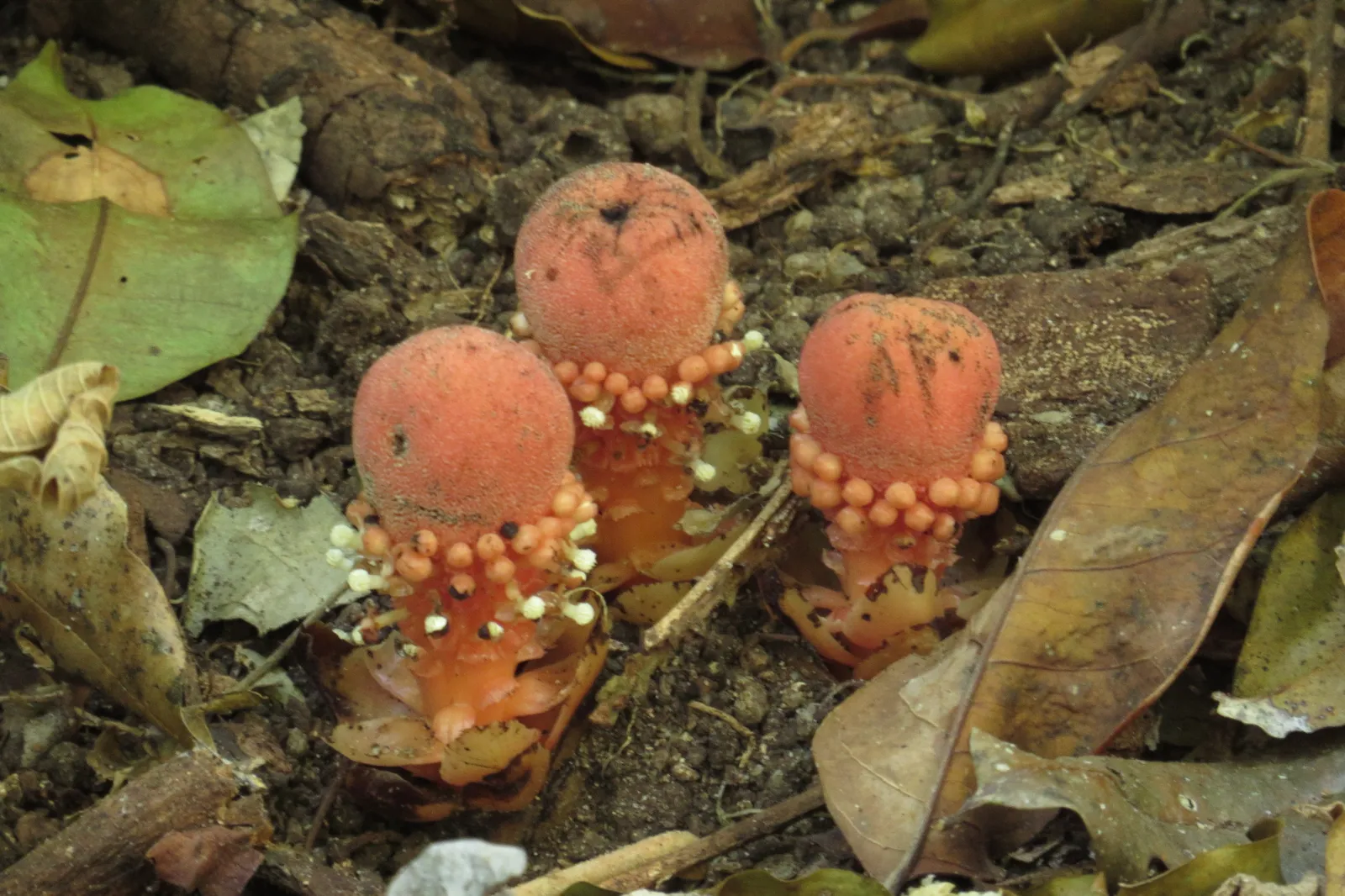
With no chlorophyll to photosynthesize with and no root system to supply it with water from the ground, Balanophora has evolved a series of extreme traits to survive entirely as a parasite on the roots of specific, local trees. It looks like a mushroom, grows in the mountain forests of East Asia, and has been quietly rewriting what botanists think is possible.
Unlike some other parasitic plants that extend a haustorium into host tissue to steal nutrients, Balanophora induces the vascular system of its host plant to grow into a tuber, forming a unique underground organ with mixed host-parasite tissue. This chimeric tuber is the interface where Balanophora steals nutrients from its host plant. The mechanics of this manipulation alone have occupied researchers for years.
Researchers estimate that the Balanophoraceae lineage turned parasitic in the Cretaceous, around 110 million years ago. That timing places them among the earliest parasitic flowering plant lineages known, older than many better-studied parasites in other families. A December 2025 study published in New Phytologist mapped the genomes of multiple Asia-Pacific Balanophora species, adding a new layer to this already strange picture.
Balanophora, a rare parasitic plant lacking chlorophyll and roots, survives by attaching to specific host trees and exhibits extreme reduction of plastid genomes, retaining only about 20 genes but importing over 700 proteins. Some species and populations produce seeds only without fertilization, which is exceedingly rare in the plant kingdom. Every time scientists think they have it figured out, Balanophora adds another twist.
4. Strangler Fig (Ficus species): The Tree That Is Also Its Own Root System

The Banyan tree is an example of a strangler fig that begins life as an epiphyte in the crown of another tree. Its roots grow down and around the stem of the host, their growth accelerating once the ground has been reached. From there, the process becomes something that looks more like architecture than botany.
Eventually, the fig’s roots can completely encase the host, strangling its trunk and cutting off nutrient flow until it dies and rots away, leaving just the hollow fig behind. When the roots reach the ground, they grow into the soil, thicken, and become additional trunks. In this way stranglers grow outward to become large patches of fig forest that consist of a single plant with many interconnected trunks.
Scientists examined the prevalence of strangler figs in Lamington National Park in Australia after a cyclone that felled hundreds of trees. Comparing felled trees with their nearest still-standing neighbors, they found those that survived the storm were more than four times more likely to have large attached strangler figs. The root cage, it turns out, can act as a structural support system rather than just a killing mechanism.
Leaf nitrogen and phosphorus content of host trees decreased significantly after strangler figs’ aerial roots had entered the ground, giving researchers measurable proof of the competitive takeover in real time. A 2024 to 2025 study on strangler fig colonization in urban green spaces found that 13 strangler fig species widely colonized 67 host species, with palm hosts bearing more than half of all strangler individuals.
5. Keita deniseae: The Newly Discovered Liana With Roots That Smell Like Marzipan

The stems and roots of this new species, which is also a new genus, smell strongly of marzipan when scraped. Climbing with strange, hooked structures up into the forest canopy, this liana bears large edible fruits. Discovered in Guinea and formally described in 2024, it represents the kind of find that reminds botanists how much is still out there.
Its roots give off a sweet, marzipan-like scent when scraped, thanks to the presence of benzaldehyde. Scientists are studying the strange plant to understand the unique features and to develop conservation plans, as it’s currently endangered due to habitat loss from mining and agriculture.
The name deniseae honors Denise Molmou, the Guinean botanist who collected the type specimen in the Boyboyba forest of Guinea. The species is endangered due to its small range and threats of clearance of its forest habitat. The aromatic compound in the roots, benzaldehyde, is already drawing interest beyond conservation circles, given its potential applications in natural fragrance research.
What makes Keita deniseae especially interesting to root researchers is that the marzipan scent emerges specifically from the roots and stems when they are damaged, suggesting a possible chemical defense function. There are currently 400,000 named plant species, and scientists at the Royal Botanic Gardens, Kew, estimate up to 100,000 more are still to be discovered, which means there are likely many more chemically unusual root systems still waiting underground.
The Deeper Pattern Behind All Five
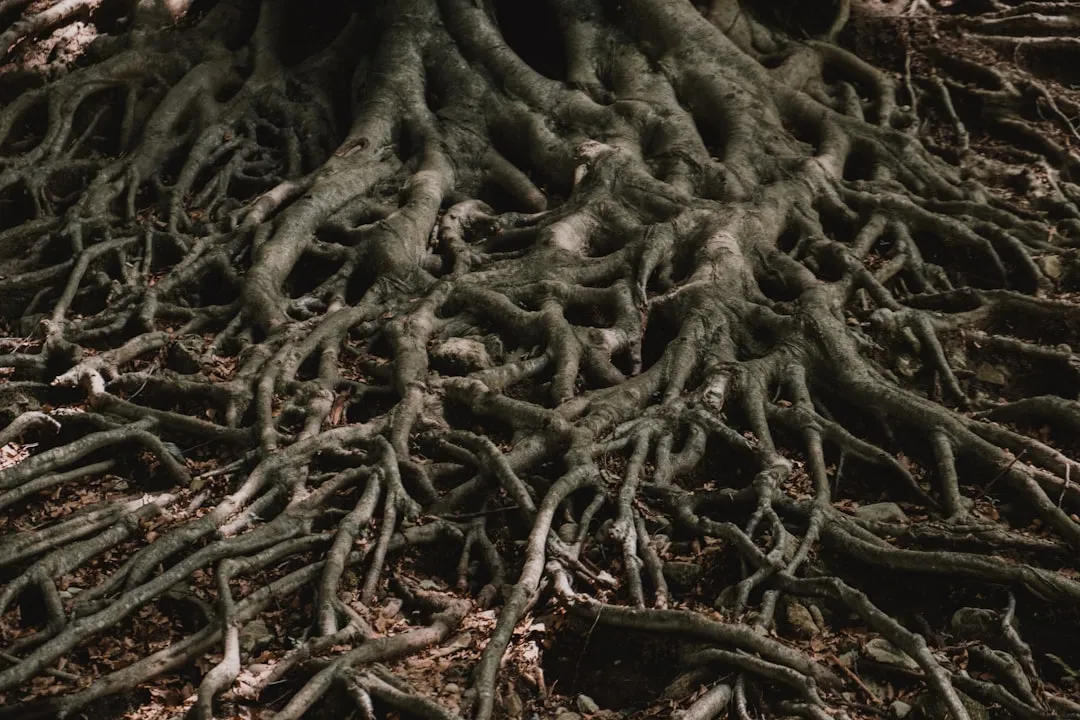
Researchers have found that nearly 20 percent of studied ecosystems had roots that peaked twice across depth, a phenomenon called bimodality. In these cases, plants developed a second, deeper layer of roots, often more than three feet underground and aligning with nutrient-rich soil layers. This 2025 finding from a multi-institution study published in Nature Communications suggests that even the most ordinary-seeming root systems are more complex than previously mapped.
A biological mechanism familiar to people who fast helps plant roots grow strong. The discovery by University of Copenhagen scientists provides an answer to a long-unanswered question and a deeper understanding of the mouths of plants, which can help develop climate-resilient crops. Root research, in other words, is no longer purely academic. It has direct implications for agriculture, climate modeling, and coastal engineering.
What unites mangroves, Welwitschia, Balanophora, strangler figs, and Keita deniseae is not just oddness for its own sake. Each one has evolved a root strategy that pushes against the limits of what plant biology typically allows, and each one is still actively teaching scientists something new. The strangest roots, it turns out, often have the most to say.
AI Disclaimer: This article was created with the assistance of AI tools and reviewed by a human editor.