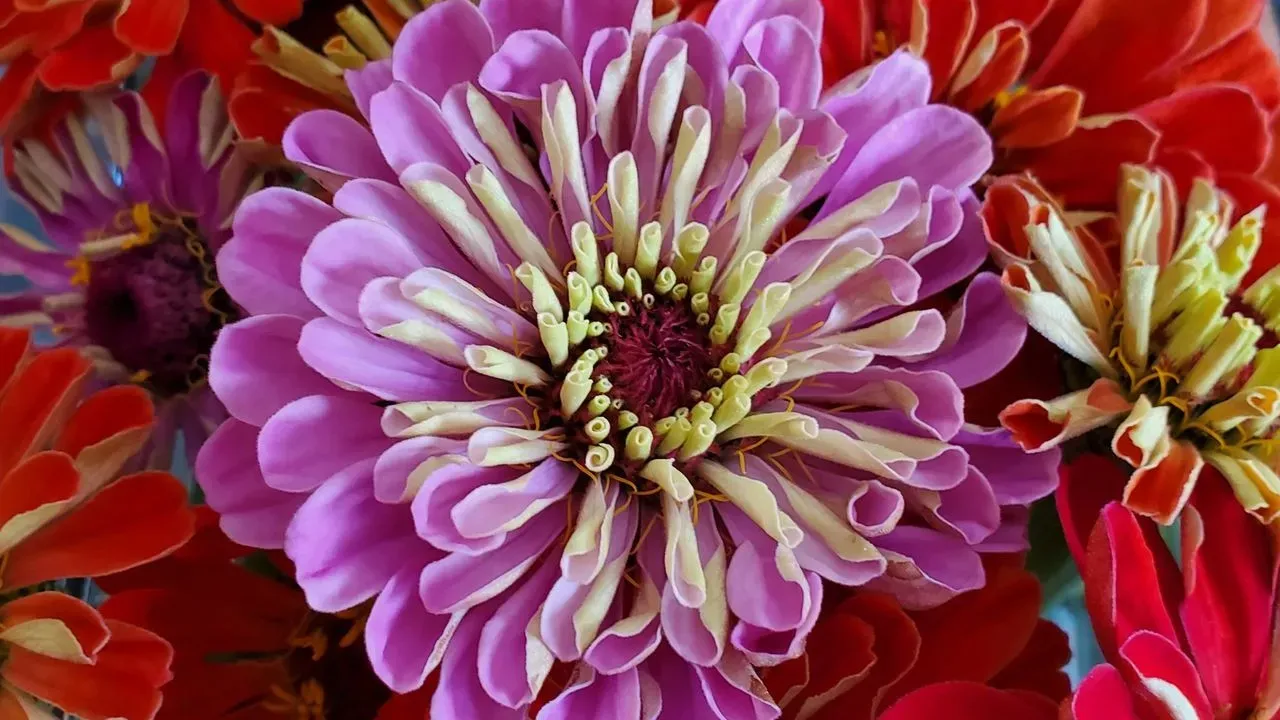

Gardeners often expect that leaving young plants untouched will produce the best results. Yet with zinnias, the opposite holds true. Removing the central growing tip at the right stage redirects the plant’s energy into multiple side shoots. The outcome is a bushier specimen covered in more stems, buds, and blooms than an unpinched plant would deliver.
The Core Mechanism at Work
Zinnias naturally grow tall and single-stemmed when left alone. The apical bud at the top dominates growth through a process known as apical dominance. By pinching that tip away, the dominance ends. Lower buds along the stem then activate and develop into additional branches. Each new branch carries its own flower buds. The plant therefore shifts from one main stem to several productive ones. This change happens quickly once the initial cut is made, provided the plant is still in active growth.
Timing the Pinch for Best Effect
The window for pinching opens when seedlings reach roughly four to six inches in height and show three to four sets of true leaves. At this point the central stem is firm enough to handle the cut yet flexible enough to respond with new growth. Waiting too long allows the plant to set its first flower bud, after which pinching yields smaller gains. Most varieties respond well when pinched once or twice during early summer. In regions with long growing seasons, a second pinch on the new side shoots can further increase branching. Cooler climates may limit gardeners to a single early intervention.
Performing the Pinch Correctly
Use clean fingertips or small scissors to remove the top inch or so of the central stem, just above a leaf node. The cut should be precise and angled slightly to shed water. No more than one-third of the plant height needs to be removed. After the pinch, the plant typically pauses for a few days before resuming growth. Side shoots emerge within one to two weeks under favorable conditions. Regular watering and consistent light help the new branches develop evenly.
Observable Outcomes Over the Season
Plants that receive this treatment usually stay shorter and wider than their unpinched counterparts. The increased number of stems translates directly into more flower heads over an extended period. Gardeners commonly report fuller displays that continue until frost arrives. The technique works across many zinnia cultivars, though taller varieties show the most dramatic change in shape. Shorter bedding types still benefit but may require less aggressive pinching. In both cases the result is a more compact, productive plant suited to borders or containers. The practice requires only a minute or two per plant yet alters the entire season’s display. For anyone growing zinnias from seed or young transplants, the step offers a straightforward way to multiply blooms without additional plants or expense.
AI Disclaimer: This article was created with the assistance of AI tools and reviewed by a human editor.